Cuenca’s Hanging Houses: what begins after the photograph
Behind the balconies over the Huécar lie restorations and Fernando Zóbel’s decision to give art a home, rather than let a collection scatter.
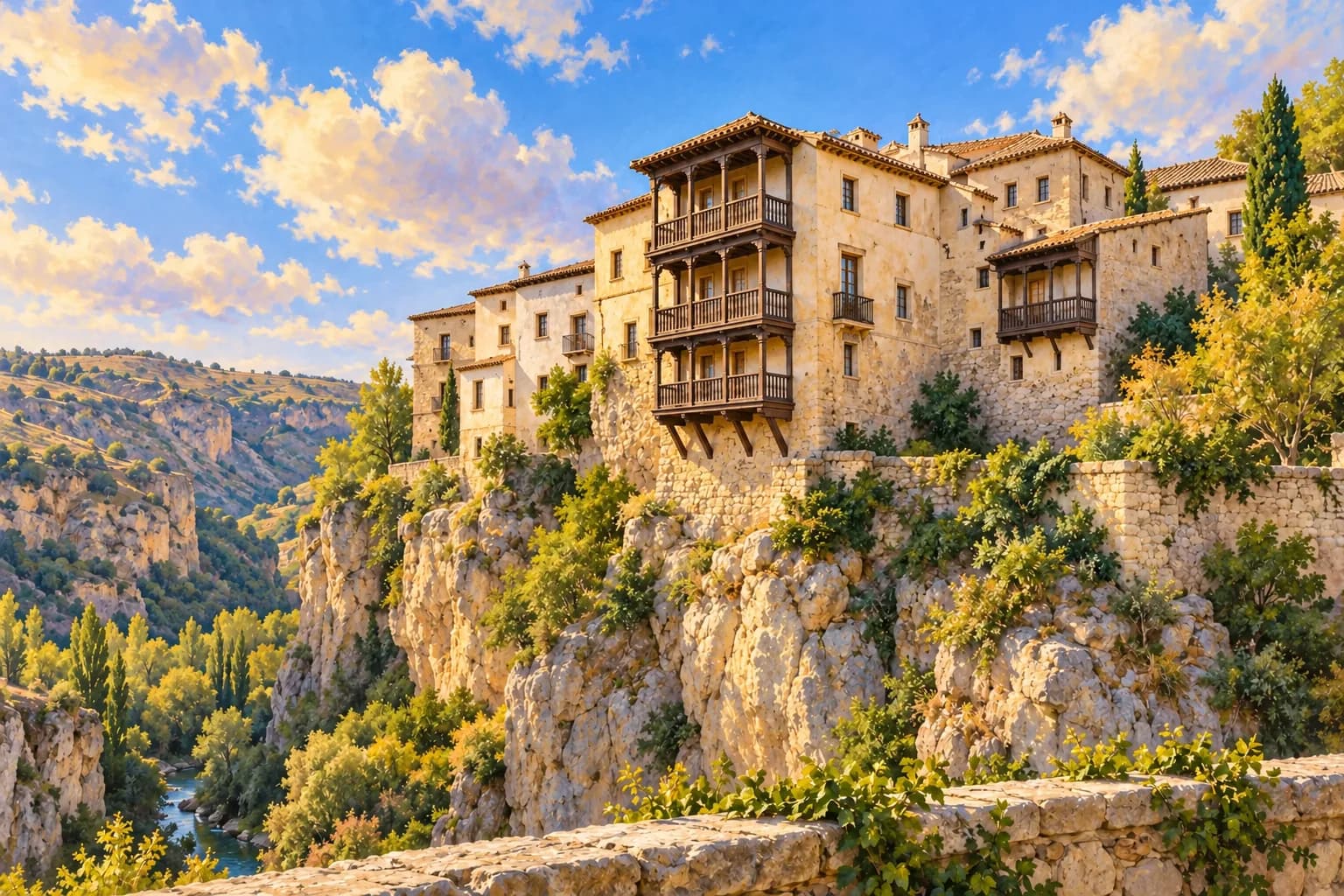
Some buildings seem made for a photograph. Cuenca’s Hanging Houses could be among them: dark wood, pale rock, and the gorge opening beneath the balconies.
Yet the familiar view is only the beginning. Behind it are houses that changed profoundly, and people who found room for something that still lacked a home: the art of their own time.
Next time you look, ask two questions. How do they stand? And what brought them back to life?
Discover the Hanging Houses with WAONDERBefore the vertigo, the supports
The balconies project over the Huécar gorge. From a safe viewpoint, look at the details: railings, slender posts and diagonal braces returning to the wall reveal the work behind that familiar silhouette.
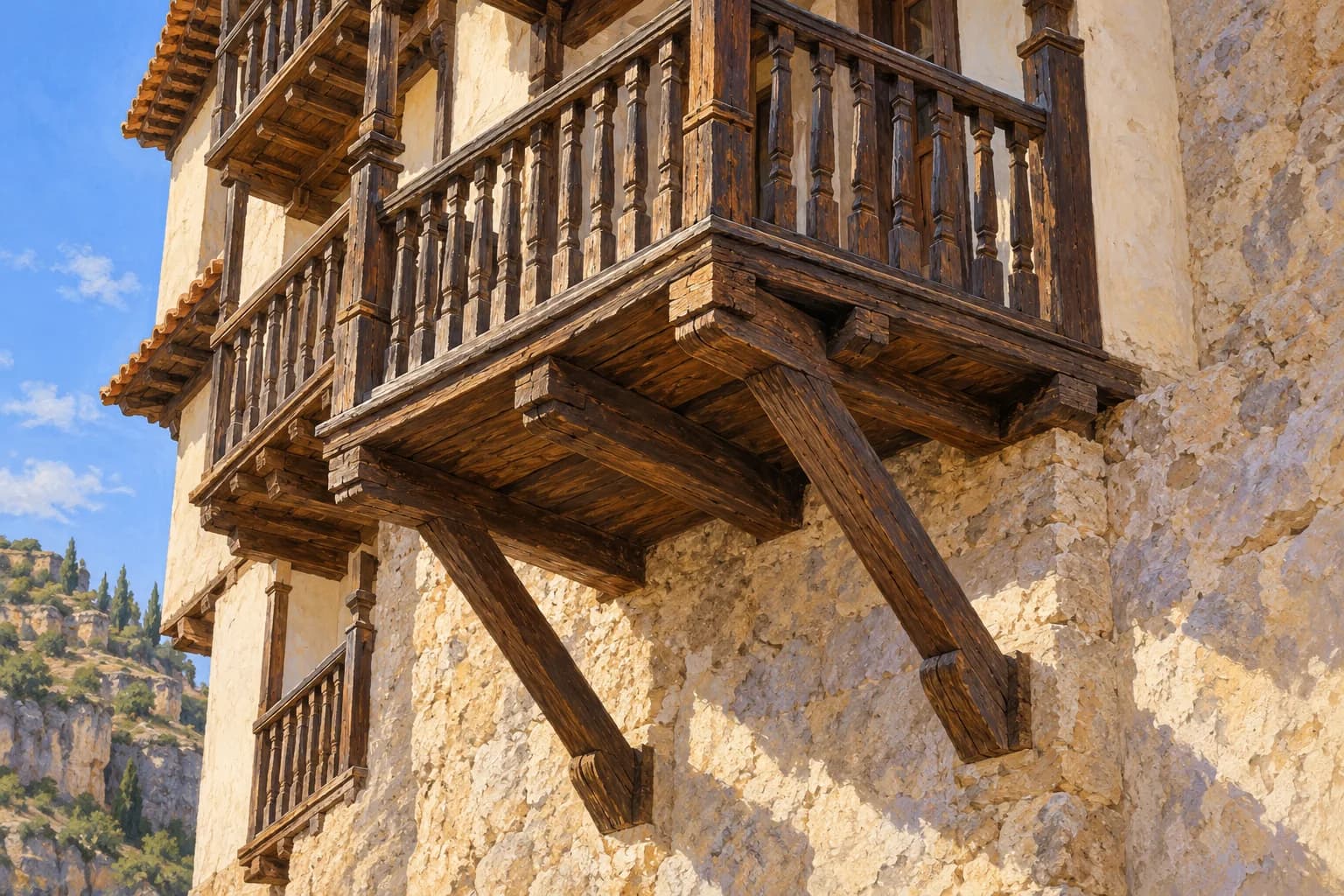 An illustration of timber supports and their connection to the wall.
Looking at a support can be as compelling as looking into the drop. It restores a human scale: people shaped the wood and found room beside the city’s edge.
The municipal tourism account describes three former grand residences of uncertain origin. Inside are carved ceiling beams, Mudéjar features and decoration from later periods. The familiar exterior conceals a less uniform history than you might expect.
Restoration is part of the story
Their appearance is not a frozen photograph of the Middle Ages. After neglect, the houses were extensively restored in the 1960s. The Renaissance entrance portal also came from another building, in Villarejo de la Peñuela.
Look for that entrance as you approach from the street. Its stone travelled from a palace in another town to this edge of Cuenca; the houses themselves went from neglect to becoming a carefully preserved city landmark. Their history lies not only in what survived, but also in what had to be brought back.
A collection that should not scatter
Fernando Zóbel had spent years collecting fellow artists’ work. He wanted it to be known in Spain, rather than dispersed. Finding a suitable setting was part of that ambition.
The Fundación Juan March archive records that Gustavo Torner suggested the Hanging Houses in 1963, while they were being rebuilt. Torner also brought decisive ideas to the museum’s design and operation; Gerardo Rueda served as curator.
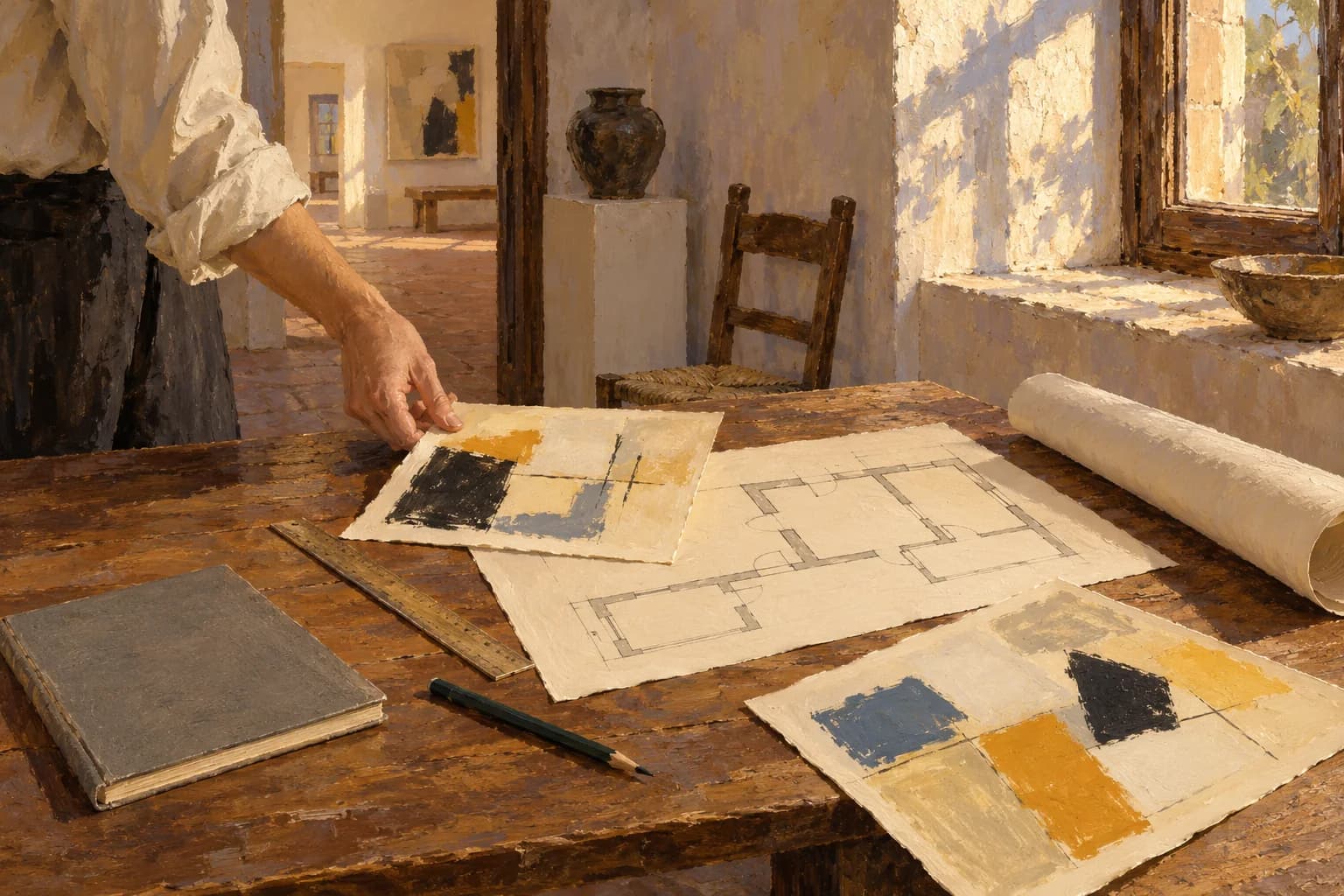 An evocative illustration of preparing the museum; the plans and studies are not attributed to its founders.
It was not simply a matter of finding walls for paintings. It meant considering how someone would approach a work, what they would encounter next and how it would be lit. A private collection was becoming a shared experience.
Looking from within
The Museum of Spanish Abstract Art opened on 1 July 1966. Its collection includes painting and sculpture by artists such as Antonio Saura, Eusebio Sempere and Zóbel himself, as the municipal museum guide explains. In 1980, Zóbel donated his collection to Fundación Juan March, which continues to expand it.
Inside, the direction of your gaze changes. From outside, you see houses leaning towards a landscape; from within, the landscape enters the building. The encounter between contemporary art, old rooms and windows is reason enough not to stop at the exterior view.
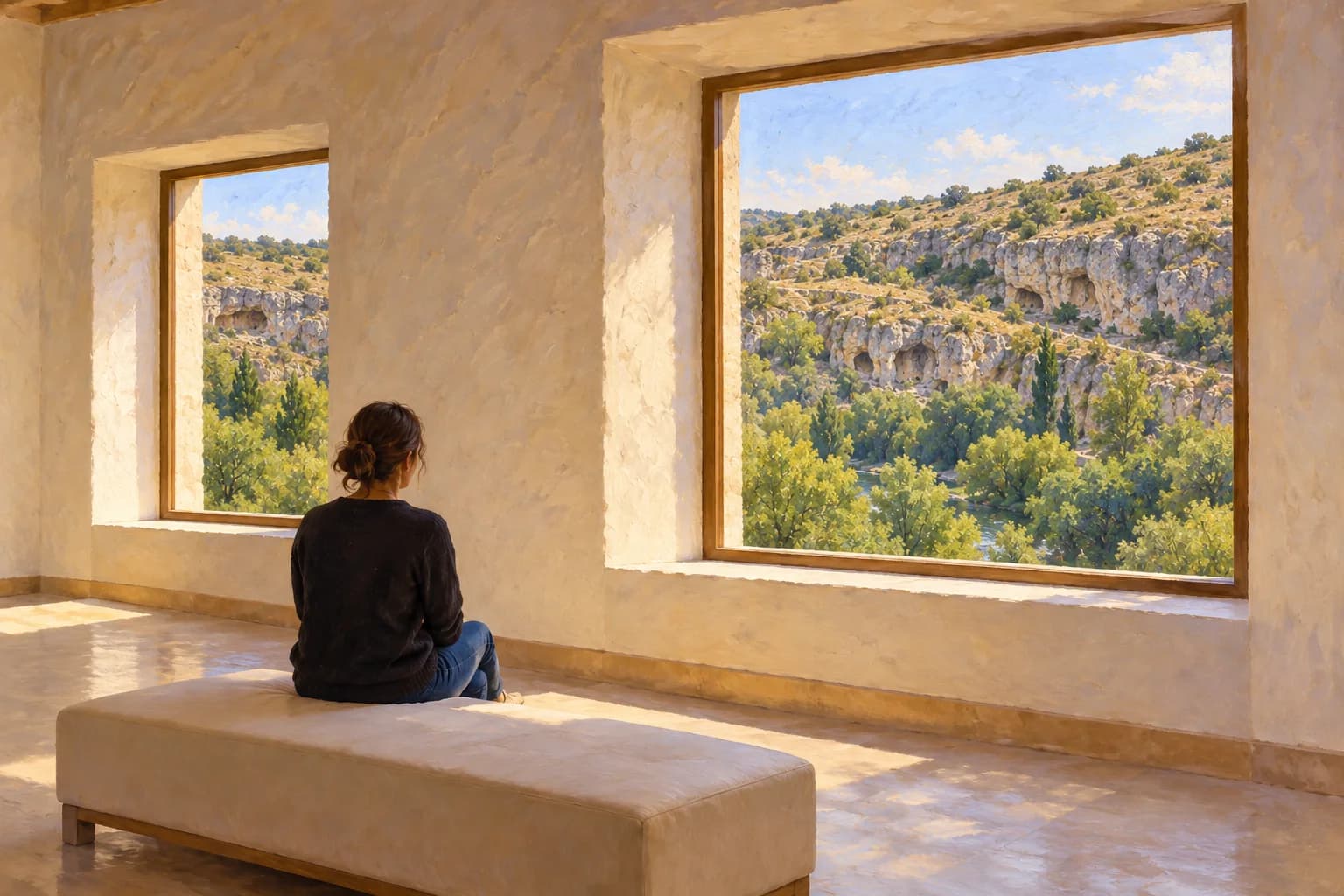 An evocative illustration of the view from within, not a specific room or exhibition.
The city’s documentation of later renovations shows that adaptation did not end in 1966. A living museum requires continuing care for the building, the works and the conditions of a visit.
A visit in two parts
First, take time to see the group from authorised viewpoints. Then, if the museum is open and suits your plans, allow another spell inside. Follow the museum information linked from the municipal guide for opening times, access and changes; not every balcony is freely accessible.
The old town has slopes. Adapt your route, and do not approach unsafe edges for a photograph. Our selection of places across Castile-La Mancha offers separate outings for other days.
You may return with the same photograph of the balconies. But you can also bring home something it cannot contain: people who wanted old houses to become a place where art could stay, and meet an audience.
Bring a fresh perspective to Cuenca with WAONDERSection
Stories behind places