Cristo de la Luz, Toledo: nine vaults and a thousand years in a small building
Names recorded in brick, reused columns, and a legendary lamp: discover the details that make this former Toledo mosque worth another look.
Four columns and nine reasons to look up
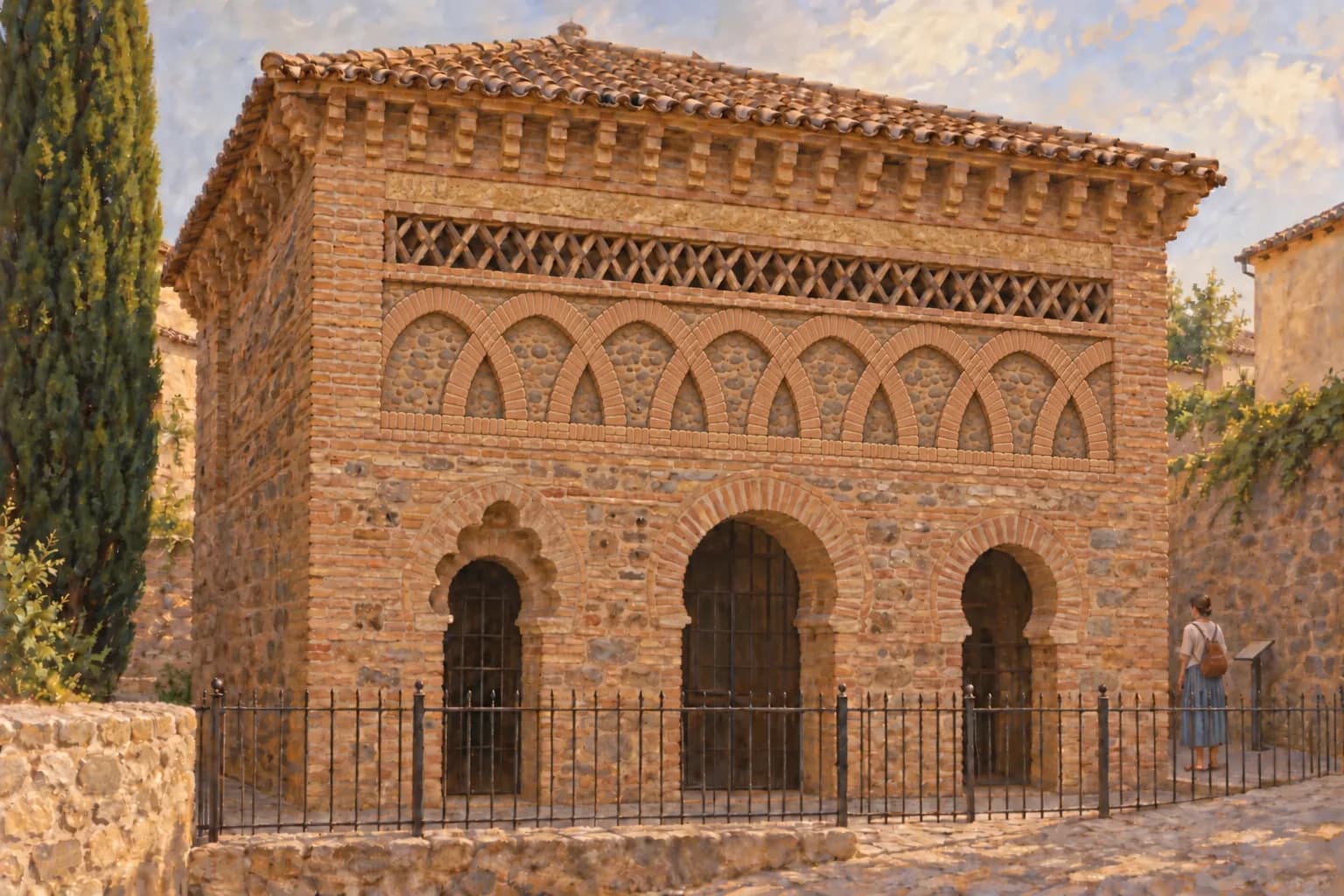
From the street, Cristo de la Luz does not compete with Toledo’s larger monuments in size. Its reward lies elsewhere: a small room, four columns, and nine vaults that do not repeat the same design. Change your position and what first looked like one ceiling becomes a sequence of distinct patterns.
The building began as the mosque of Bab al-Mardum and later became a Christian place of worship. You can follow both lives through its architecture today. It also preserves something less obvious: names recorded in brick more than a thousand years ago.
Explore Cristo de la Luz in WAONDERThe names the brickwork preserved
The monument is usually introduced with the date 999. The specialist Museum With No Frontiers entry, written by Ángela Franco, gives the inscription’s more precise interval: December 999–January 1000, corresponding to Muharram in the year 390 of the Islamic calendar.
That foundation inscription identifies the patron, Ahmad ibn Hadidi. The history published by the monument’s operator also records Musa ibn Ali, associated with directing the construction.
Brick does more than build a wall here: it preserves a memory. Someone provided the resources, other people worked the material, and the building recorded its beginning. When you look at the band high on the facade, you are not seeing only a geometric ornament. You are seeing writing that helped date the place and recover names.
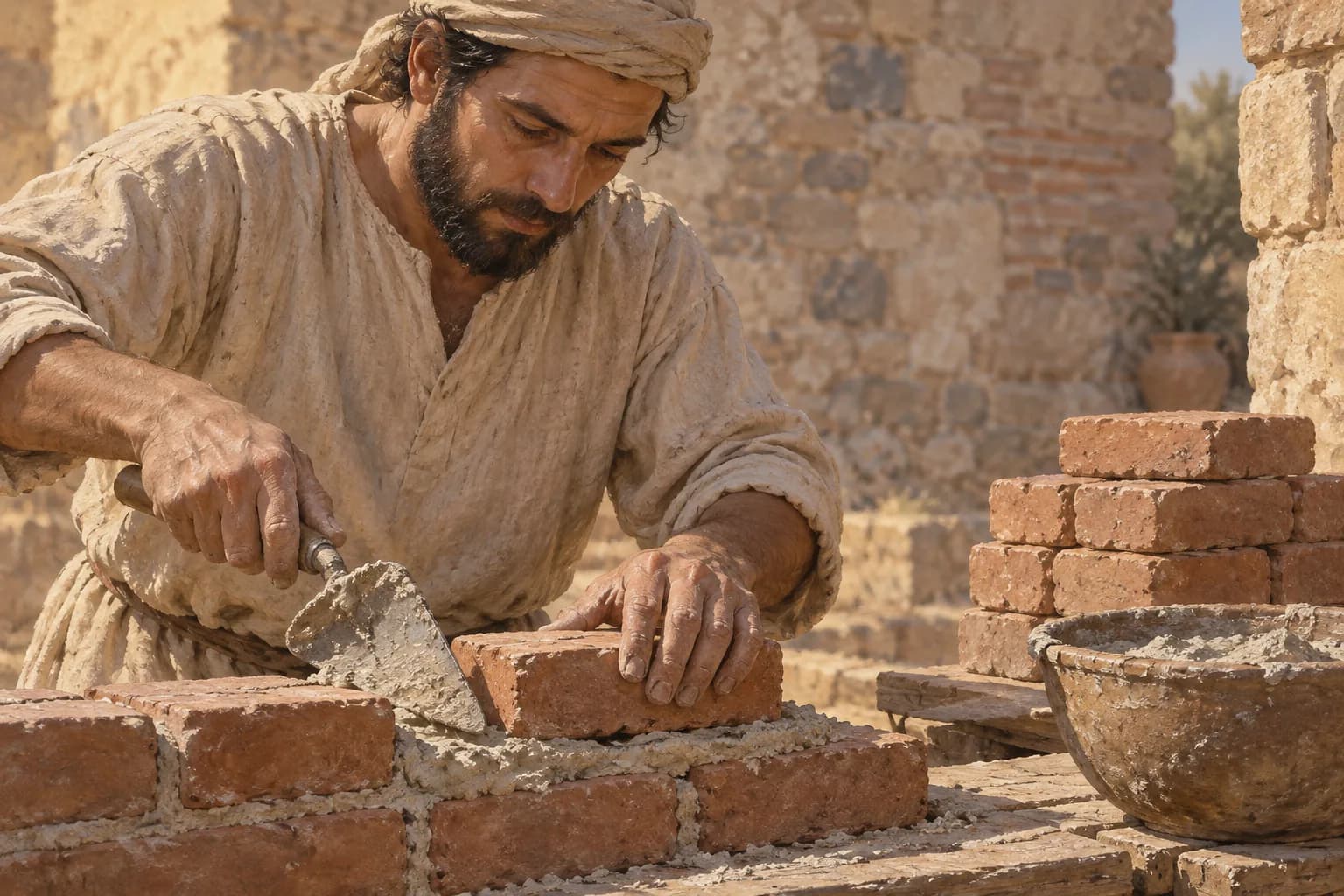 An evocation of brickworking, not an identified builder or a documented working day.
You do not need to read Arabic to pause at that band. Begin by noticing how an everyday material changes its purpose: some bricks hold up the wall; others carry a message. Below it, the brick bands of the arches interlace: follow one curve and watch it cross the next.
A small building containing nine different ceilings
The interior is organized around four columns, dividing the space into a grid of nine bays. Castilla-La Mancha’s tourism description helps identify that structure and the horseshoe arches.
At first, the vaults may seem like variations of one ceiling. Then differences emerge: lines cross in different ways, their junctions change, and the center rises higher. Museum With No Frontiers singles out the central vault, octagonal and taller than its neighbors.
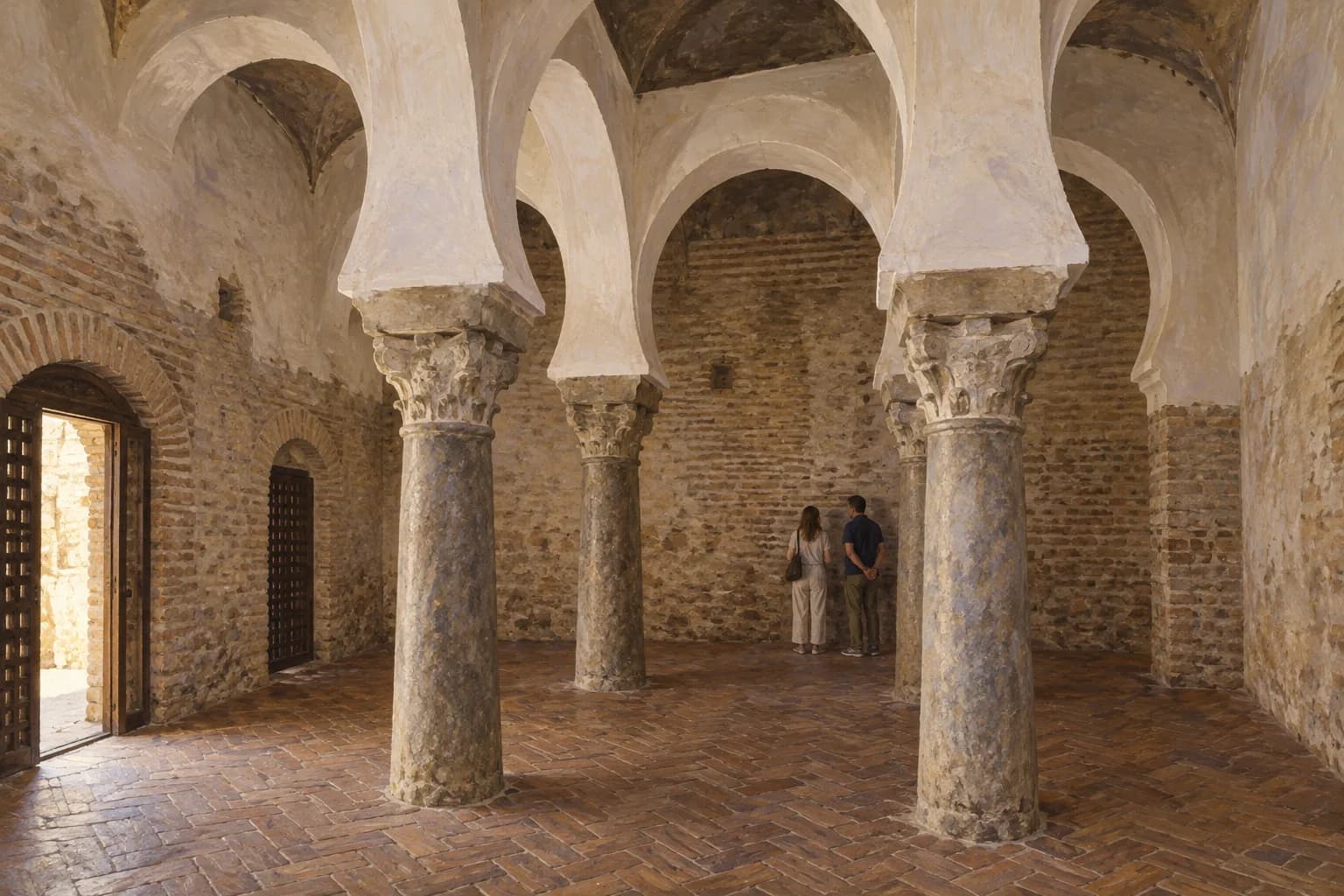 The columns help reveal the room’s layout. An architectural illustration, not a survey of the nine vault designs.
Spend a little time comparing two neighboring bays, then find the central one. The point is not to finish a count, but to discover differences where you first saw repetition.
The vaults have been connected with those of al-Hakam II’s extension to Córdoba’s mosque. That relationship introduces a larger scale without requiring you to leave this room: an architectural idea can travel and find another proportion in a neighborhood mosque. A shared influence does not make the Toledo and Córdoba buildings identical.
The columns already had a past
Now look at the point where each arch meets its support. The capitals are not decorations separate from the structure: they form the transition between the stone shaft and the arch above.
Earlier pieces were reused. The specialist entry identifies three Visigothic capitals among the former mosque’s supports. Their worn surfaces retain carvings and forms you can compare without touching.
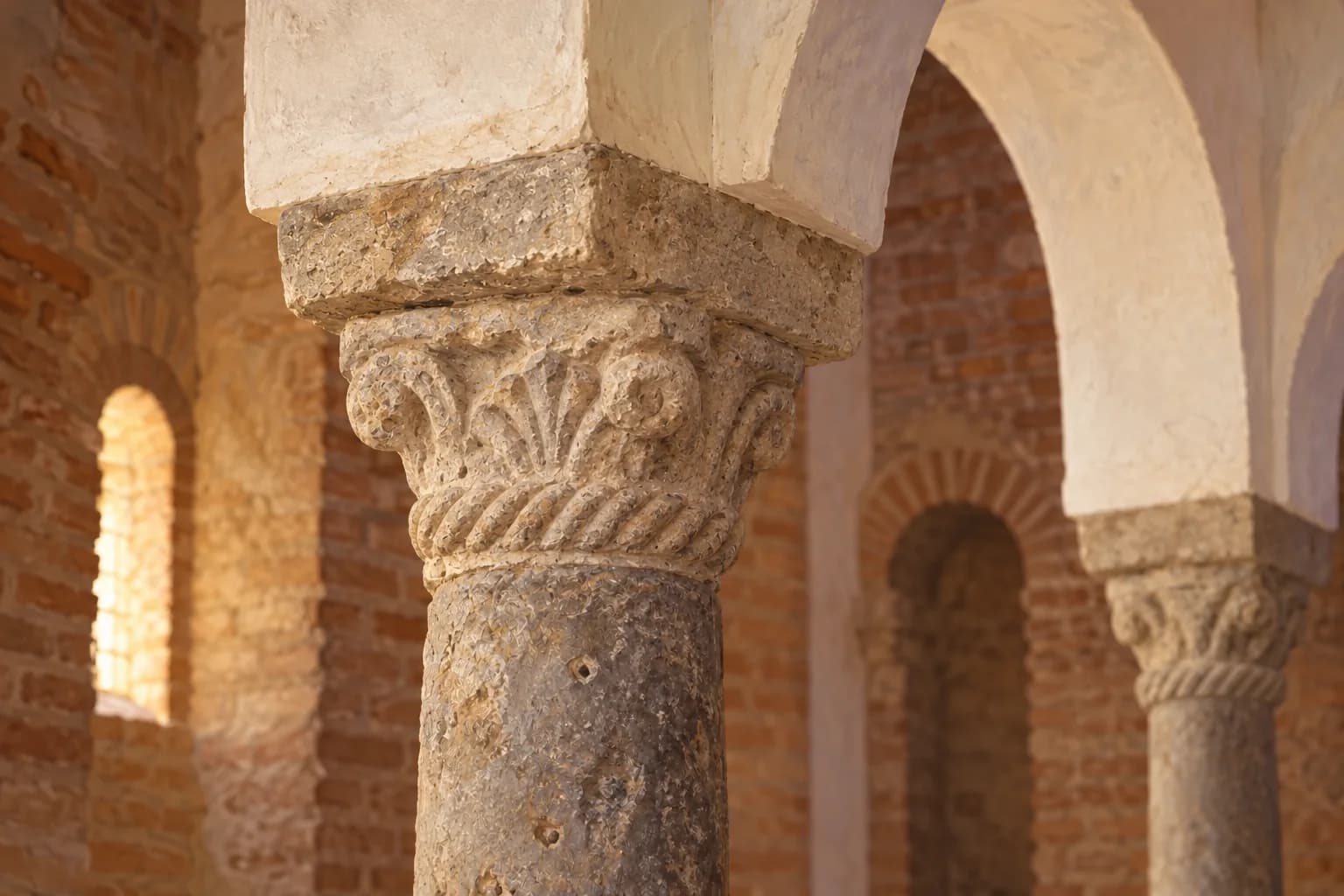 An interpretation of the support and worn carving, not a substitute for observing each original piece.
This is easily missed when you are looking only for a photograph of the whole room. The late-tenth-century building incorporated materials that had already lived another life. Later, the building itself would acquire another purpose.
Time is not present only in a date beside the entrance. It is also present in reused stone, its wear, and the contrast between its surface and the pale arch it supports.
The curve that came later
Outside, find the difference between the former mosque’s volume and the semicircular brick sanctuary. That curve does not belong to the original foundation.
After Toledo’s Christian conquest in 1085, the building came into Christian use. The specialist entry records its grant to the Order of the Hospital in 1182 and associates the Mudéjar transept and apse with that period. The municipal entry explains the mosque’s transformation into a church and the added sanctuary.
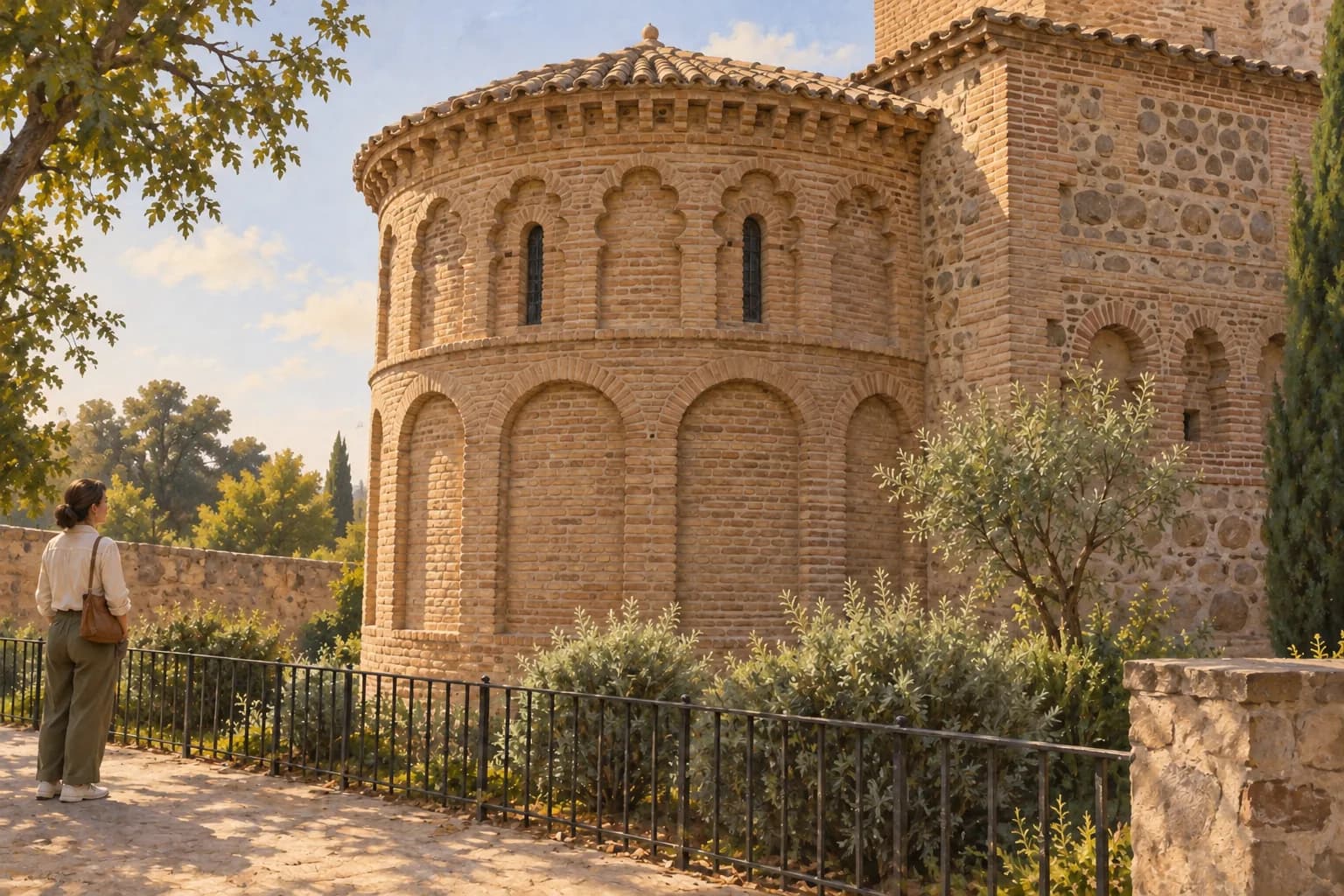 The added sanctuary helps distinguish the building’s stages; this is an architectural illustration.
The continuity of materials can make everything appear to be one construction. The shapes tell another story: the initial room and the sanctuary answer different needs. The place did not survive unchanged.
Within a few steps you can identify three different periods: the earlier reused pieces, the room of Islamic origin, and the extension associated with Christian worship. Each left a visible form in the same place.
The lamp belongs to a legend
The name Cristo de la Luz comes with a tradition that the monument’s operator recounts as a legend. In that version, Alfonso VI’s horse stops before the place; behind a wall, a crucifix is found beside a lamp said to have remained alight for centuries.
The scene contains a powerful image: a small light enduring an impossible wait. It is a tradition tied to the place’s name, not an episode demonstrated by archaeology.
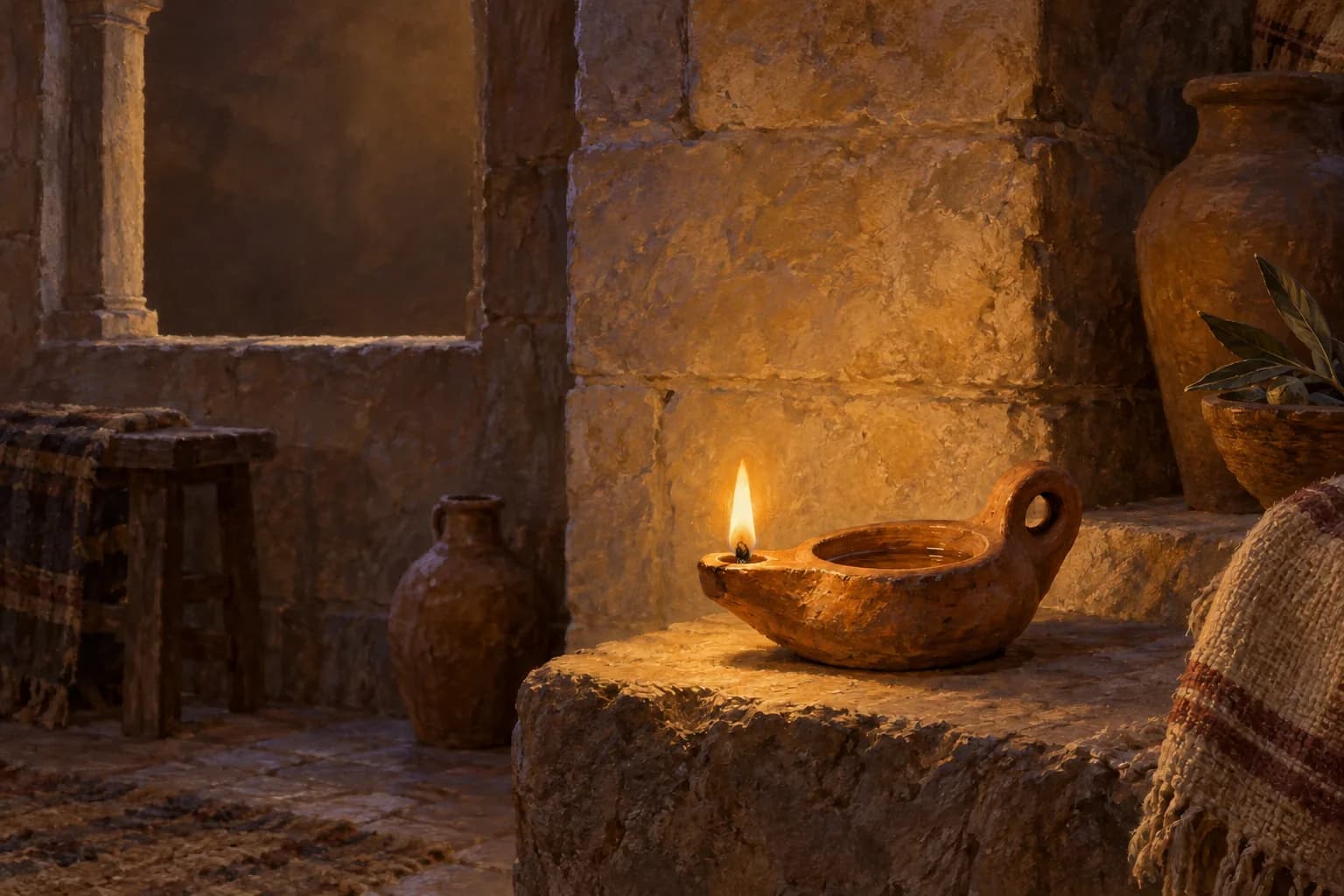 An imagined lamp accompanies the legend; it evokes the tradition, not an excavated object.
You can listen to the tradition and look at the building without confusing the two. The inscription, columns, and successive additions reveal the building’s physical history; the legend offers another way the same place has been remembered.
For your next visit: look up, then return to the ground
The monument is at 22 Calle Cristo de la Luz, according to Toledo’s tourism office. Before setting out, check the operator’s ticket and visiting information: opening hours, access conditions, and prices can change. If you need accessibility information, confirm it with the site’s operator.
There are also remains of a Roman roadway nearby, described in the operator’s article about the excavations. The visit can take you from the vaults’ patterns to a route older than the building itself. Observe it from designated areas without assuming the remains can be walked on.
For further exploration, our selection of places in Castilla-La Mancha opens possibilities beyond this stop.
Here, keep three details with you: a name that survived in brick, a stone that lived more than once, and a ceiling that changes when you look again. The next time you pass this street, the building will still be small. What you know about it will not.
Continue exploring Cristo de la Luz in WAONDERSection
Stories behind places