Maya Lin’s Wall: why these names stay together
In Washington, the Vietnam Veterans Memorial does not list names alphabetically. Maya Lin’s choice changes how the Wall is read and remembered.
Not arranged like a telephone directory
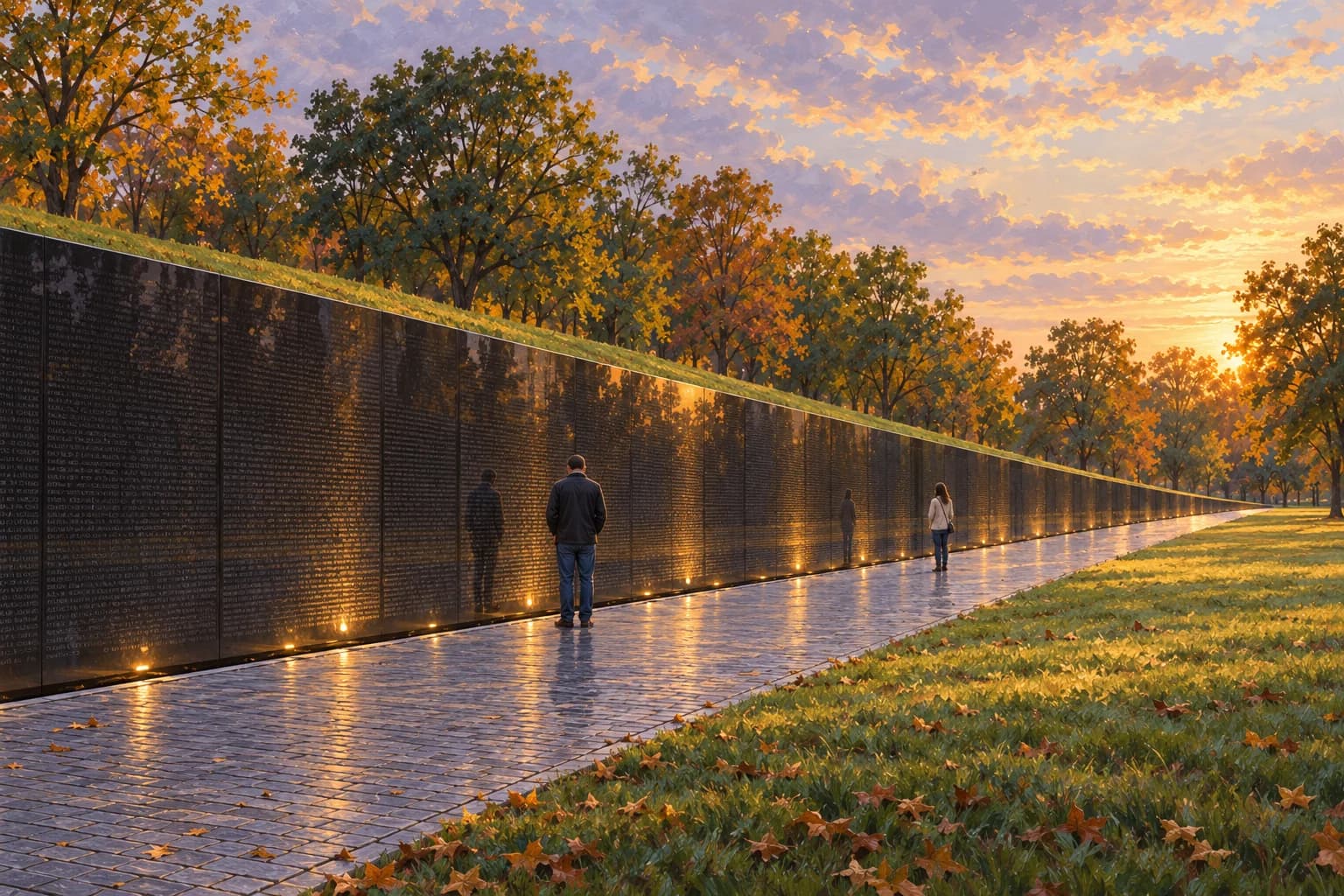
The Vietnam Veterans Memorial commemorates US service members who died or remain missing from the Vietnam War. From a distance it seems a dark line within the park. As you approach, the granite fills with names. They follow the chronology of loss, not alphabetical order. A directory can help you find a person; reading the Wall means following time.
That distinction holds a human choice: people lost at the same moment are not separated by the first letters of their surnames. The Vietnam Veterans Memorial Fund explains that the sequence lets a veteran recognise their period of service and keeps together those who died together.
In a city accustomed to raising figures on pedestals, this memorial asks you to approach at the scale of a name.
Find the Vietnam memorial in WAONDERA 21-year-old student, among 1,421 entries
Maya Lin was studying at Yale when she won the 1981 competition. She was 21. The National Park Service’s educational resource records her selection and the 1,421 submitted designs.
Her answer was not a towering statue. She reshaped the ground itself: two walls meeting at an angle, a path following their changing height and a surface reflecting anyone who pauses.
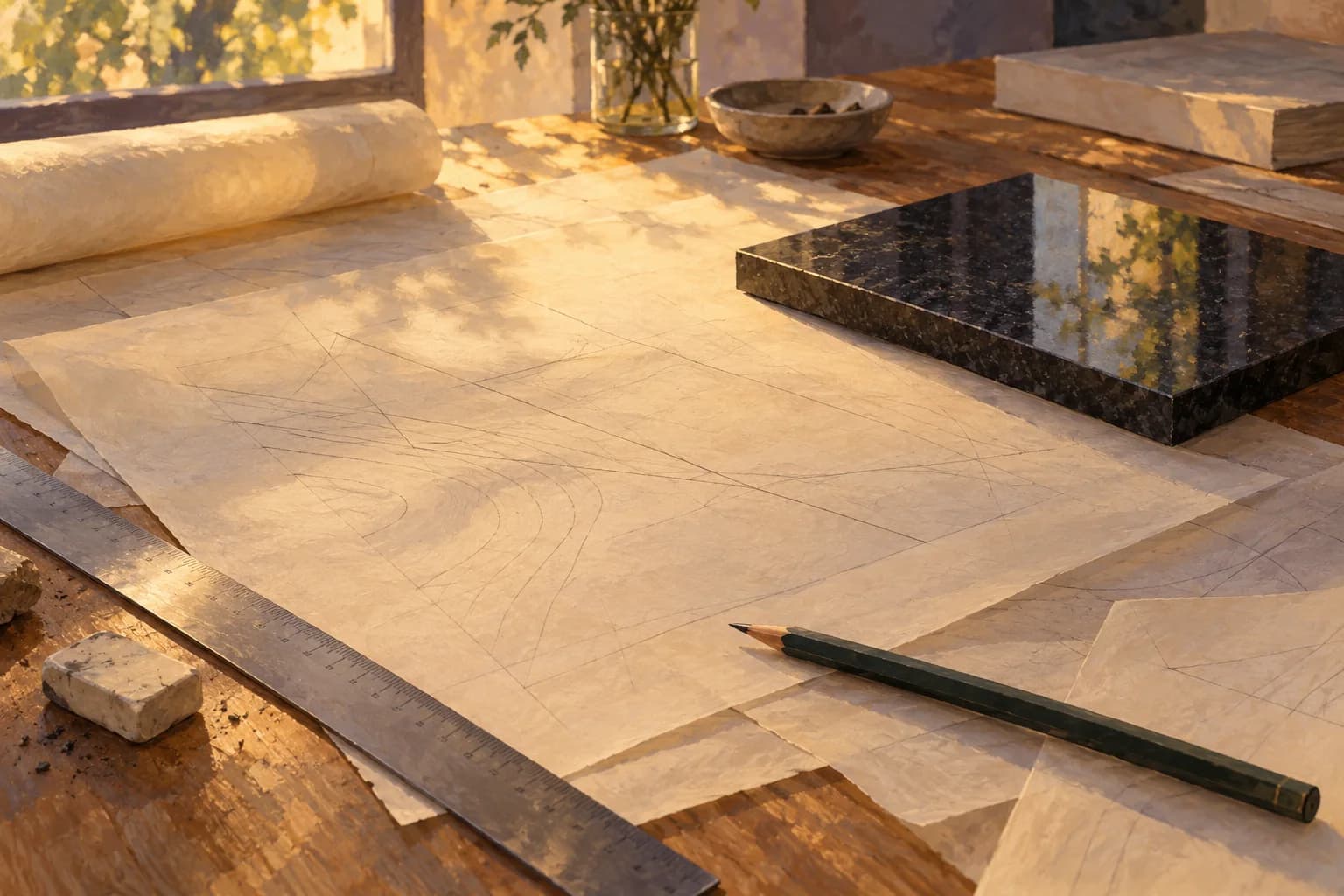 Thinking about a place of remembrance: an imagined design scene, not Maya Lin’s studio or her original drawings.
Her age is striking, but cannot explain the place on its own. What continues to work is the relationship between scale and closeness: the memorial becomes immense through so many names, yet asks you to approach a small inscription. Your attention moves from the whole to someone.
Descending without leaving the park
The National Park Service describes two straight polished black granite walls forming an open V within the earth. Their height increases towards the central meeting point and diminishes towards the ends.
This is not an isolated wall understood only through a frontal photograph. The path, grass and changing height are part of the experience. As you advance, the Wall occupies more of your view; as you leave, the park opens again.
On your next visit, notice that relationship with the ground. Here, the landscape is part of the act of remembrance. Architecture does more than support an inscription: it shapes where you read it from.
Your reflection is not outside the story
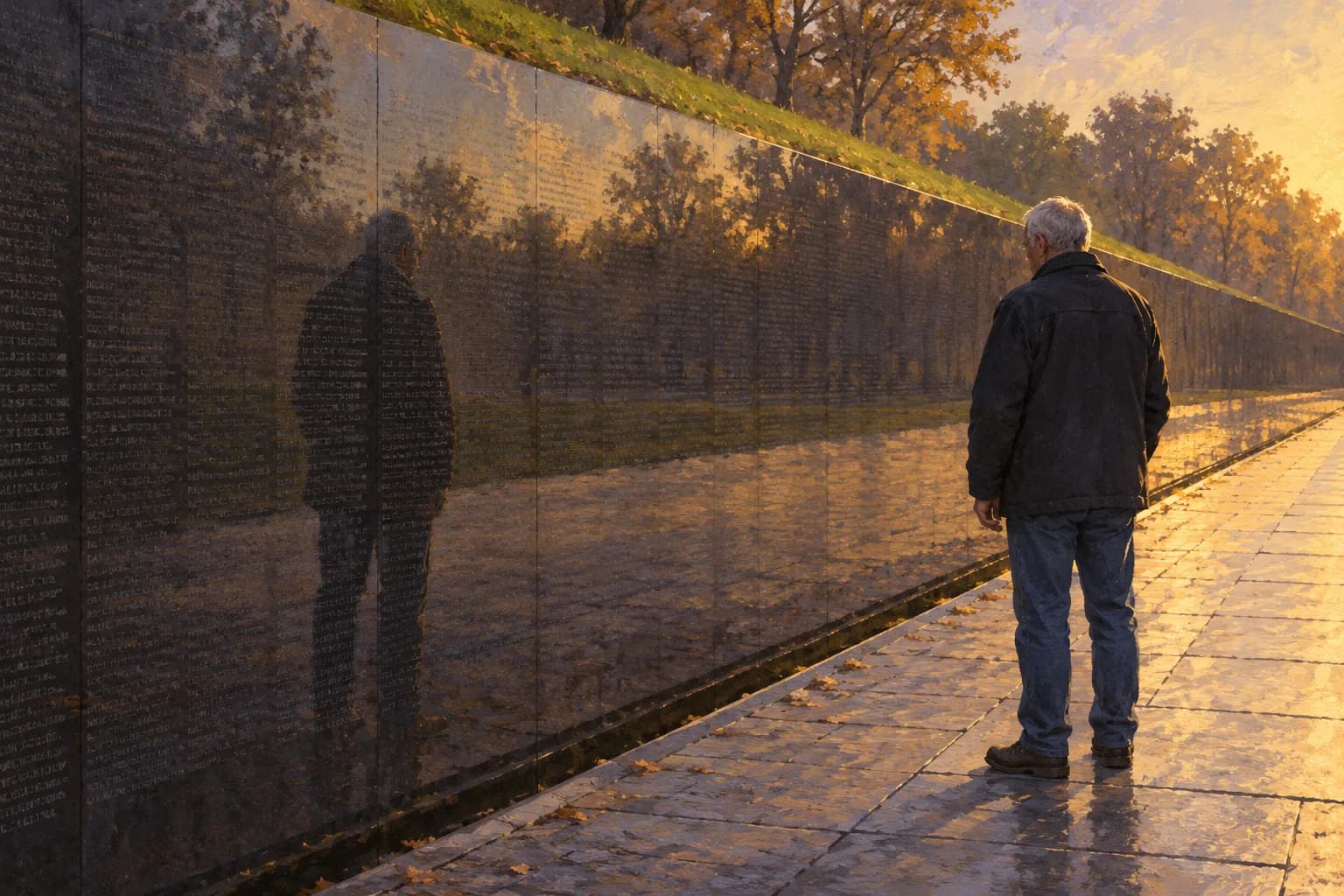 The polish lets visitors see themselves beside the inscriptions. An illustration, not an identified person or a transcription of real names.
This is not the matt black of a chalkboard. Its surface returns trees, light and visitors. While you try to read the past, something of the present appears in the same plane.
Some visitors are searching for a familiar name; others are approaching for the first time. The same Wall makes room for private remembrance and for an attempt to understand someone else’s history.
That is why leaving space matters too. If someone is searching for an inscription, keep their way clear and avoid making their moment the background to your photograph. Another person’s most important image may not be the one you came to take away.
The first and last pages meet
The explanation of the names’ sequence places the beginning at the apex towards the east wing; the sequence resumes at the west wing’s far end and returns to the centre. Beginning and ending remain close.
An alphabetical arrangement would help locate names but tell a different story. Here the directory answers an individual search; the Wall preserves the shared sequence. Two different tools keep practical needs from erasing the design’s meaning.
Returning to the path with another perspective
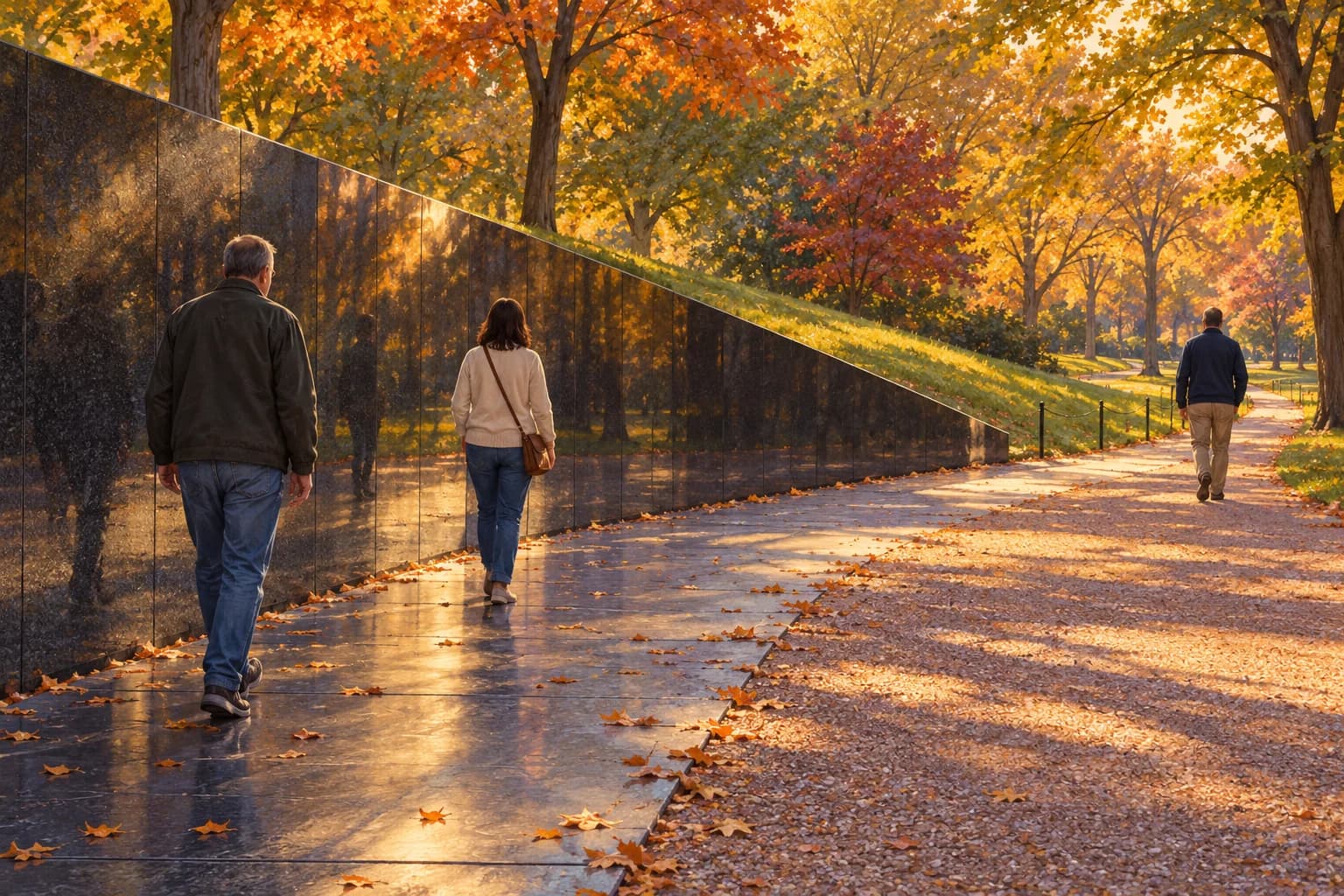 The height decreases and the park opens again. A painterly interpretation of the walk, not a site plan.
The memorial stands at the west end of the National Mall. Consult the National Park Service for visitor information and current conditions. The site includes other commemorations; Lin’s Wall is not everything there is to see.
Our Washington, DC selection offers other city stories. This one deserves its own pause: reading an inscription, understanding why it stands beside the others and recognising a name as more than a statistic.
Continue exploring this place with WAONDERSection
Stories behind places