Palace of Fine Arts: a second life for a ruin that was never ancient
Built for the 1915 exposition, it was not made to last. San Francisco chose to rebuild the Palace of Fine Arts rather than lose it.
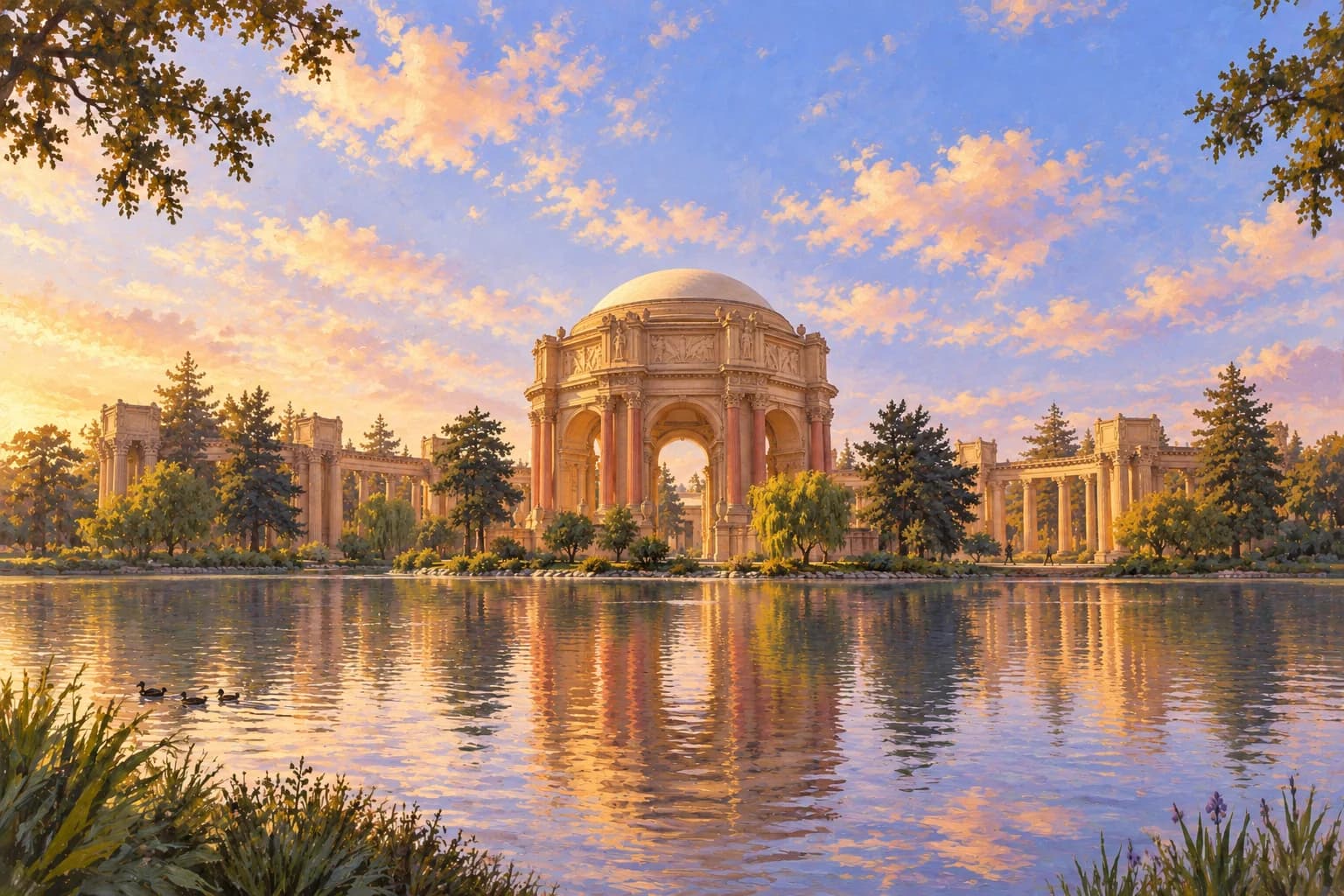
It looks eternal. It almost disappeared
A dome, immense columns and water reflecting their silhouette. From the shore, the Palace of Fine Arts seems to belong to a past far older than San Francisco. Yet this is not an ancient ruin: it was built for the 1915 exposition, and its monumental architecture was temporary.
What you recognise today did not arrive untouched. There was deterioration, preservation campaigning and reconstruction. This is the story of a city deciding whether beauty intended for a few months deserved another life.
Find the Palace of Fine Arts in WAONDER1915: a city back on its feet
The Panama-Pacific International Exposition celebrated the completion of the Panama Canal and demonstrated San Francisco’s recovery after the 1906 earthquake and fire. The Palace was one of its settings.
That context adds another layer to the postcard: a city that had lost so much built spaces to welcome the world. The lagoon belonged to an exposition site very different from the neighbourhood surrounding it today.
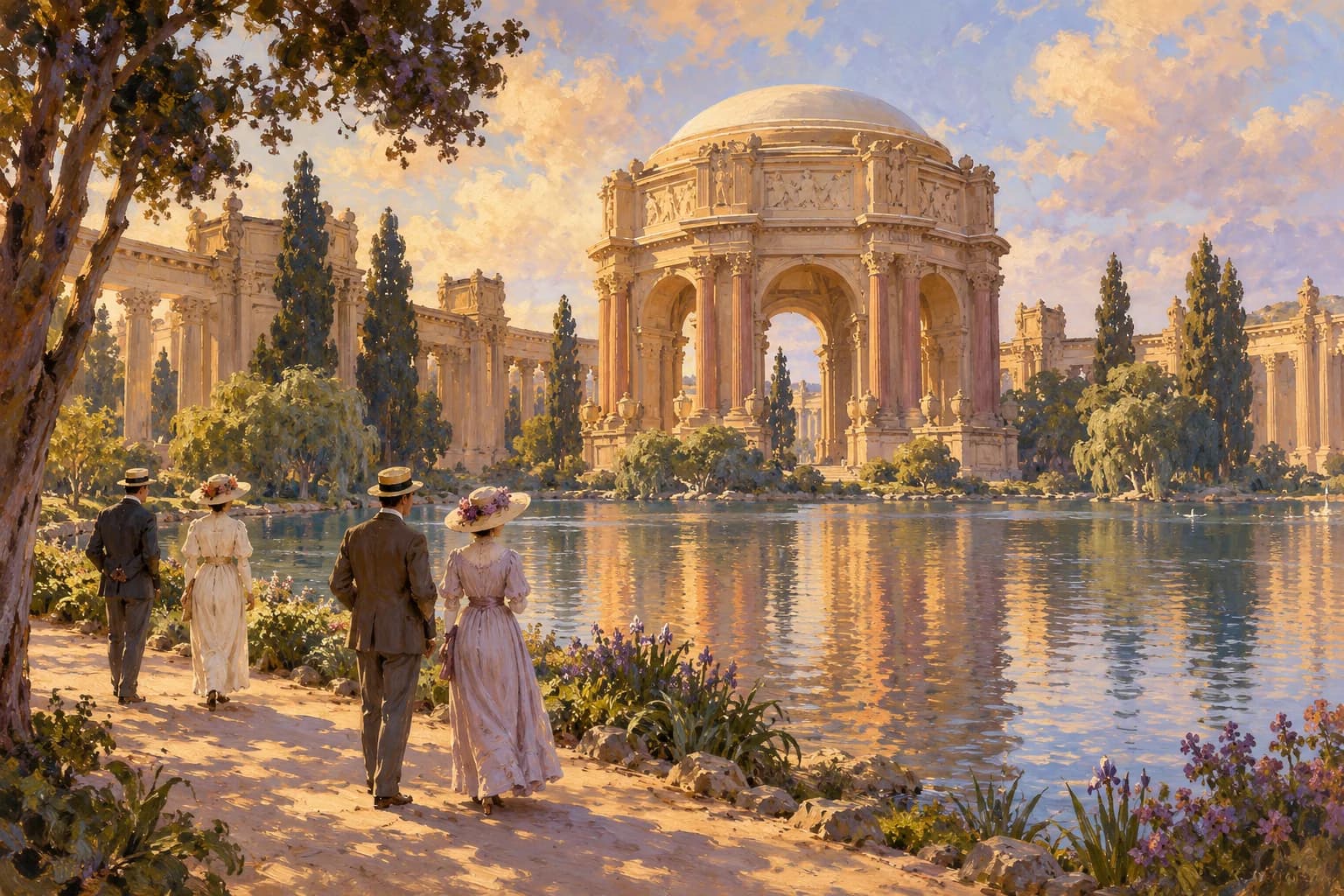 An imagined visit to the 1915 exposition; a period recreation, not a documented historical scene.
Bernard Maybeck designed the Palace. The National Park Service archive recalls its provisional nature. The appearance of permanence and the actual life of its materials were different things.
The problem lay beneath the surface
The city landmark report describes the original columns and rotunda as wood-framed and coated in staff, a plaster-and-fibre mixture.
From a distance they could suggest heavy, ancient architecture. That impression did not make them stone capable of enduring indefinitely. Over the decades, keeping their form required more than continuing to admire them.
Remember that when you next see the reflection: a photograph shows a solid presence, but behind it lie decisions about materials, money and care. Heritage can begin as something temporary that people grow too fond of to lose.
Keeping it meant rebuilding it
The wish to preserve the Palace could not halt its deterioration by itself. The NPS dates the formation of an organisation seeking to make it permanent to 1962.
The municipal report records the decisive step: demolition began in 1964, after original decorative elements were removed for mould-making. A reconstruction phase was finished in 1967, with further colonnades completed in 1975.
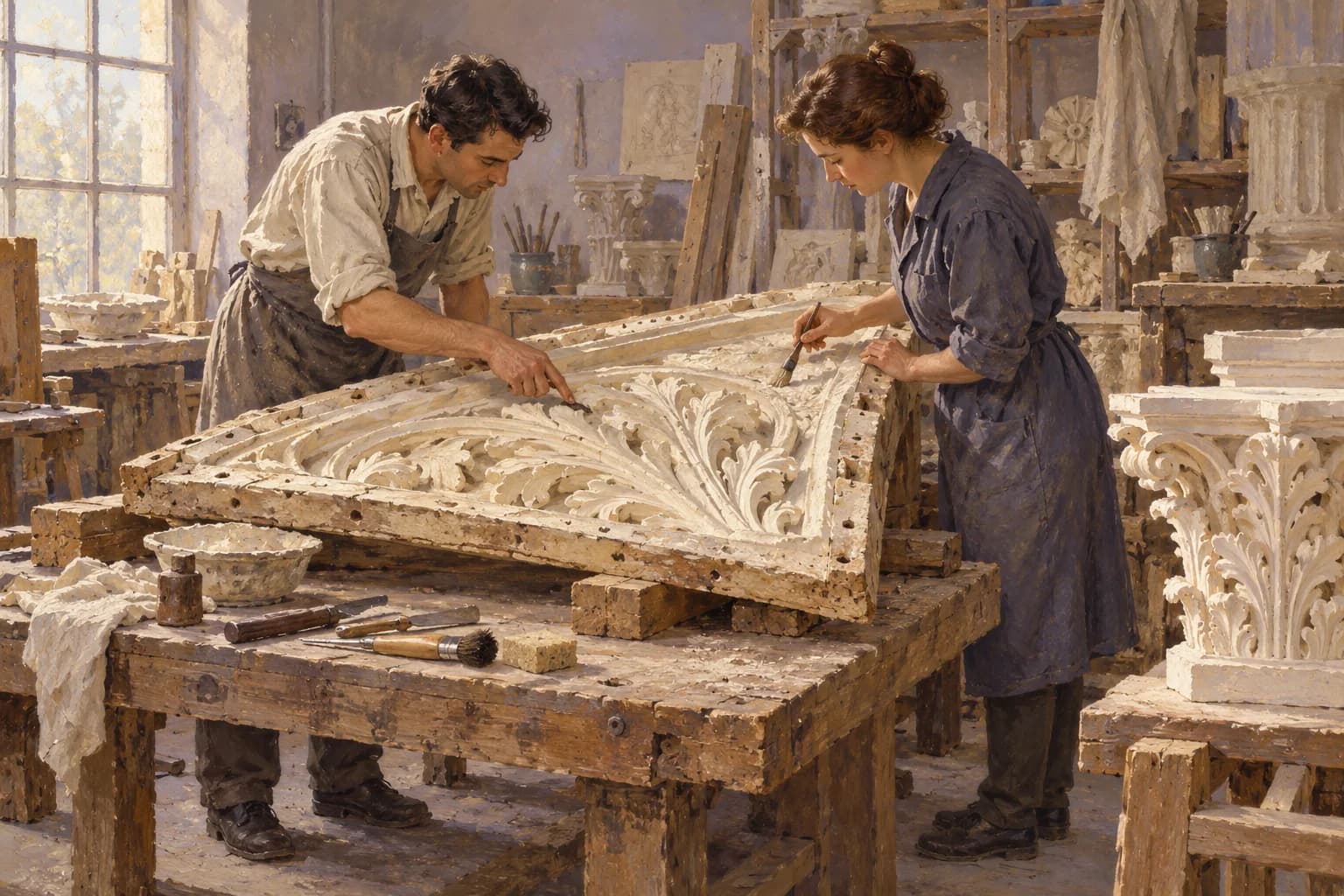 An evocation of work with moulds and architectural pieces, not identified workers or an exact workshop.
The paradox matters: saving the place did not mean leaving every material untouched. Forms had to be preserved and structures remade. The image you recognise has a real connection with 1915, but it is not an unchanged original ensemble.
That need not diminish the visit. It adds a different question: what, exactly, does a city choose to preserve when a building can no longer remain the same?
Getting closer after the photograph
From across the lagoon, dome, trees and reflections come together. Beside the columns, the scale shifts: supports gain thickness, arches cast deep shade and the sky appears between the pieces.
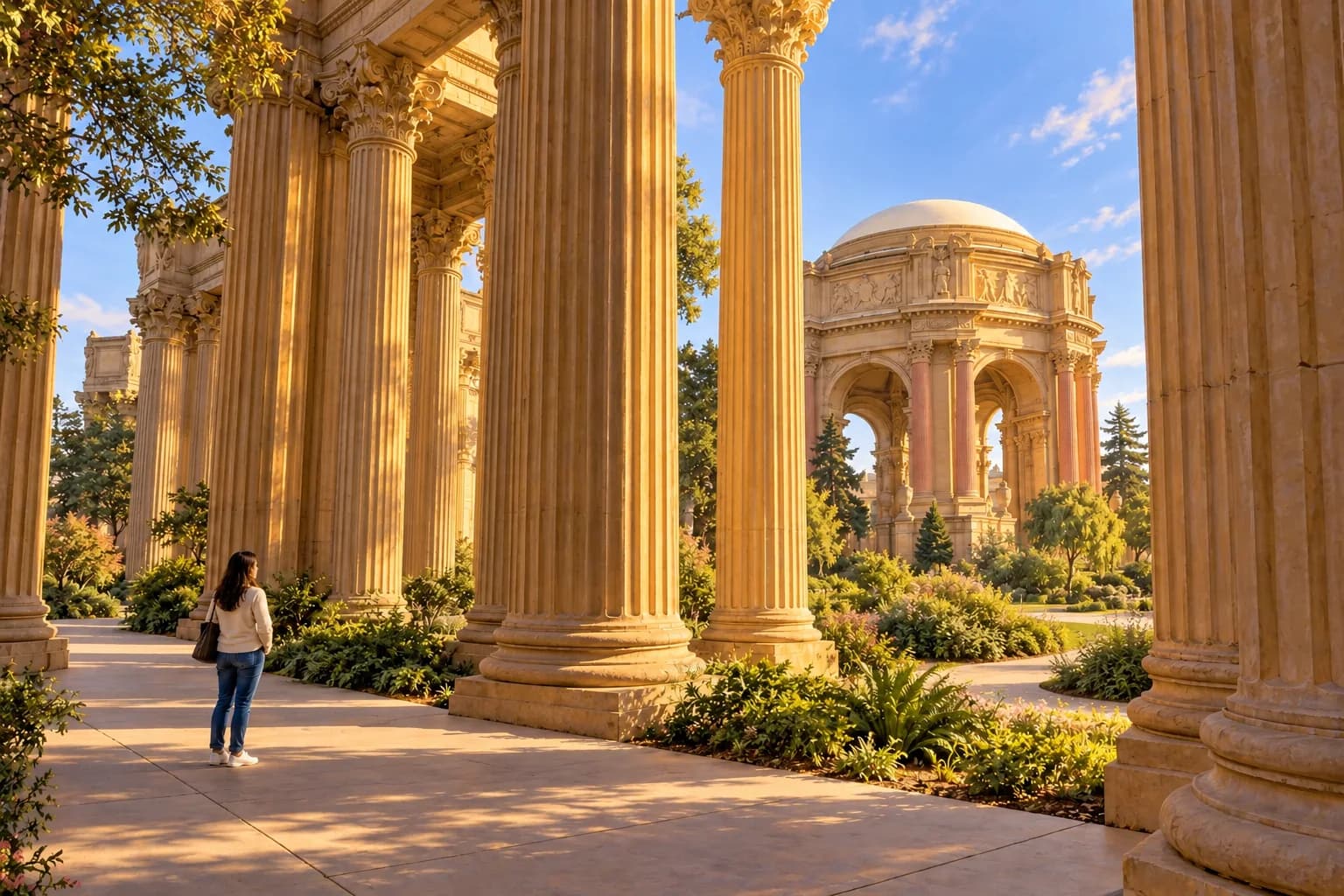 Another scale for looking at the Palace. A painterly interpretation of the present-day site, not a record of access conditions.
You can spend a whole walk exploring those two perspectives without adding ten stops. First the whole; then a part that looked small from the opposite bank. The light need not be identical on every visit for returning to be worthwhile.
Check Recreation and Parks’ information before setting out: park access and event spaces have different conditions. Our Bay Area selection offers further places, not an automatic route in the app.
As you leave, the dome will still look old. You may also notice the work that made it possible for it to remain.
Follow the Palace’s story with WAONDERSection
Stories behind places