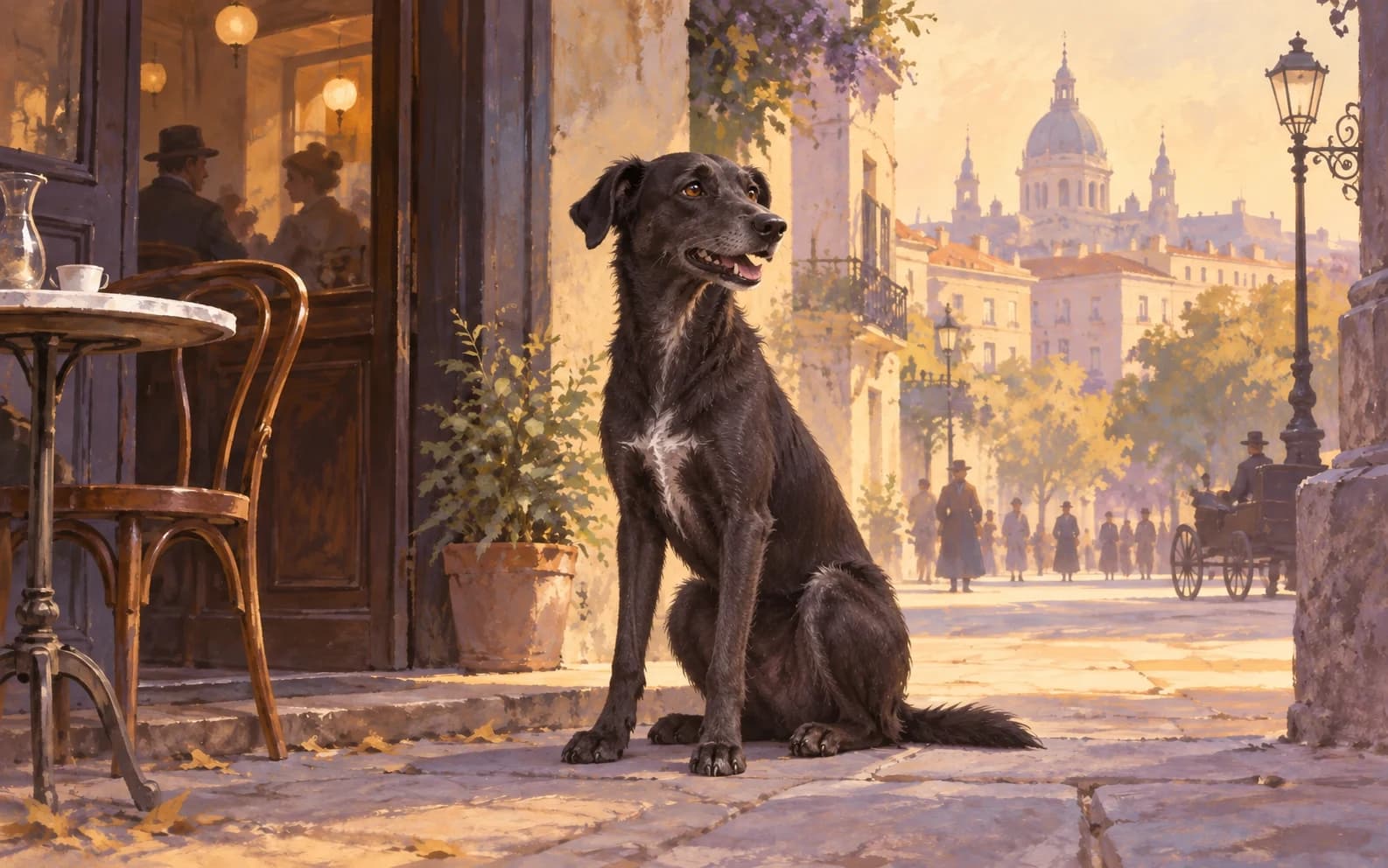
Balto in Central Park: the dog who attended his own statue unveiling
Togo helped clear the way; Balto brought the medicine into Nome. After his Central Park tribute, the dog needed a rescue too—this time, from people.
The statue whose subject stood before it
A bronze dog, a harness and a rock. On Central Park's east side near 67th Street, Balto can seem like a familiar stop on a familiar walk. Until you discover something hard to imagine beside almost any monument: the real dog attended the unveiling of his own statue.
It happened on December 17, 1925, according to Central Park Conservancy. The living Balto stood before the bronze Balto. That might sound like the perfect ending to a hero's story, but his life still had another turn ahead: after helping save lives, he would need help himself.
Open Balto in WAONDERA town was waiting for something more urgent than victory
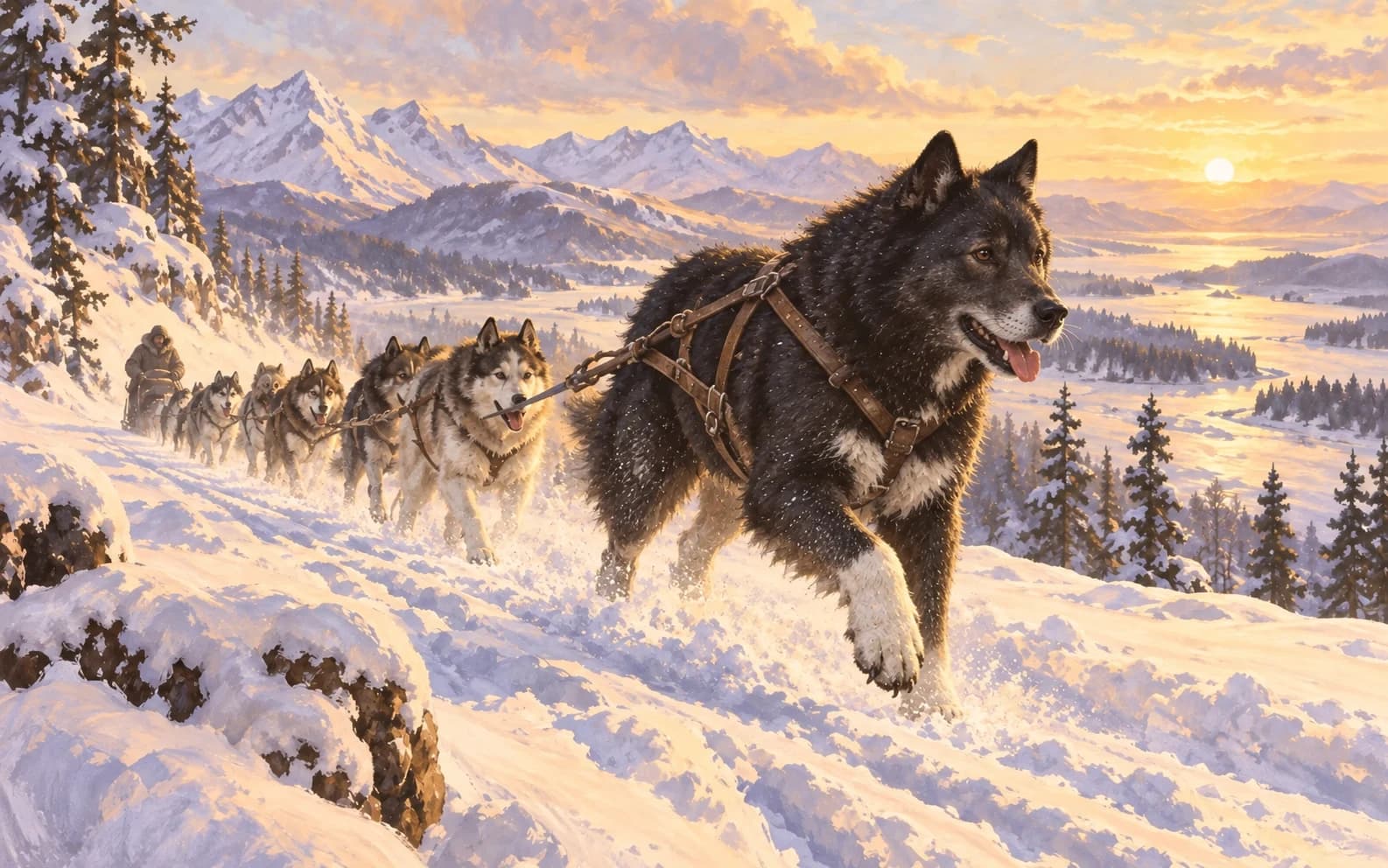
In January 1925, diphtheria threatened Nome, Alaska. Winter conditions prevented the medicine from arriving by plane. Mushers and sled dogs became the alternative: twenty teams relayed it over five days and seven hours, as the monument's official page records.
This was not a race for a trophy. At the end of the trail were patients who needed antitoxin. Each handover put the package into someone else's hands; getting further meant someone else could carry on. The story has one very familiar name, but its strength begins with that chain.
Togo and Seppala: finding a way across the ice
Among its protagonists was Togo, Leonhard Seppala's lead dog. The National Park Service highlights the difficulty of his leg. The American Kennel Club's historical account describes crossing the ice of Norton Sound and handing over the medicine at Golovin.
In that landscape, knowing where to go was no minor detail. The dog's experience was part of what made the journey possible. Togo deserves his own place in the story, not a footnote arguing over who should be more famous. His effort and Balto's belonged to the same delivery: neither diminishes the other.
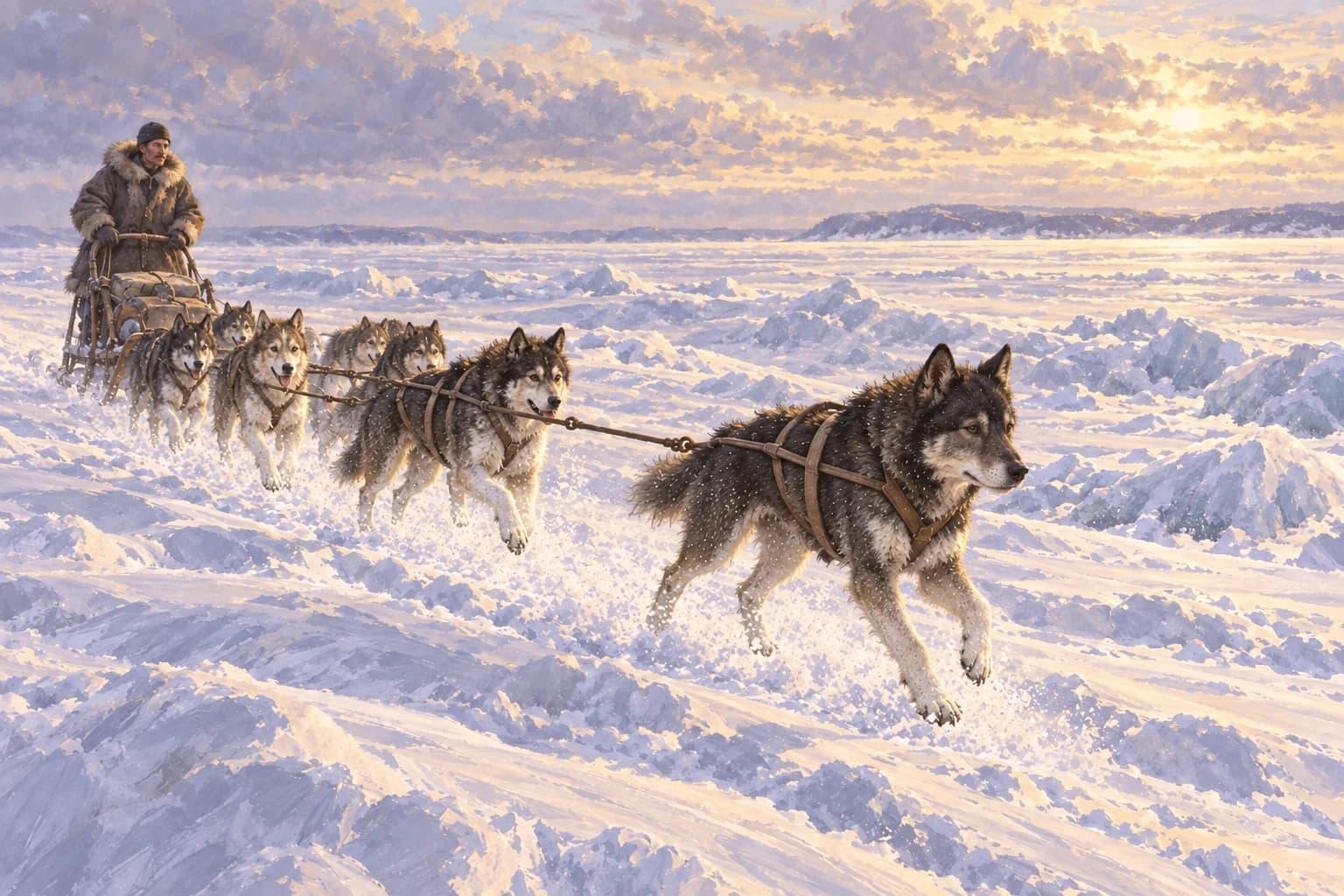 An evocation of Togo and Seppala crossing Norton Sound, informed by historical photographs. The landscape, light, pose and sled rigging are artistic interpretation, not an exact reconstruction.
Balto and Kaasen: getting the medicine into Nome
After the intervening handovers, Gunnar Kaasen's team, led by Balto, took on the final stage. The Cleveland Museum of Natural History recounts how the wind overturned the sled and Kaasen recovered the medicine from the snow with his bare hands.
The account brings the journey down to a human scale: the whole chain's success still depended on not losing that package. You did not have to be first to have a decisive task. Someone had to make it to the end.
Balto and Kaasen entered Nome before daybreak on February 2, 1925. Radio and newspapers spread the story; New York raised money for a tribute. Cecilia Beaux led the artists' initiative and Frederick Roth made the sculpture. The Conservancy documents both the arrival and the unveiling with the dog present.
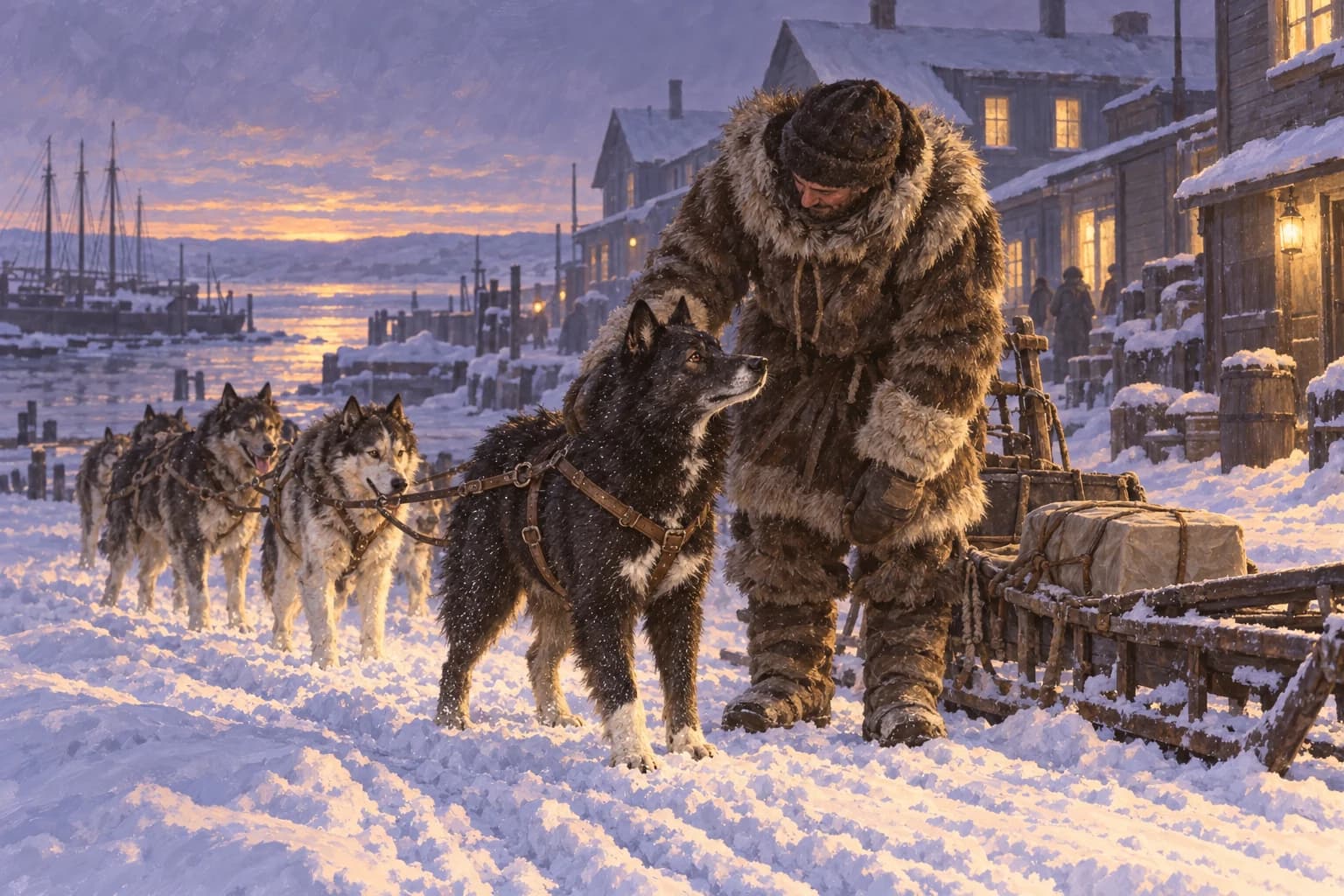 Balto and Kaasen: an evocative scene of reaching Nome. Historical portraits inform the dog and clothing; the gesture, buildings and light do not reconstruct the actual arrival.
After the bronze, someone had to help him
Fame did not secure his welfare. Cleveland's museum recounts how Balto and six teammates ended up on display in poor conditions in Los Angeles. George Kimble led a campaign to get them out; the fundraising secured the money in ten days.
A small, extraordinary detail of that response survives: a fundraising coupon in The Plain Dealer on March 2, 1927 asked for help bringing the dogs to Cleveland and left a space to attach a coin. Someone could cut out the paper, add a contribution and mail it. The rescue no longer depended on a team making its way across ice, but on people choosing to do something for animals they knew through a story.
The museum's institutional history confirms their move to Brookside Zoo in 1927. The dog who had helped others also needed others to care for him. That part does not make him less heroic: it gives him a life beyond the moment that made him famous.
What changes when you look at the plaque again
Find the rock just east of Willowdell Arch, on the East Side at 67th Street. Look at the bronze harness, then the relief of the sled and dogs. The plaque remembers the collective effort, not only the animal above it.
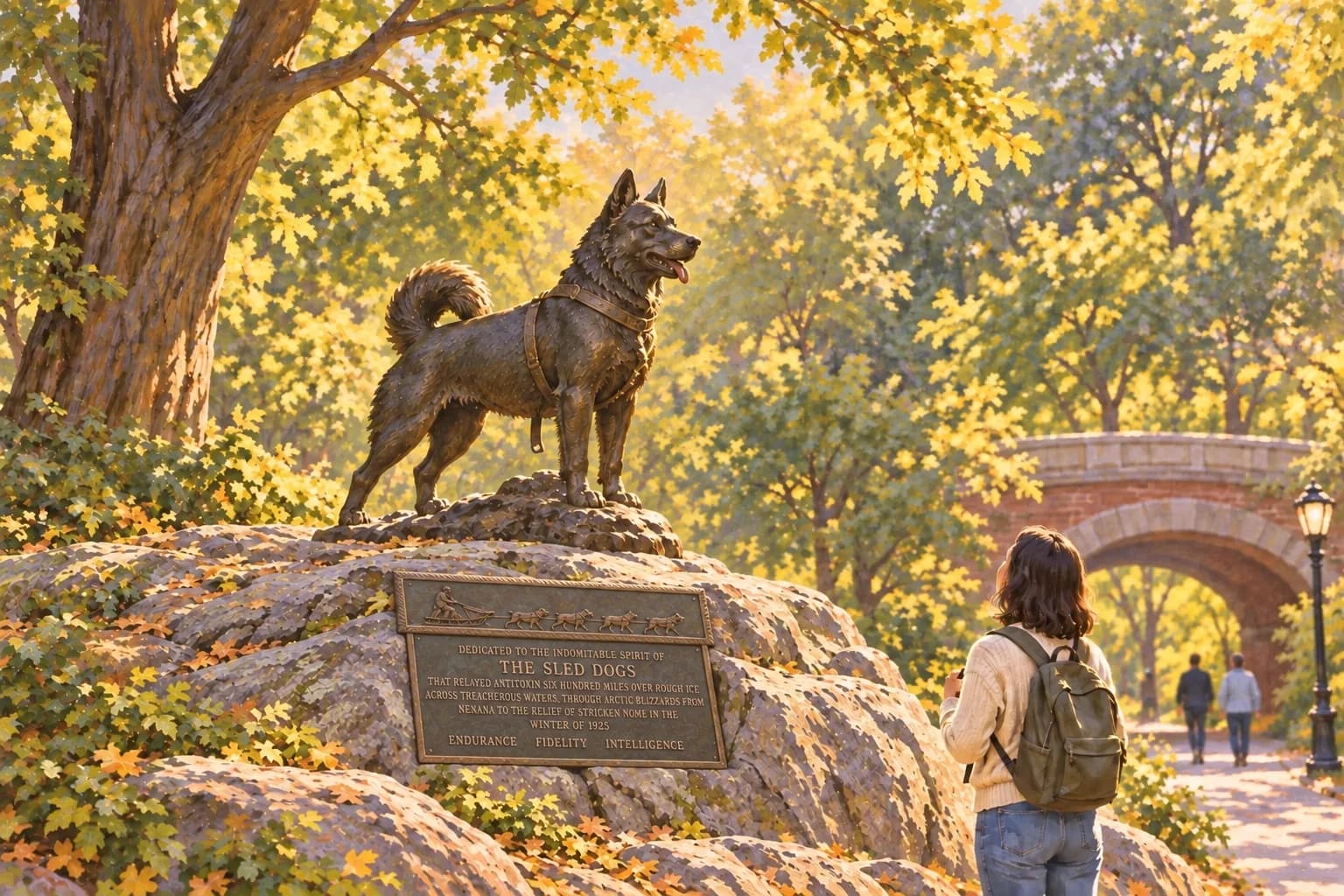 The monument and the plaque's relief and dedication draw on photographs of the original. This remains a painterly interpretation, not a photograph or exact reconstruction.
A photograph beside Balto can now hold more than a visit to Central Park: the memory of Togo, of those who continued the relay, and of those who later helped its protagonists. The figure has one name. The story you can take away from this place has many.
Discover Balto in WAONDERSection
Stories behind places