The Statue of Liberty: the stories beyond the torch
Ahead of her 140th anniversary, look again at the copper, the journey from France and the broken chain most photographs miss.
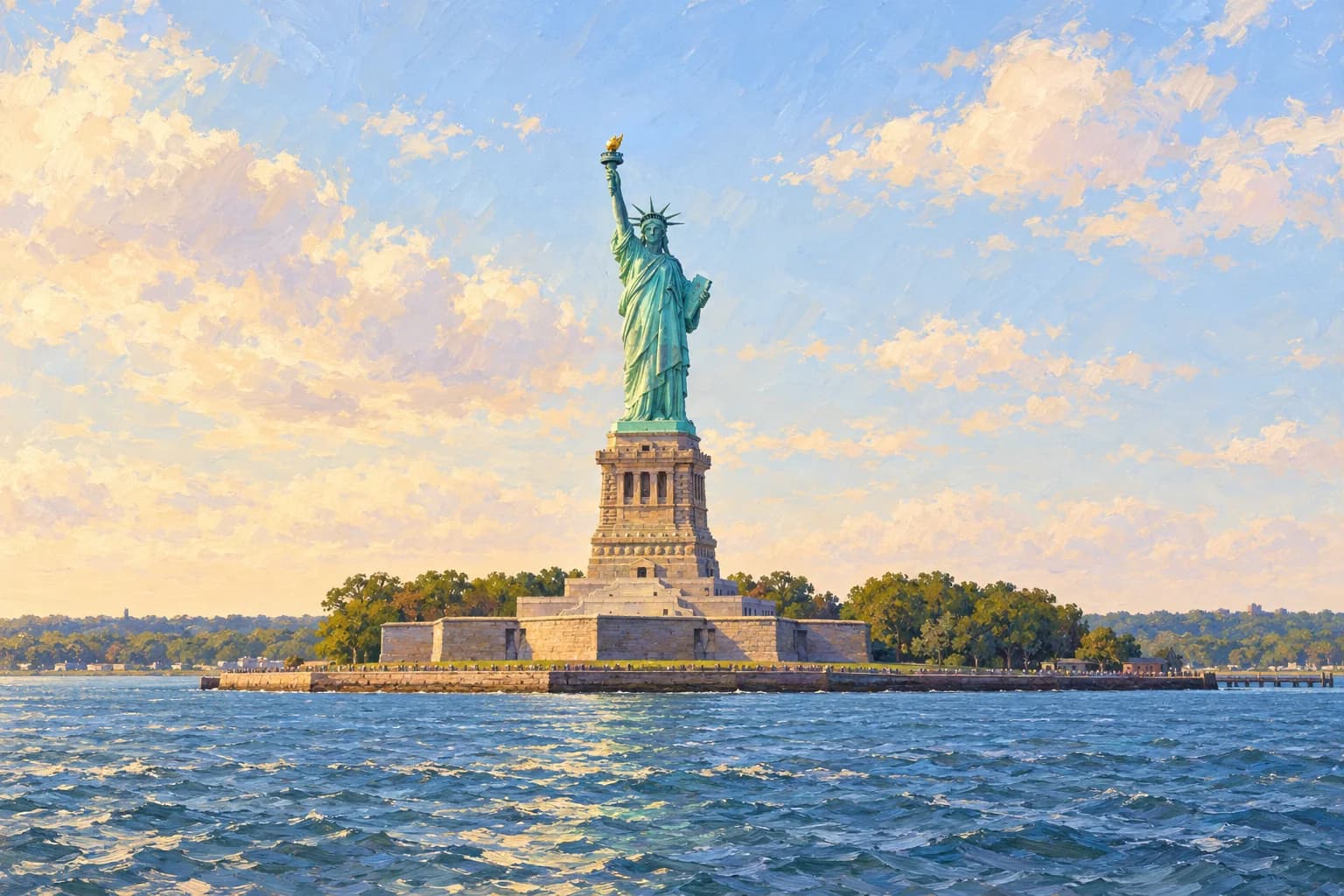
You recognize her before you can make out her face. An arm held high, a flame, a green silhouette above the water. The Statue of Liberty feels like a place we already know, even if we have never stood there.
Yet she holds a detail we almost never see: a broken chain at her feet. October 28, 2026 marks 140 years since her dedication in 1886. It is a good reason to look down from the torch and notice the people, and the work, left outside the familiar photograph.
Discover the Statue of Liberty with WAONDERBefore the green, there was copper
The color now inseparable from New York was not a coat of paint chosen to stand out in the harbor. Her outer skin is copper, which gradually developed its green patina.
Picture the same figure in brown tones, closer to a copper coin. This is not a different statue, but an earlier stage of the one you see today. The National Park Service explains that gradual change: over the years, oxidation of the copper formed the patina we now recognize from a distance.
Next time you look, the green can mean more than a recognizable icon. It is time made visible on a surface.
A giant that began in a workshop
Frédéric Auguste Bartholdi shaped the sculpture, but behind that name were engineering, carpentry and many hands working metal. The statue did not emerge from a foundry as one solid casting. A skin of copper sheets over an internal structure created her monumental form.
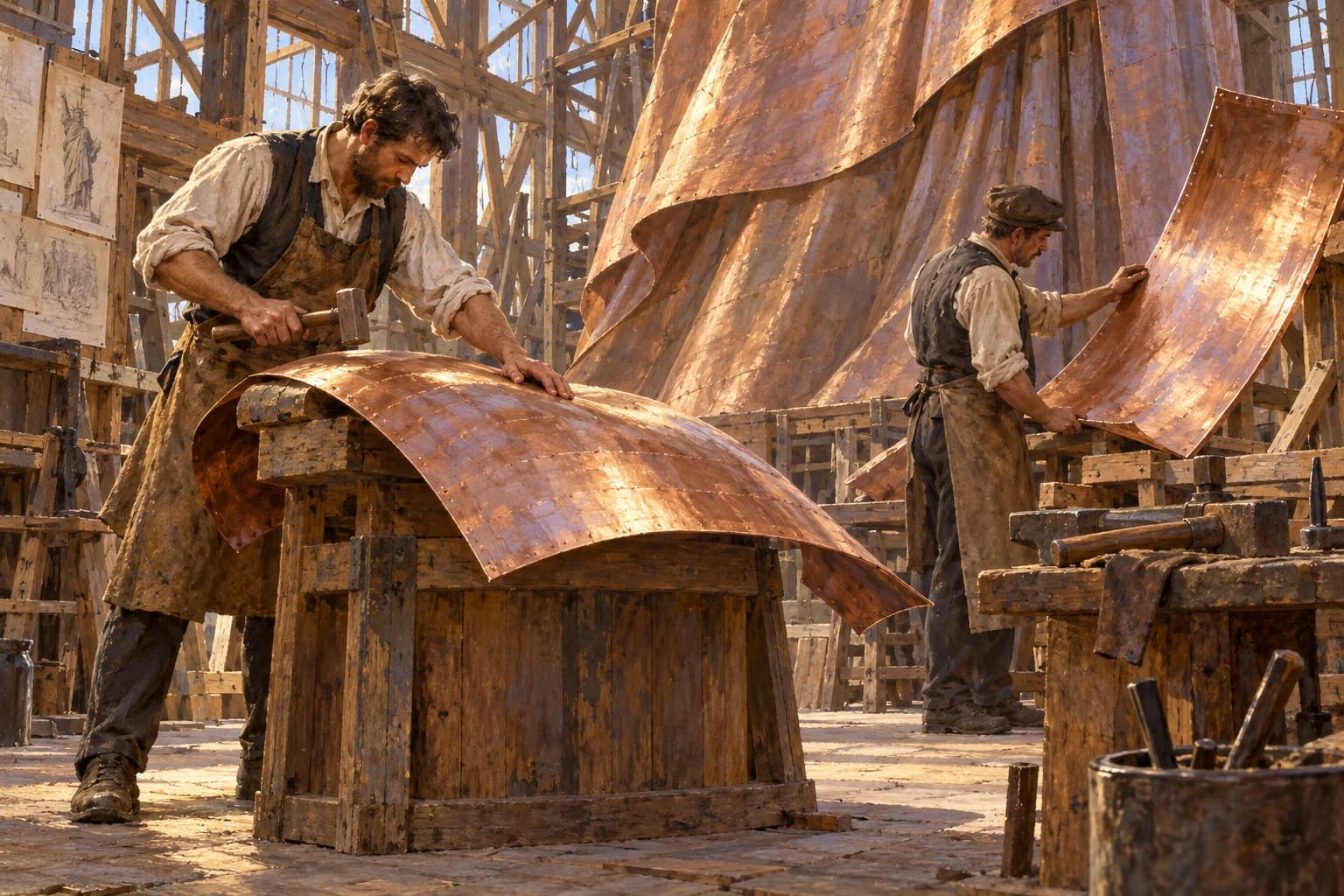 An evocative fabrication scene, not a depiction of an identified working day or named craftspeople.
The images and history of her construction in France invite a change of scale: stop thinking only of a goddess and start seeing something made by people. Before she could become a symbol of welcome, she had to stand.
She crossed the Atlantic in pieces, then waited
The statue was assembled in Paris before her final journey. Then came dismantling, crates and the ocean. The French ship Isère reached New York Harbor on June 17, 1885, but the pedestal was not finished.
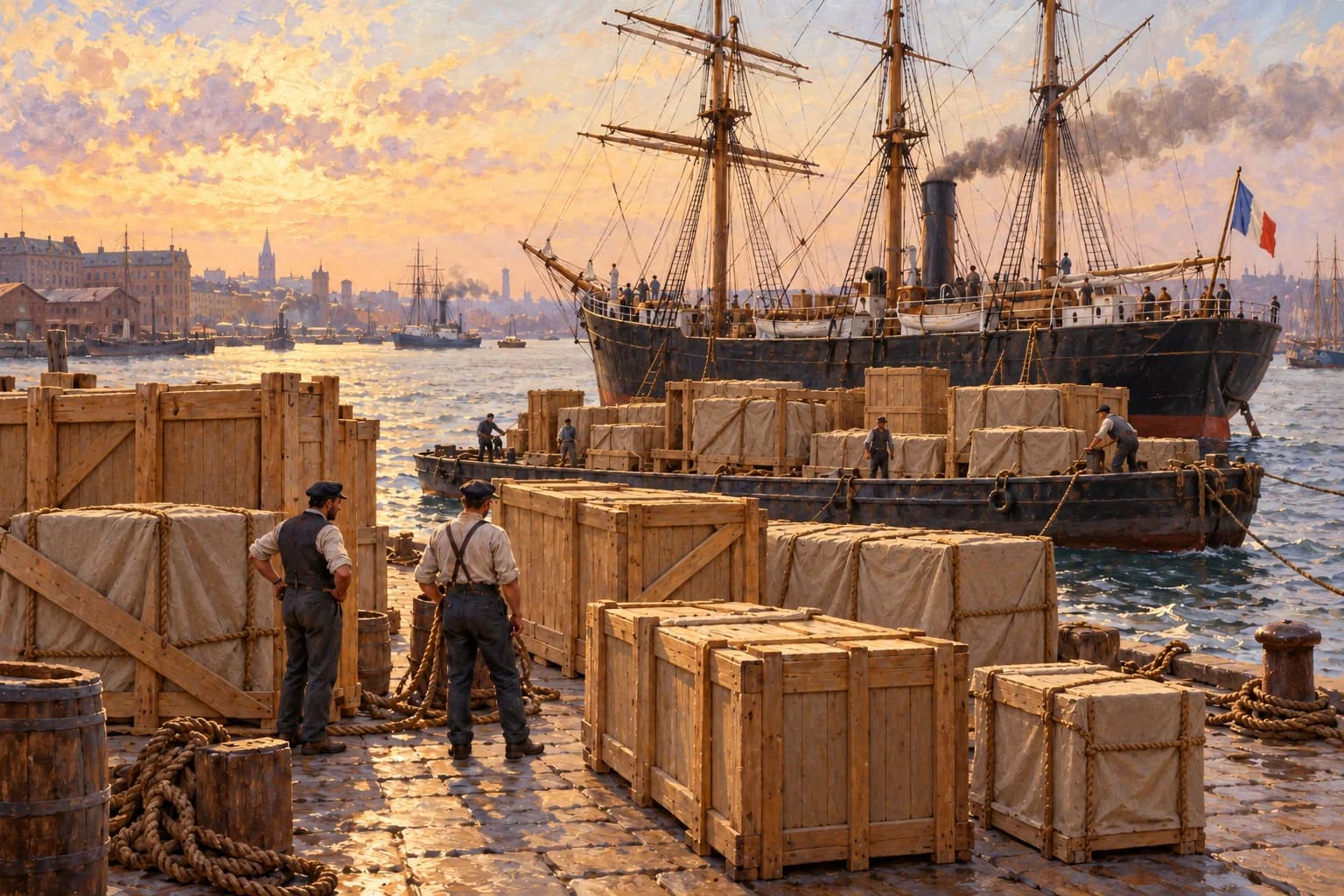 An illustrative recreation of transport in parts, not a crate inventory or an exact portrait of Isère.
There is something wonderfully human about that setback: the grand gift had arrived, but its place was not ready. The Liberty Island chronology records reassembly and dedication in 1886.
The pedestal has a collective story too. When funds ran short, Joseph Pulitzer’s New York World campaign brought attention to small contributions, not just great fortunes. The NPS describes that public effort. Beneath a vast symbol sit much smaller gestures.
The chain outside the postcard
Now return to her feet. A broken chain and shackle lie among the folds. Her right foot is lifted, as though the figure is moving forward rather than standing still.
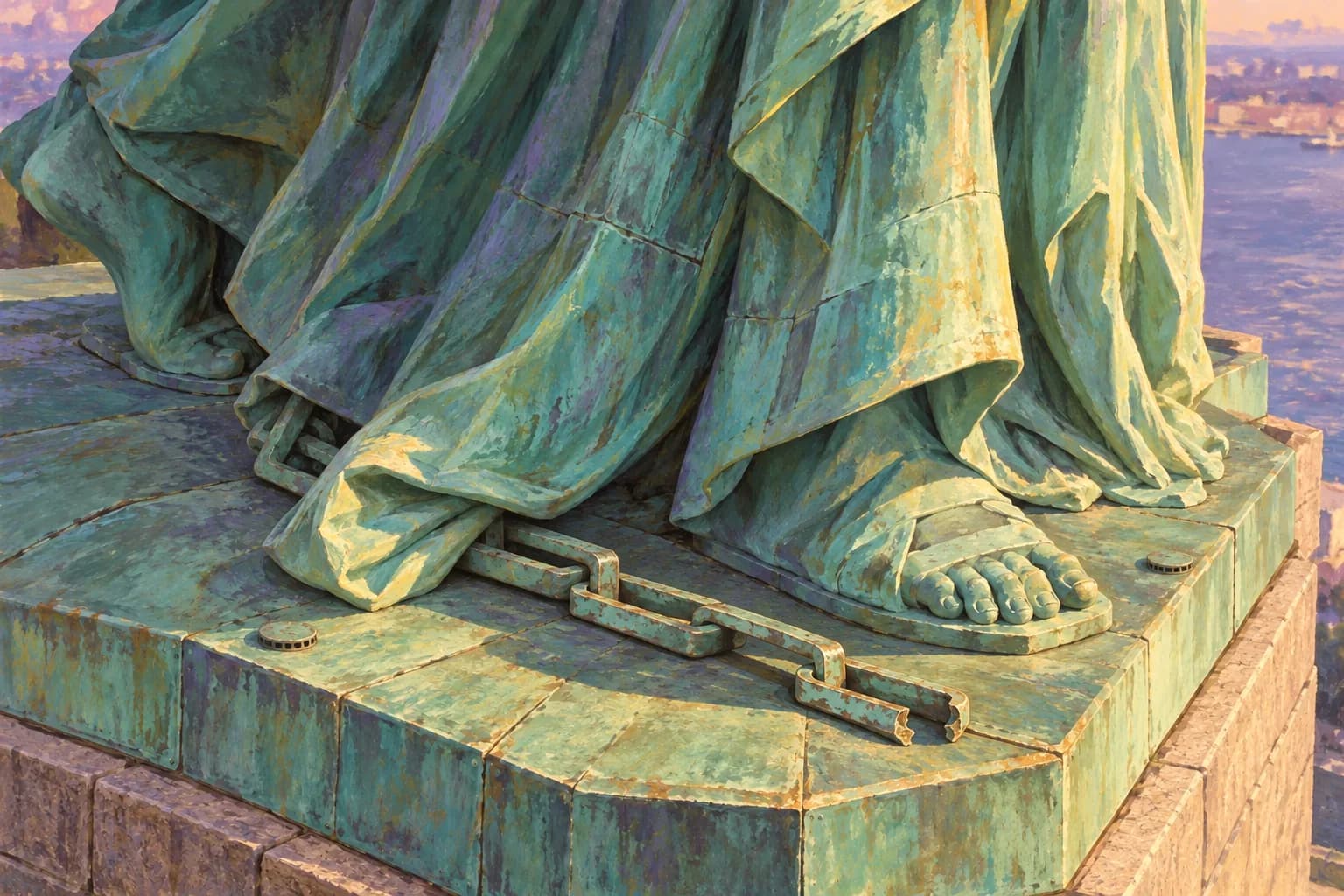 An illustrated study from an elevated angle; this is not the view available from the island’s ground level.
The NPS account of abolition connects that symbol with the end of slavery and makes an essential distinction: proclaiming liberty did not mean equality had been achieved for African Americans in 1886. Looking more closely also means refusing to erase that gap.
One detail matters when planning your visit: it cannot be seen from below. Knowing it is there changes the monument even when you cannot photograph it.
Choose the visit you actually want
The Statue of Liberty stands on Liberty Island, not Ellis Island. Reaching the island, entering the pedestal and climbing to the crown are different options; one does not guarantee the others. Check the NPS visit planner and its authorized ferry operator before booking. Confirm which areas your ticket includes and availability for your chosen day.
You can keep exploring through our New York selection. But next time you see this familiar silhouette, try something different: after the flame, think of the hands that built her and the step she is taking. The photograph may look much the same. The story you carry away will not.
Look beyond the torch with WAONDERSection
Stories behind places