Sutro Baths: when San Francisco put the Pacific under a roof
Behind the Sutro Baths ruins were pools, engineering, recreation and a fight for the right to enter. Read San Francisco’s coast through the lives of a vanished building.
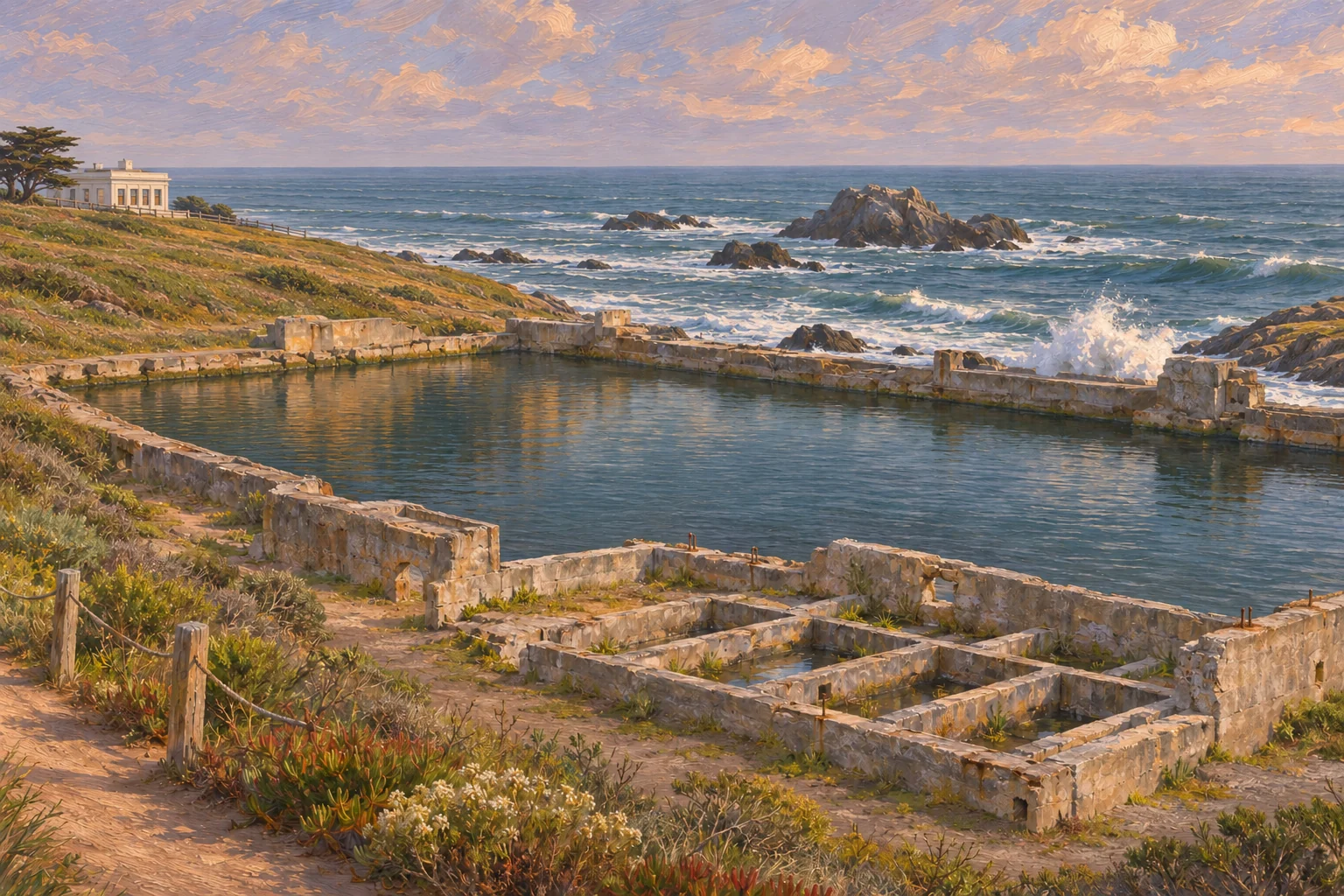
There is something odd about the ruins of Sutro Baths, on San Francisco’s western shore. The Pacific is right in front of them, yet the water held among the remains draws a different geometry. The sea does not make those right angles.
What looks like an abandoned pond belonged to somewhere the city came to swim, watch and spend the day. Adolph Sutro’s complex officially opened on March 14, 1896. Today’s landscape retains its foundations, not the building that once enclosed all that activity.
Understanding it takes more than mentally adding a roof. There was the work of bringing the ocean into pools, and an invitation to recreation whose doors did not open equally for everyone.
Find Sutro Baths in WAONDERA roof between the swimmer and the coast
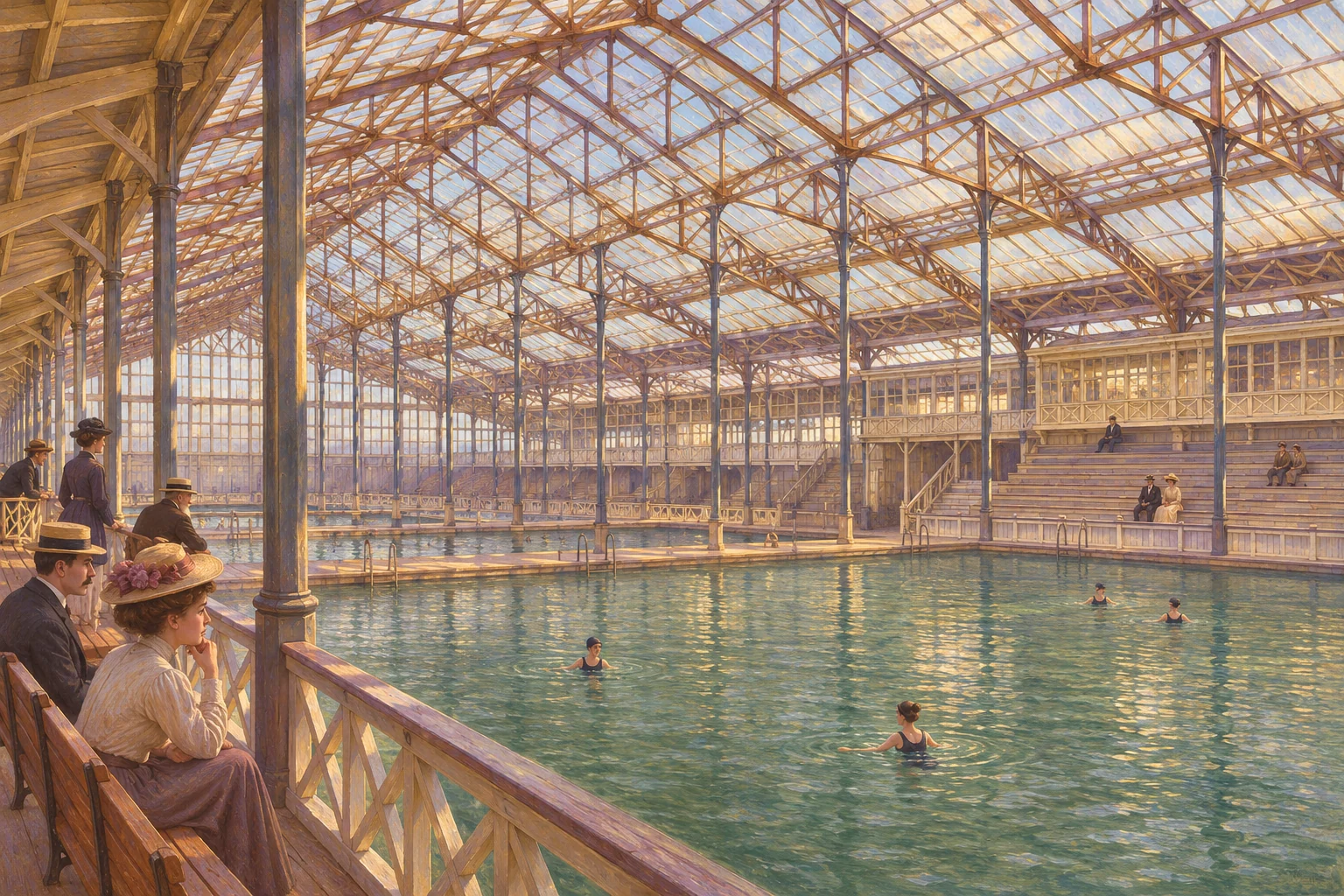 The pools before they became ruins. A painted interpretation of the historic atmosphere and structure, not an exact reconstruction of a particular day.
In old photographs, repetition conveys the building’s size: columns, trusses, walkways and expanses of water. Beneath that lightweight enclosure was substantial infrastructure, not a Roman bath transplanted to California.
The National Park Service’s heritage guide explains the combination of metal supports, wooden trusses and glass. Its effect was quite different from bathing on the shore: people could gather inside a place built around water.
What is missing now is precisely what once joined those elements visually. Where your eye would have met a roof, it meets sky. Remembering that absence helps you read the remains without treating each surviving wall as part of an intact building.
The ocean had to pass through a system
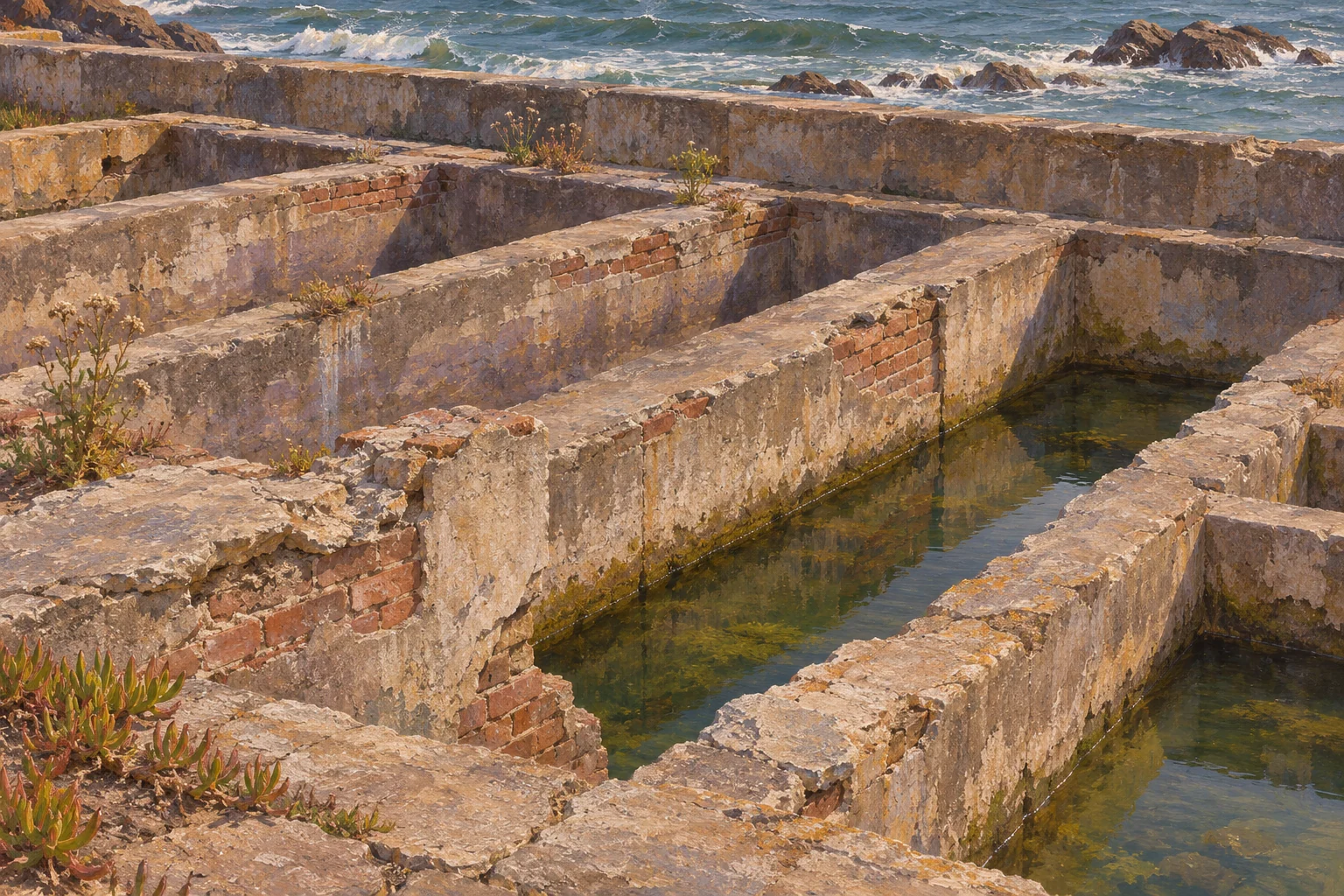 Looking at remains of the water system. A material study, not a pipe diagram or a guarantee of each compartment’s condition.
The NPS history of the complex describes seven pools at different temperatures, filled with help from the high tide. Sharing a roof did not mean swimming in one vast pool: water had to be distributed and conditioned.
Collecting, channeling and conditioning water separated the bathing experience from what happened beyond the wall. The surviving lines also belong to that less visible work: making possible an activity that could seem as simple as stepping into a pool.
That makes the smaller compartments worth a look, not just the broad basin. A panoramic photograph tells us where we are; a detail lets us ask how it worked. You do not need to reconstruct every conduit to recognize that a system stood between the sea and the swimmer.
The swimming costume was part of the outing
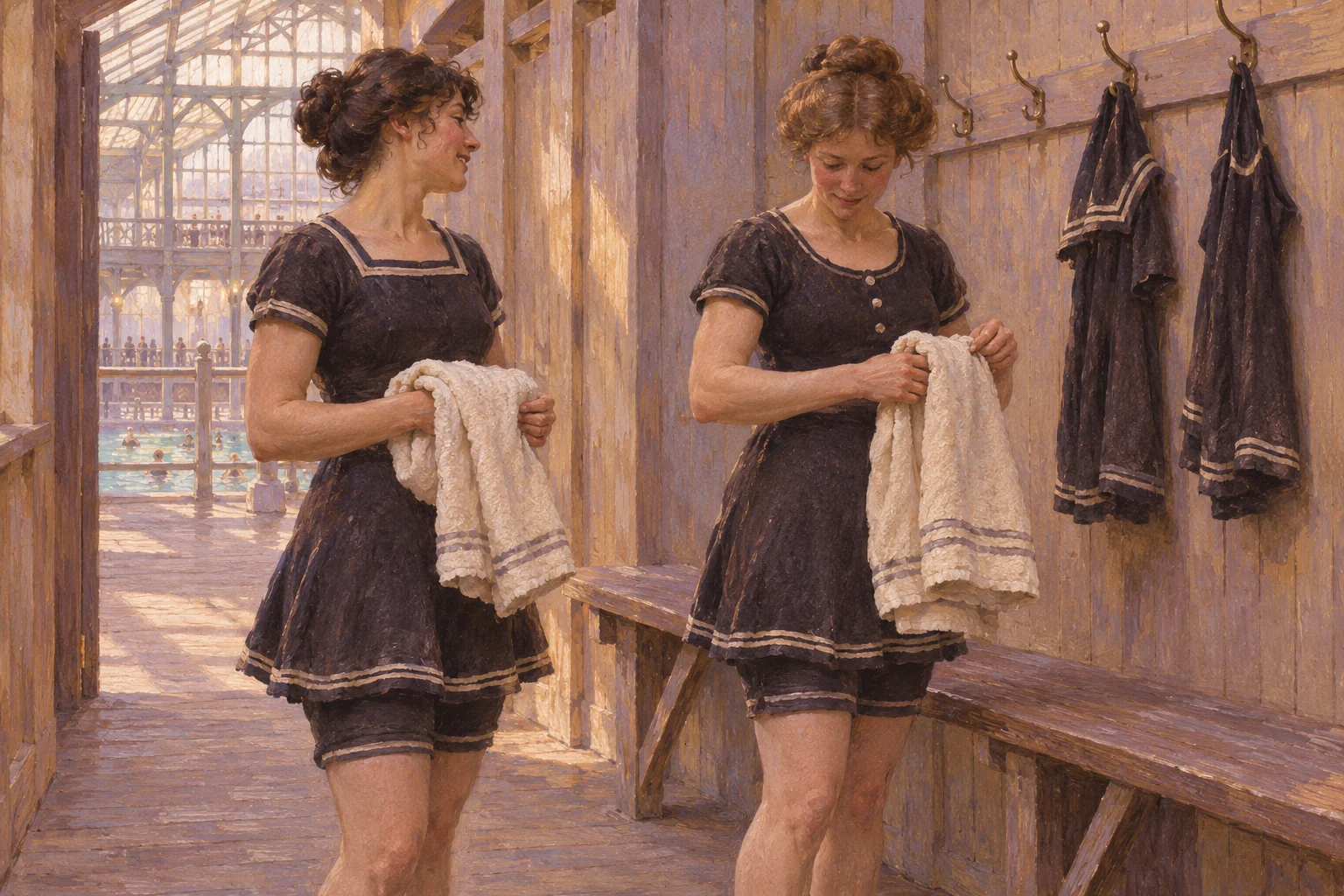 Preparing to swim in the complex’s early decades. Imagined visitors and interpreted clothing, not portraits or an exact changing-room layout.
Clothing brings the monumental scale closer to an individual. The wool suits documented in the park archive recall the preparations, rules and ordinary objects that accompanied entering the water.
The visit could begin long before reaching a pool. The historic-district study connects these coastal outings with railway transport. Traveling to the city’s edge was part of the plan.
Staying to watch was another way to participate. The Library of Congress catalog for a film made in 1897 records swimmers and spectators at the complex. It offers a small window onto uses that bare concrete can no longer show.
The wish behind such an outing is still familiar: leaving the usual routine, meeting other people and having something to talk about on the way home.
The day out John Harris had to defend
In July 1897, John Harris paid for entry and was denied access to the pools because he was Black. The NPS account of his case documents the refusal and his decision to take it to court.
A paid ticket was not enough to share the same space. Alongside the technical ability to fill the pools stood the human decision to refuse someone a swim. “Public” did not mean equal access.
Harris won, but the history recorded by the park’s conservancy emphasizes the limits: he received one hundred dollars for two refusals, an amount that, according to that account, did not cover his legal costs.
It did not end discrimination immediately. It was a person asserting a right the business did not want to honor. Remembering him prevents the building’s beauty from becoming a more comfortable, less truthful version of its history.
Ice where there had been swimming
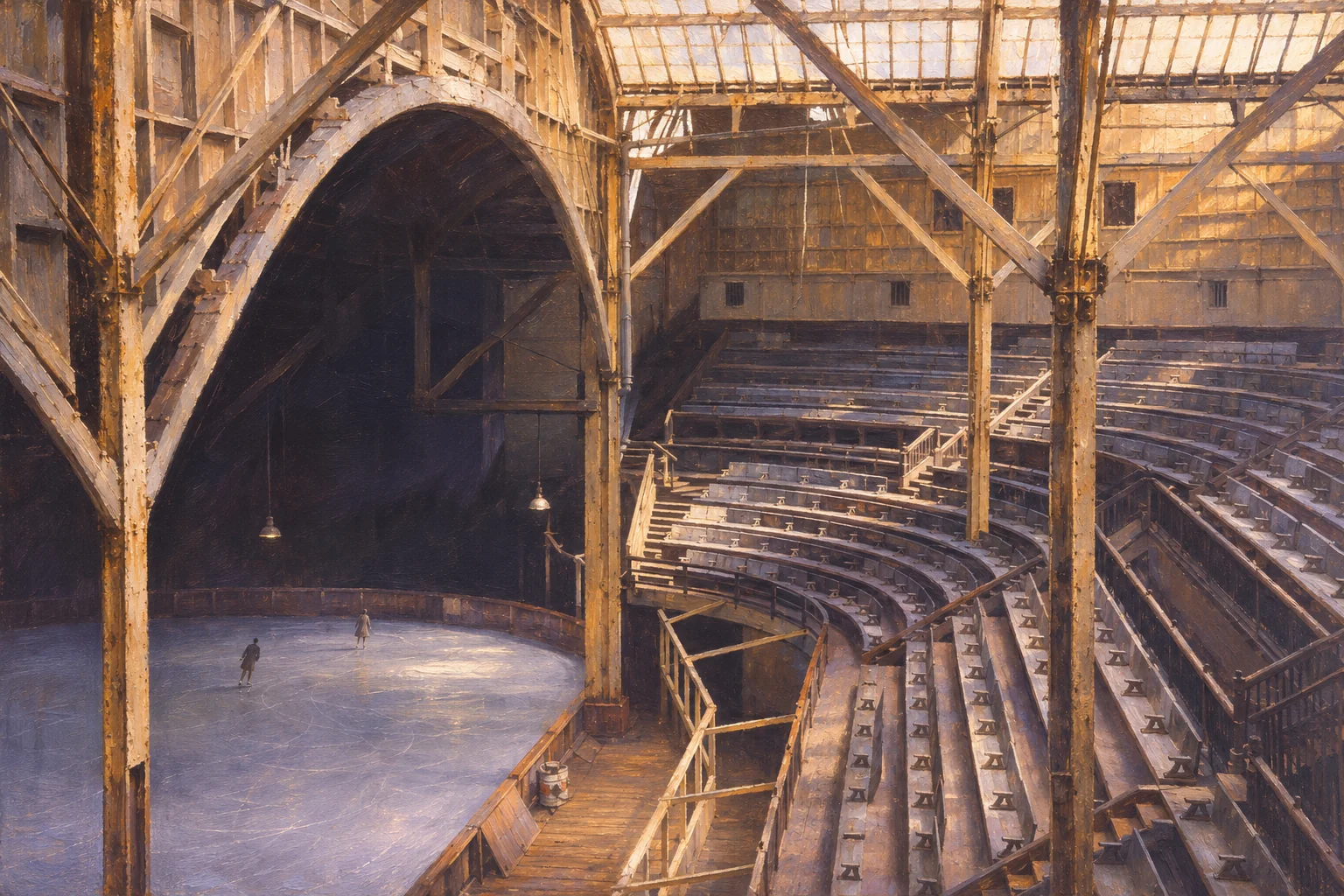 A change of use around the mid-twentieth century. An interpretation of an archival view from around 1950, not a color photograph or a documented skating session.
The complex needed other ways to attract visitors. An NPS archive photograph and its description document the ice rink introduced in part of the building from 1937.
The detail is surprising: “swimming pools” cannot contain the building’s whole life. It was adapted and divided, trying another activity beneath its roof. For someone who knew it then, the memory might have been a glide over ice rather than a splash.
The NPS overview notes that these changes did not solve its long-term financial viability. A spectacular structure and a sustainable operation are not the same thing.
The fire was not the beginning of the end
In 1964, developers bought the site for apartments. The NPS history places the 1966 fire during demolition, when the building was already being taken apart. The planned apartments were not built.
We are not looking at the frozen instant when a day’s swimming suddenly stopped. Closures, changes of business, dismantling and fire lie behind this space open to the sky. A ruin does not always come from a single event.
The coast also had a life before Sutro. The district study recalls Ohlone presence before the development of this recreational landscape. The entrepreneur built here; he did not begin the place’s history.
Looking without turning the ruins into a risky adventure
Check Lands End information and notices before setting out. The NPS warns about surf, slippery rocks and cliffs. Stay on permitted paths, away from edges and narrow walls. This visit does not require swimming or entering tunnels.
From the upper approaches, start with a simple comparison: water remaining within constructed shapes, and the sea continuing beyond. If you need an accessible route, check the specific access; an upper path does not guarantee a step-free descent.
To explore more of the region, see our Bay Area selection, not a continuous walking route from here.
You might recognize these ruins again through the image of the ocean. Behind it, something else may appear: a missing roof, people preparing to enter the water, and a question architecture could never settle on its own—who had the right to enjoy it?
Look closer at Sutro Baths with WAONDER Download WAONDERSection
Stories behind places