Petite France: the water behind the postcard
A Strasbourg walk through drying lofts, a swing bridge and old defenses: discover what the neighborhood's beautiful facades were built to do.
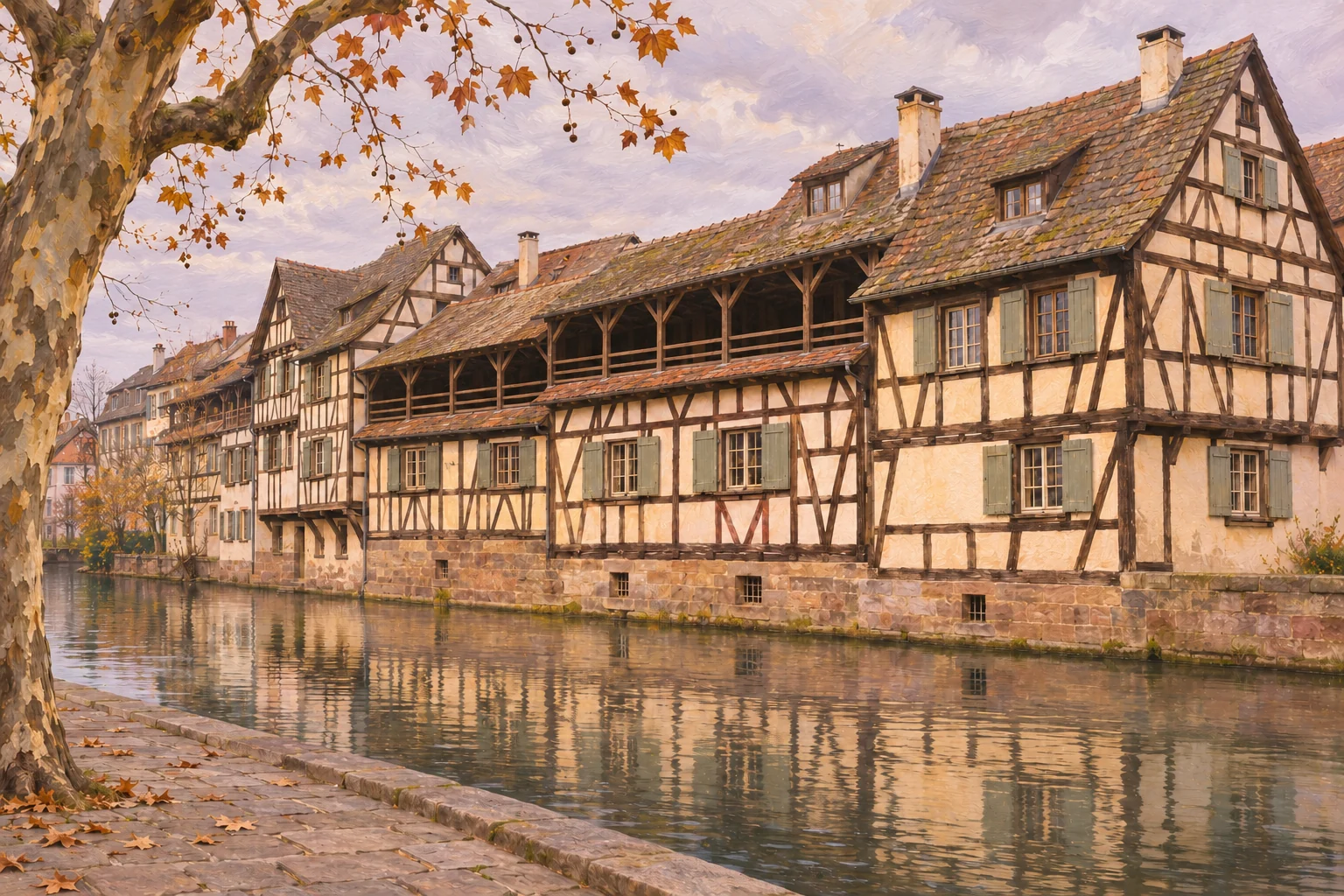
Some neighborhoods seem familiar before we reach them: a reflected facade, a bridge, a photograph we have seen many times. In Strasbourg’s Petite France, it is worth resisting that feeling for a moment. The interesting part does not end with the picture. It begins when we ask why the houses, roofs and crossings have these particular forms.
This walk is a small investigation on foot. Start at Place Benjamin Zix, look along Rue du Bain-aux-Plantes and find Pont du Faisan. Then decide whether to continue toward the Ponts Couverts. There is no compulsory collection of sights. Water is the thread: where it helped people work, where it can make us wait, and where it once helped defend the city.
Look up Pont du Faisan in WAONDERStart with a question rather than a collection of photographs
Place Benjamin Zix offers a first point of reference before the narrow streets. Locate the channel edge, notice the height of the houses and let your gaze travel up to the roofs. Then find Rue du Bain-aux-Plantes. A building changes when we look at it from the water’s edge and from the street.
You need not enter a restaurant or book an activity to follow this idea. If you have little time, stay with this small area and return another day. With someone who knows the neighborhood well, try a simple challenge: each choose a detail whose purpose neither of you has considered before.
Notice the ground, too. Historic paving and narrow passages can change the pace in rain, cold or crowds. For particular mobility requirements, consult the destination’s accessibility resources. This suggested walk is not a certified accessible itinerary.
What the houses tell us when we look up
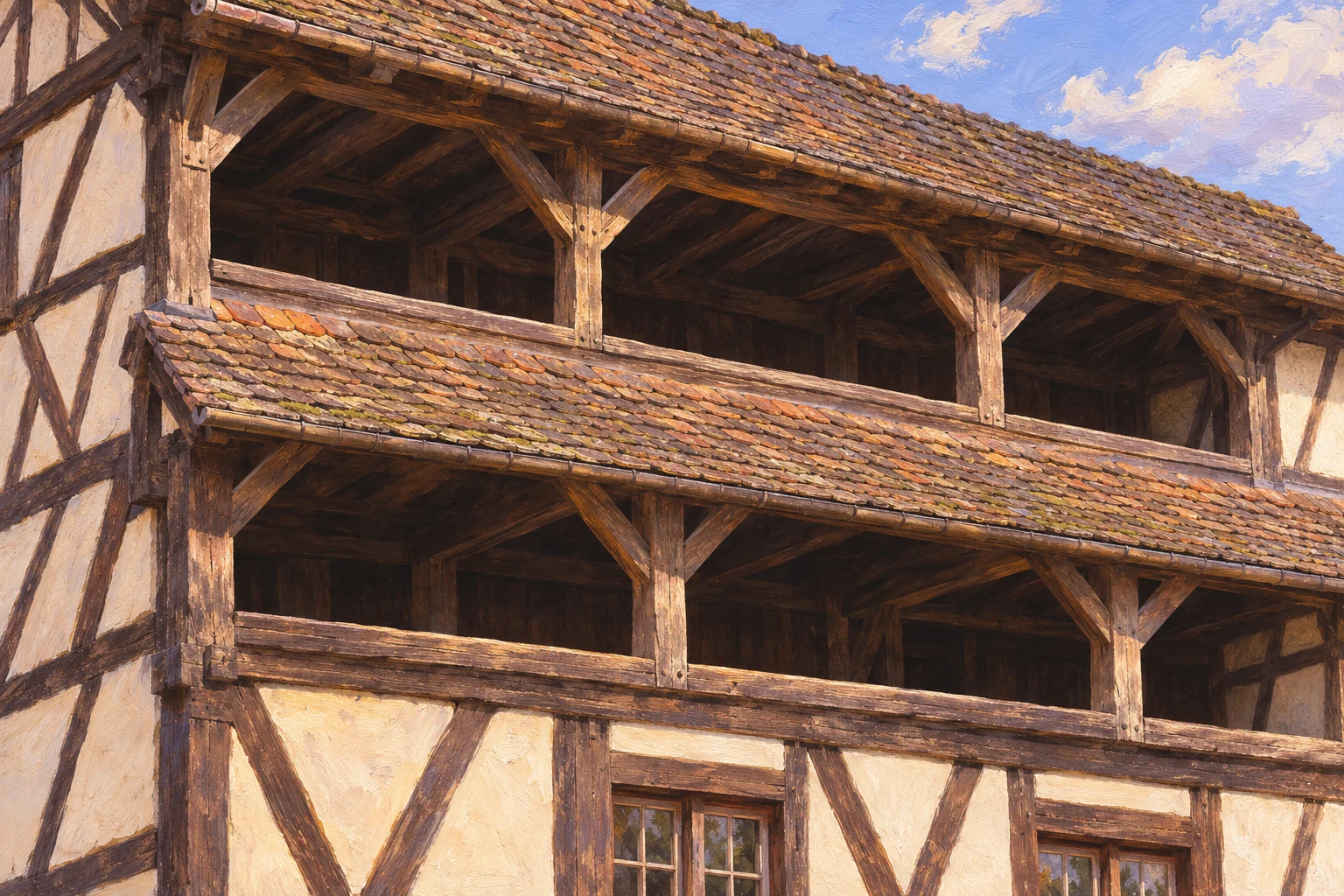 An interpretation of roof openings and their supports, not a record of every element of one facade or a historic workshop in operation.
The timber frames catch the eye, but openings in the roofs can tell us more. The tourism office explains that open upper levels were used to dry hides. Air was part of the work. A form we photograph for its beauty also answered a practical need.
From the public street, follow the alternation of tile, timber and open space. Distinguish a gallery from a glazed window. We need not assume every opening still serves its earlier purpose, or that every visible piece is original, to understand the connection between a building and a trade.
The city’s account places tanneries, mills and other work along the channels. Before becoming a holiday image, this was a place where people earned a living. That thought changes a pleasing facade: behind it were rooms, time and effort devoted to work.
A small bridge that can change our pace
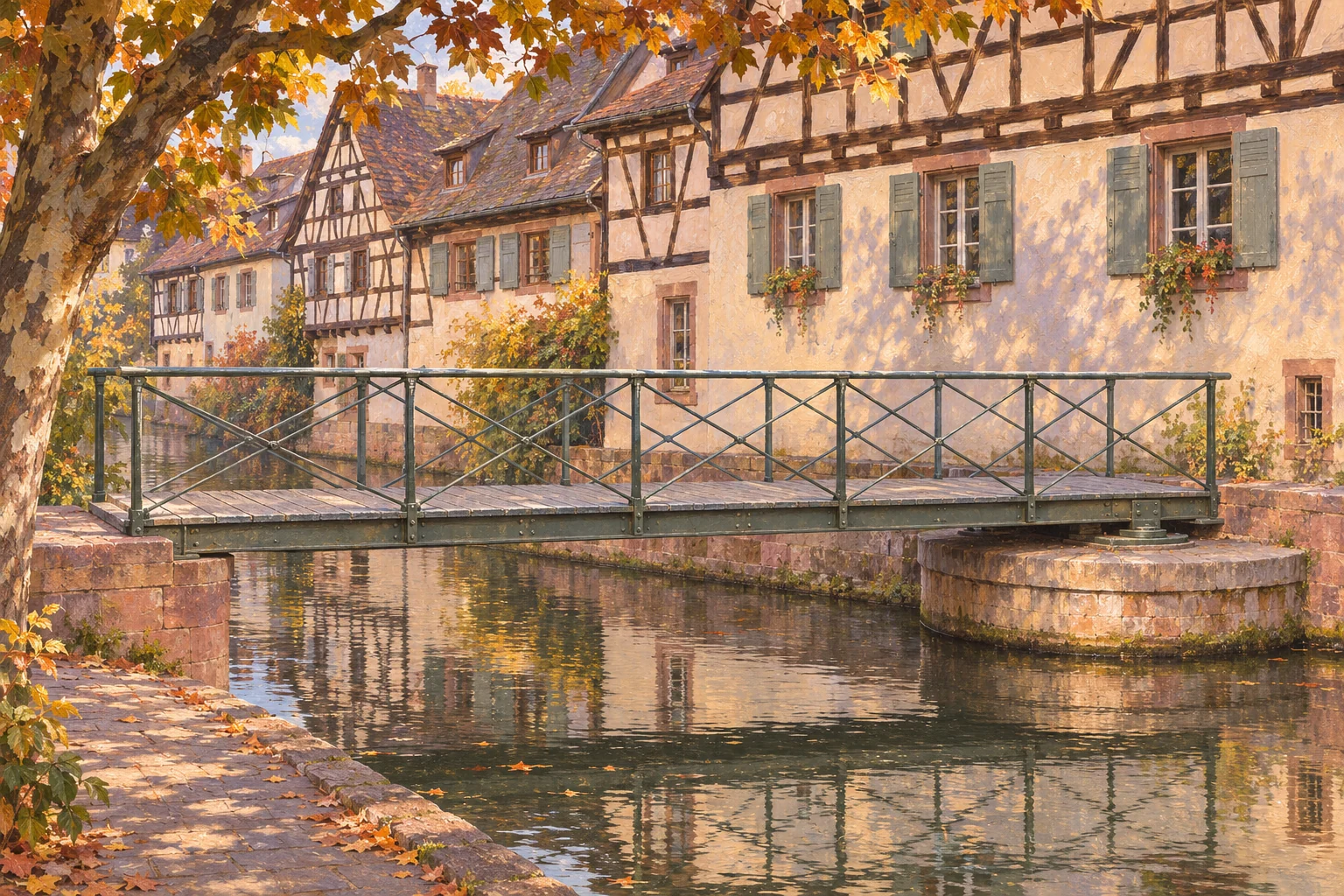 An interpretation of the bridge’s structure, not a technical drawing or confirmation of its operation on a particular date.
At the end of Rue du Bain-aux-Plantes, find Pont du Faisan. Do not expect a grand monumental gateway. Its interest lies in an everyday scale: crossing to the other side, then realizing that the crossing need not always occupy the same position.
It is a pedestrian swing bridge. The official tourism account describes it turning aside to let a boat pass. If you find it open for navigation, respect barriers and wait where signs direct you. There is no need to chase a maneuver or schedule your outing around seeing it.
Even when it is still, consider the direction of movement: the deck turns horizontally to clear the channel rather than lifting like a bascule bridge. That distinction helps explain the relationship between support, railing and water. Observe it from the public path: pedestrians and boats need the same space at different times.
Continue, and the defenses appear
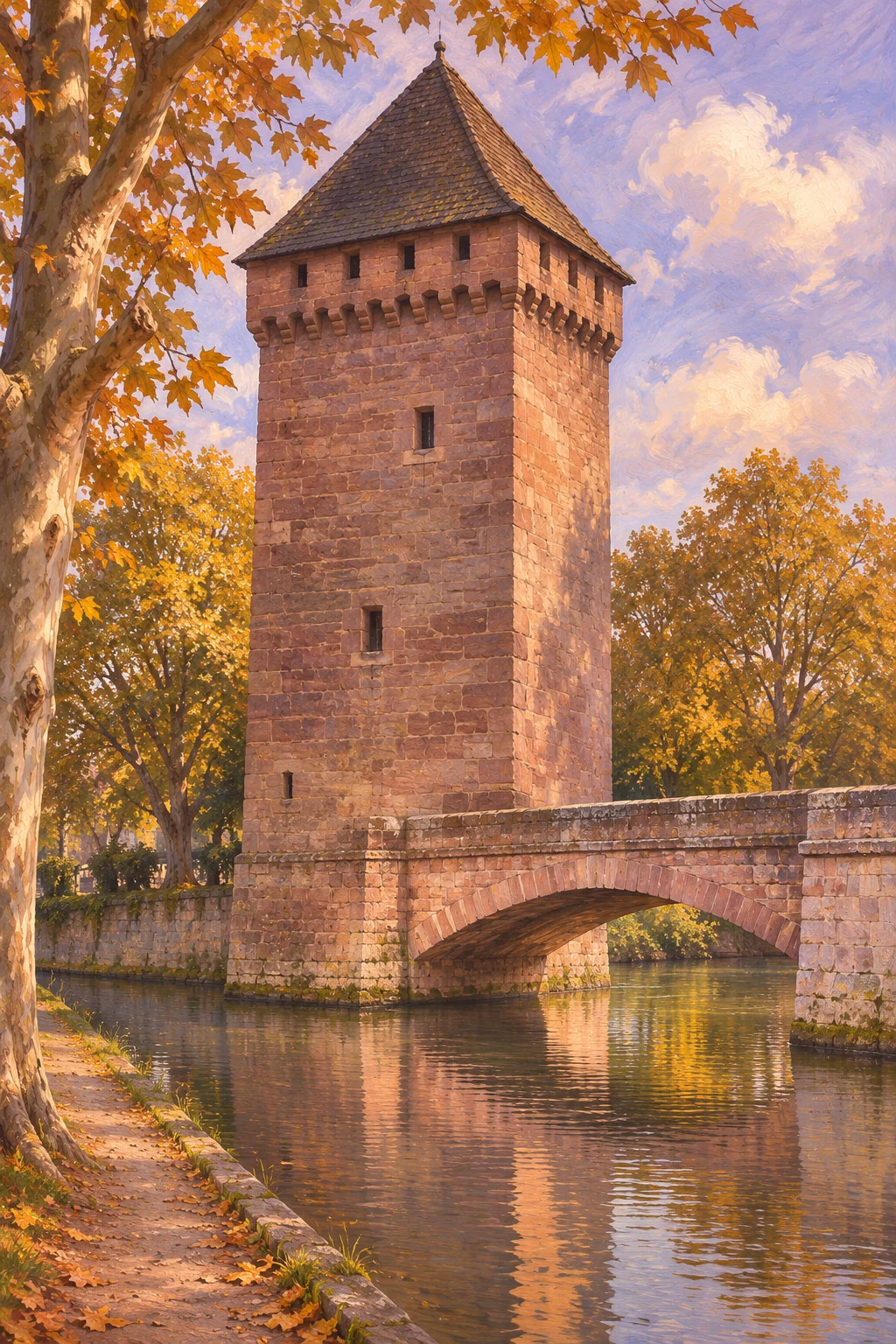 An interpretation of part of the complex, not a view of all its towers or a reconstruction of the former bridge roofs.
If you want a longer outing, follow public signed paths toward the Ponts Couverts. The scale changes: domestic timber framing gives way to masonry that speaks of boundaries and protection.
The name, “covered bridges,” can be puzzling when the crossings no longer have roofs. The tourism listing recalls their removal in the eighteenth century and the three towers that remain. Rather than searching for a missing roof, consider what a name keeps after a structure changes.
A photograph of one tower can convey scale, too. Stand without blocking the path, look at its small openings and compare its height with the houses you have just left. The water that enabled work could also become an approach that needed defending.
Explore the Ponts Couverts with WAONDERVauban is an option, not a condition
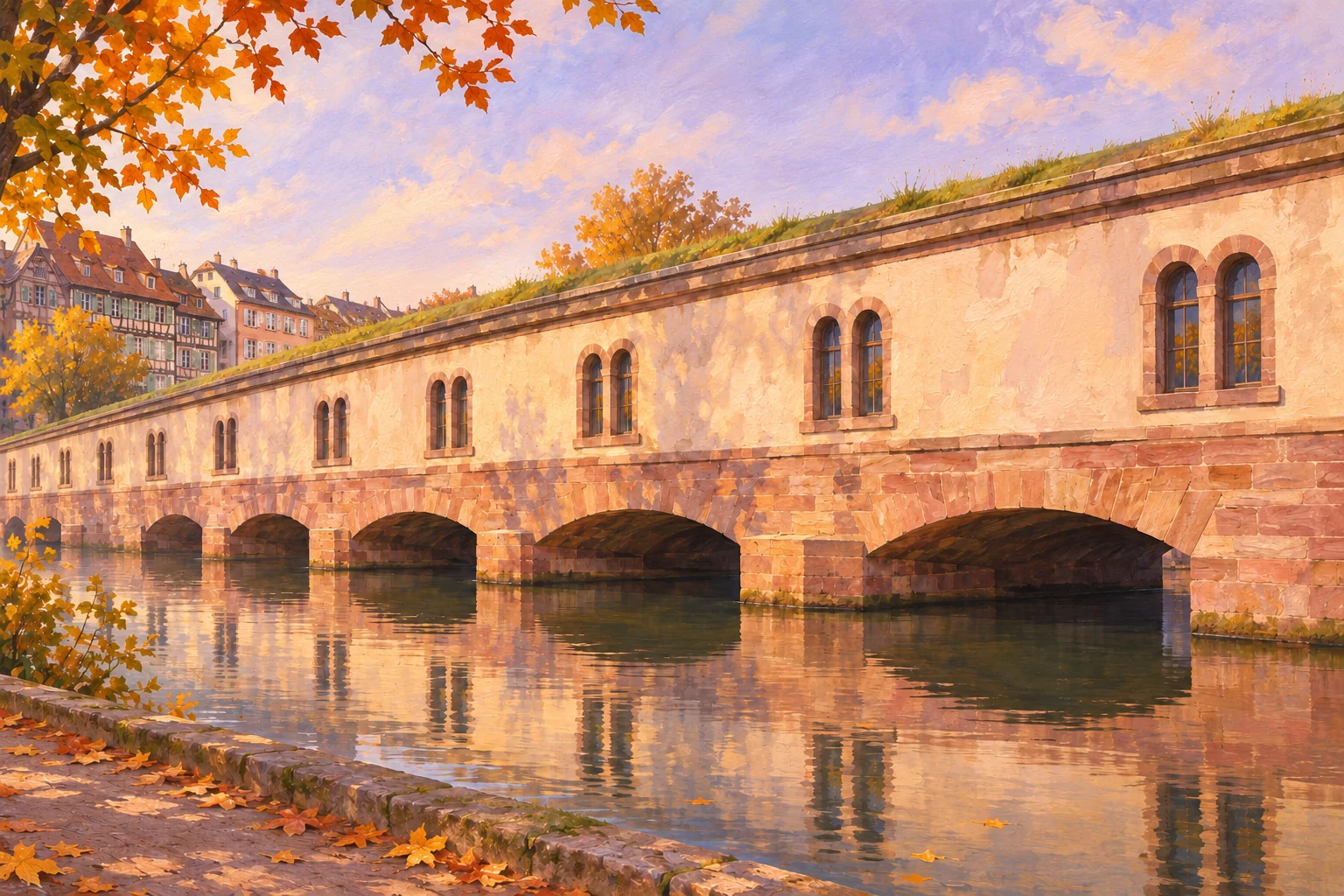 An interpretation of part of the fortified lock, not a view of all thirteen arches or a promise of an open terrace.
The Barrage Vauban is nearby. Its long, low form contrasts with the towers. The city explains that this fortified lock could control the water and flood the city’s southern front to hinder an attack. The current could become a means of defense.
Looking from outside is enough. If you want the panoramic terrace, check current municipal information: the lower passage and terrace have different access arrangements and hours, which change with the season. Do not make the whole outing depend on going up.
Not every walk needs to end with a view from above. From a bank, another idea is already visible: Strasbourg did not simply build beside water. It had to decide how to work with it and how to control it.
Return with something new to recognize
A good ending might be returning to a facade that initially seemed merely beautiful. Now you may recognize a drying loft, a support or a change of level. You have not had to discover a secret place. You have learned to look differently at a familiar one.
If you live nearby, keep one question for another outing instead of exhausting the neighborhood today. If you are visiting, take that detail home rather than only a generic picture of Alsace. Our selection of places in France offers other ideas; this article’s buttons lead to individual places, not a combined route.
This plan depends neither on Christmas markets nor empty streets. Its reason to go out is curiosity: behind the reflection is a city that worked, moved and defended itself with water.
Look again at Pont du Faisan with WAONDER Download WAONDERSection
Ideas for city walks