New York: two lions, a library and time to stay
A walk between the Schwarzman Building and Bryant Park: details to notice, access to check and reasons to give this Midtown corner more than a passing photograph.
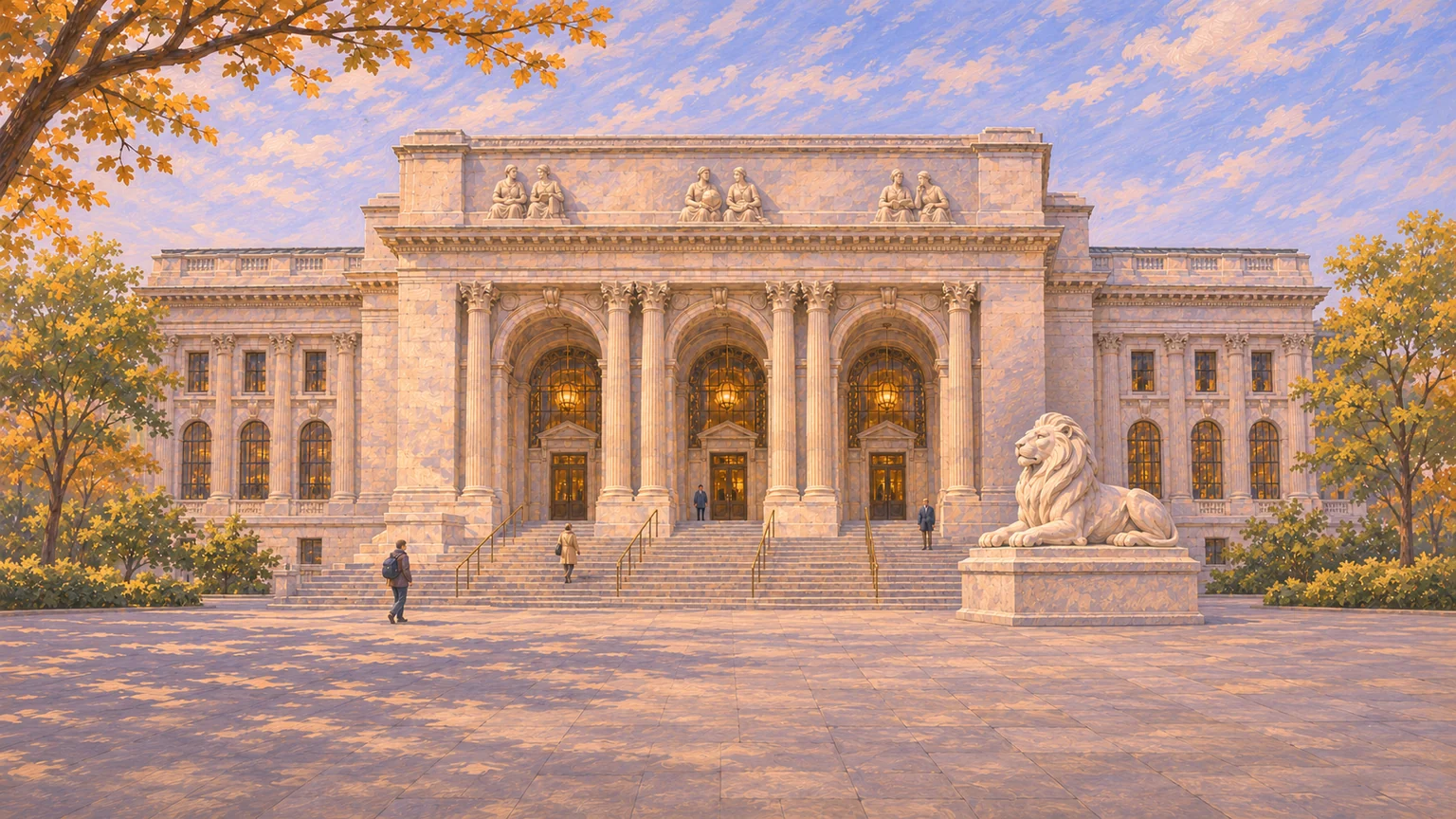
On Fifth Avenue, two lions lie still while Midtown keeps walking. It is easy to take their photograph and move on to the next place. Here we can do something else: choose one building and the park behind it, and give ourselves time to understand them.
This walk pairs the New York Public Library’s Stephen A. Schwarzman Building with Bryant Park. A facade, a visitor space indoors if open, and a pause outside: there is no need to cross several neighborhoods or gain entry to every room.
Before arranging your day around the celebrated Rose Main Reading Room, check NYPL’s official visitor information. This is a research library, not an interior open to unrestricted sightseeing at any hour. The walk keeps its alternatives if that room is unavailable.
Look up the Schwarzman library in WAONDERChoose the outing you want today
Start in front of the library on Fifth Avenue. If time is short, stay with the lions and facade, then go around the building along 42nd Street toward Bryant Park. If you want to enter, leave room for checks and staff guidance; the walk’s length changes with what you choose to visit.
You can also divide the plan into two outings: one to get to know the building, another to return with something to read. You need not have seen every room to recognize a new detail next time.
Check access and conditions before setting out. If you need step-free entry, NYPL’s guide identifies the entrance at 10 West 42nd Street. The park has entrances of its own: library and garden do not necessarily share the same accessible route.
Two lions named for difficult times
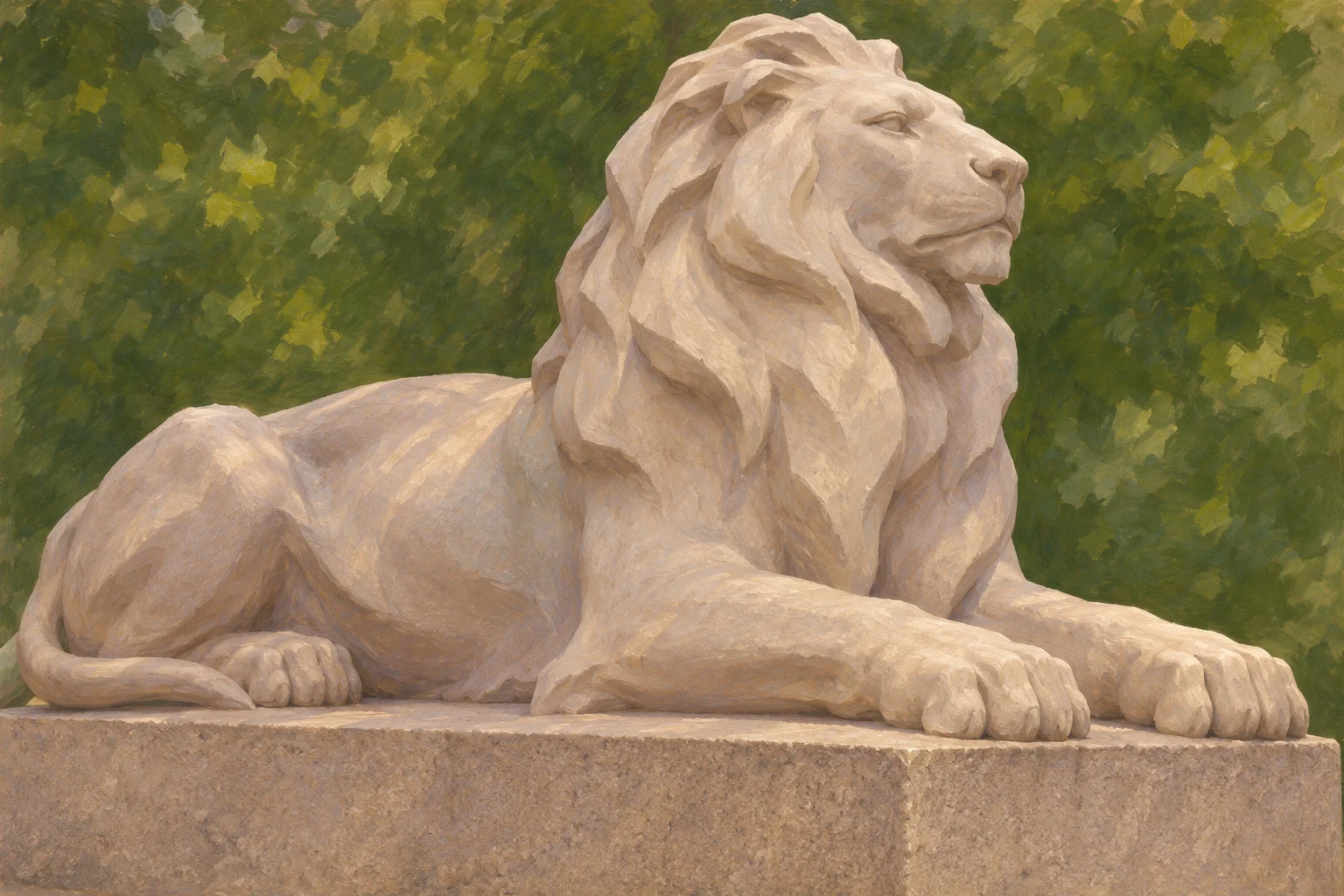 An interpretation of the sculpture’s material and pose, not a reproduction of every carved detail or the light on a particular day.
They are called Patience and Fortitude. The library credits these names to Fiorello La Guardia during the Great Depression. They invite a way of looking beyond the monumental entrance.
The library’s account of the lions recalls Edward Clark Potter’s design and the Piccirilli brothers’ carving in Tennessee marble. A photograph can focus on the animal; a slower look can also distinguish the sculptor’s decisions.
Notice the upright head, resting body and way the paws sit on the plinth. These lions are neither roaring nor leaping. Their stillness makes a useful contrast with an avenue we often move along quickly.
Find a position without blocking the stairs or climbing onto the pedestal. A photograph from ground level is enough to keep that relationship between lion, building and human scale.
Going inside can begin with finding your bearings
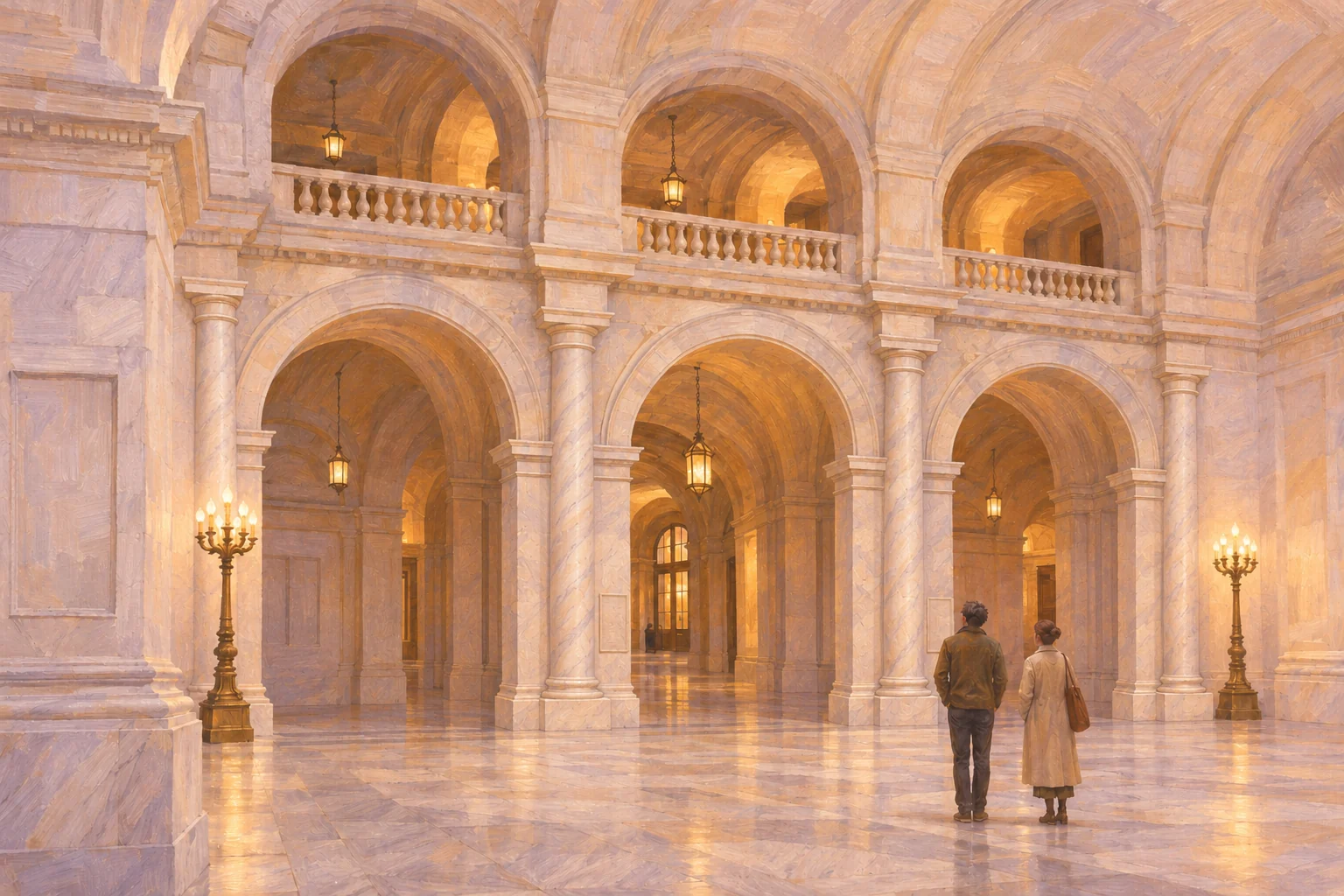 An interpretation of the entrance hall, not an access plan or a promise that every room is open.
In Astor Hall, the scale changes: pale stone, great openings and a height that invites you to look up. Follow the meeting of an arch and its support before looking for the next place. The hall deserves attention in its own right; it is not simply a corridor to a more famous photograph.
Ask at the Visitor Center what is available. Using a reading room, seeing an exhibition and joining a tour are different experiences. Staff guidance can save you from crossing the building in search of an entrance not available to sightseers that day.
People studying and researching belong to the library’s real life, not the scenery of our outing. Silence your phone, follow photography instructions and avoid framing identifiable readers. If you choose a longer indoor visit, the park can wait for another occasion.
Before the books, there was water
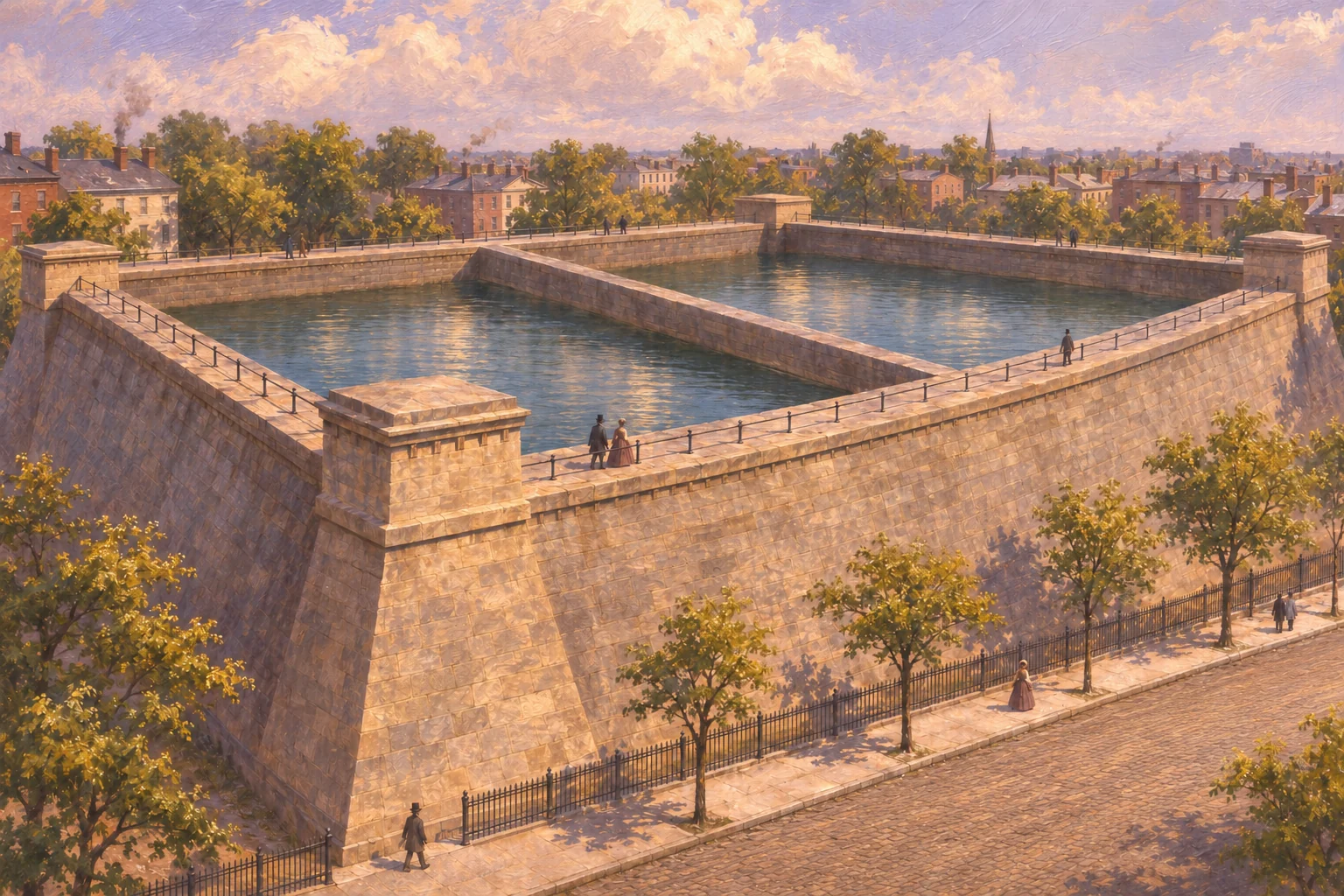 An evocation of the former reservoir based on features documented in a print. Not a photograph, measured reconstruction or place accessible today.
The park’s history recalls that the Croton Distributing Reservoir occupied the library’s site before its demolition in 1900. The building we see was completed in 1911. The same ground changed its infrastructure.
There is no need to imagine a pool hidden inside the library. The reservoir disappeared. The comparison offers a way to think about what a city needs to keep and distribute, and how its ways of doing so change.
Another layer is invisible from a chair: book storage beneath Bryant Park. NYPL’s architecture guide distinguishes these Milstein spaces from the former stacks beneath the reading room. They are not an underground attraction open for casual visits.
Knowing that park and books are connected below ground changes the pause outside. The building does not end quite where its facade does.
Go around the building and find your pause
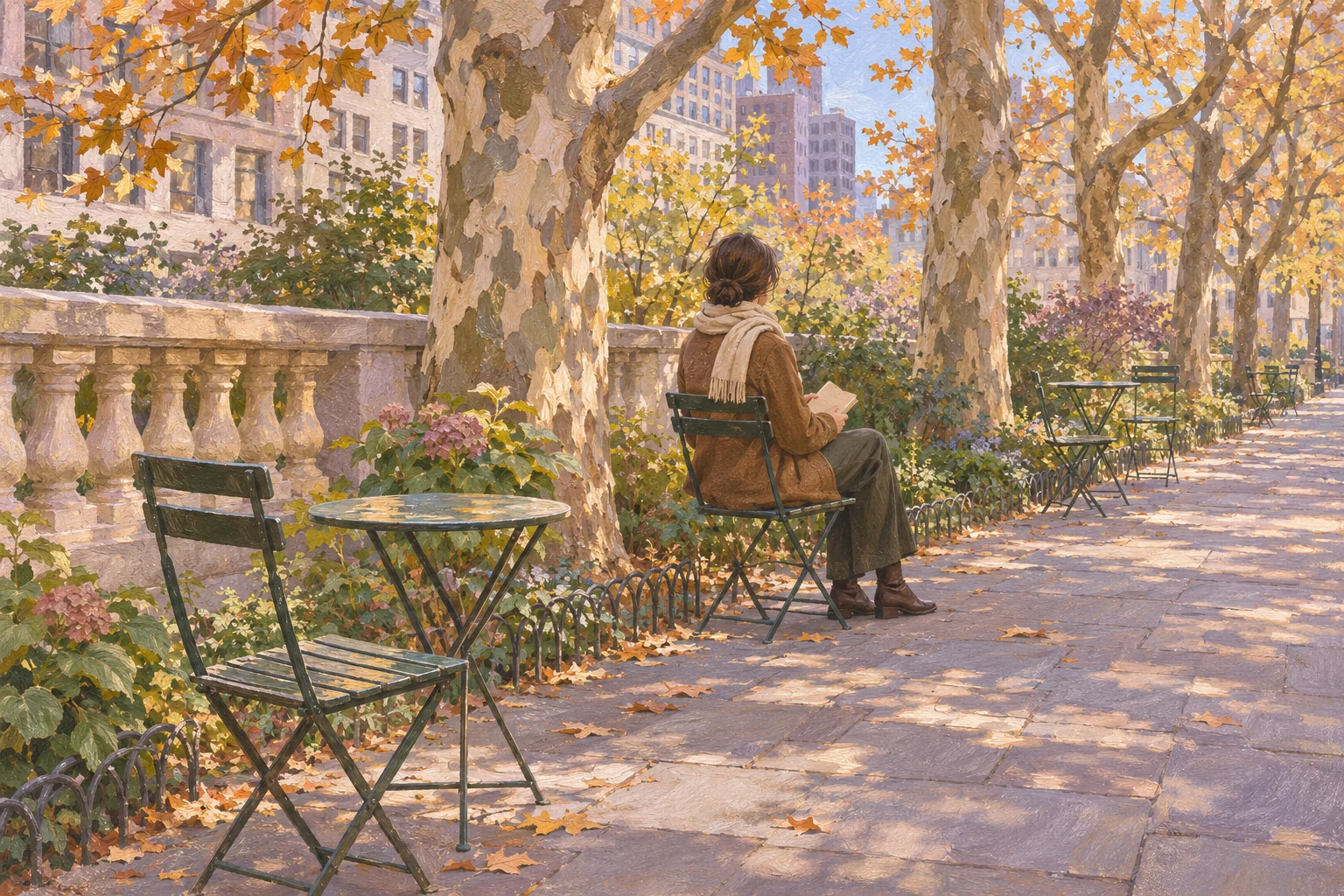 An interpreted side allée, not November’s exact park layout or a guarantee of an available chair or quiet surroundings.
Return to the street and walk west along the 42nd Street sidewalk to reach the park. Do not rely on a direct indoor exit: the park’s operator places Bryant Park between 40th and 42nd Streets and Fifth and Sixth Avenues, behind the library.
The park’s accessibility information identifies mid-block entrances on 40th and 42nd Streets. Follow designated crossings and signs; you do not need to cross Fifth Avenue to get from this library to the park.
Movable chairs belong to its modern transformation. They change how you use the park: you can choose where to look rather than accept the direction of a fixed bench. If one is available, find a position from which to compare the library’s rear elevation with its Fifth Avenue facade, keeping walkways clear.
In winter, programming and installations change the central space; check the park’s current information. This plan depends neither on the lawn, skating nor buying something. Nor does it promise quiet: shorten it if it is crowded, cold or the weather changes.
Look up Bryant Park in WAONDERReturn with more than another photograph
An outing can end with a closer look at a lion’s paws; another with an indoor visit; another with a few pages read. These are different ways to use the same corner, not incomplete versions of a compulsory program.
Our selection of New York places offers ideas for another day. This article’s buttons lead to the library and park separately; they do not open a combined route.
When you return to the avenue, perhaps you will remember both the stone and the time you chose to give it: a facade that was more than a backdrop, and a pause that did not take you far from your everyday route.
Return to the library with WAONDER Download WAONDERSection
Ideas for city walks