Marseille from the port to Le Panier: three stories for a different walk
A town hall without an internal staircase, Fort Saint-Jean’s square tower and the Vieille Charité courtyard: another way to look at Marseille.
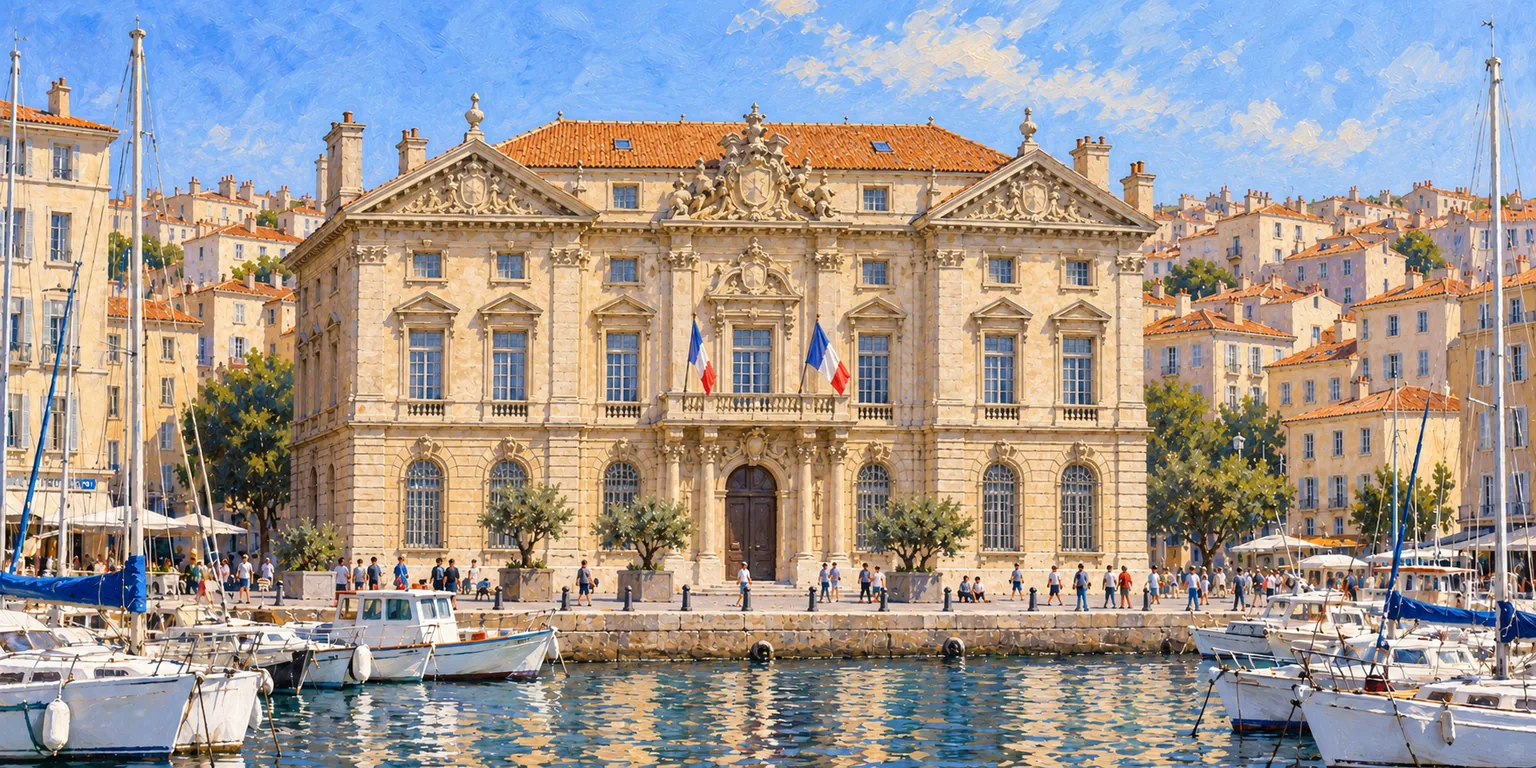
Among the masts of Marseille’s Old Port, the town hall looks easy to read: a formal façade, a balcony, some flags. Yet a detail hidden from the waterfront changes the picture. Its two main floors are not connected by an internal staircase.
That small surprise is a good reason to step out of your usual walking routine. Between the town hall, Fort Saint-Jean and the Vieille Charité, three different questions emerge: who governed the city, who guarded its entrance, and who was removed from its streets? You can explore them on separate outings. There is no need to turn curiosity into a race.
Take WAONDER on your next Marseille walkA town hall reached through another building
Start with the balcony and the triangular pediments at either end. The Hôtel de Ville presents its formal face to the port: municipal life and the working waterfront looking towards one another.
Then comes the surprise. According to the city’s history of the building, access to the first floor of the Puget pavilion runs through the building behind it, the Bargemon pavilion, by way of a bridge. This is not a modern visitor gimmick; the link belongs to the unusual arrangement of the complex.
A familiar façade suddenly becomes a spatial puzzle. Where is the part of the building you cannot see? From the surrounding public streets, look at the relationship between its ceremonial front and its rear. This is an invitation to observe, not a promise that the town hall’s interior is open to casual visitors.
Find Marseille town hall in WAONDERSaint-Jean: recognising one tower changes the view
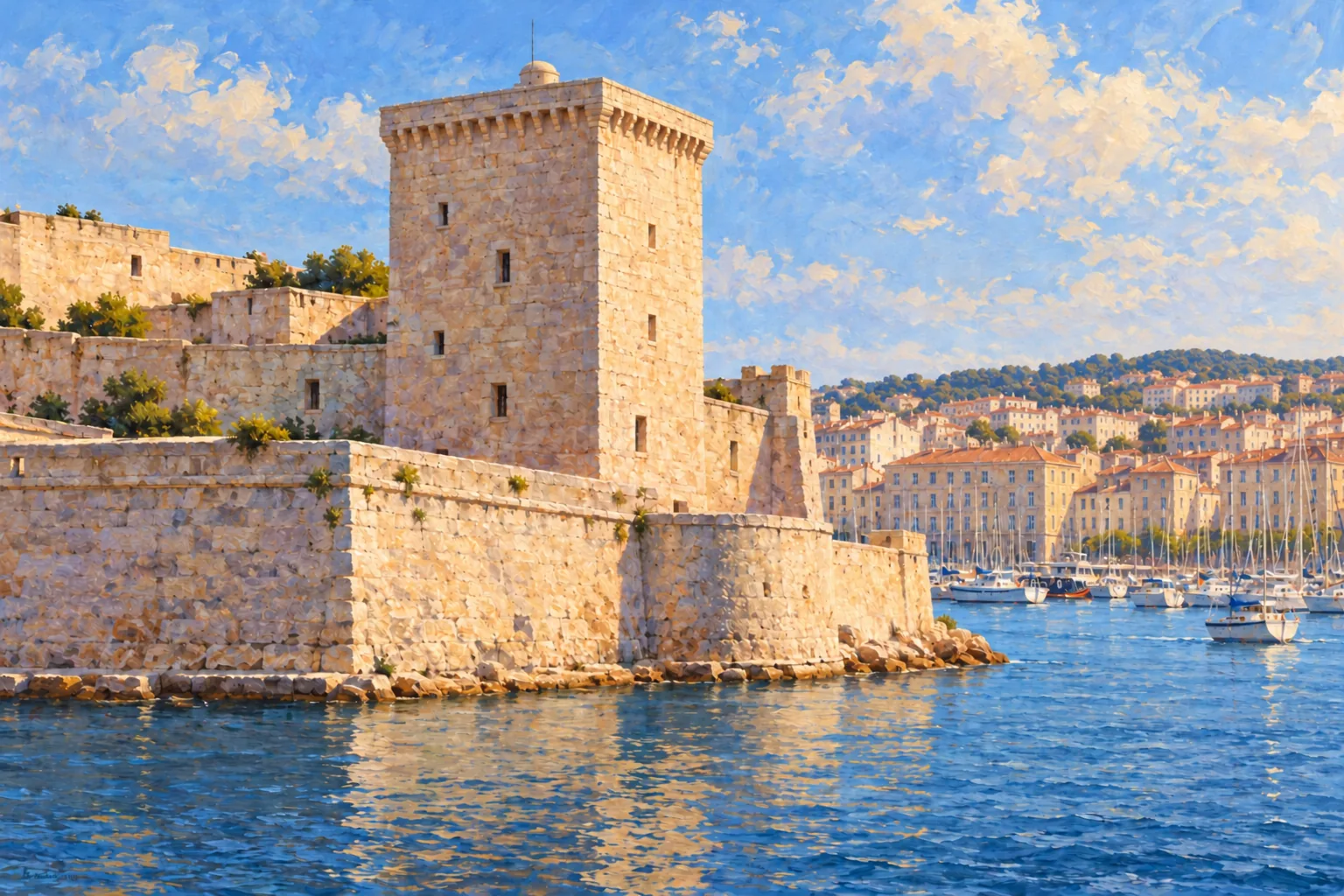 Documentary-style illustration: King René’s tower is square, unlike the cylindrical Fanal tower.
Continue west along the northern side of the port. Before deciding whether to enter the fort, pick out the square tower: the fifteenth-century tower of King René. Distinguishing it from the cylindrical Fanal tower stops Saint-Jean becoming just one undifferentiated silhouette.
The site combines buildings from different periods and is now part of the Mucem. King René’s tower watched the harbour entrance; around it, the museum now offers a garden walk with plants from different shores of the Mediterranean. Change your viewpoint twice: first follow the defences facing the water, then turn to that planted landscape.
The fort’s outdoor spaces are free to enter within their opening hours and access conditions; exhibitions have separate arrangements. Free does not mean open at any hour. Reading the buildings from outside is a worthwhile option if a visit does not fit your day.
Locate Fort Saint-Jean in WAONDERThe Vieille Charité: beauty with an uncomfortable history
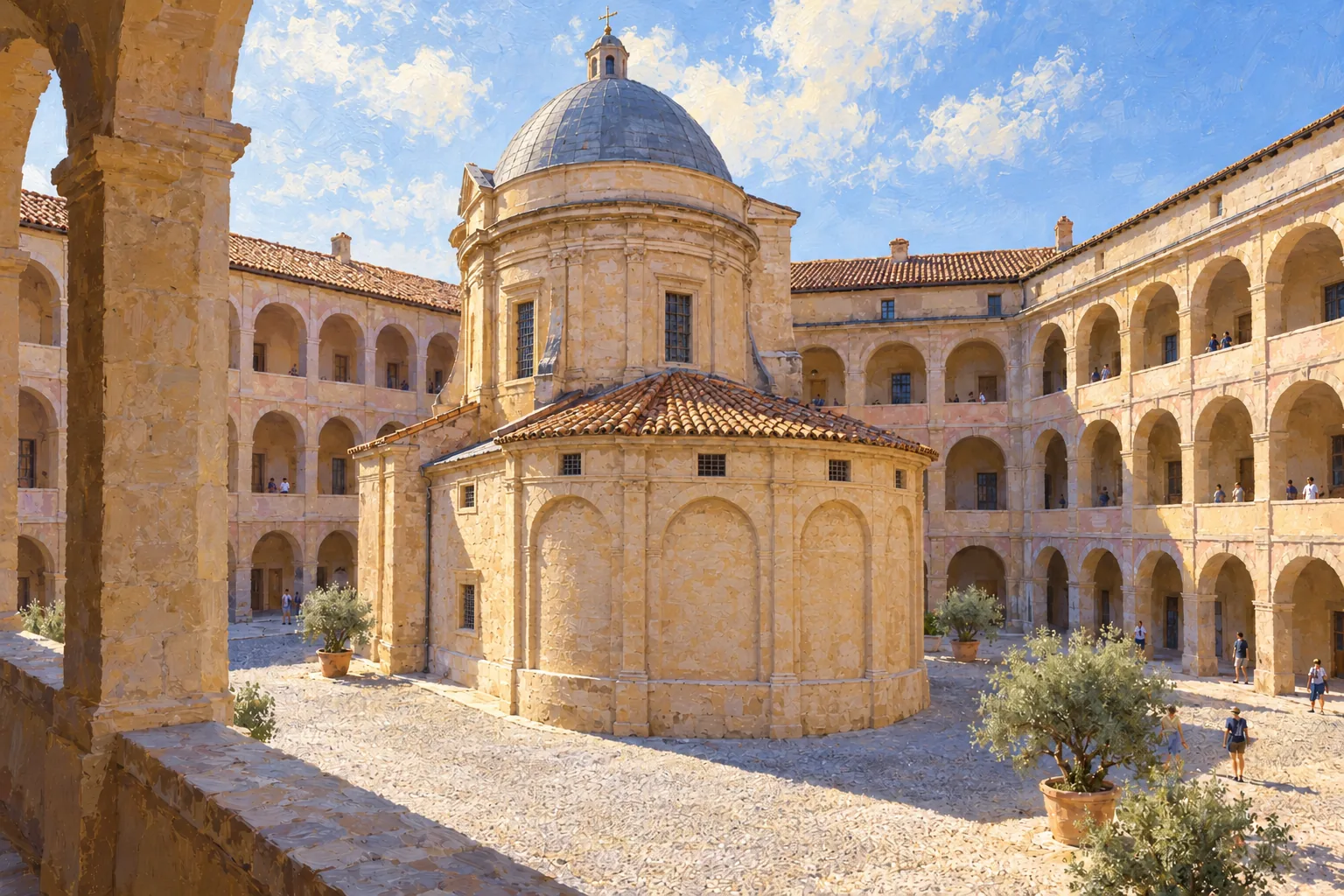 Documentary-style illustration of the courtyard and chapel rear, not a photograph.
Climbing from the waterfront towards Le Panier changes the pace: narrower streets and changes in level replace the long line beside the water. Choose a path on the map that suits your mobility; this walk does not rely on crossing the museum’s footbridges.
At the Vieille Charité, the chapel and its oval dome stand in the centre of a courtyard that invites a pause. But the name can suggest an overly comfortable story. The city’s account describes a project associated with both assistance and the confinement of poor people and beggars. It was not simply conceived as a welcoming refuge.
Knowing that does not diminish the architecture. It restores people whom a beautiful picture might leave out. Look at the chapel, then the surrounding galleries: the monument’s scale and the lives lived here belong to the same history.
Find the Vieille Charité chapel in WAONDERThree levels of arcades, and a reason to return
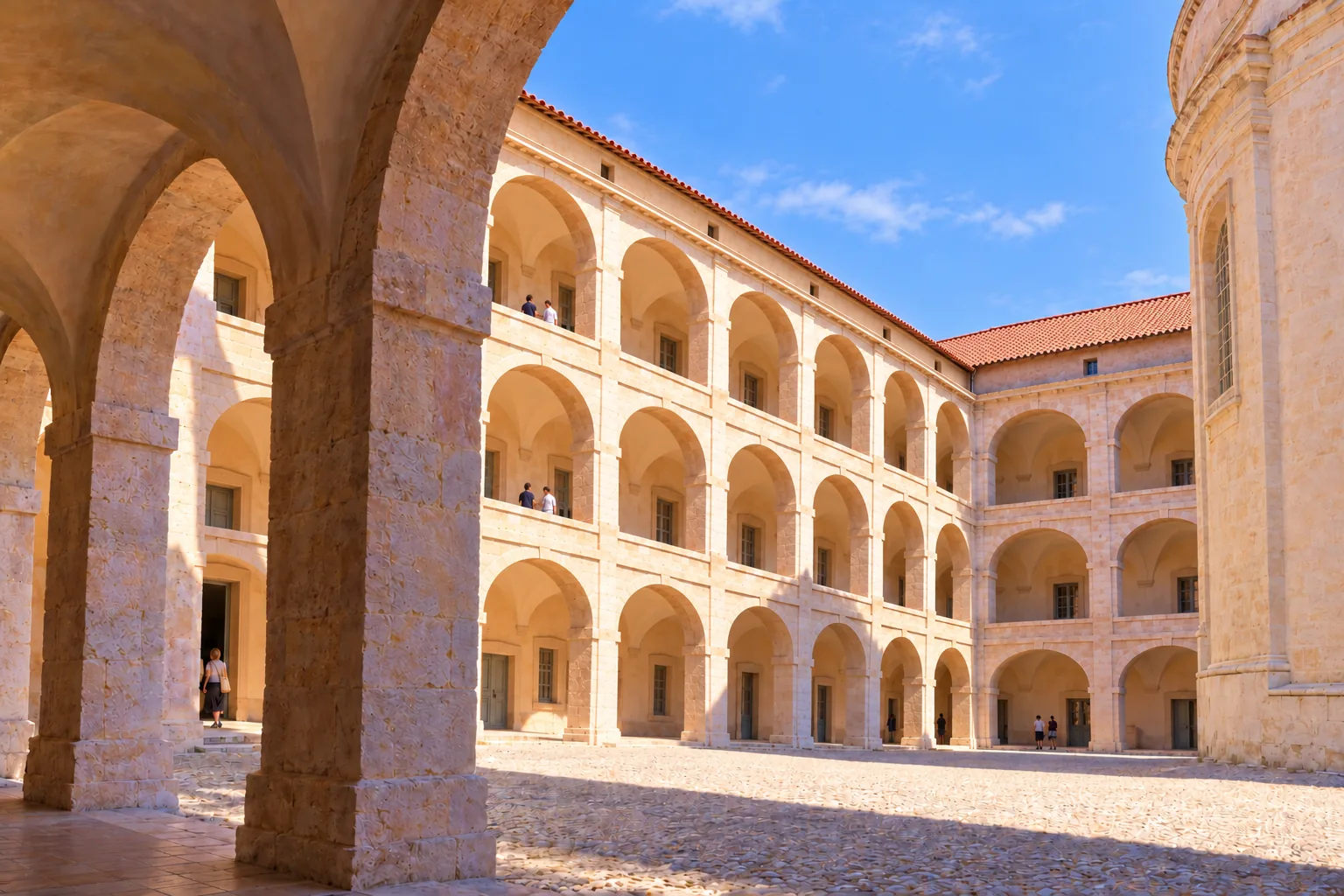 Documentary-style illustration: three levels of galleries surround the courtyard.
The complex has three levels of arcaded galleries. Follow the pillars from one level to the next and compare the chapel’s two sides: its dome belongs to the Baroque project, while the columned entrance porch was added in the nineteenth century. What looks like a single-period composition took generations to build.
The address is 2, rue de la Charité. To combine the stops, check the Vieille Charité centre’s calendar and the fort’s page linked above. As checked on 28 October 2026, the usual choice is:
- Wednesday to Sunday: the fort and Vieille Charité normally share opening days, subject to public holidays and exceptional closures.
- Monday: build the walk around the harbour and fort; do not count on entering the Vieille Charité.
- Tuesday: choose the Panier and Vieille Charité; the fort is closed, but its silhouette can be seen from the harbour.
Note 11 November, an announced closure day at the Vieille Charité. Exhibitions have separate conditions, and the uphill approach to the Panier remains: check access and mobility arrangements before setting out.
Finish in the courtyard facing the galleries, or return to the water. The walk leaves three details to remember: a bridge that does the work of a staircase, a tower guarding the harbour entrance and a chapel whose beauty sits alongside a difficult history.
Plan your next discovery with WAONDERSection
Ideas for city walks