France in WAONDER: eight cities beyond the first photograph
Paris, Marseille, Nice, Lyon, Bordeaux, Strasbourg, Biarritz and Toulouse: places and stories to rediscover your city or plan your next visit.
A tower whose future was once uncertain. A basilica where people left their thanks. A city gate that still invites you through.
WAONDER now includes eight French cities: Paris, Marseille, Nice, Lyon, Bordeaux, Strasbourg, Biarritz and Toulouse. If you live in one of them, start with the place that has always been part of your daily backdrop. If you are visiting, choose something you would like to understand before photographing it. These are separate suggestions: pick your city, without feeling you have to visit them all.
We have chosen one landmark in each city. Some outlines will be familiar; others may be new to you. The point is not to recognise them all, but to find a story that changes your next encounter with a place.
Take WAONDER on your next walkChoose your next city
Paris and Bordeaux, to think about what a city keeps; Marseille and Toulouse, to discover what a building meant to other people; Nice and Lyon, to notice overlooked details; Strasbourg and Biarritz, to follow a familiar outline into its history.
- Paris: a tower that had to find its future
- Marseille: somewhere to leave your thanks
- Nice: a square that invites a conversation
- Lyon: when telling the time meant describing the world
- Bordeaux: the gate that ceased to be a boundary
- Strasbourg: the spire without a twin
- Biarritz: a rock with more than a view to offer
- Toulouse: a city shaped by arrivals
Paris: a tower that had to find its future
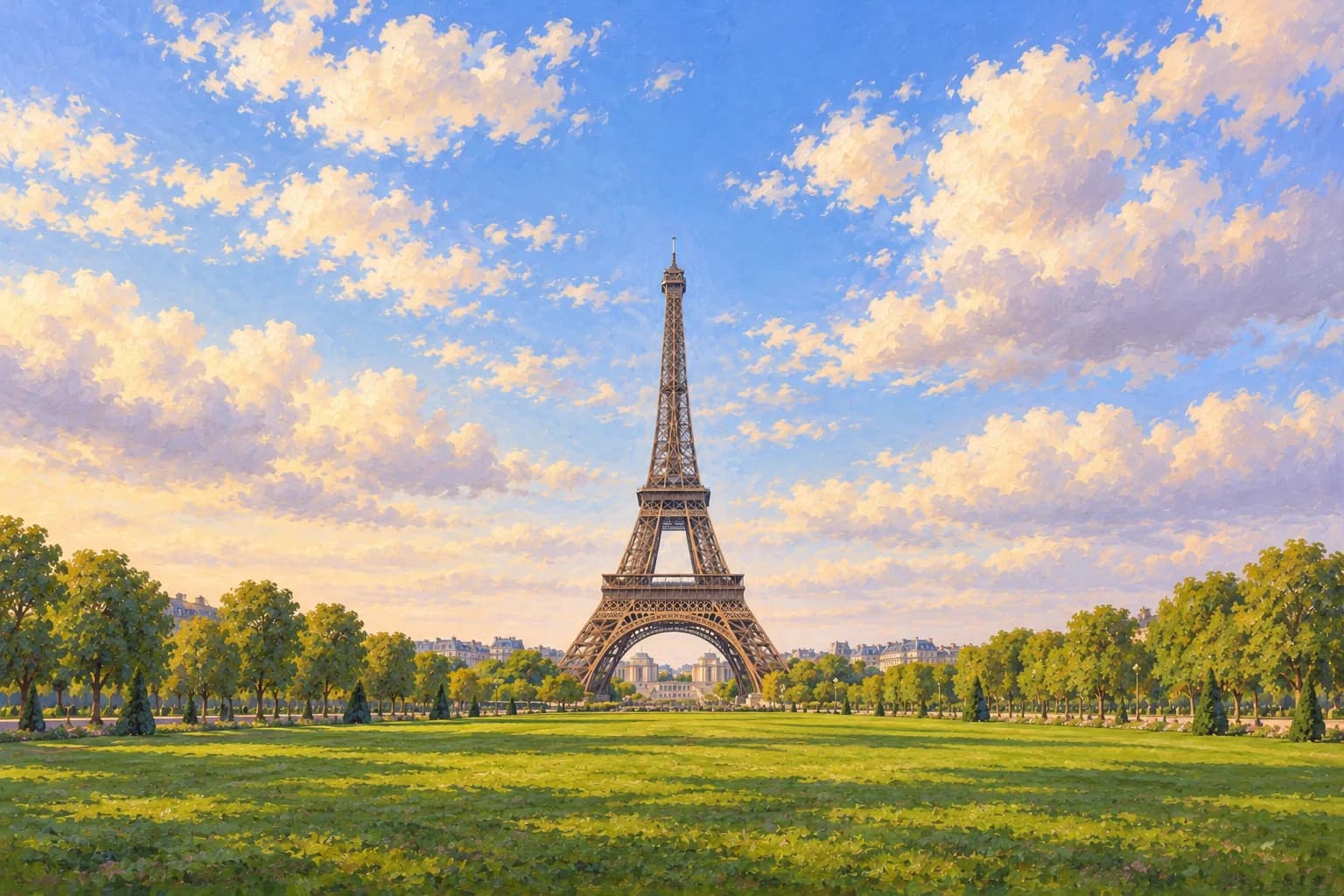
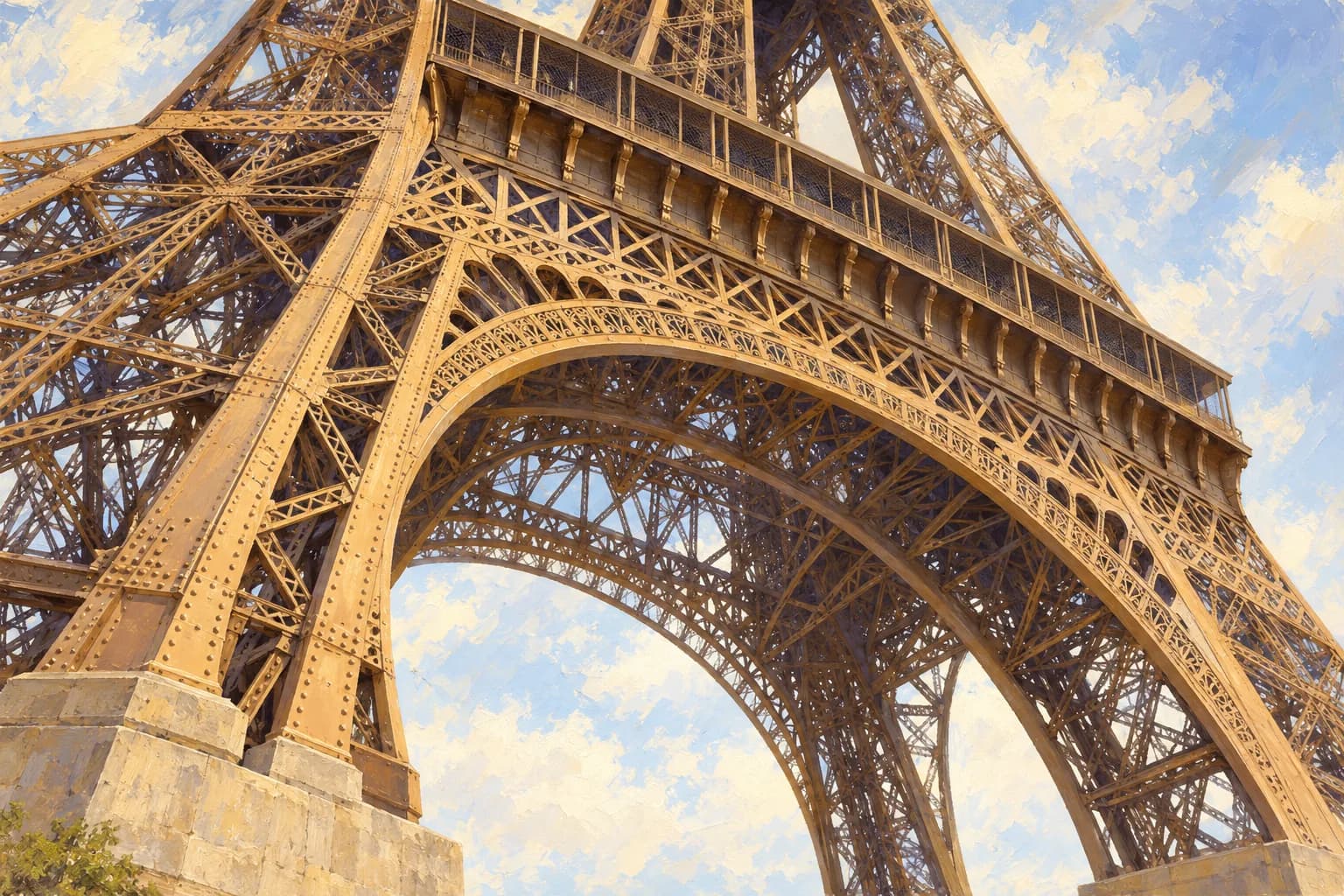 Beneath the outline: a painterly interpretation of the structure, not an engineering drawing or photograph.
The Eiffel Tower feels so inseparable from Paris that it is hard to picture it as a temporary venture. Yet recognising a symbol does not mean knowing the decisions that kept it standing.
The Tower's own history recalls that the 1887 agreement gave Eiffel a twenty-year operating concession. That was not an automatic demolition order at the end of the term: scientific uses and communications would become part of the story of its survival.
Under the great arch, the postcard becomes beams, rivets and supports. Follow a diagonal to see the work inside something that looks like a single line from far away. You do not need to go up for that first encounter; check official information for tickets and access controls.
Explore this place in WAONDERMarseille: somewhere to leave your thanks
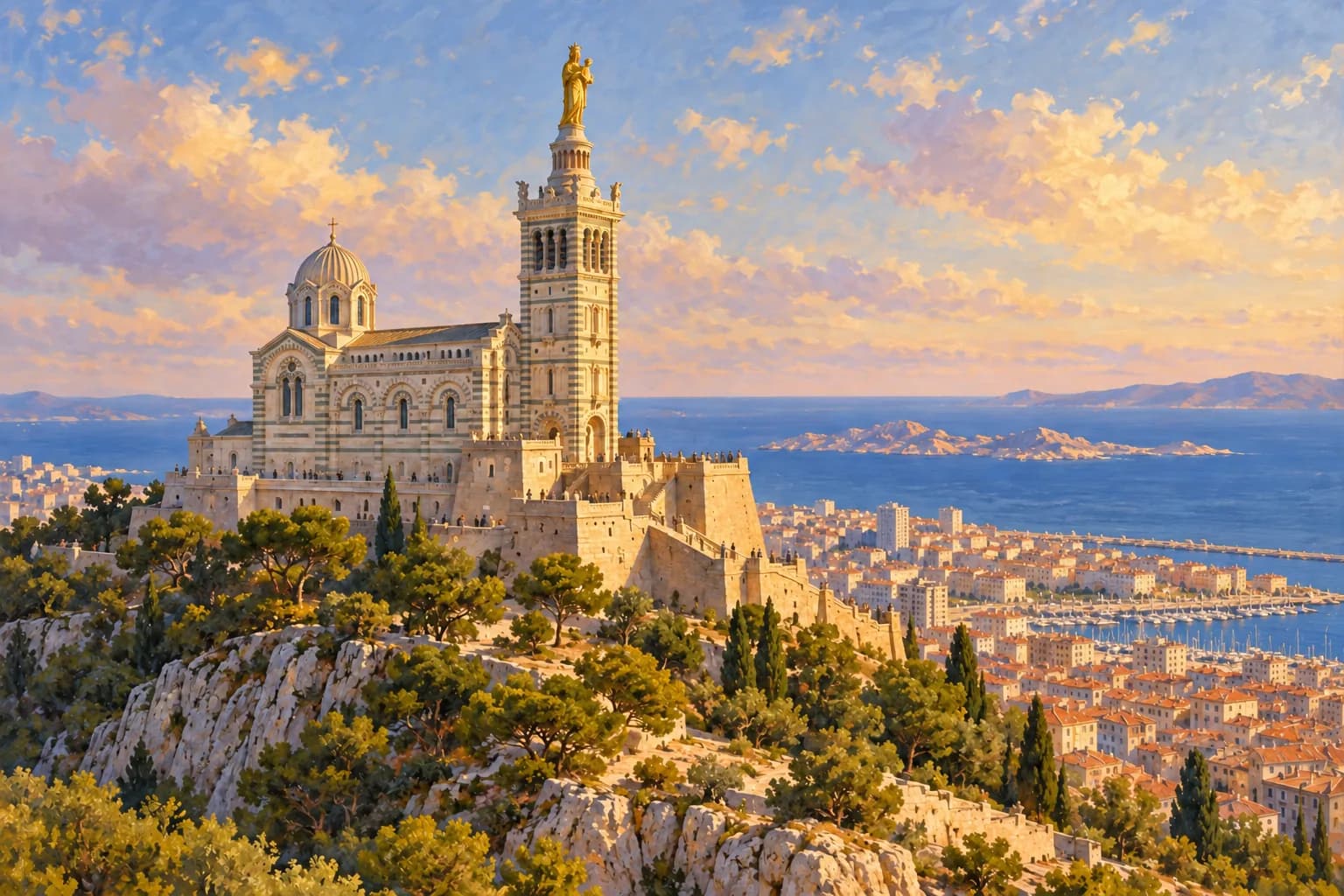 The basilica above Marseille: an illustration of its architecture and relationship with the city.
Notre-Dame de la Garde is visible from many parts of Marseille. High above the city, its gilded figure offers a shared point of reference in a place that looks towards the sea.
Inside, the scale becomes more intimate. Marseille’s tourist office describes its ex-votos: offerings, model ships and other expressions of gratitude. Alongside the grand architecture are small objects someone chose to leave there. They preserve another kind of memory: not an official victory, but a personal thank-you.
If you enter, look at these small objects before considering the visit complete. The panorama shows where the city is; these gestures of thanks help explain why the place matters to its residents. Remember that it remains a place of worship.
Explore this place in WAONDERNice: a square that invites a conversation
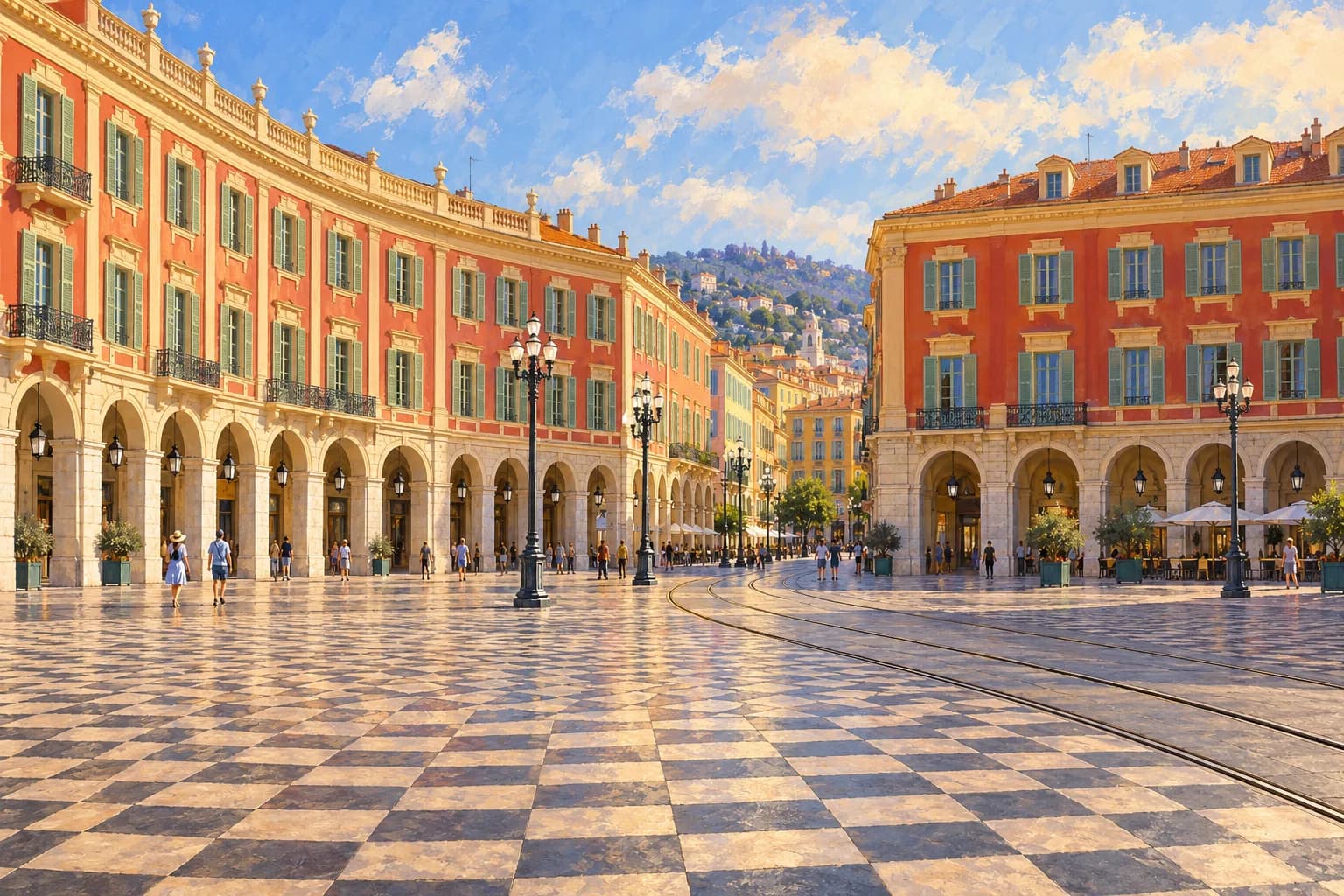 The setting of Place Masséna: facades and paving. The illustration does not reproduce the contemporary sculptures.
In Place Masséna, the red facades and geometric paving already reward a pause. But another conversation takes place above the people crossing the square.
The destination's guide explains Jaume Plensa's «Conversation à Nice»: seven figures associated with the continents and the idea of dialogue. They are not there merely to complete a photograph of Nice.
Start by noticing how your gaze moves between the paving, arcades and raised figures. The square is a reminder that exploring does not always require entering a monument: sometimes it means discovering what a place you usually walk through is trying to say.
Explore this place in WAONDERLyon: when telling the time meant describing the world
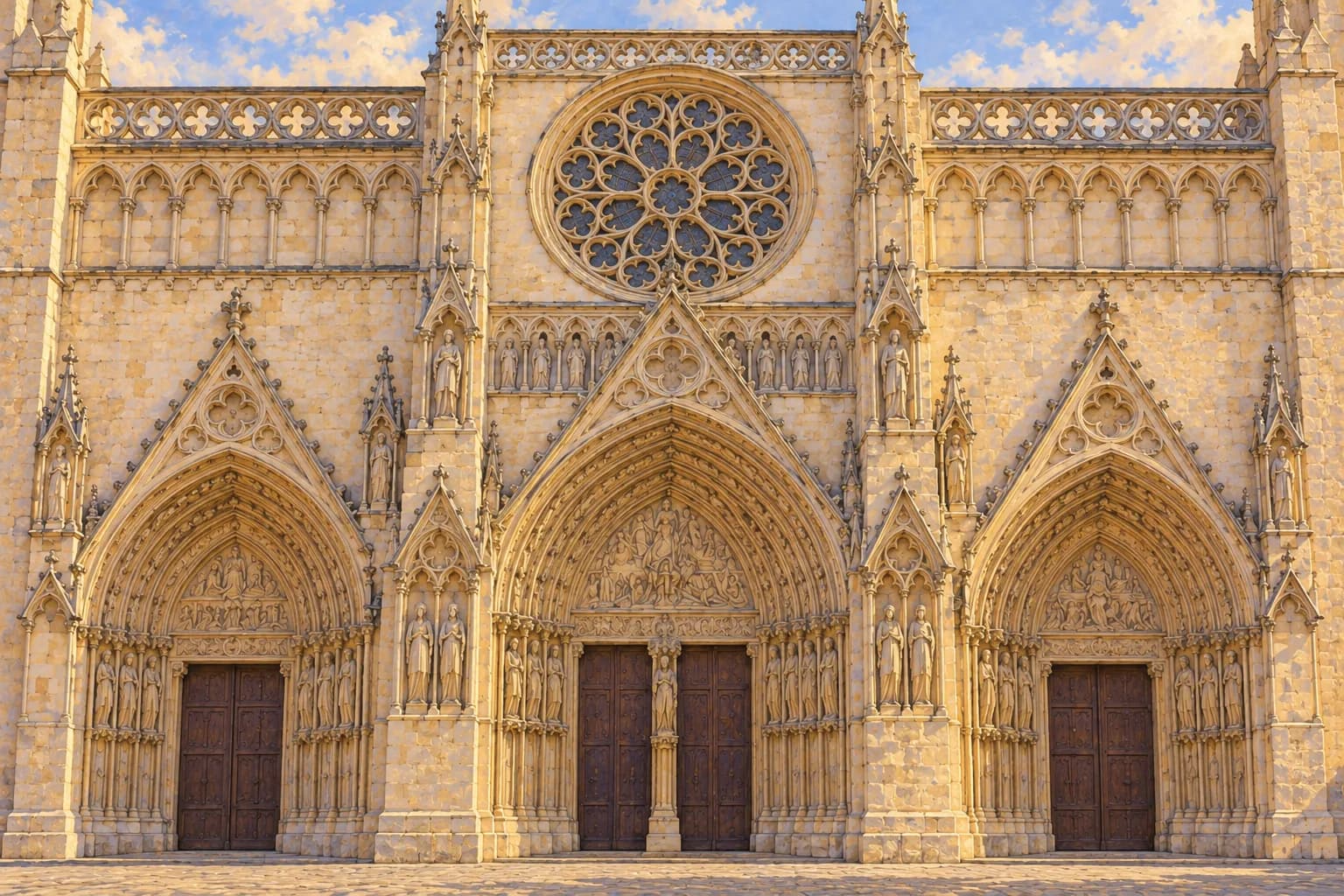 An interpretative detail of Saint-Jean's facade; the astronomical clock inside is not shown.
A clock can tell you that you are late. The one at Saint-Jean suggests a much greater ambition: representing the relationship between human time and the sky.
Lyon's tourist office explains its astronomical clock, which brings together solar, lunar and religious-calendar indications. Its story is not simply about an accurate hour: it is about the tools earlier generations used to give order to their world.
Begin with the facade’s rose window and, if you can go inside, look for the clock. The contrast changes what you notice: from worked stone to the cycles earlier generations tried to measure. If you also want to see the automata move, check their operating status and current visiting times first.
Explore this place in WAONDERBordeaux: the gate that ceased to be a boundary
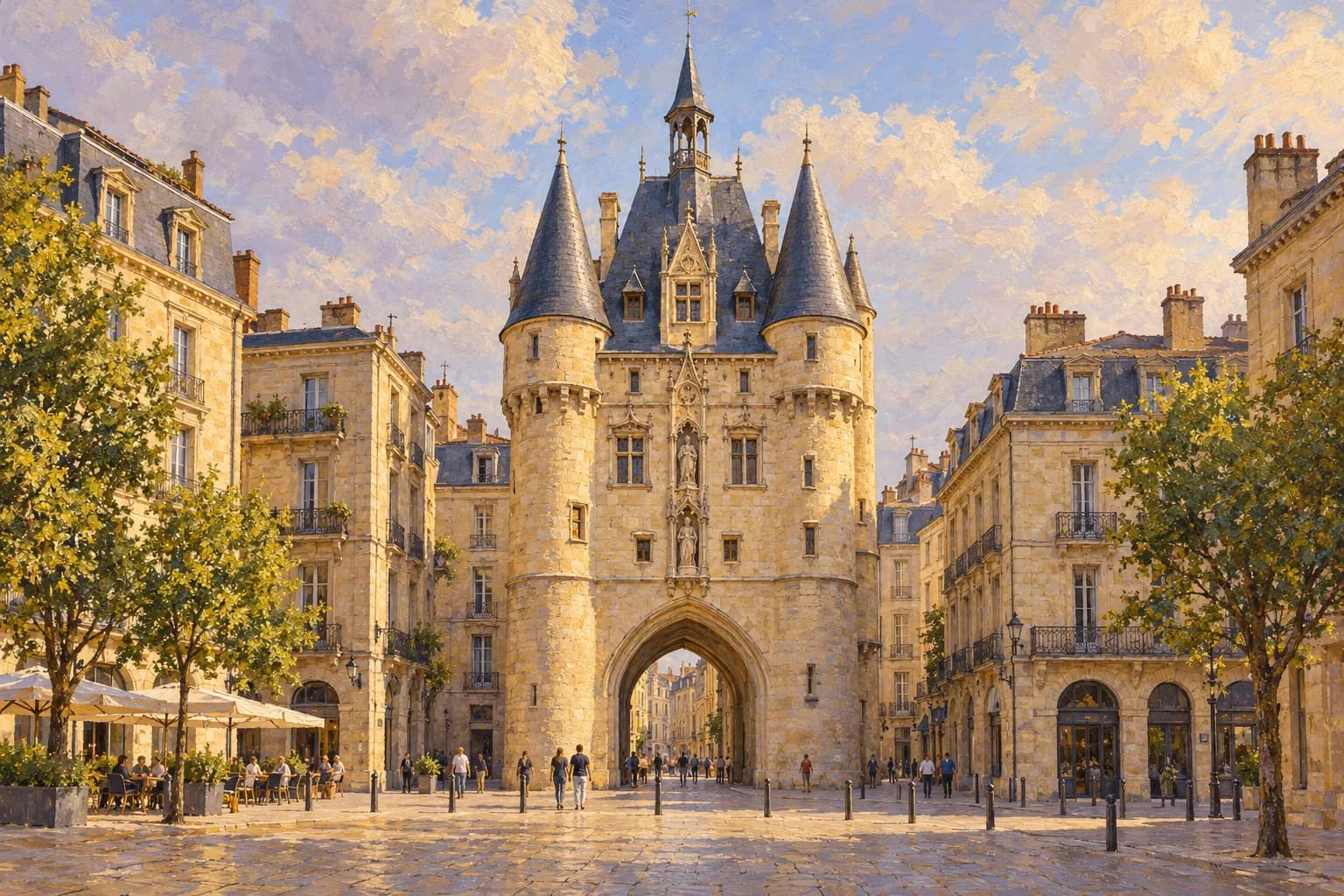 Porte Cailhau as a city threshold. A painterly interpretation, not an exact reproduction of its reliefs.
Walking through an old gate is different from walking around a statue: your own movement makes its purpose visible. There is a before and an after to the arch.
Bordeaux Tourism dates the construction of Porte Cailhau to 1493–1496. Its combination of defensive and ornamental features preserves the memory of a city that marked its entrances and expressed its power.
Notice the contrast between the open street-level passage and the pointed roofs above. It does not need to become a fairy-tale castle to hold your attention. Walk through, look back and consider how much the meaning of entering Bordeaux has changed since it was built.
Explore this place in WAONDERStrasbourg: the spire without a twin
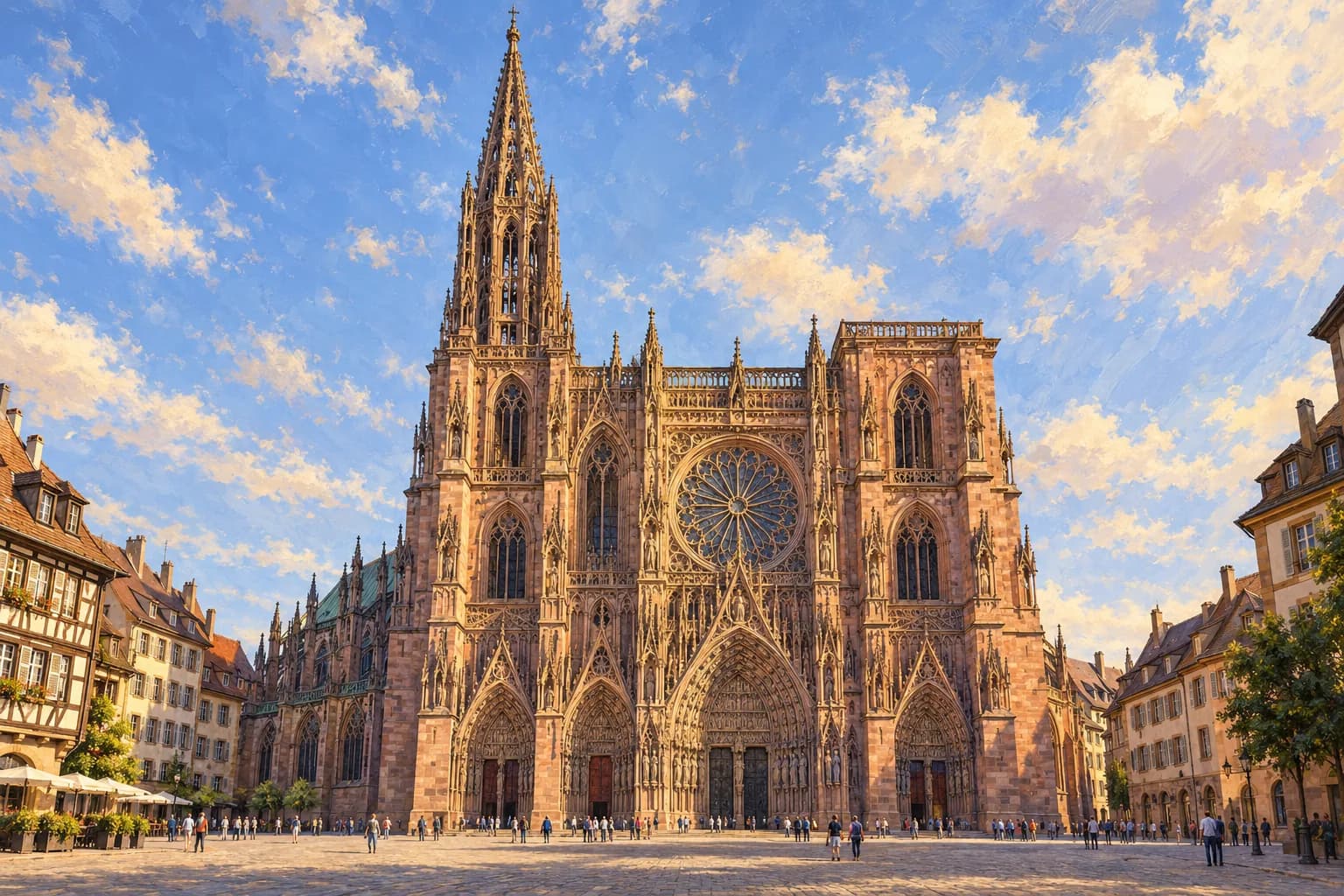 One spire, on the viewer's left when facing the facade. An illustration of the asymmetric outline.
Sometimes you discover a building by resisting the urge to complete it in your mind. Strasbourg Cathedral does not have two matching tall spires: its outline becomes unmistakable once you notice that difference.
The official introduction highlights its Vosges sandstone and single spire. The stone's colour, the gaps in the tracery and the difference between its two sides turn a huge facade into something you can learn to recognise in parts.
Find the asymmetry first, then choose a detail at eye level. The scale becomes less overwhelming when you stop trying to take everything in. You do not need to climb to the platform to begin that conversation with the building.
Explore this place in WAONDERBiarritz: a rock with more than a view to offer
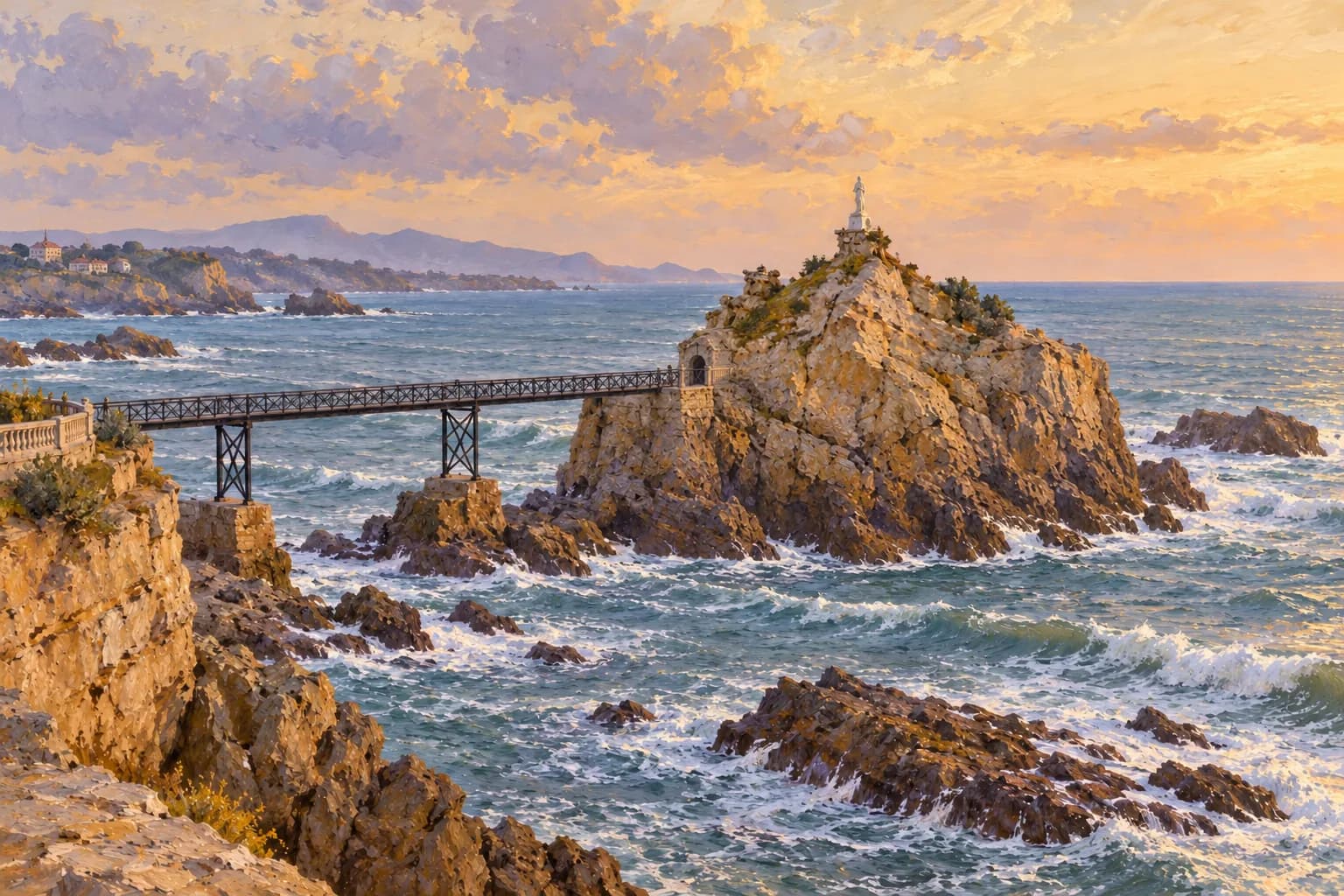 The Rocher de la Vierge and the tunnel entrance at footbridge level. Illustration.
The Rocher de la Vierge seems to offer a simple scene: a bridge, the sea and a white figure. Its history also involves human projects and a coast that does not easily submit to them.
Tourisme64’s heritage guide explains that Napoleon III wanted to use the rock in a harbour of refuge. Its tunnel allowed stone blocks to reach the breakwater: the passage that catches the eye today once had a working purpose.
Before you go: the city announces works nearby from 19 October to 26 November 2026. Check current pedestrian access and respect any closures; the works notice alone does not confirm whether the entire footbridge is open or closed.
Explore this place in WAONDERToulouse: a city shaped by arrivals
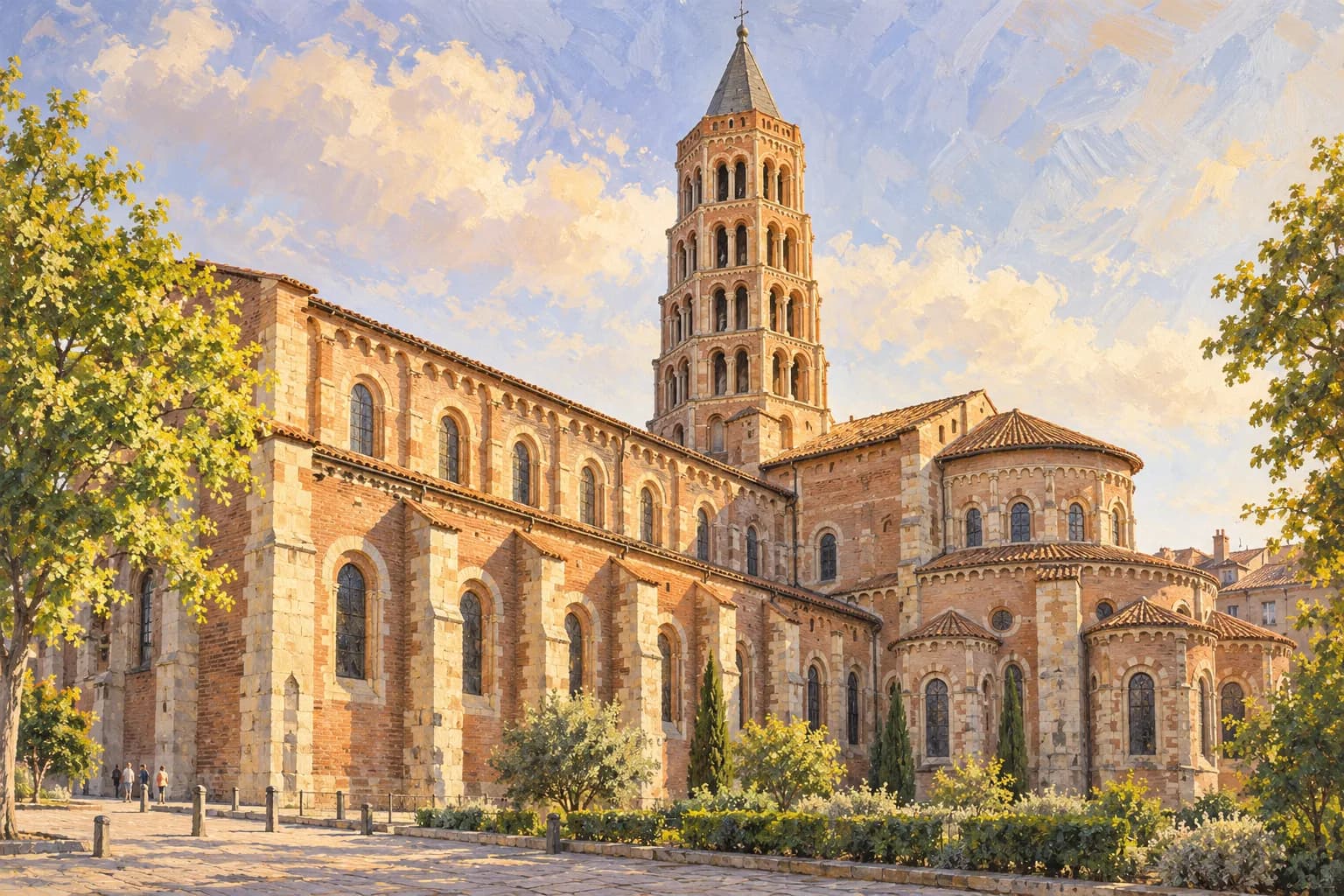 Saint-Sernin and its stepped bell tower. An illustrated interpretation of the building.
Saint-Sernin's brick has a warm presence even before you know its history. Afterwards, the building becomes more than a large church: you can also see it as somewhere people arrived after travelling a long way.
Toulouse's tourist office explains its links with pilgrimage and the routes to Santiago. Its Romanesque architecture holds a story of devotion, journeys and welcome that cannot be reduced to a single date.
Walk around the permitted public spaces and follow the levels of its octagonal bell tower. If you live in Toulouse, you can return another day to look at something else. If you are passing through, you may take away more than a silhouette: a sense of all the arrivals that came before yours.
Explore this place in WAONDERWhat you can find beyond these eight places
The working inventory reviewed on 27 October 2026 contains 28,868 exported records across these eight cities: 13,035 map-only points and 15,833 records not restricted to the map. The latter include 901 zones or areas and 14,932 records not marked as areas. This is not a count of 28,868 unique monuments or independently verified production conversations.
| City | Records |
|---|---|
| Paris | 13,244 |
| Marseille | 4,247 |
| Nice | 1,603 |
| Lyon | 3,732 |
| Bordeaux | 1,635 |
| Strasbourg | 1,634 |
| Biarritz | 287 |
| Toulouse | 2,486 |
These six categories are a selection from the inventory's 46 top-level categories, not a complete breakdown. Use them to decide what you would enjoy discovering, rather than judging a walk by its number of stops.
| Category | Records | A way to begin |
|---|---|---|
| Public art | 3,874 | Notice the figure, relief or intervention that changes a square. There are 1,985 records not restricted to the map. |
| Monuments and remembrance | 3,220 | Connect something visible with the person or event it commemorates; 1,832 are not restricted to the map. |
| Exhibition spaces | 1,458 | Choose a slower visit when you want to explore a collection; 1,378 are not restricted to the map. |
| Churches and places of worship | 1,434 | Discover architecture and local connections, as in Marseille or Toulouse; 1,095 are not restricted to the map. |
| Cultural centres | 1,155 | Find a neighbourhood's cultural life, not just its best-known landmarks; 1,109 are not restricted to the map. |
| Gardens | 2,849 | Plan a pause during your outing: 2,487 are map-only points, not promises of a conversation of their own. |
Map-only points help you find your bearings but do not guarantee an individual interactive story. Figures come from the reviewed local inventory and may differ from the app version you have installed. Check opening times, bookings and access with each venue before visiting.
Start nearby and take your curiosity with you
If you live in one of these cities, you do not need to wait for a holiday. Choose a place, learn one detail and return another day for the next. If you are planning a trip, start with a question you actually want answered, not an obligation to see everything.
You can read the website in Spanish, English, French and Italian. For the app’s language news, we also explain what WAONDER’s language update for iOS introduced.
Your best first outing may be a small one. What matters is that the next time you pass, the place is no longer entirely unfamiliar.
Find your next story with WAONDERSection
Waonder updates