Paco the Dog: why Madrid gave a street dog a statue
He had no owner, but Madrid gave him music, an obituary and a statue. Paco's story changes how you see the small bronze dog on Calle Huertas.
The neighbour who needs no pedestal
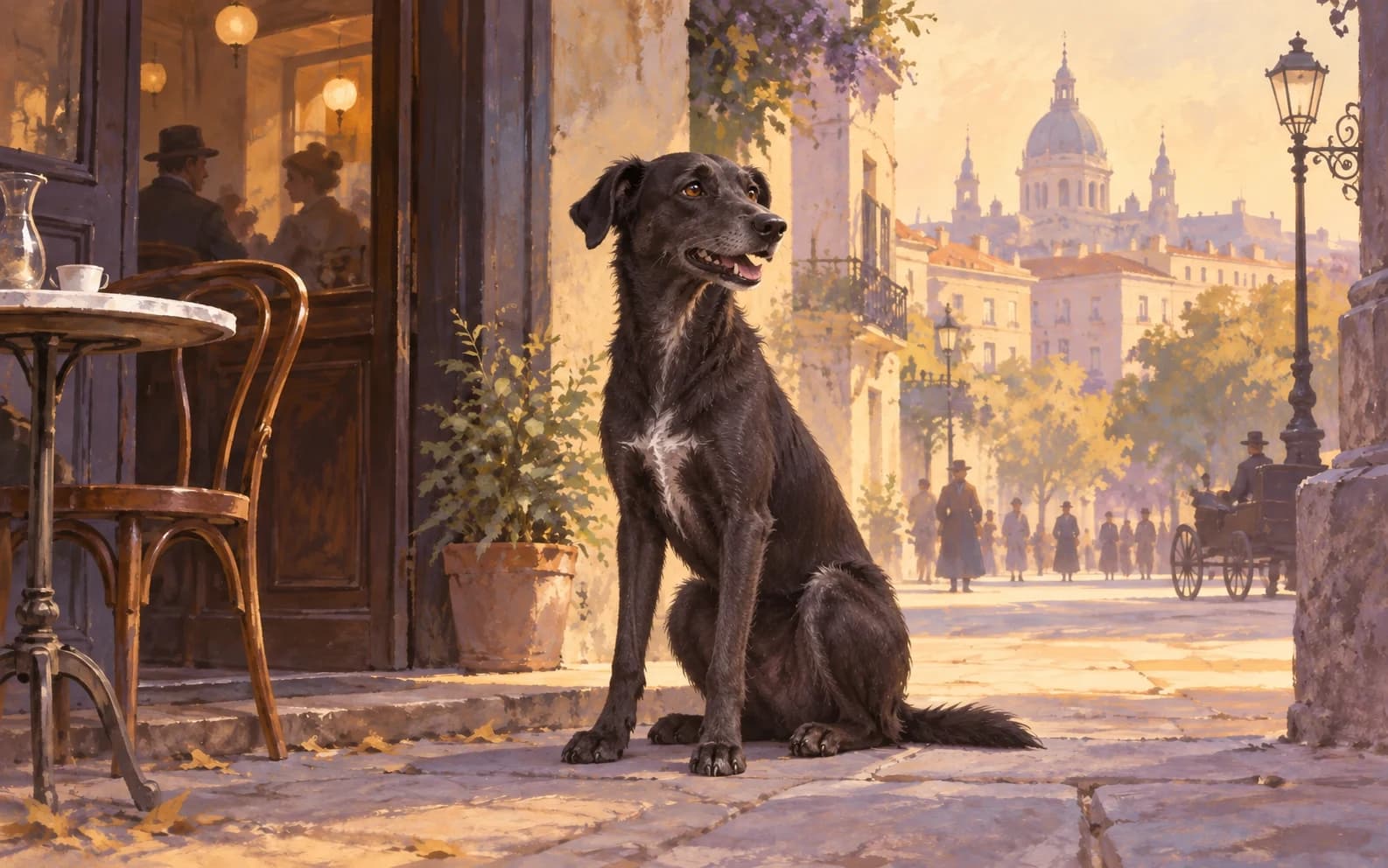
At 71 Calle Huertas, there is a dog you could overlook precisely because he sits at your feet. He has a long muzzle, folded ears and an open mouth. He guards no fountain and crowns no pedestal: he sits on the pavement, as though the street still had room for him.
This is Paco the Dog. He won no battle and belonged to no distinguished family. He was a stray whom Madrid eventually honoured with sheet music, an obituary and, much later, this small monument. To understand why, we have to return to a city that began treating a dog with no owner as someone it knew.
Open Paco the Dog in WAONDERA meal, a name and no leash
Madrid City Council's account places the beginning at Café de Fornos on October 4, 1879: the Marquis of Bogaraya fed the dog and named him Paco after St Francis of Assisi. That is the version in a retrospective account, not a scene we can reconstruct word for word.
A meal seems a small beginning for a story that would survive for more than a century. Yet there is something moving about its scale: before the fame, before the bronze, someone made room for an animal from the street.
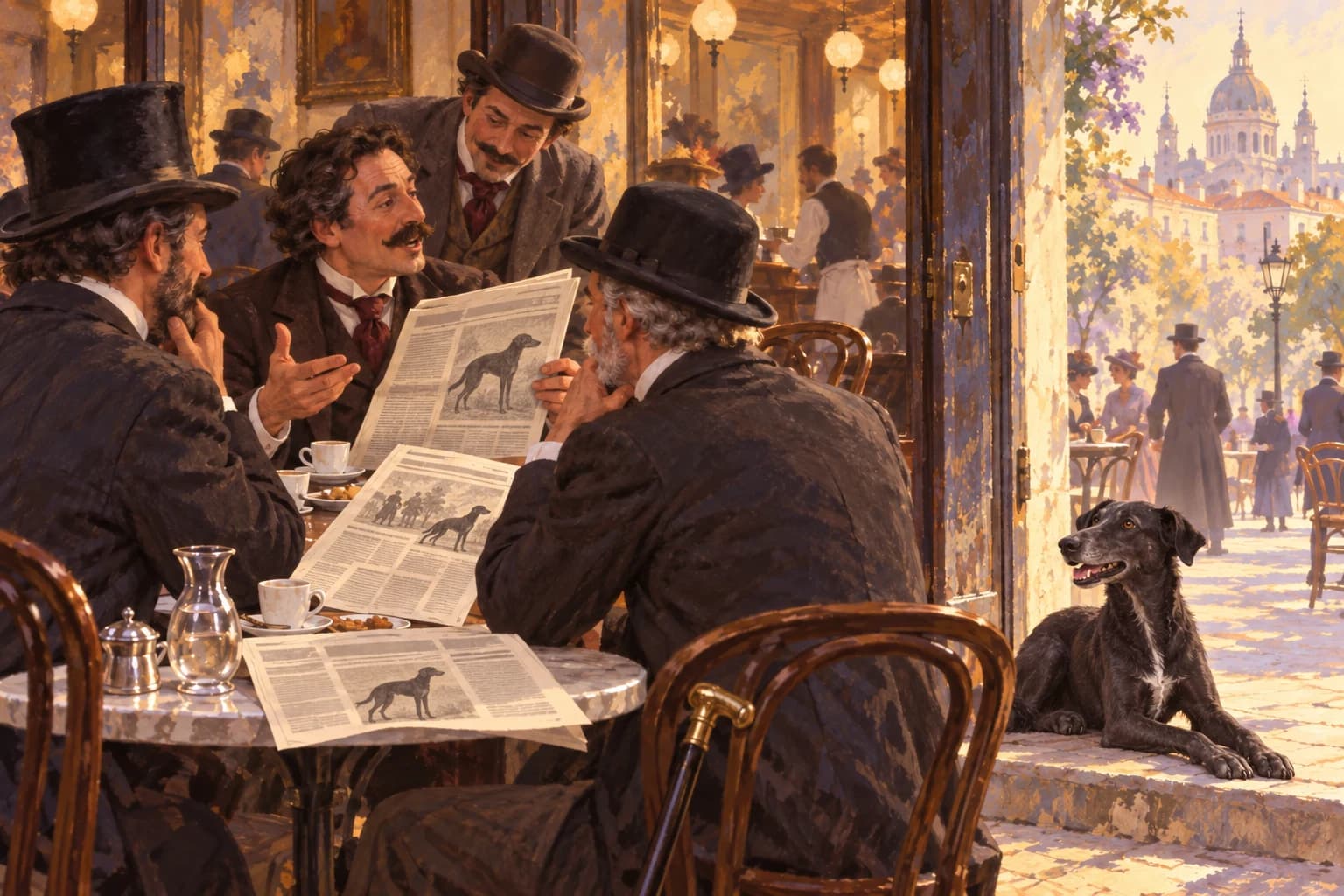 From the street into café conversations and the press: an evocation, not a document of Café de Fornos.
Paco remained a stray. A dossier from Madrid's Víctor Espinós Music Library follows him through cafés, theatres and bullrings; newspapers made stories out of his adventures. He wasn't simply a famous man's dog. He was the character himself.
Madrid gave him music
His popularity left evidence you can still consult. The library holds a piano polka dedicated to Paco, playfully presented as the work of two dogs, Turco and Palomo. Its voices imitate barking. This is not biography: it is musical fiction built around a real animal.
That detail gives his fame a different scale. People did more than recognise him in the street. Someone wrote music bearing his name; a publisher printed it; a score let you take Paco home without taking him off the streets. The library also documents a funeral march dedicated to him. Between a dance and a lament, much of his story comes into focus.
When the news stopped being funny
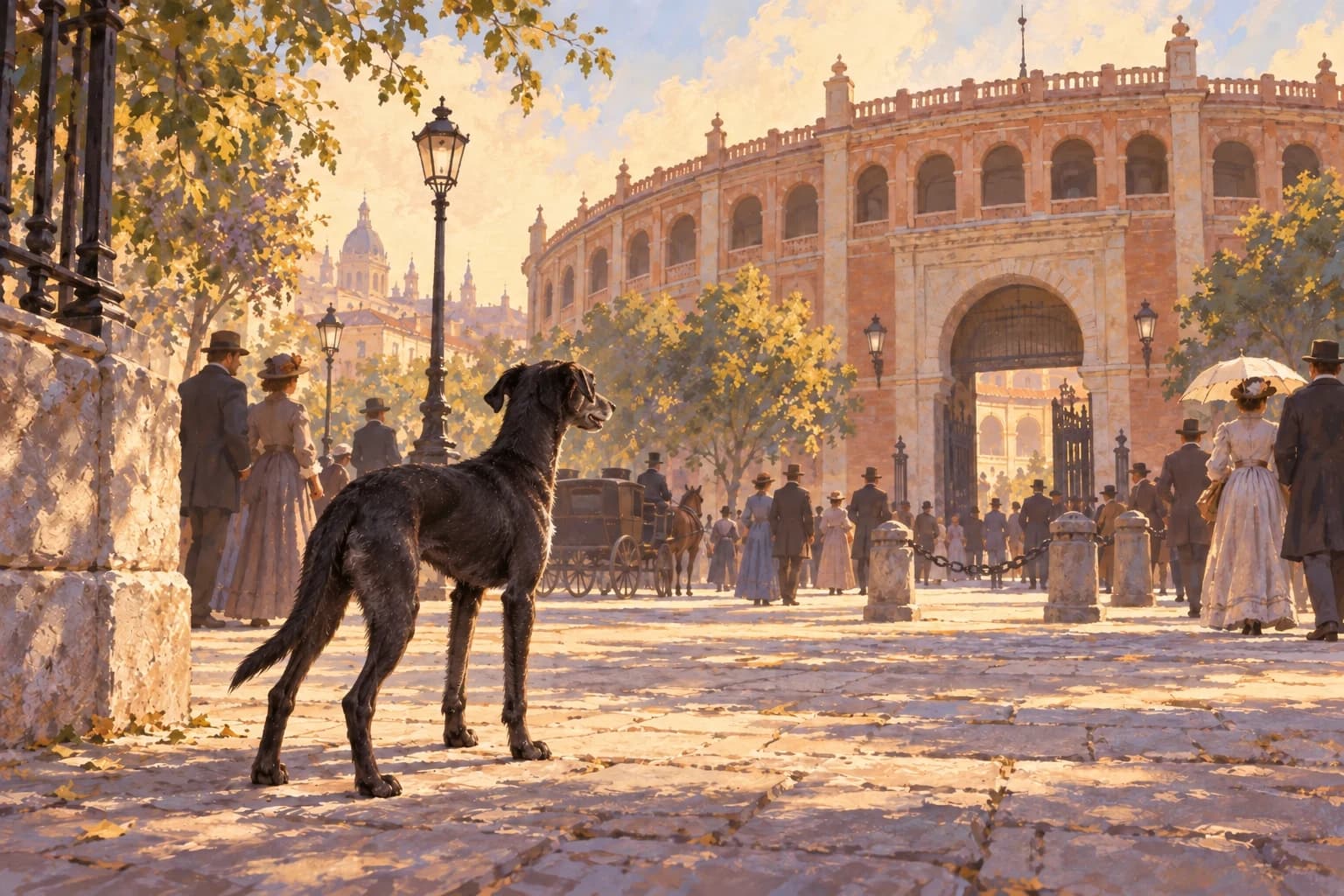 Paco outside a bullring: an evocative scene, not a reconstruction of his final steps or a specific venue.
In June 1882, an incident in a bullring brought his life to an end. The municipal sources do not agree on the whole sequence: Madrid's tourism office places his death on the day of the incident; the council's chronicle says he died later from his wounds. We do not need to choose the most dramatic version to understand the loss.
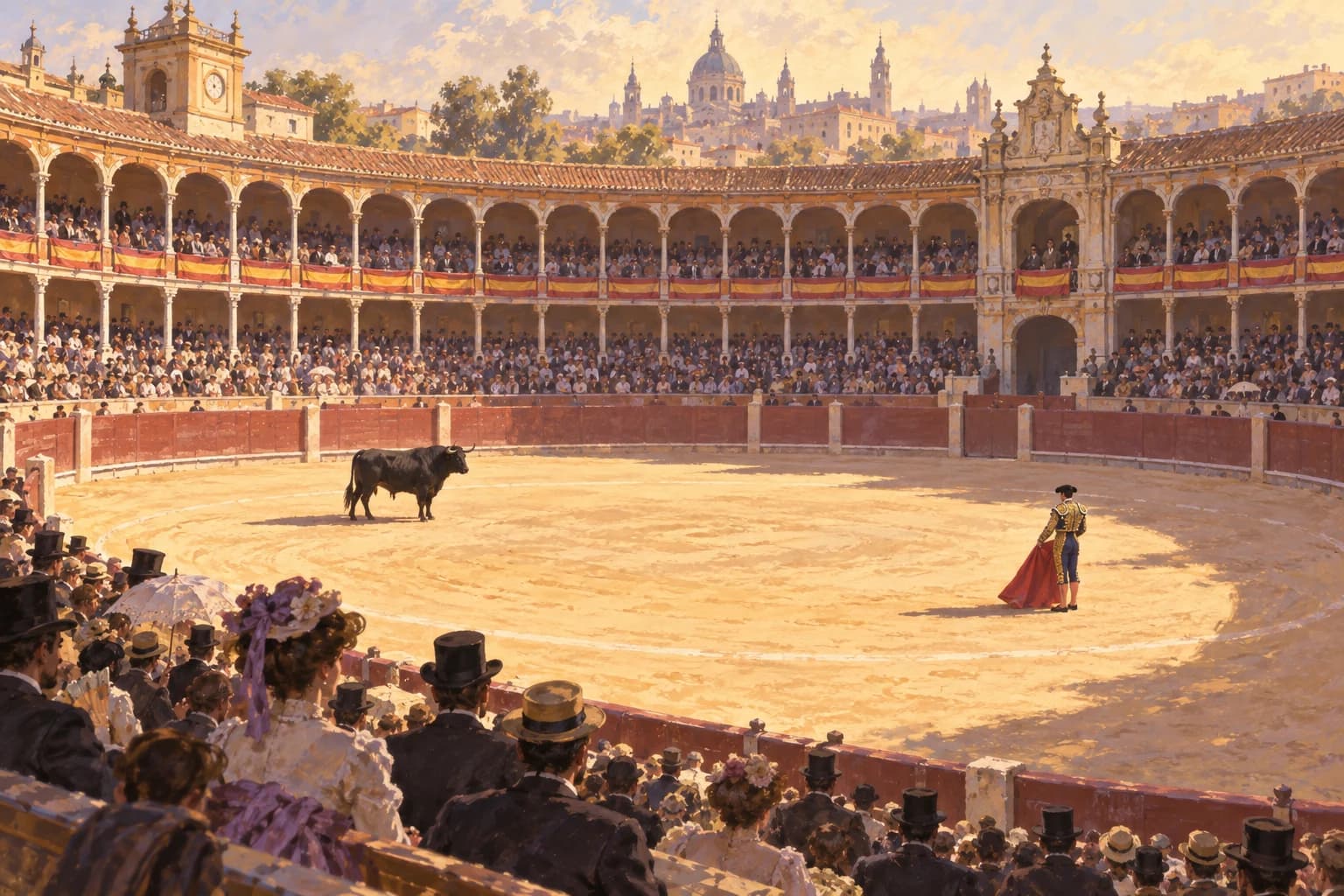 An evocative bullfight scene, not a reconstruction of what happened to Paco.
The council's chronicle reproduces reports on his condition and records an obituary paid for by an anonymous citizen. Someone wanted this dog's death to have a place in the newspaper. We do not know who paid, but the gesture remains: Paco deserved a written farewell.
Municipal accounts also say his remains eventually reached the Retiro. However, we have not been able to verify a burial location or a grave you can visit. That part belongs here as an attributed tradition, not directions to find him there. The place where you can meet him today does have an address.
Finding him again on Calle Huertas
On January 16, 2023, an initiative by Madrid's Nuevo Rastro and Literary Quarter traders' associations became a visible tribute. More than 140 years had passed since Paco's death. Sculptor Rodrigo Romero Pérez brought him back to the street in bronze.
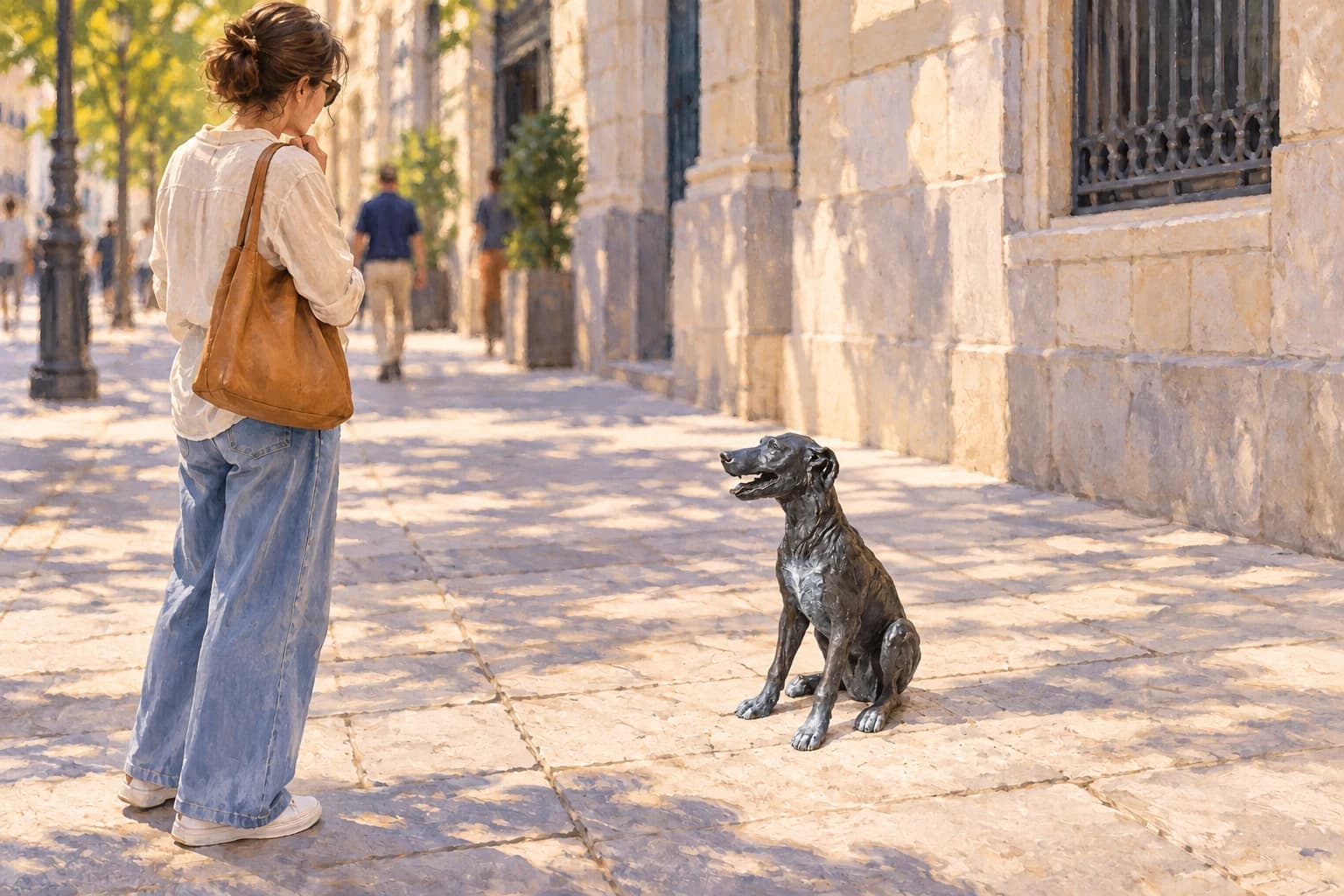 The silhouette and expression were checked against photographs of the real monument; the light, passerby and setting are an artistic interpretation.
The city's public-art record describes a life-size figure with a black patina, resting directly on the pavement. That detail is worth pausing over: meeting Paco requires no upward gaze. You can simply stop beside him.
Next time you pass 71 Calle Huertas, look at the dog first, then his plaque. Perhaps what you want to keep in a photograph will not be an unusual sculpture, but this small exception among so many solemn monuments: the memory of someone who had no owner, but did have people who remembered him.
Discover Paco the Dog in WAONDERSection
Stories behind places