Bordeaux without the perfect reflection: Cailhau to the Garonne
A walk from Porte Cailhau through Saint-Pierre to the quays and Place de la Bourse, with details to notice and a real alternative when the water mirror is switched off.
There is a photograph of Bordeaux that seems to set conditions: the Bourse facade, still water and a sky doubled beneath it. A walk need not wait for that picture to become possible.
The tourist office warns that the Miroir d’Eau is out of service for winter maintenance, from November to April. That official notice is a useful starting point: we can head out knowing what we are not going to look for.
This walk links Porte Cailhau, a pause in Saint-Pierre and the quays as far as Place de la Bourse, on the Garonne’s left bank. Its interest lies in moving from a city that closed its gates to one presenting a broad facade to the river. Going inside the gate is optional; the walk does not depend on climbing it.
Look up Porte Cailhau in WAONDERBefore heading out: choose your walk
Start on Place du Palais, beside Cailhau. You can spend time with the gate and return to the neighborhood, or continue to the Saint-Pierre square, come back to the quays and walk north to the Bourse. There is no need to cross the river.
The official quays itinerary links the Bourse and Cailhau in the opposite direction. Here we choose just that stretch and a neighborhood detour, not its full eight kilometers or its accessibility certification.
There is no compulsory finish time. Looking closely at a facade, entering the gate or sitting down changes the plan. If you need a step-free route, consult the official itinerary and its access information; the riverwalk, old streets and monument stairs are not interchangeable.
Cailhau: go around before going through
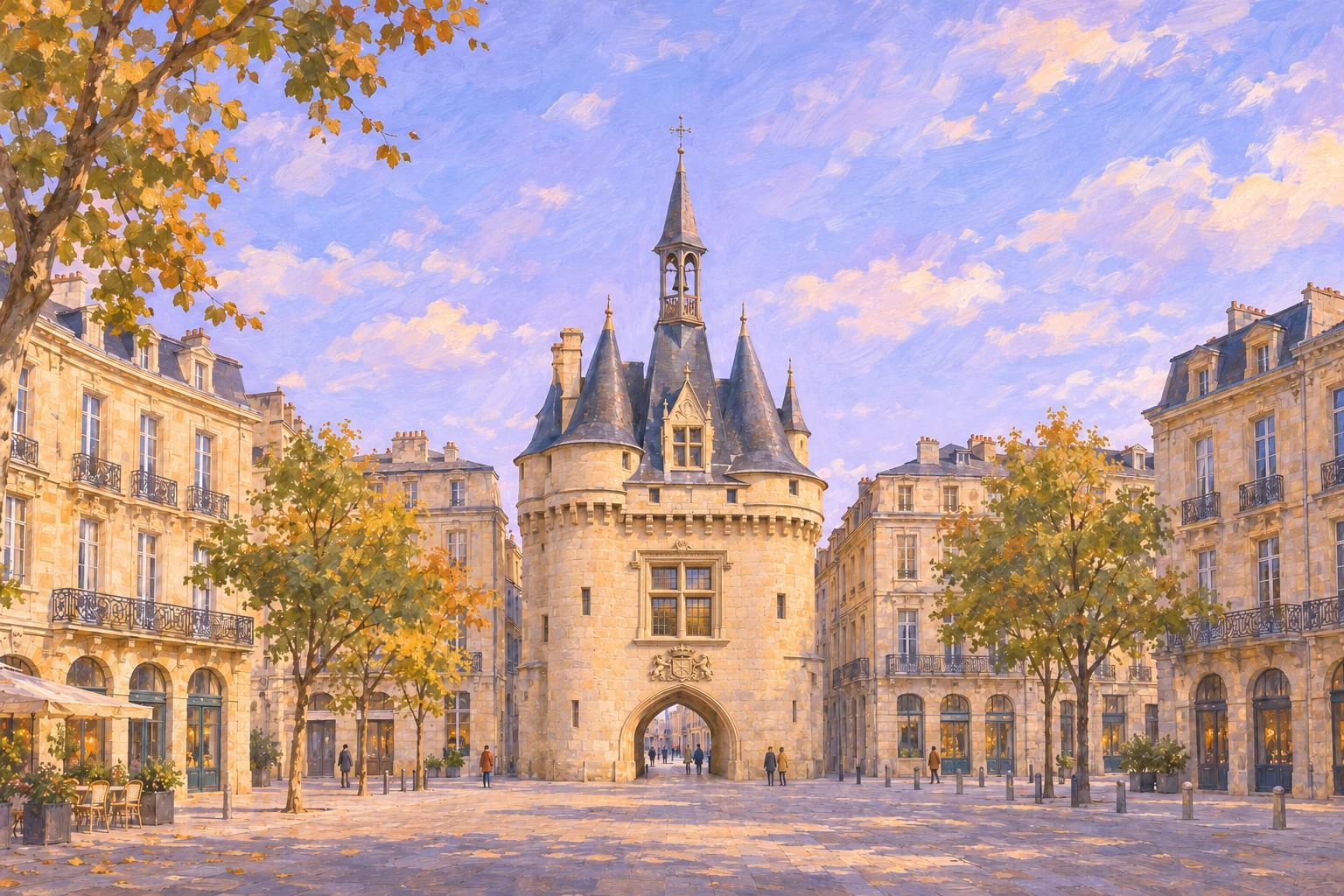
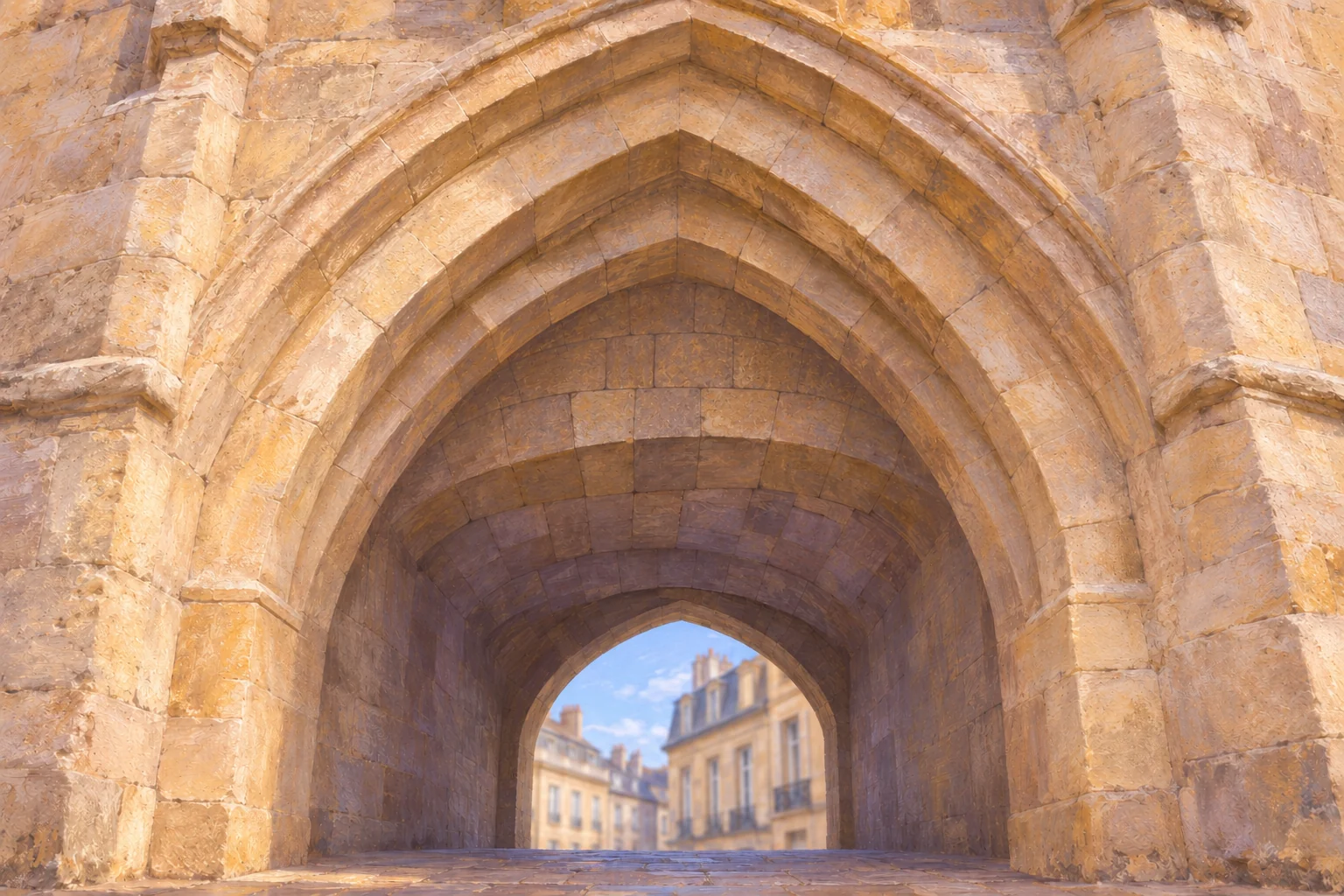 Looking closely at the stone. An interpretation of the existing passage, not an archaeological section or an exact record of defensive openings.
From the square, Cailhau can look like a small, isolated castle. The French Culture Ministry’s entry identifies it as a late-fifteenth-century gate that belonged to a wall. Look at its sides to understand the difference: it was not conceived as a sculpture standing in a square.
The monument’s own exterior guide invites you to recognize connections with the old defenses and compare the two faces. Their decoration differs. The king’s image faces the river; the city side carries a heraldic composition. The building was also a way of presenting the city to arrivals.
Then approach the arch without blocking the passage. Its depth and the joining of stone tell another part of the story, less delicate than the roofs. An overall photograph and a closer look answer different questions.
If you want to enter, check winter opening and the stairs before arranging a morning around the climb. You can keep this entire first stop even if the interior is closed.
Saint-Pierre: a pause without an admission ticket
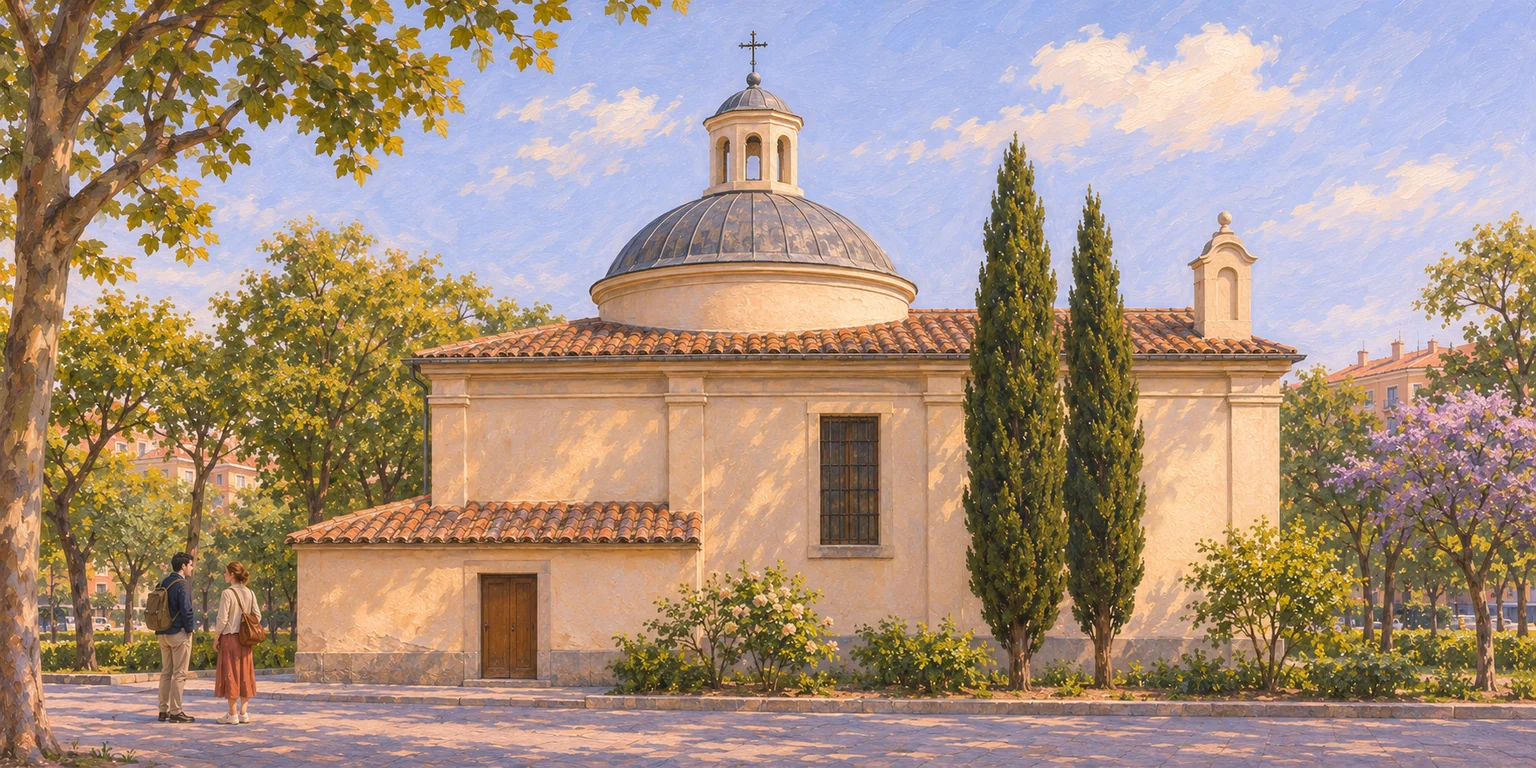
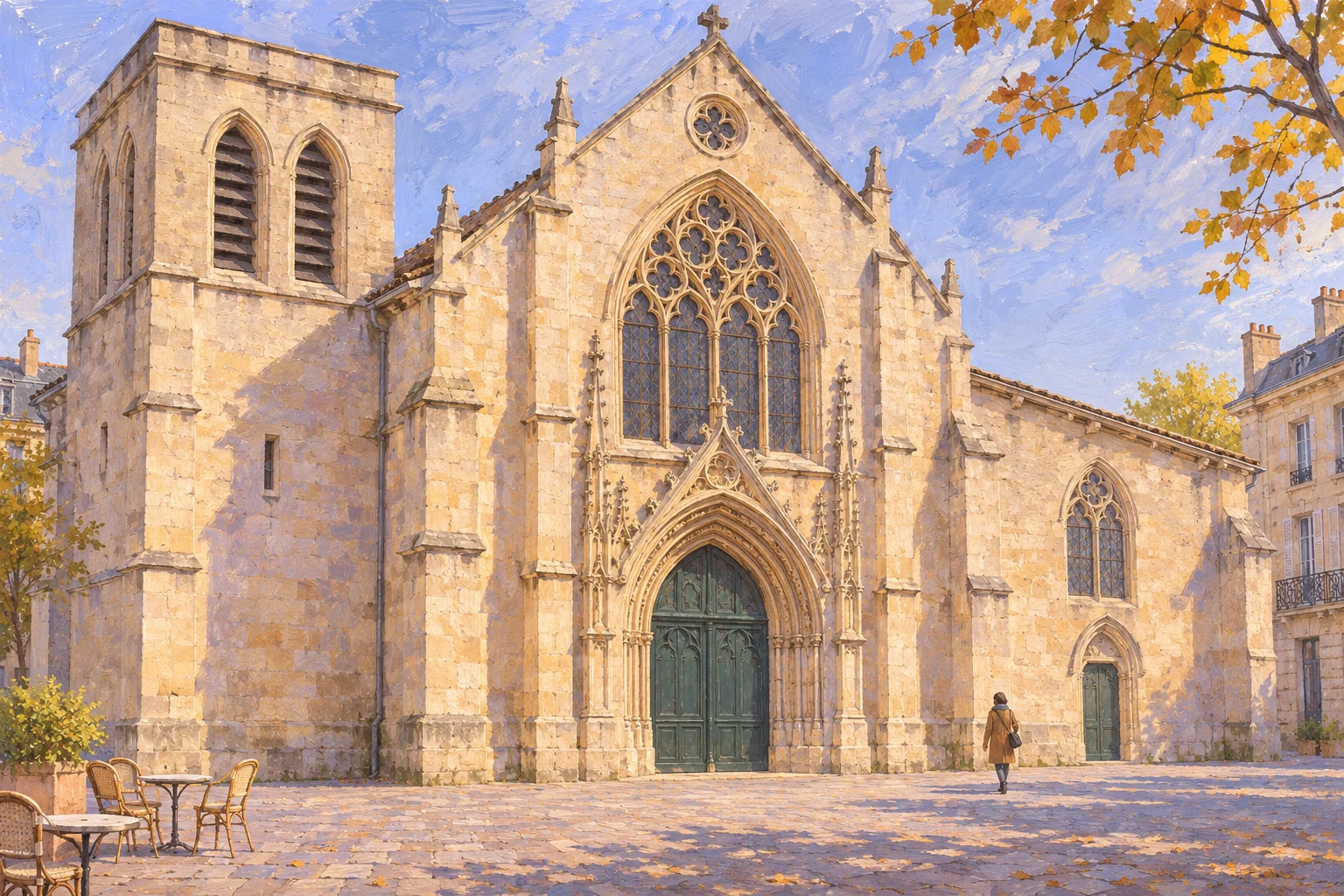 A painted interpretation of the church and square, not a guarantee of interior access or the precise arrangement of café terraces.
Head into the neighborhood toward Place Saint-Pierre. The shift in scale is part of the walk: from a monumental passage to narrower streets and a place to pause without completing a sightseeing checklist.
The tourist office’s history of the church places it on the site of the Gallo-Roman port, filled in during the Middle Ages. Today’s neighborhood square once received water and goods. When you return to the Garonne, compare the two spaces: the port moved, and the city grew over its footprint.
From outside, look for the tracery window above the entrance and the square tower to one side. You do not need to enter to compare these openings with domestic windows nearby. If the church is open and you choose to visit, respect its religious use.
This can be the walk’s pause. There is no compulsory café, and buying something does not make the plan more valid. Stopping for a moment lets you see how facade, square and everyday life fit together.
Look up Saint-Pierre in WAONDERBack to the Garonne: from narrow street to open space
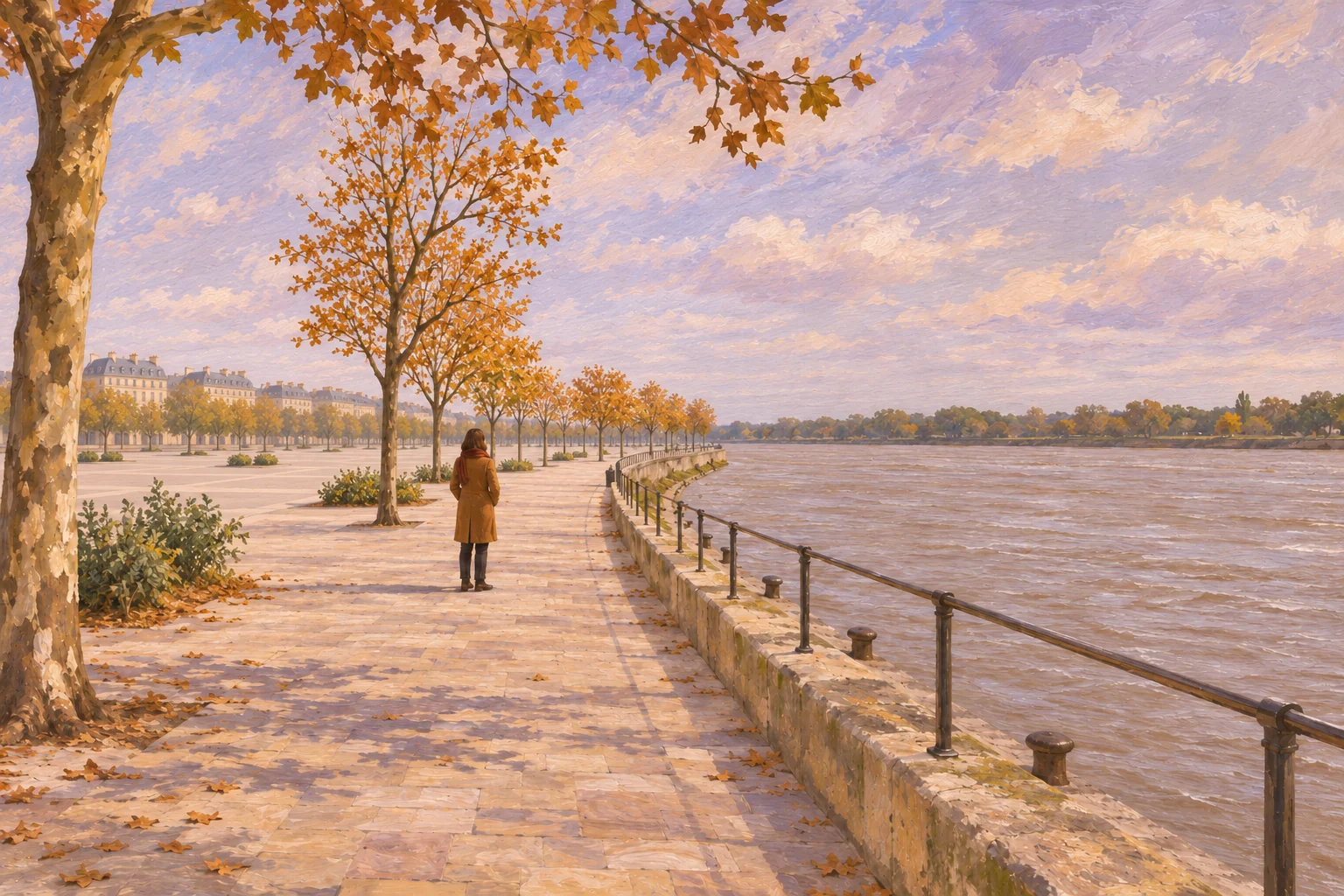 The change of scale beside the river. An interpreted scene, not a map of a particular access or a current inventory of its street furniture.
Return toward the quays and use designated crossings over traffic lanes and tracks. From the riverwalk access, continue north toward Place de la Bourse. The city stays to one side; the river opens the other.
Do not stand in the cycle lane for a better photograph. The metropolitan authority’s information on left-bank cycle continuity is a reminder that the quays are a transport corridor, not an empty stage set.
The pause here can be as simple as staying behind the railing and comparing the Garonne’s width with the streets you have just left. The walk can be shortened: if the weather turns, you need not reach the last stop to have seen something differently.
The Bourse without a double in the water
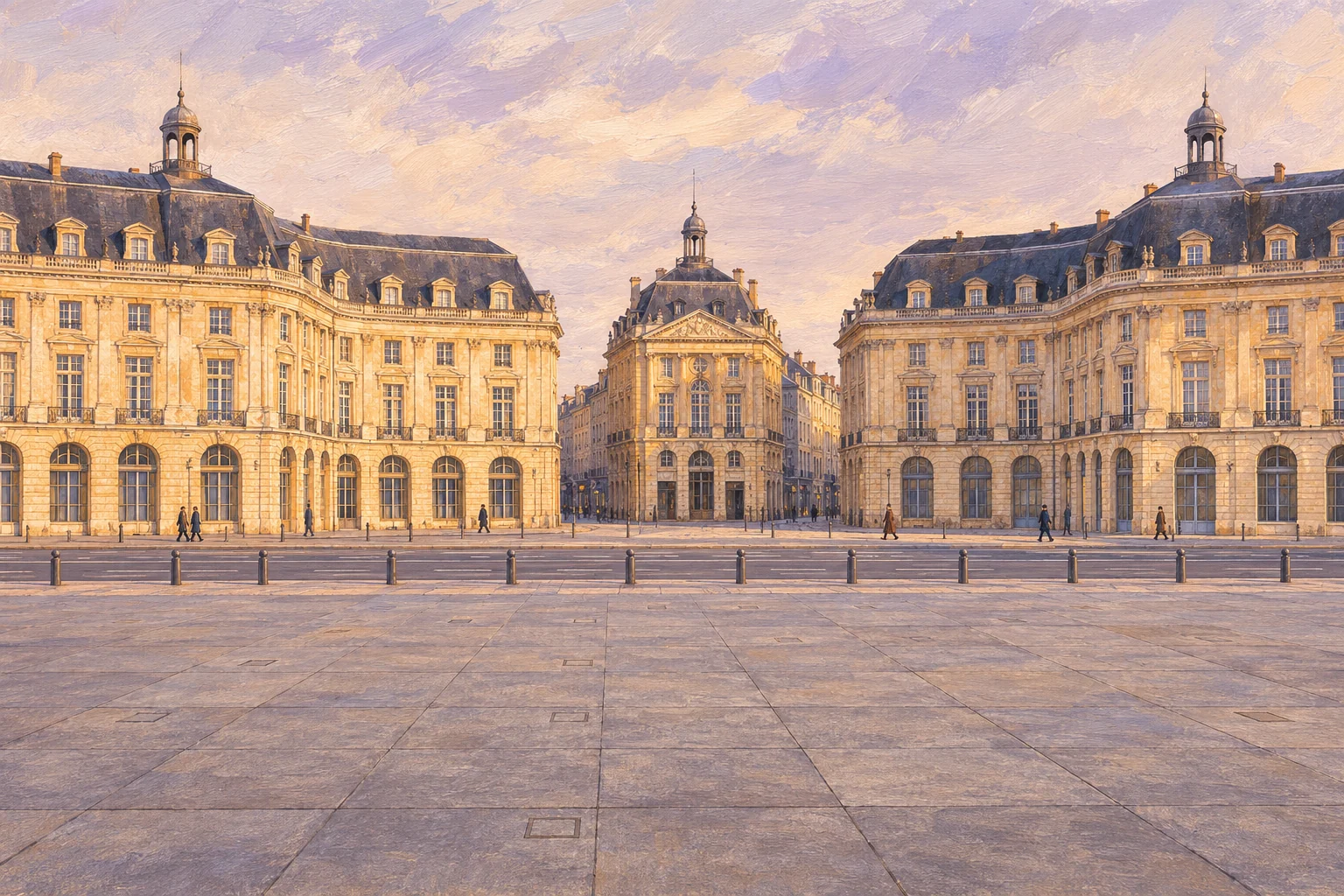 An interpretation of the square with the water mirror dry. It does not depict the weather on a particular day.
On arrival, look first at the buildings. The tourist office explains the eighteenth-century project associated with the Gabriels, which opened a new relationship between city and river. After Cailhau, that contrast has a scale you can recognize.
The square’s wings, windows and central space remain when there is no reflection. Follow the rhythm of the facades with your eyes instead of waiting for the ground to copy them.
If the paving is dry, it does not mean you came at the wrong time or too early. The question changes: rather than “How do I get the water-mirror picture?”, try “How is a square arranged to face a river?”.
Look up Place de la Bourse in WAONDERA walk worth returning to
The plan needs neither interiors, purchases nor a particular light. A first outing can stay with Cailhau and Saint-Pierre; another can concentrate on the waterfront. Check local notices before leaving and adapt to conditions on the day.
For a wider view, our selection of French cities places Bordeaux among other destinations to explore. This walking selection is editorial: the buttons lead to individual places, not a combined route loaded into the app.
Your next photograph may not contain two perfectly reflected cities. It can hold a gate you understand, a square where you stopped and the river that connects them. That is reason enough to go out, even when the mirror rests.
Return to Cailhau with WAONDER Download WAONDERSection
Ideas for city walks