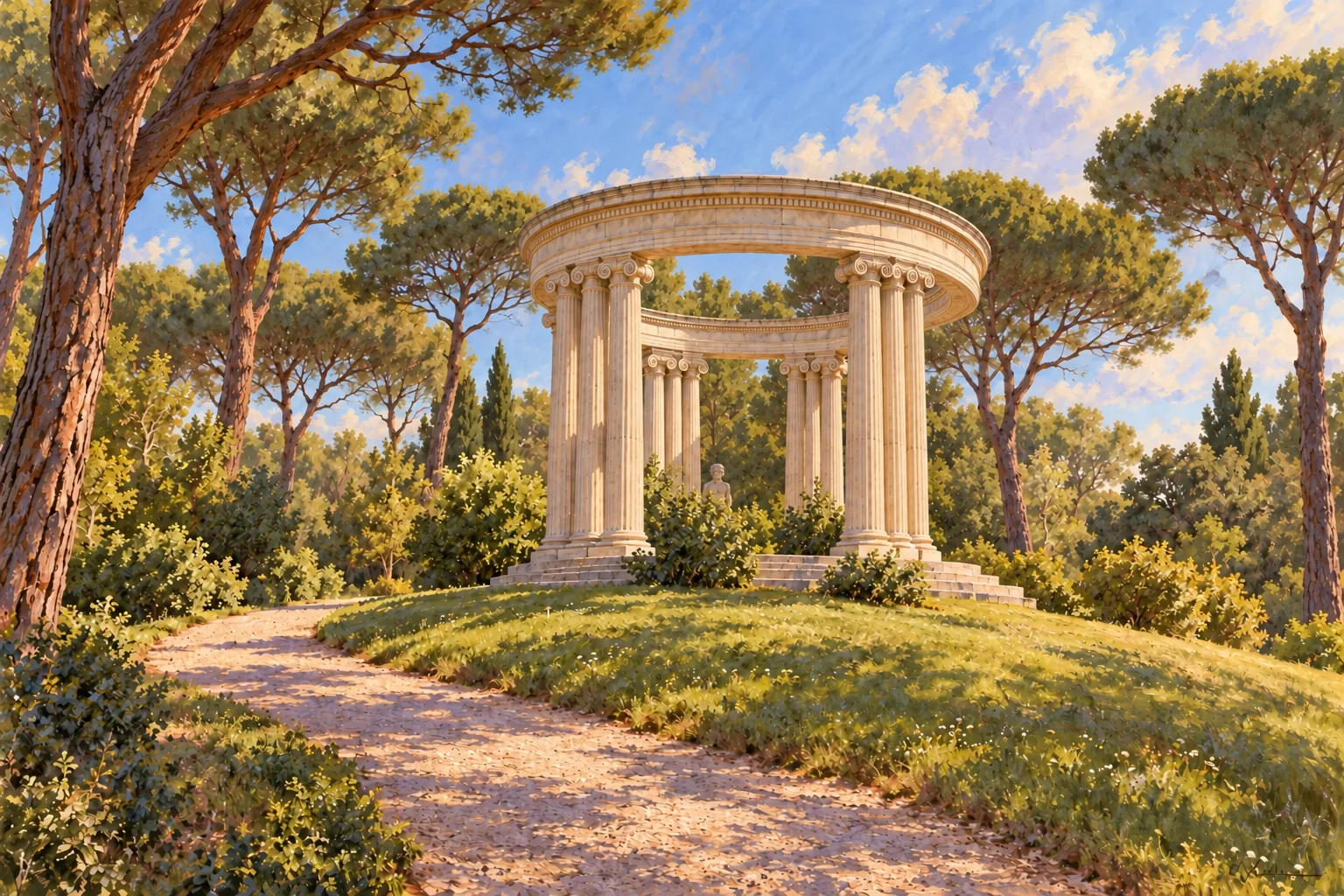
A walk to Goya: San Antonio de la Florida and the Manzanares
A small chapel, a ceiling full of people and a bridge over the Manzanares: a short Madrid walk with time to look closely at Goya’s frescoes.
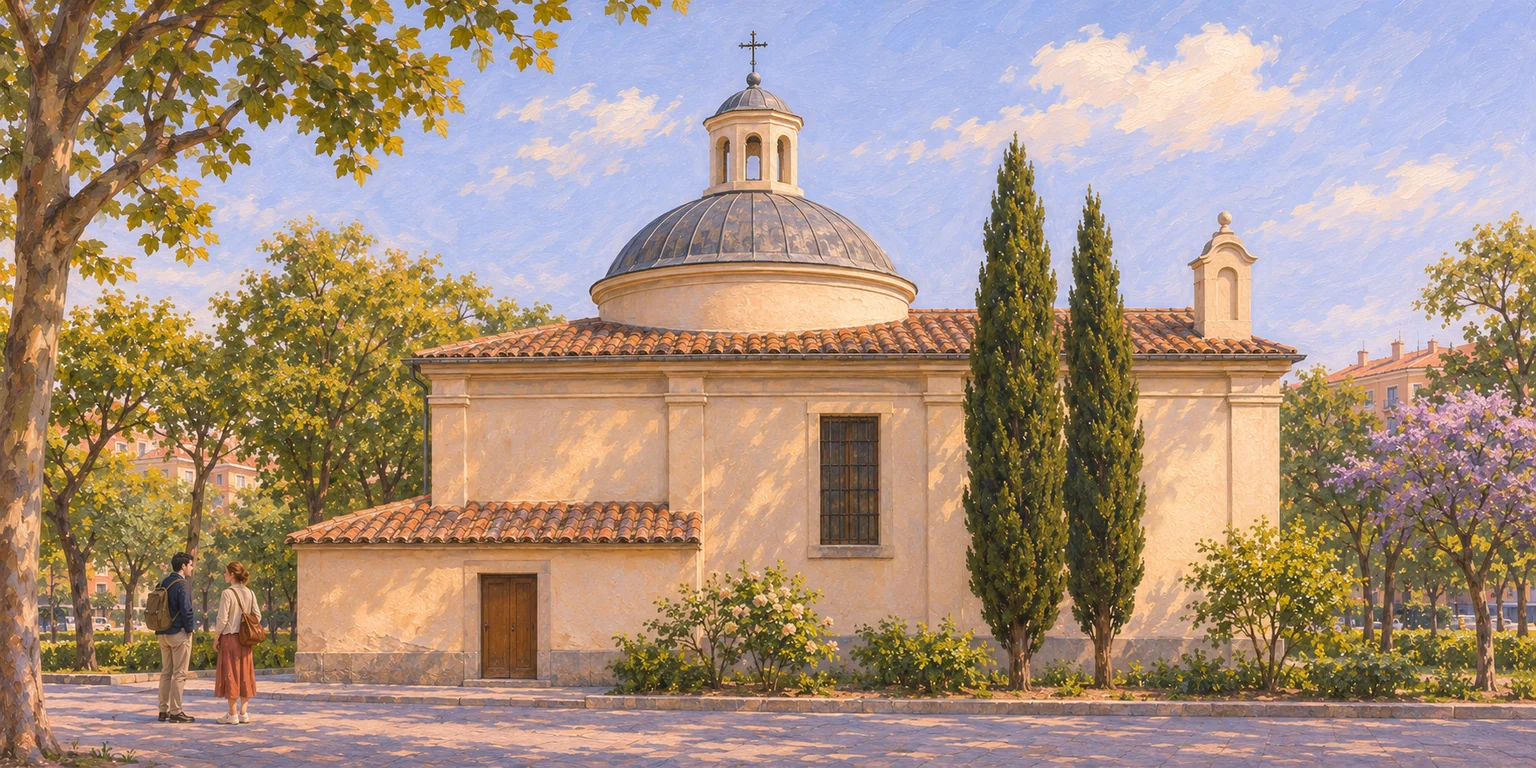
On some Madrid walks, the most interesting thing is above your head. Not because you need to climb very high, but because you entered looking straight ahead.
At San Antonio de la Florida, pause before moving further inside. Above you, around a railing that does not exist, people lean out, talk and watch. Goya painted them on a dome. We can spend a few minutes underneath, following their gestures instead of immediately looking for the next room.
The plan is simple: reach the chapel, give it your attention, then walk towards the Manzanares. One museum and one bridge, not ten attractions to tick off. It works as a weekend outing or a fresh look at a neighborhood you already know.
Find San Antonio de la Florida in WAONDERFirst, find the right chapel
Príncipe Pío is a useful arrival point. From there, follow Paseo de la Florida to Glorieta de San Antonio de la Florida. Look for the museum signs at number 5, rather than simply entering an open church door.
There is a reason for checking: two very similar churches stand here. Madrid’s official tourism page explains that another was built to accommodate worship while preserving the original as a museum. The frescoes are in the original.
Before going in, notice the difference between this building’s scale and the idea of a major museum. Its compact exterior does not quite prepare you for the amount of painting inside. You do not need to add another stop to make the outing worthwhile: this one already offers a change of pace.
A painted railing that gathers everyone together
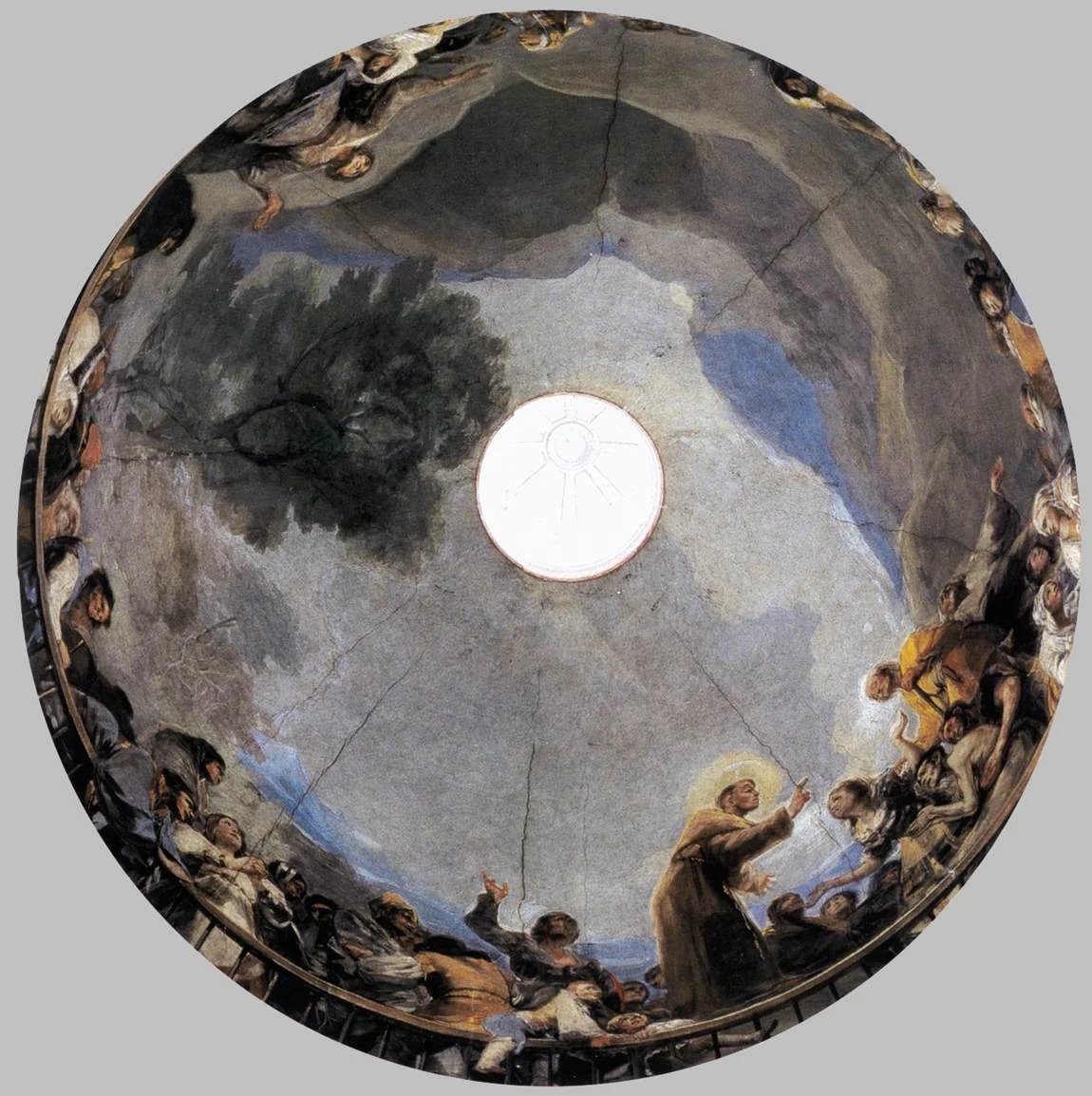 Goya, The Miracle of Saint Anthony of Padua, 1798. A reproduction of the actual painting, not a generated reconstruction, showing its circular composition.
The University of Zaragoza describes the ring of spectators: ordinary people look over a painted balustrade, with landscape and sky behind them. Angels occupy other parts of the decoration. Separating these spaces helps you avoid seeing everything as one cloud of figures.
Choose a point on the railing and follow it with your eyes. Bodies lean out, hands rest on it, and heads turn in different directions. An imagined piece of architecture brings the painted people closer to the space you occupy.
Then distinguish building from image: the cornice belongs to the architecture; that balcony belongs to the painting. This small exercise can be more rewarding than trying to memorize every name.
A miracle about a voice that was missing
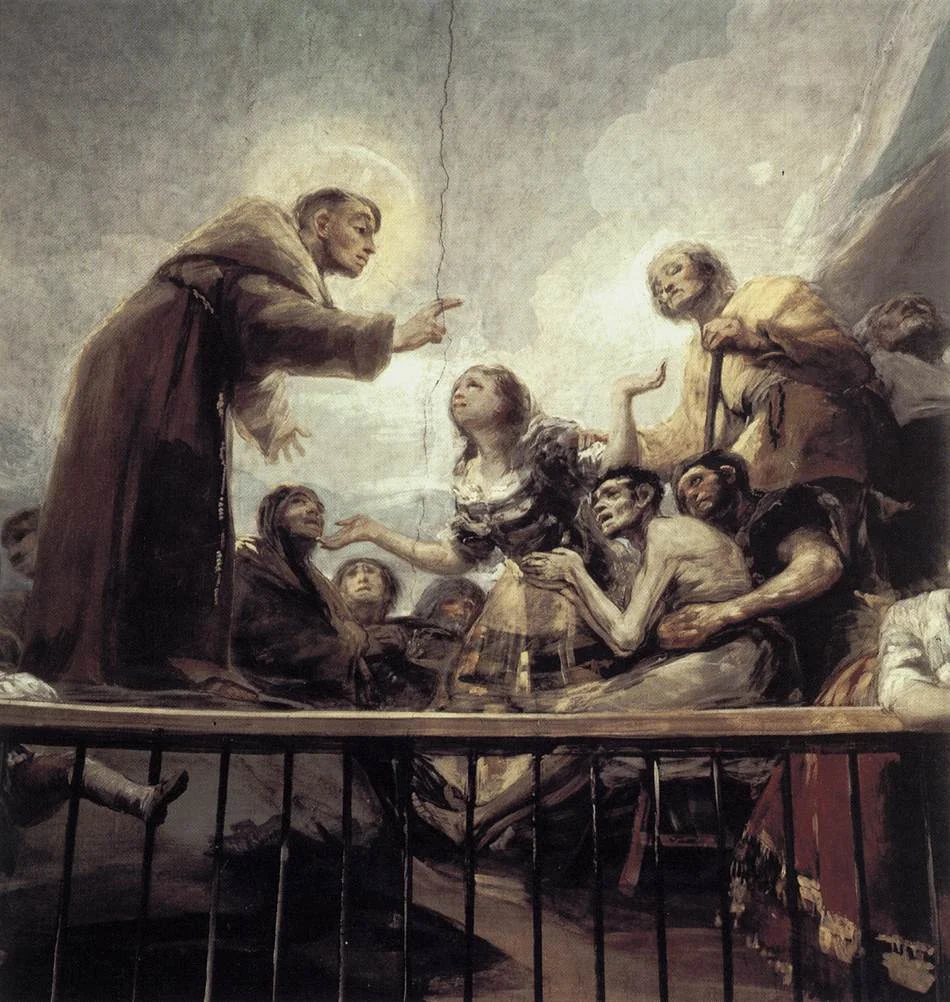 Detail of Goya’s work. The scene represents a religious tradition: the painting records how the artist told it, not evidence that the miracle happened.
The Fundación Goya explains the episode depicted: in the religious account, a dead man speaks to clear Saint Anthony’s father of the accusation of killing him.
You do not have to share the belief to recognize what is at stake in the story: an accusation, a missing voice and a sentence that might be prevented. Find the friar standing on a rock and the man he addresses. Then look at the reactions around them.
The scene becomes more than “a Goya ceiling.” There is a relationship between two central figures and an audience that does not respond as one. Noticing who listens and who seems interested elsewhere offers a way into the painting without requiring an art-history background.
Look at faces, not just a famous signature
The City of Madrid dates the commission to 1798 and notes that the figures have been described as contemporary Madrileños. Goya did not fill the space only with remote beings: there is also a crowd with something of everyday street life about it.
Take a second visual circuit without moving very far. The first time, follow the main story. The second, choose someone in the audience: the tilt of a head, the space left for a neighbor, the direction of a glance.
Compare two attitudes: someone absorbed in the scene and someone who seems to be looking around. Sometimes the nearest way into a great work is not its signature, but a gesture you have also seen at a bus stop or on a street corner.
A place of remembrance too
Lower your eyes and the visit changes register. Goya’s tomb stands at the foot of the presbytery.
The place holds both the work and the memory of its painter. After following the painted spectators’ gestures, pausing at the tomb changes the scale of the visit: Goya becomes more than the name attached to the fresco.
Leave room for others. A small interior is easier to share when nobody needs to speak over everyone else. Quiet also lets you finish the visit without allowing your phone to decide when you have seen enough.
From a painted balcony to a river railing
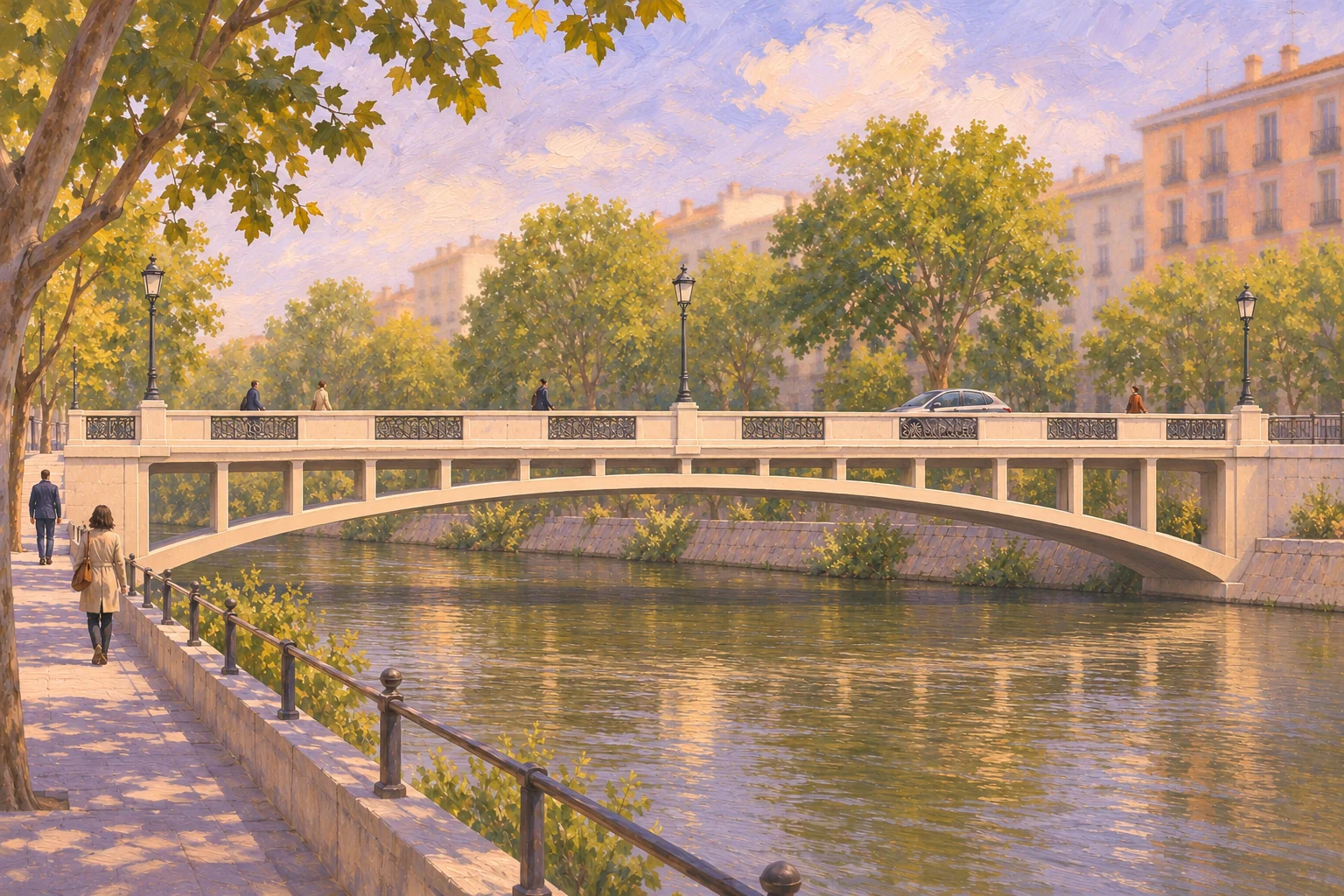 The bridge is the second stop. An illustration of its recognizable structure, not an engineering survey or evidence of today’s water level.
Outside, use the marked crossings to reach Aniceto Marinas and Puente de la Reina Victoria. This is a short urban continuation, with traffic and crossings, not an isolated trail between chapel and water.
The city’s history of the Manzanares bridges dates this one to 1908–1909 and identifies its reinforced-concrete construction. Here the railing is real. From the pedestrian pavement, notice how the deck spans the channel and how the two banks differ; there is no need to descend into the riverbed or approach its edges.
Walking offers a release after looking upwards. Stay nearby or return towards Príncipe Pío. You do not have to extend the outing simply because you can.
Find Puente de la Reina Victoria in WAONDERA little planning, not a packed schedule
As our own planning suggestion, allow around an hour for walking and stopping, and extend it to suit your pace. This is not an official duration or a timed walking route.
When checked on 8 November 2026, the museum listed free entry and Tuesday–Sunday opening, 09:30–20:00 outside its summer period. It closes on Mondays; last admission is twenty minutes before closing. Check the listing before setting out.
The municipal visitor rules ask for quiet voices and prohibit flash; they also mention small steps. Contact the museum about mobility or access requirements before planning a visit. This suggestion is not a certified step-free itinerary.
Come home with a detail, not a completed checklist
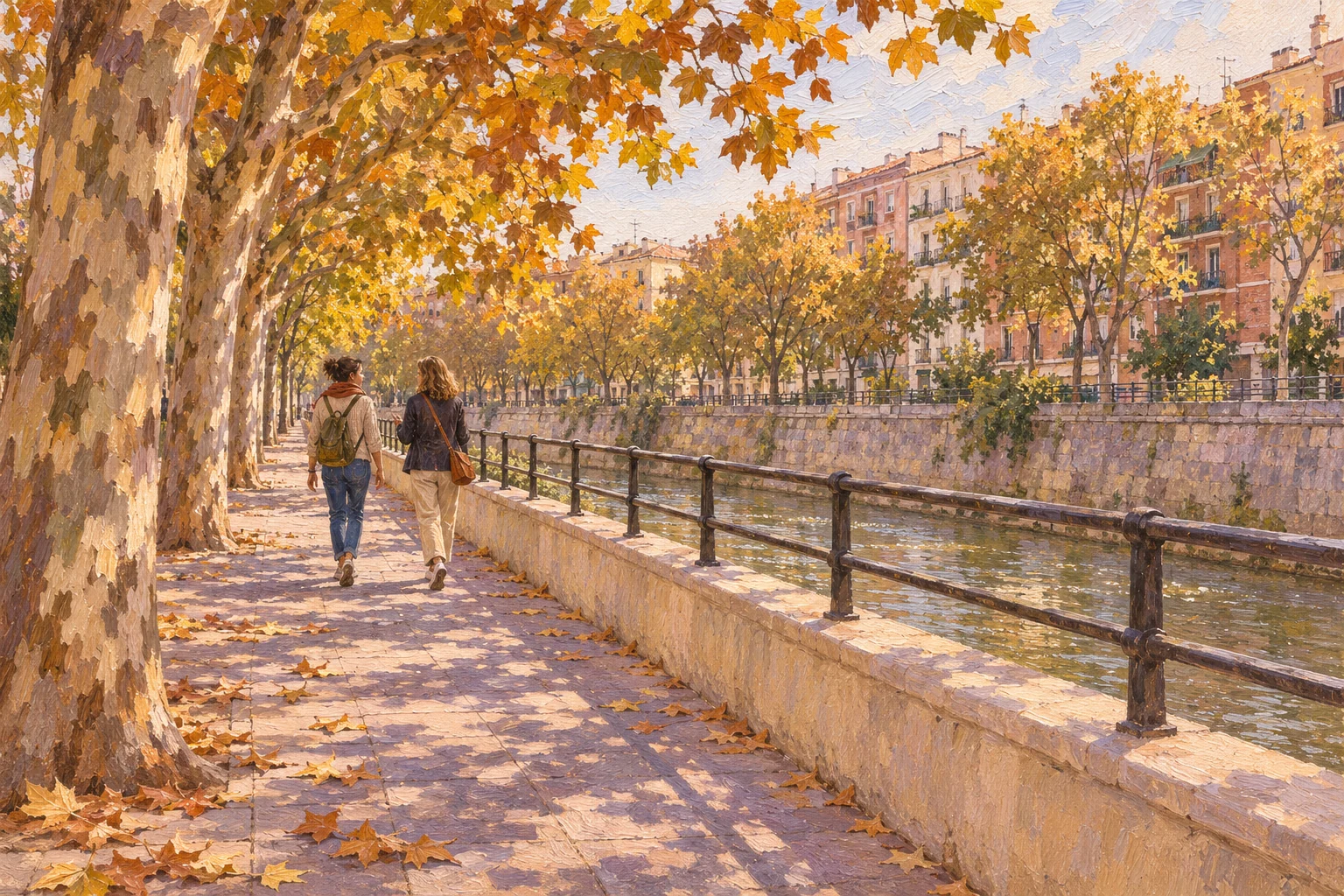 Walking after looking. An evocation of an urban stroll beside the Manzanares, not route mapping or a promise about river conditions.
For another outing, explore our selection across the Community of Madrid. Today, remembering one figure in the dome and the place from which you looked is enough.
This is an editorial suggestion to explore independently, not an app-provided guided route. The links lead to the two specific places in WAONDER; without the app, the fallback page offers the stores. Installing afterwards does not guarantee that the same place will automatically reopen.
Next time you pass, the dome will no longer be only a grey roof among trees. You will know that people are leaning over a railing on the other side, and perhaps you will want to look at one of them again.
Return to San Antonio de la Florida with WAONDER Download WAONDERSection
Ideas for city walks