Washington, D.C. in WAONDER: beyond the monuments
A singer who found a stage, an overlooked craftsman and a house saved by mistaken identity: eight stories to rediscover Washington, D.C. with WAONDER.
A singer denied a concert hall found a stage before thousands of people. An enslaved man helped make a figure of freedom. A small house survived partly because, for years, people confused it with another building.
Washington has monuments we recognize immediately. The lives running through them are not always as familiar. Between a dome, a stone facade and a dark wall lie stories far removed from the city we see in the news.
The District of Columbia is one of WAONDER's covered territories. We have chosen eight places to see DC with fresh curiosity: on a familiar daily journey, while planning a weekend walk or when a visit leaves you time to pause. You do not have to wait for a trip to discover something new.
Download WAONDER and see Washington with fresh curiosityChoose a neighborhood, not a list of obligations
The links take you to the stories within this article. Start nearby, or choose the subject that draws you in:
- National Mall · voices, stone and remembrance: Lincoln Memorial, Washington Monument and Vietnam Veterans Memorial. Three different approaches to public memory; choose how far you want to walk.
- Capitol Hill · skilled hands and knowledge: U.S. Capitol and Thomas Jefferson Building. An outing around architecture and the people behind it; check entry arrangements if you want to go inside.
- Penn Quarter · a stage that still has a life: Ford's Theatre. A historic visit and attending a play are different experiences.
- Georgetown · a house among storefronts: Old Stone House. A reason to interrupt your walk and notice a modest facade.
- Anacostia · a life beyond the pedestal: Cedar Hill. An outing of its own, exploring a historic figure's domestic world.
This is not an automatic in-app route or an itinerary to complete in one day. Our scope is DC: it does not include Arlington, Virginia, or the rest of metropolitan Washington. Check official transport, accessibility and visiting information before setting out. The reviewed catalogue's figures and scope appear below.
Lincoln Memorial: a voice that found a stage
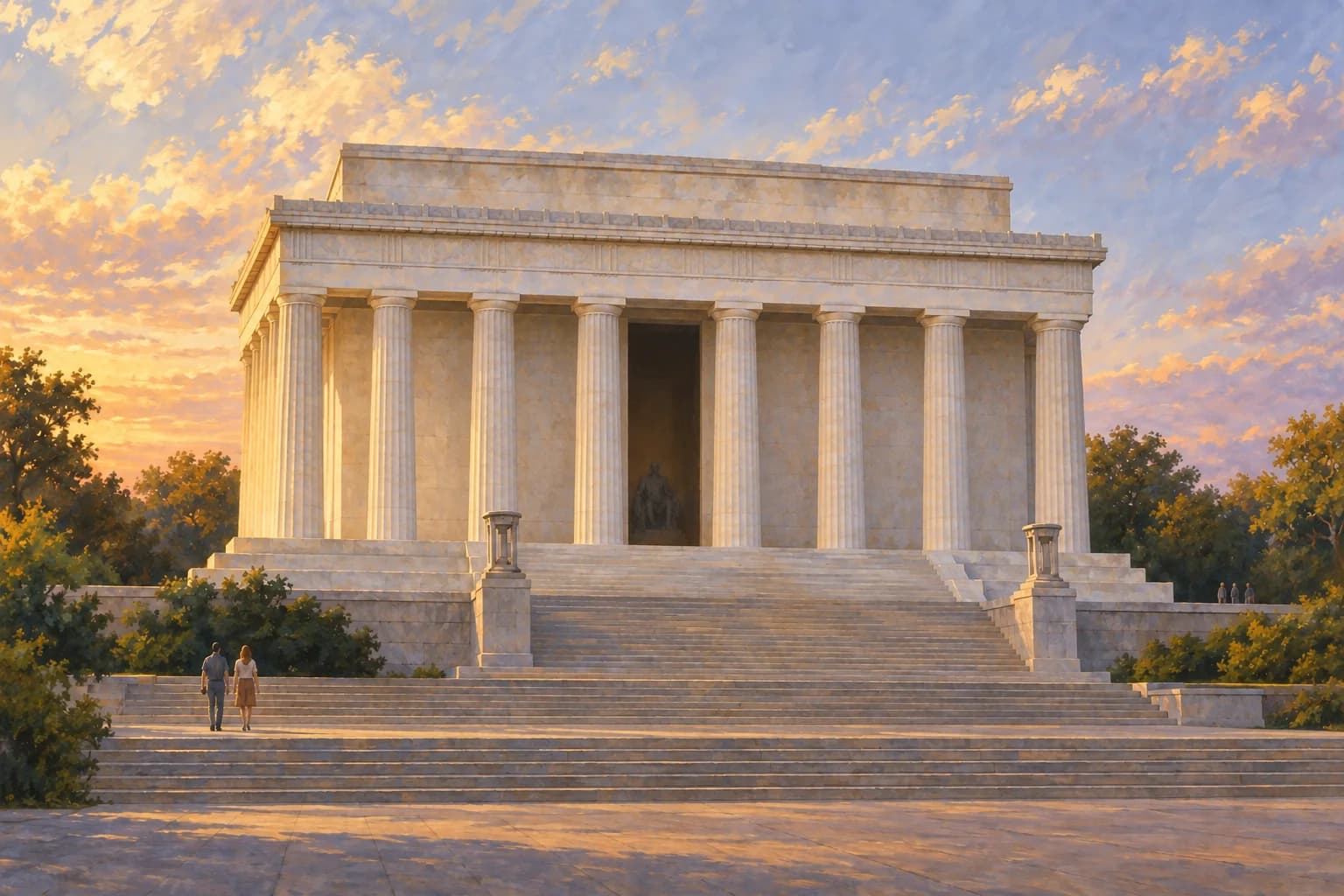
The Lincoln Memorial steps can be somewhere to sit, look across the Mall or take a photograph. They were also a stage that changed the meaning of that space.
In 1939, Marian Anderson was denied a performance at Constitution Hall because of her race. On April 9 she sang before the Lincoln Memorial to an integrated audience of approximately 75,000, as documented by the National Park Service.
Next time you pause before the columns, notice the steps too. The architecture provides the setting; Anderson's story gives you another reason to stay. You can leave with a picture of the building and a question that may linger longer: what does it mean for a voice to find a place after a door has been closed to it?
Explore the Lincoln Memorial in WAONDERWashington Monument: a pause written in stone
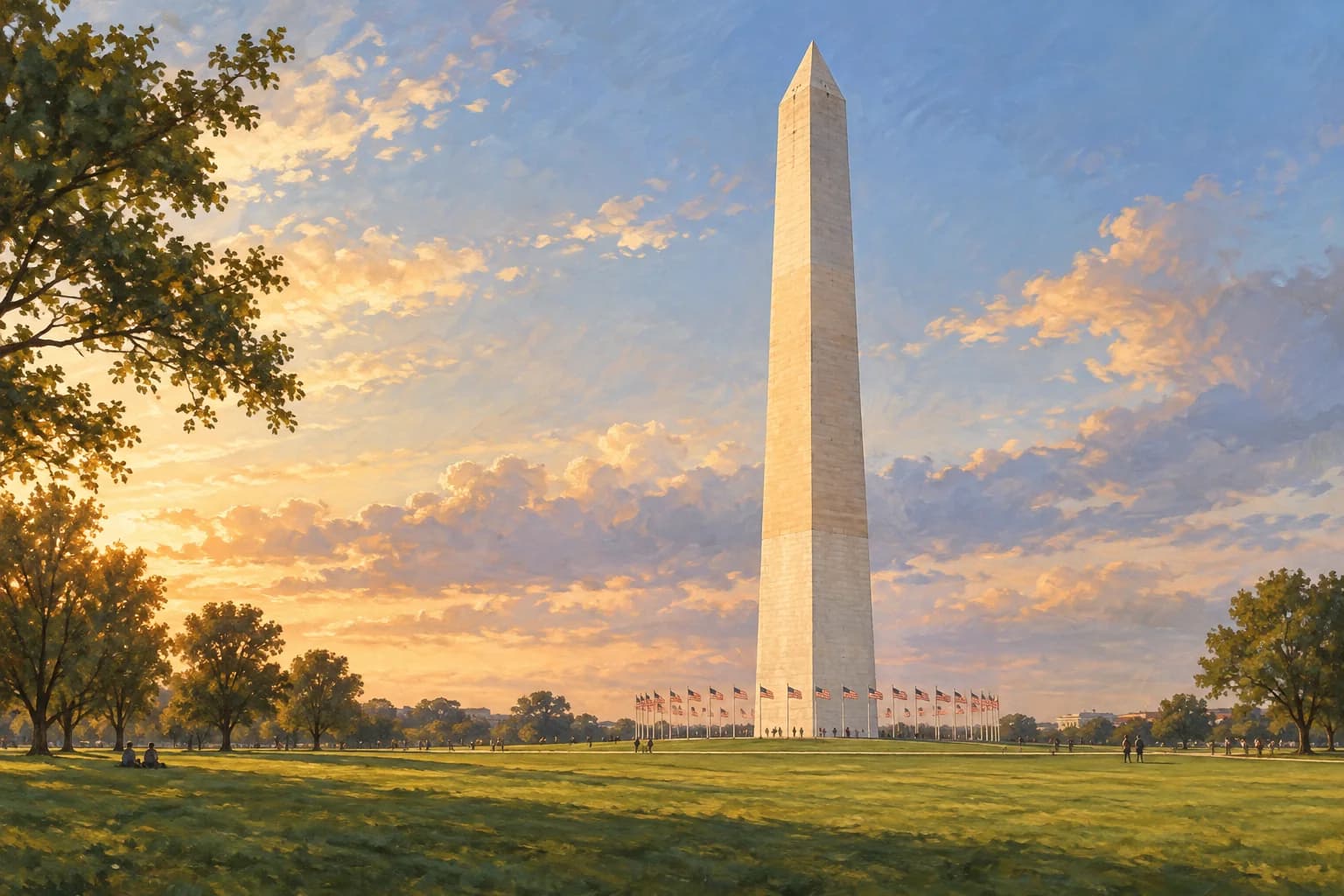 The Washington Monument and its different marble tones. Architectural illustration.
From a distance, the Washington Monument looks uninterrupted, a single continuous form. Look more closely at its marble: a change of color breaks that impression.
Construction took place in two phases, 1848–1854 and 1876–1884. By the time work resumed, the original quarry was unavailable and stone from other sources was used. The NPS explains the financial and political difficulties, long interruption and changes of marble; the Civil War alone does not explain the pause.
It is a detail to look for without turning your visit into a list of facts. A difference in color can open a story spanning decades. If you pass through the Mall, you now have something specific to notice. To go up the monument, consult the official visiting arrangements.
Explore the Washington Monument in WAONDERVietnam Veterans Memorial: when your reflection enters the story
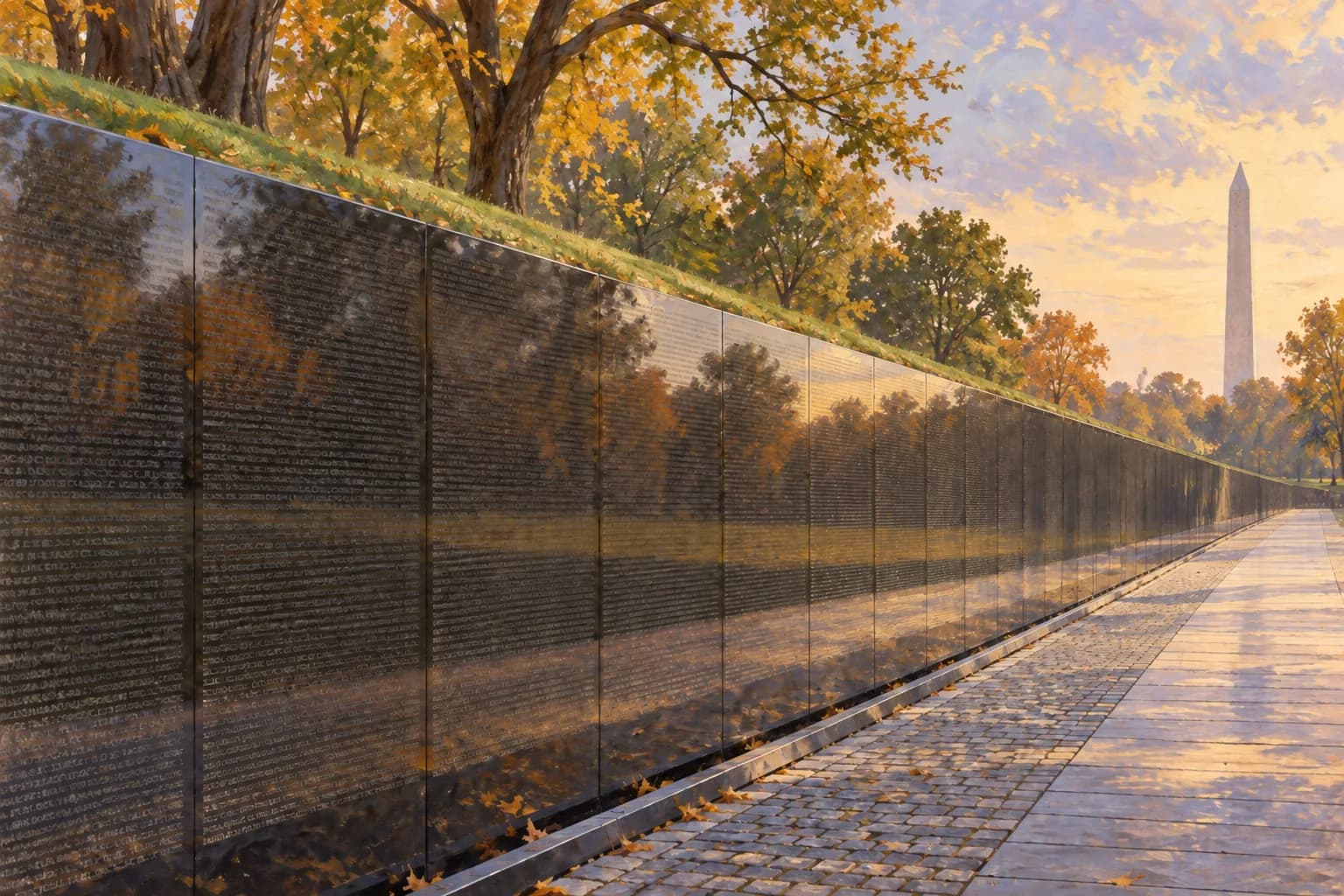 The granite wall and its reflective surface. Illustrated marks do not reproduce legible names.
Here the gesture changes: lower your gaze, approach a wall and read. Do not look for the tallest figure in the landscape.
Maya Lin, then a Yale student, designed two polished black granite walls meeting in a V. The names follow the chronology of losses, rather than alphabetical order. The surface reflects those who approach it, explains the National Park Service.
That reflection makes the experience more than looking at something belonging to the past. You can pause without knowing a particular name, notice how the wall's height changes and leave room for people remembering someone. It is a place to visit attentively, not a stop to rush through.
Explore the Vietnam Veterans Memorial in WAONDERThe Capitol: the man behind the figure of freedom
 The Capitol from the National Mall side. An illustration of the building, not a portrait of its workers.
At the top of the Capitol dome stands a figure that can look tiny in photographs: the Statue of Freedom. It is not New York's Statue of Liberty.
Before casting it, the plaster model had to be taken apart. Philip Reid, an enslaved foundry worker, worked out how to separate its sections. He became free in 1862, before the final section of the statue was installed in 1863, according to the Architect of the Capitol.
Looking up can reveal a historical contradiction that the silhouette alone cannot: the figure of freedom also carries the labor of someone who was not free. Your next photograph might hold two protagonists, even if only one is visible. For an indoor visit, plan through the Capitol Visitor Center.
Explore the U.S. Capitol in WAONDERLibrary of Congress: a reason to look up
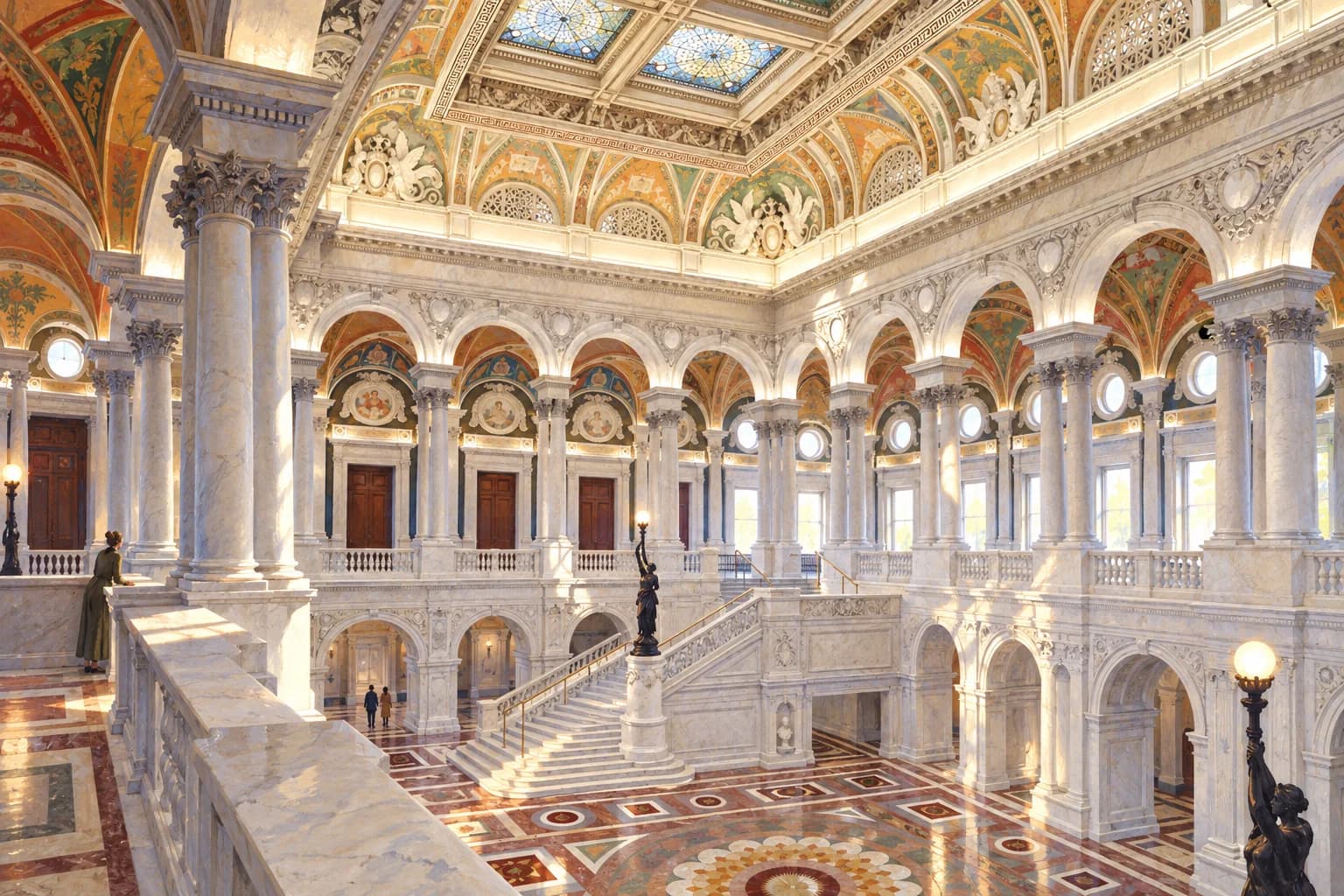 The Thomas Jefferson Building's Great Hall. An illustrated evocation, not the Main Reading Room.
A library can spark curiosity before you open a book. In the Thomas Jefferson Building, the marble, stairs and ceiling of the Great Hall invite you to look in every direction.
The building opened in 1897. The institution was much older: after its collection was destroyed during the War of 1812, Congress bought Thomas Jefferson's 6,487-volume library, recalls the Architect of the Capitol.
Here you can change the pace of an outing: choose an arch, a staircase or a detail that makes you ask a question, instead of trying to see everything. The Great Hall's virtual tour helps you recognize it; the Library's visiting information helps you plan entry. Access arrangements are not the same for every room.
Explore the Thomas Jefferson Building in WAONDERFord's Theatre: a stage, not just a memory
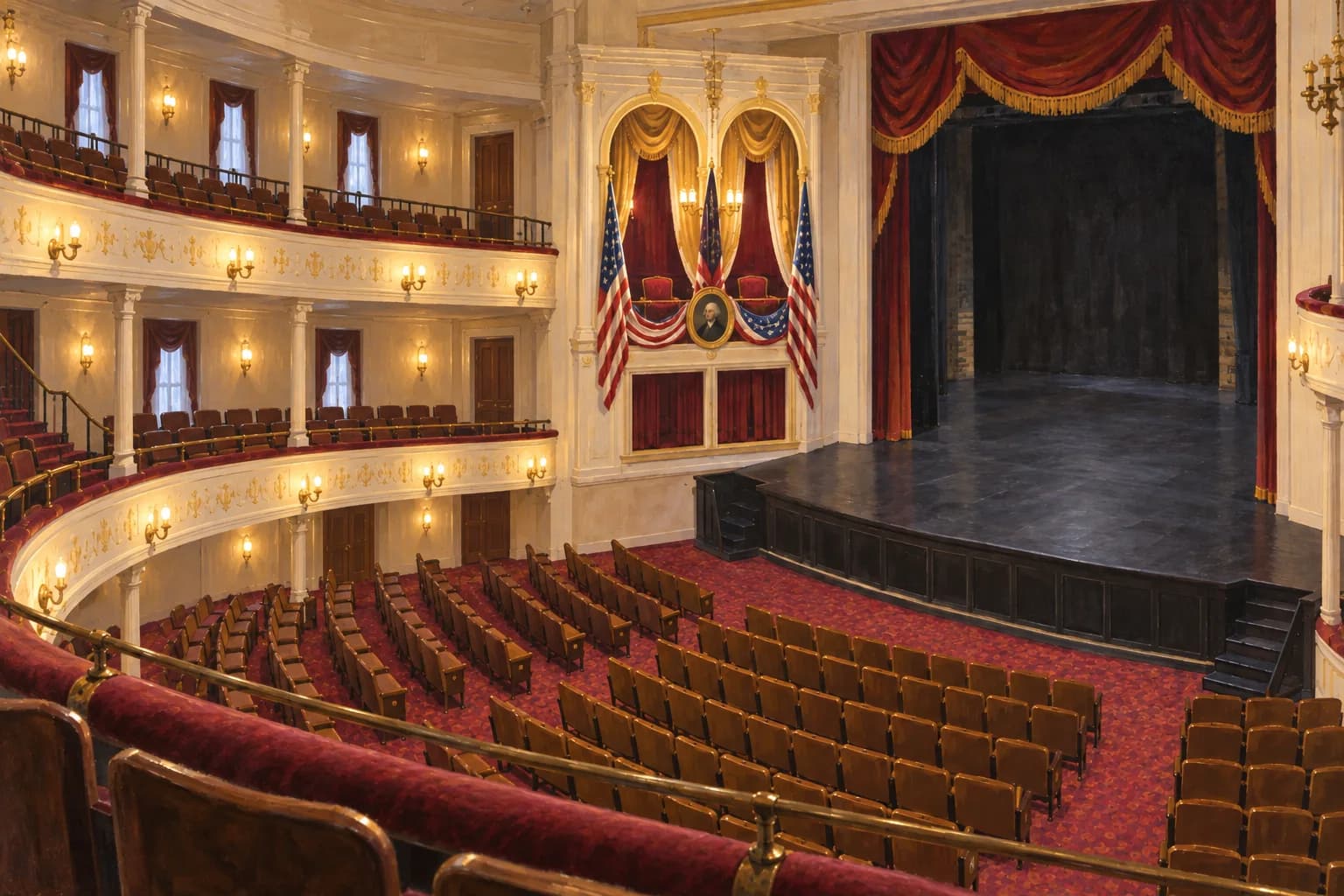 An evocation of Ford's Theatre's restored interior, not an exact reconstruction of the night in 1865.
The name Ford's Theatre inevitably leads to Abraham Lincoln. But the building also invites a question about how a place continues living after tragedy.
Lincoln was attacked here in 1865. Today's theater has not kept that interior intact: it served other purposes and reopened after restoration in 1968. It remains a working stage, not only a commemorative space. The NPS distinguishes its original features, restorations and present-day role.
Looking at the empty box and looking at the stage are different gestures. One approaches remembrance; the other recalls the building's continuing cultural life. Decide which interests you before setting out, and check tickets, performances and possible closures: a historic visit is not the same as attending a play.
Explore Ford's Theatre in WAONDEROld Stone House: the house a mistake helped save
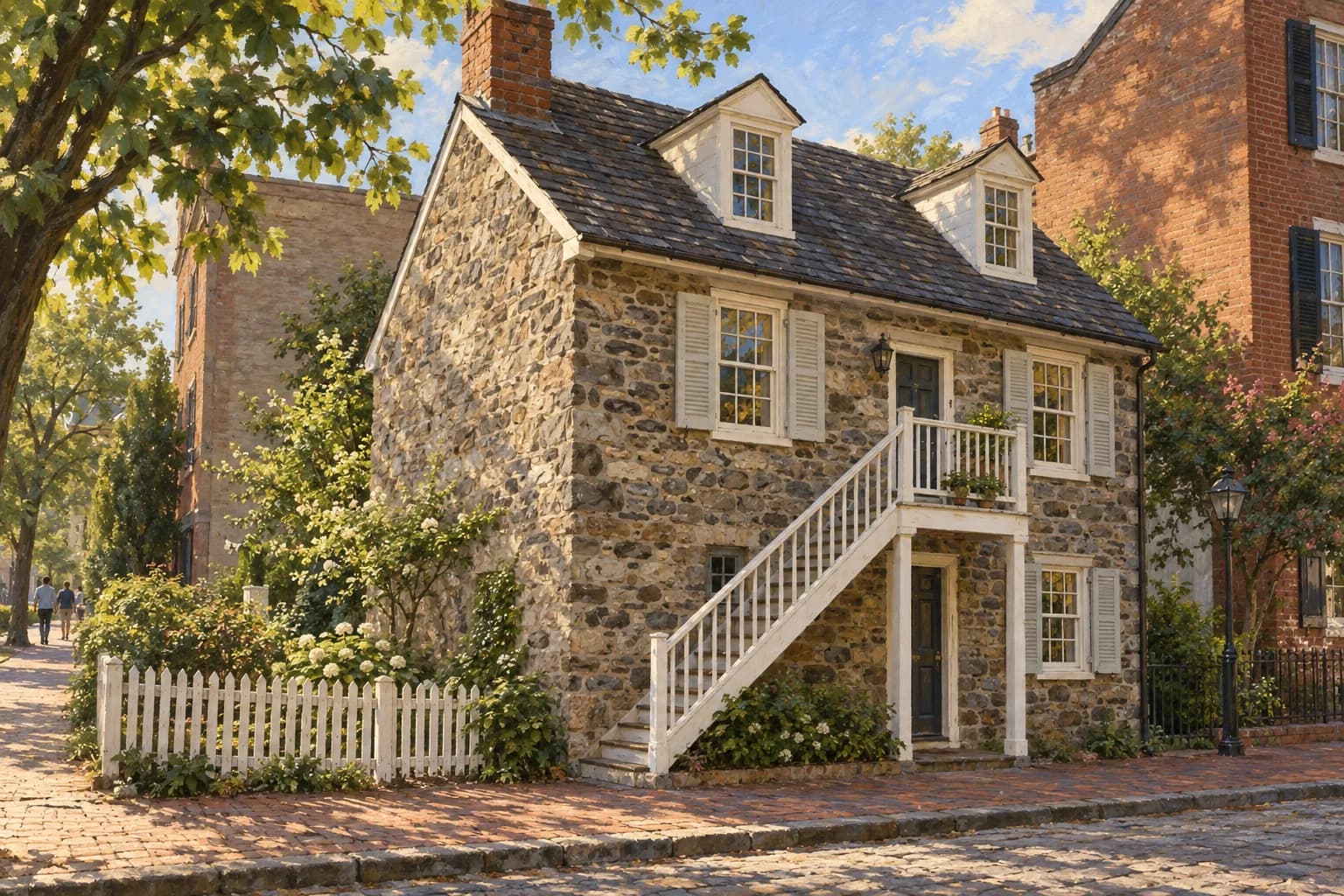 Old Stone House in Georgetown. An illustration of its architectural features.
Among the storefronts of M Street, a stone house can seem too small to compete for your attention. Its story gives you a reason to grant it some.
Old Stone House was built in 1765. The NPS explains that mistaken identity helped preserve it: it was confused with the inn associated with a visit by George Washington. Later research distinguished the buildings. It is not correct to say Washington stayed in this house.
The surviving building does not become less interesting when the legend is corrected. The question changes: from where a president slept to how an ordinary home survived. Pause before the stone, compare its scale with the neighbors and, if you want to go inside, check the official visiting information.
Explore Old Stone House in WAONDERCedar Hill: getting closer to Frederick Douglass
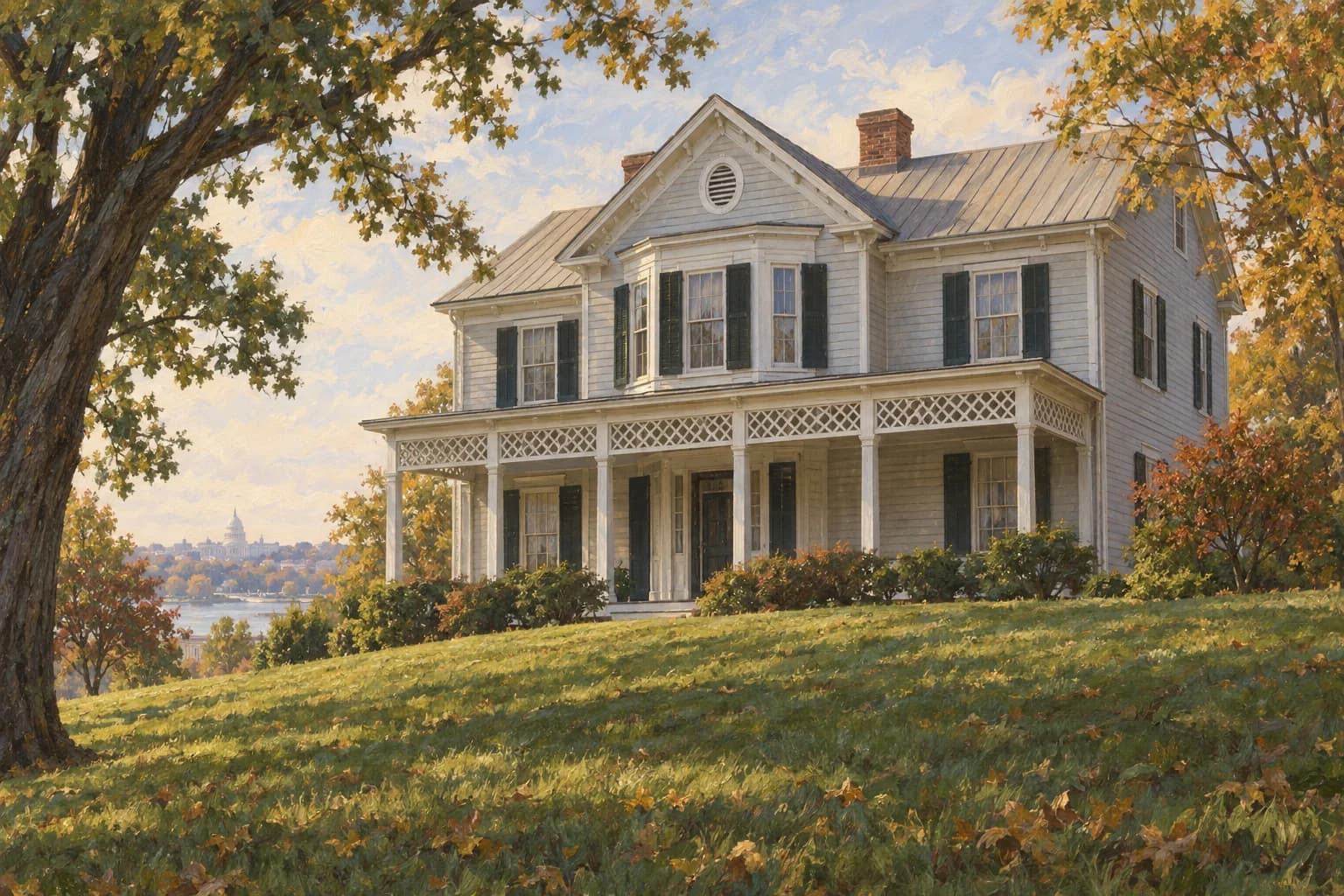 Cedar Hill, Frederick Douglass's home in Anacostia. A painterly evocation of the house and its surroundings.
In Anacostia, Frederick Douglass's home offers a different distance from history: that of a porch, a garden and somewhere a person could rest.
Douglass acquired Cedar Hill in 1877. The NPS documents his relationship with nature: he walked the grounds and cared for plants; pressed specimens were found in his books. This domestic dimension brings the abolitionist closer without reducing his public life to a beautiful house.
Nor did the home preserve itself. Helen Pitts Douglass began the preservation effort; later, Black women's organizations helped pay off the debt and restore it, as the NPS's preservation history explains.
You can give it an outing of its own: look at the house and remember the people who made its survival possible. Check the official visiting arrangements before planning access to the interior.
Explore Frederick Douglass's home in WAONDERBeyond these eight: what DC's catalogue contains
The selection above is not the end of the ways to explore the city. In the DC working inventory reviewed on September 29, 2026, we counted 4,123 records: 1,532 map-only and 2,591 not limited to the map. The latter include 205 zones or areas, rather than only individual points.
These are figures from the reviewed local catalogue, not a census of unique buildings or an audit of uniform availability or quality in production. The table shows ten selected main categories. Each record is counted once by its primary category, not once for every tag it carries. Other categories sit outside this selection.
| Category | Records | A way to turn curiosity into an outing |
|---|---|---|
| Churches | 792 | Notice a neighborhood facade or bell tower and wonder which community has gathered there. The category does not imply indoor access. |
| Parks | 685 | Choose a green space as the starting point for some free time and notice which nearby places prompt questions. |
| Public art | 545 | Pause before an artwork on a familiar journey: who made it, what does it represent, and why is it here? |
| Gardens | 381 | Slow down and notice a neighborhood's cultivated landscape. 291 are map-only: the figure does not mean 381 conversations. |
| Monuments | 327 | Move from recognizing a silhouette to understanding a decision, a person or a memory, as with the three Mall places in this selection. |
| Cultural centers | 112 | Find an area for an outing around a particular interest, without inferring current programming or availability from the category. |
| Viewpoints | 110 | Choose another perspective on buildings and landscape; verify access before planning your outing. |
| Museums | 71 | Give the next walk a subject: choose what you want to understand, rather than collecting buildings. Tickets and hours need separate checks. |
| Theaters | 54 | Connect a stage's history with its cultural life, as at Ford's; not every record implies a scheduled performance. |
| Libraries | 53 | Look for places where architecture and knowledge meet. The Thomas Jefferson Building is one specific example here. |
These records do not all offer the same experience. The figures explain the inventory's variety; they do not promise that every place has a complete story, open access or identical coverage.
The next story could start on a journey you already make
If you live in DC, choose something small: a marble detail you never noticed, a building you pass after work or a neighborhood you want to spend Saturday exploring. If you are visiting, choose an area and leave room for curiosity.
WAONDER can accompany that gesture: locate a place and ask about it. This selection's buttons link to each place; if you need the app, the general download offers both platforms. Visiting inside a venue still requires checking its official arrangements.
To explore another covered region, read our selection of places around the Bay Area. But you do not have to change cities to begin: perhaps you just need to pause before the next place you have always walked past.
Download WAONDER and find a reason for your next walkSection
Waonder updates