The Tower of Hercules: a new skin for an ancient light
There is another tower inside A Coruña’s lighthouse. Discover its Roman name, the decision that saved it and the clues you can spot from outside.
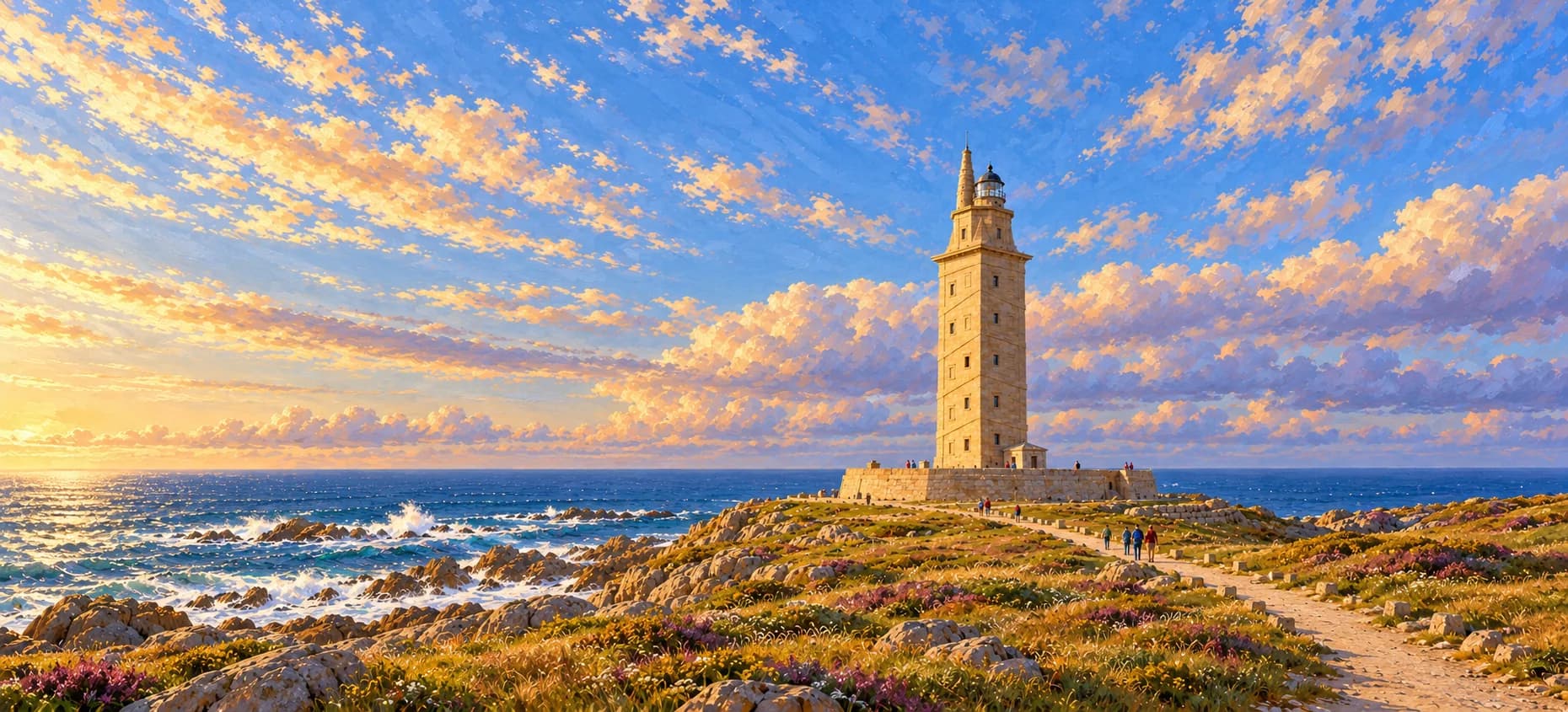
You can recognise the Tower of Hercules long before you know what you are looking at. A silhouette at the end of a walk, a light beside the sea, the tower that keeps appearing in photographs of A Coruña.
Yet that familiarity conceals something remarkable: inside the tower you see stands another, Roman one. Not a replica, or a handful of reused blocks. Its ancient heart survived because, centuries later, people decided it deserved to keep doing a job.
This is not the story of a light that never went out. It is a more human story: neglect, stones carried away, and people who found a way to bring it back.
Discover the Tower of Hercules with WAONDERStart with its outer skin
Approach with a simple question: if this is a Roman lighthouse, why does it look so orderly?
The straight faces, framed little windows and granite cladding belong to a major transformation in the late eighteenth century. UNESCO explains that the work protected the Roman core. The old building did not disappear behind the new one: it found shelter inside it.
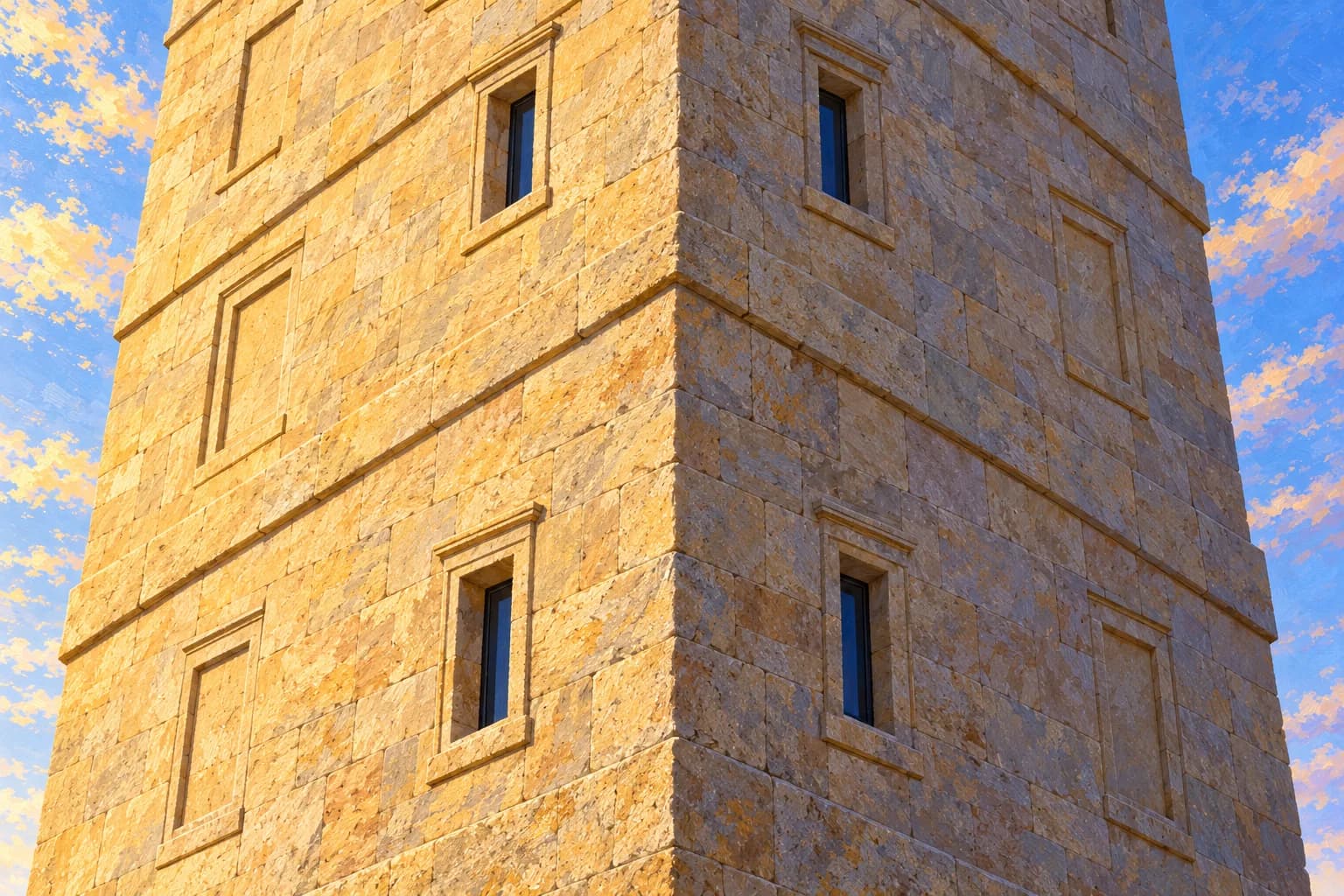 A painted study of the present facade, not the appearance of the Roman lighthouse.
From the path, trace the diagonal bands and distinguish real openings from blind window panels. Look higher and the square shaft gives way to the octagonal upper stage. The bands, blind windows and upper stage let you follow that transformation without stepping inside.
A name at the foot of a giant
Hercules gets the name. Beside the base, though, survives a trace of someone far more tangible: a votive inscription by Gaius Sevius Lupus, an architect from Aeminium, modern Coimbra.
The city’s account of the interior and its inscriptions identifies him as the probable designer. Dedicated to Mars, the inscription is sheltered by a small, later structure.
The tower fills the skyline; its probable architect appears in a few lines near ground level. The inscription records a name, a home town and a profession. Unlike the hero in the title, Sevius Lupus left evidence that can still be studied.
There were years without a light
The idea of a Roman lighthouse shining every night for two thousand years is compelling. But it leaves out part of what makes this place extraordinary.
As the Roman world broke apart and navigation changed, the tower lost its importance as a maritime signal. It became a lookout, and its stones were taken for other buildings. Galicia’s tourism authority traces these periods of decline and recovery.
The external ramp that once gave access to the top fell into ruin. The tower remained standing, but standing and functioning were not the same thing. Age alone did not guarantee its survival.
Repair it, rather than start again
By the late eighteenth century, port traffic and the area’s maritime importance made a better signal urgent. Behind the engineering lay a choice: replace the old building, or work with what it could still support.
The city’s restoration history explains that Manuel de Navacerrada’s report argued for keeping the Roman structure. It was an economical solution, and one that preserved a symbol of the city.
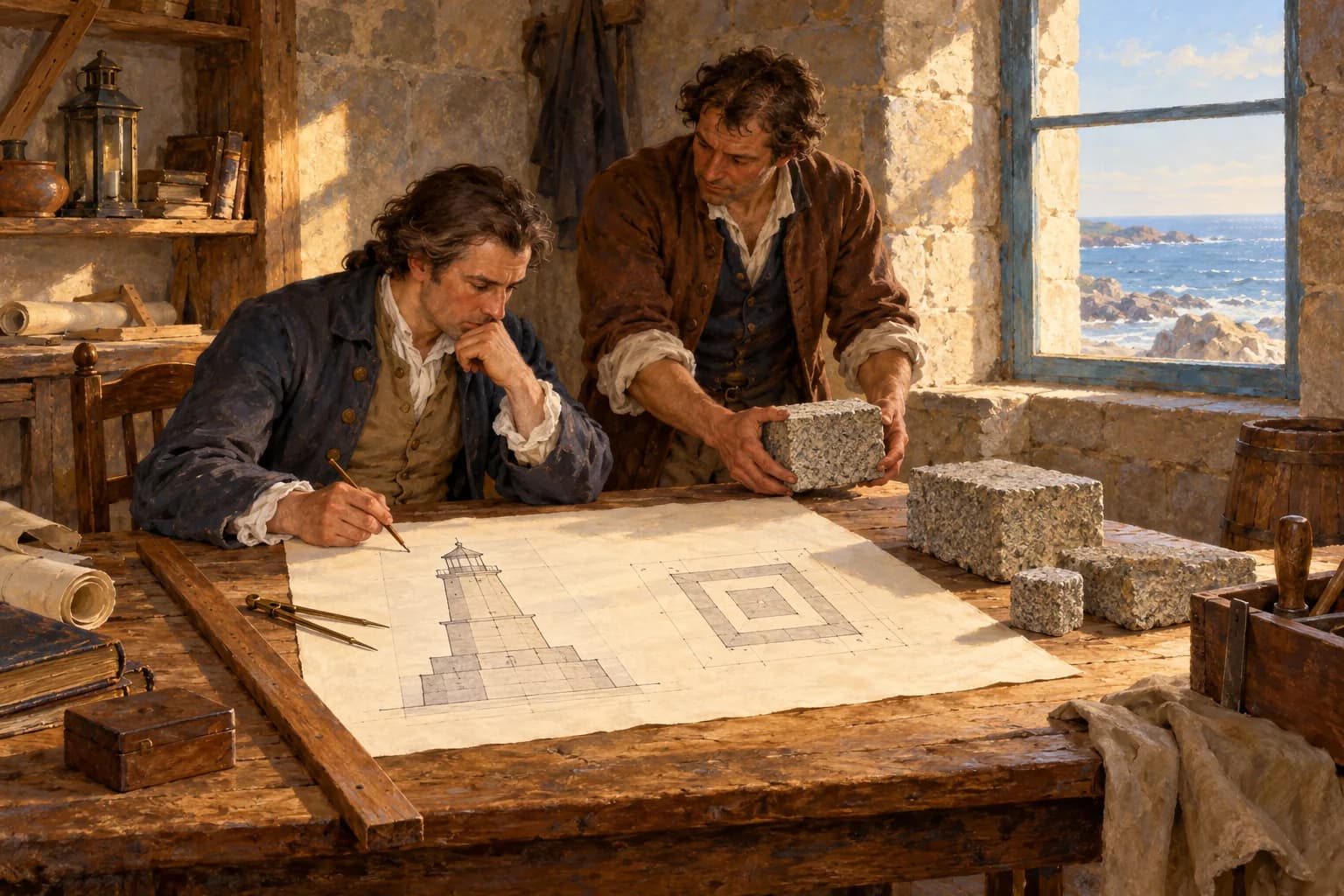 An evocation of eighteenth-century technical work, not portraits of Giannini and Cornide or a reproduction of a historical plan.
The intervention was authorised in 1788. Engineer Eustaquio Giannini developed the project with the help of local scholar José Cornide. Cornide’s knowledge of the tower helped Giannini work with its surviving fabric.
Keeping the walls was not enough: the light needed improvement too. When a new system arrived from London in late 1799, its cost prompted a public collection to help pay for the installation. Restoring the lighthouse took engineering, research and money raised beyond its walls.
The staircase has a story too
Another surprise waits inside: the stone staircase connecting the levels is not the old Roman ramp. Earlier attempts to regain access to the summit had cut through some vaults; the eighteenth-century restoration installed the substantial later staircase.
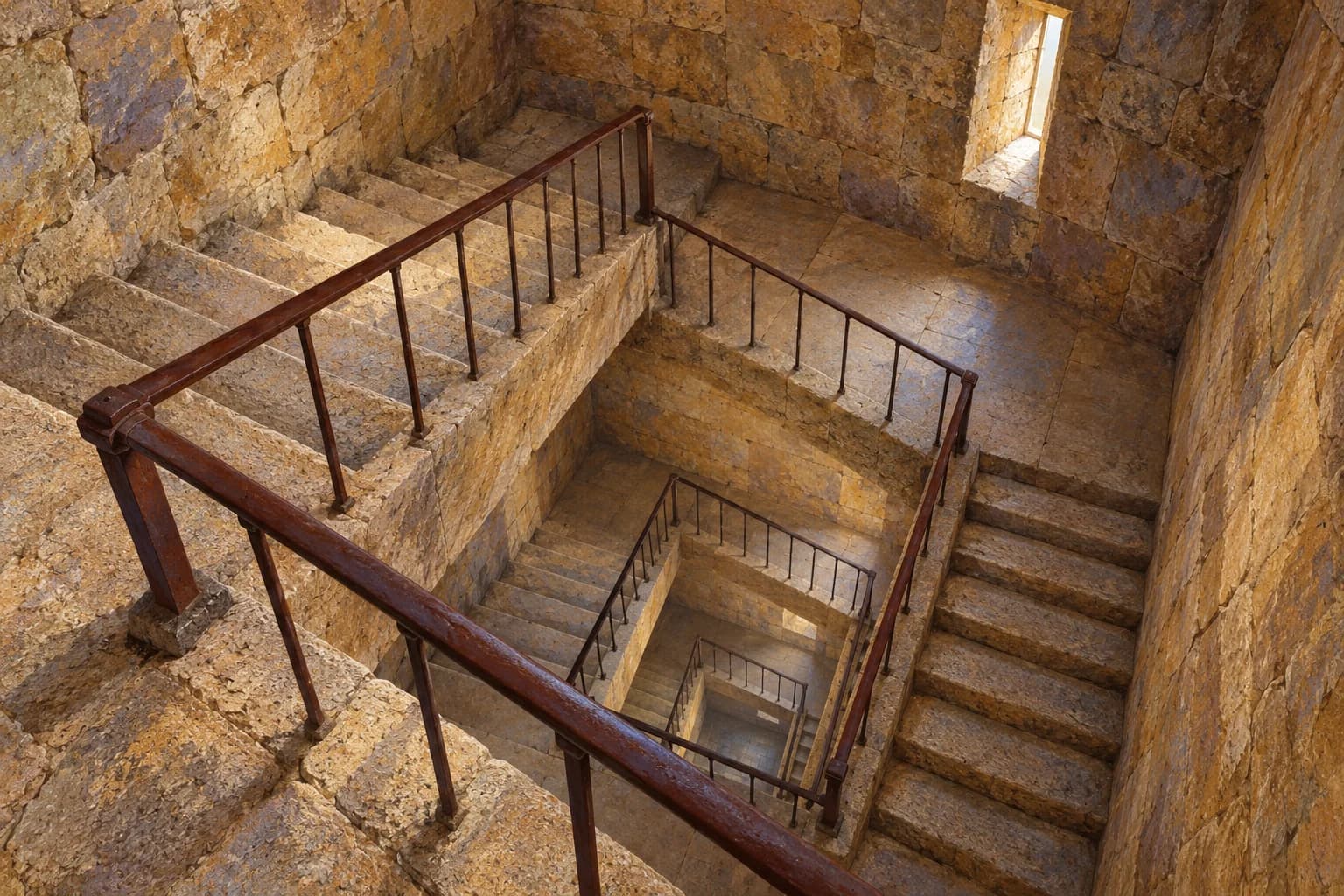 An illustration of the stone staircase added after the Roman period.
That interior journey reveals how preservation did not always mean leaving everything untouched. Each adaptation answered a need and left its mark. The tower we have inherited contains those decisions, not just the moment when it was first built.
Hercules belongs to another kind of memory
What about the hero? The tradition described on the city’s website connects Hercules with the defeat of the giant Geryon and the founding of a city.
This is legend, not an archaeological explanation of the building. It does, however, help explain why a community has spent centuries telling more than a story of measurements and materials around its lighthouse. The stone preserves one history; the name carries another.
Your next walk can begin outside
An October–November 2026 note: when we checked this article, the official website announced an interior closure from 1 October to 15 November for electrical improvements. Check the latest situation there before planning a climb. The CIAV visitor centre provides information; respect all works barriers and closures.
You can take this story on a walk through authorised outdoor areas. Choose suitable conditions, stay on paths and keep away from rocks exposed to waves. You do not have to reach the lantern to recognise what you have just discovered.
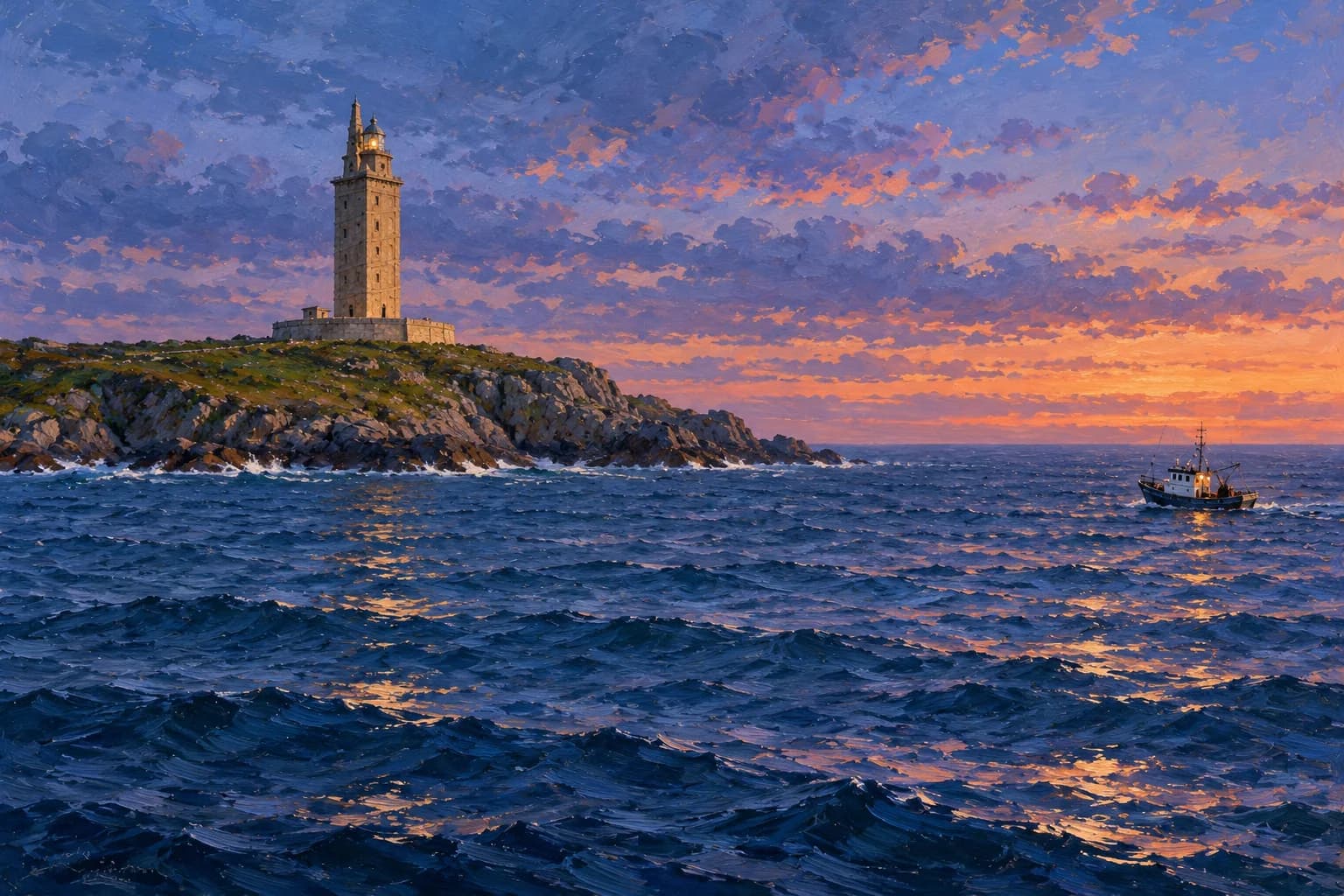 An evocative coastal scene showing the tower at dusk.
Before heading home, give the sea one look and the tower another. The first explains why it was built. The second shows how much had to change for it to remain useful.
For more ideas, our selection of places and stories across Galicia offers other, separate outings. Next time the lighthouse comes into view, its Roman stonework, Giannini’s restoration and that public collection will share the same silhouette.
Take this story on your next walk with WAONDERSection
Stories behind places