Open House New York: seeing Brooklyn from the inside
Brooklyn Army Terminal through OHNY 2026: cargo balconies, working studios and a city that still makes things. A closer look beyond the festival.
Update · October 19, 2026. OHNY 2026 ended on October 18. The Sunday itinerary and opening times preserved below refer exclusively to that edition: they are not a current invitation or a statement of regular access. For another date, consult the terminal’s visitor information linked at the end. The architecture and stories remain a reason to discover this place.
There is more to a city than its facades
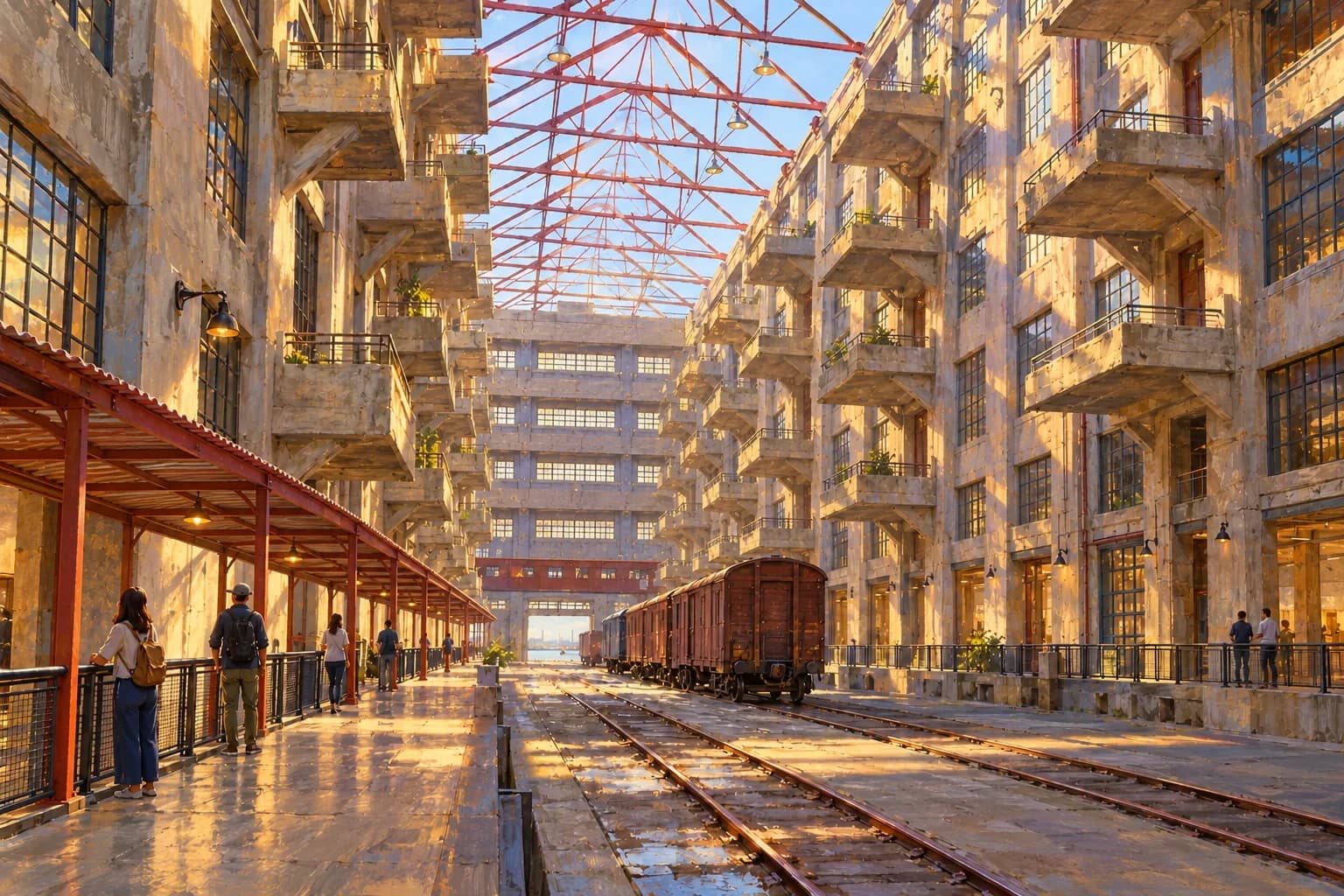
A facade can be part of your daily walk for years and still hold a question. At Brooklyn Army Terminal, part of the answer lies in its balconies: they were designed to move cargo, not admire the view. Seeing them from the atrium changes how you read the building.
Open House New York runs October 16–18, 2026. For its final day, we suggest focusing on Sunset Park rather than racing across the city from one open building to another. The official programme includes architecture, infrastructure and working spaces; access arrangements differ.
Take your curiosity into WAONDERSunday 18: two visits within one complex
The Brooklyn Army Terminal listing announces drop-in access noon–4 p.m. on Sunday 18, with check-in at Building B, 140 58th Street. All times are local to New York.
MakerSpace NYC also lists noon–4 p.m., with demonstrations and fabrication spaces: the main facility is in Building B and the pottery studio in Building A. Follow event signage between them. Do not confuse that activity with BAT Clay Studio, listed only for Saturday in this edition.
Before leaving, check the listings and the updates page. Cancellations happen during the festival itself. Drop-in access is subject to capacity and staff guidance; there may be queues.
Balconies for cargo, not spectators
The complex was designed by Cass Gilbert. Its official history explains the staggered balconies in Building B’s atrium: they helped load and unload cargo. Geometry that now looks theatrical once answered a practical need.
Notice how platforms project beyond one another and line the long central atrium. You need not know every construction term to recognise a building designed to keep things moving.
The visit offers an unusual contrast: a former military installation now accommodating production and creativity. It is not only about what New York preserved, but what still happens inside those walls.
The city that still makes things
 A workshop as a starting point for exploration: an imagined scene, not a photograph of MakerSpace or a specific festival demonstration.
Inside a workshop, the scale changes again. From the atrium’s vast volume, you turn to the shape of an object and the tools that make it possible. Watching that process helps keep an industrial neighbourhood from becoming only a photographic backdrop.
MakerSpace warns that this is a working shop, with noise, dust and potential fumes. Children must be accompanied and supervised. Follow instructions and do not cross barriers for a better photograph; watching work is not an invitation to operate machinery.
Finish beside the water, without making it a race
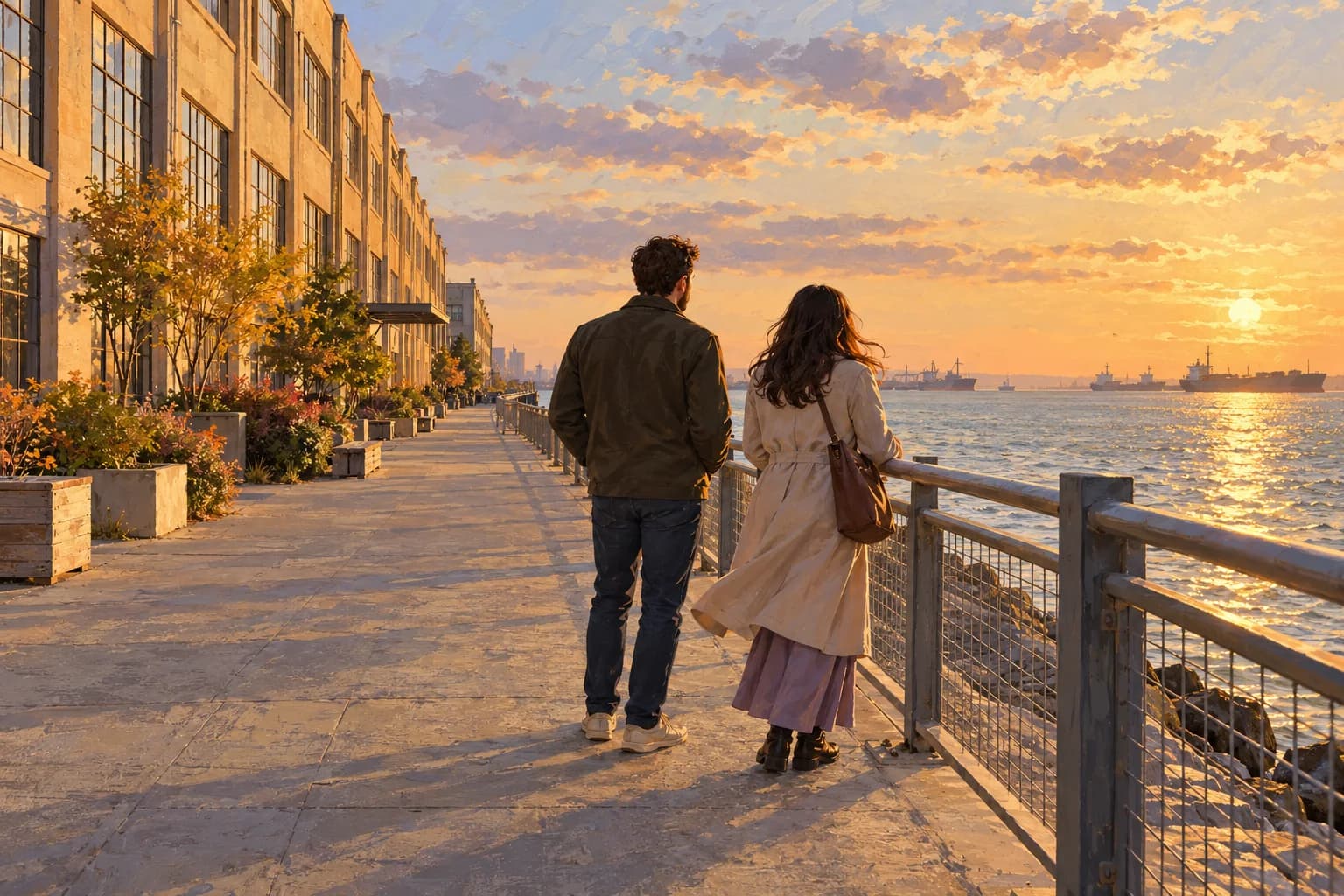 Back to the harbour: an illustrated evocation of Sunset Park, not an access map or an exact view of a pier.
The terminal’s visitor information distinguishes public areas from workplaces and describes the waterfront promenade. If conditions and signs allow, finish by looking towards the harbour. Check current transport and access information there; another cross-city visit is not essential.
Open House New York organises this festival, not WAONDER. Our suggestion is to keep that curiosity afterwards: choose a place available in the app and follow a question your walk has raised. For ideas beyond this event, our New York selection offers other starting points.
Discover available places in WAONDERSection
News in context