Italy in WAONDER: nine cities worth a second look
Rome, Florence, Milan, Venice, Naples, Bologna, Turin, Verona and Pisa: stories and small details to give your next walk a different starting point.
A stone figure carrying the voice of a city. A courtyard covered in the coats of arms of people who came to study. A tower you recognise before remembering that it was built for bells.
Italy is now part of WAONDER in nine cities: Rome, Florence, Milan, Venice, Naples, Bologna, Turin, Verona and Pisa. You do not need a grand tour to begin. If you live in one of them, your first discovery might be on a familiar journey; if you are visiting, you can choose something beyond the expected photograph.
We have picked one place in each city. These are nine separate outings, not a walking route between cities. The invitation is simple: approach something you already recognise and find a new reason to stay a little longer.
Take WAONDER on your next walkChoose your starting point
Rome and Verona for traces of the Roman world; Florence and Milan for the work behind a cathedral; Venice and Bologna for lives remembered in small details; Naples, Turin and Pisa for buildings whose stories changed while their presence endured.
- Rome: what the Colosseum audience could not see
- Florence: a dome built from decisions
- Milan: a cathedral spanning generations
- Venice: the small man beneath the announcements
- Naples: a white arch between the towers
- Bologna: students left their mark too
- Turin: a building that came to tell other stories
- Verona: the missing part can be read too
- Pisa: before the pose, a bell tower
Rome: what the Colosseum audience could not see
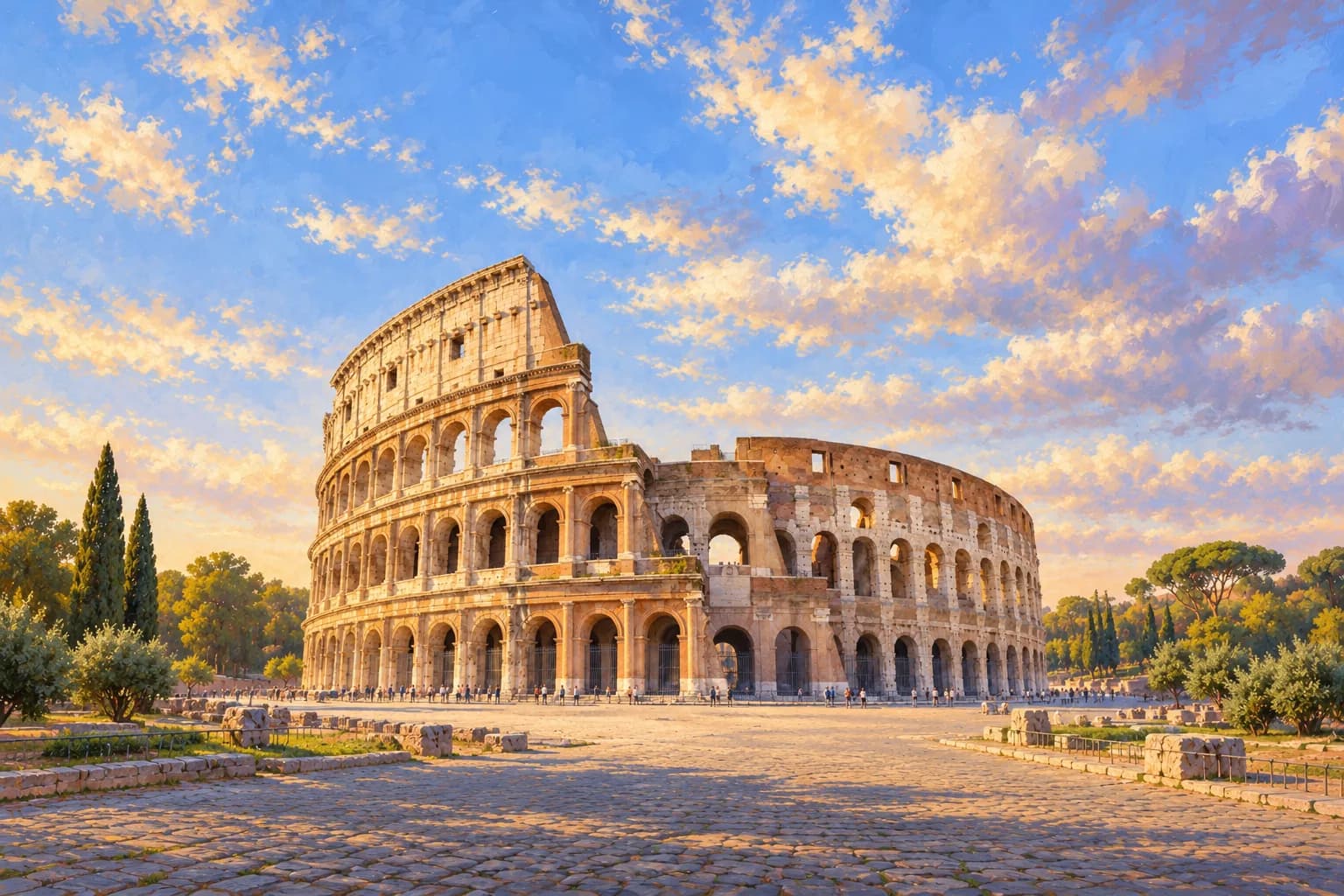
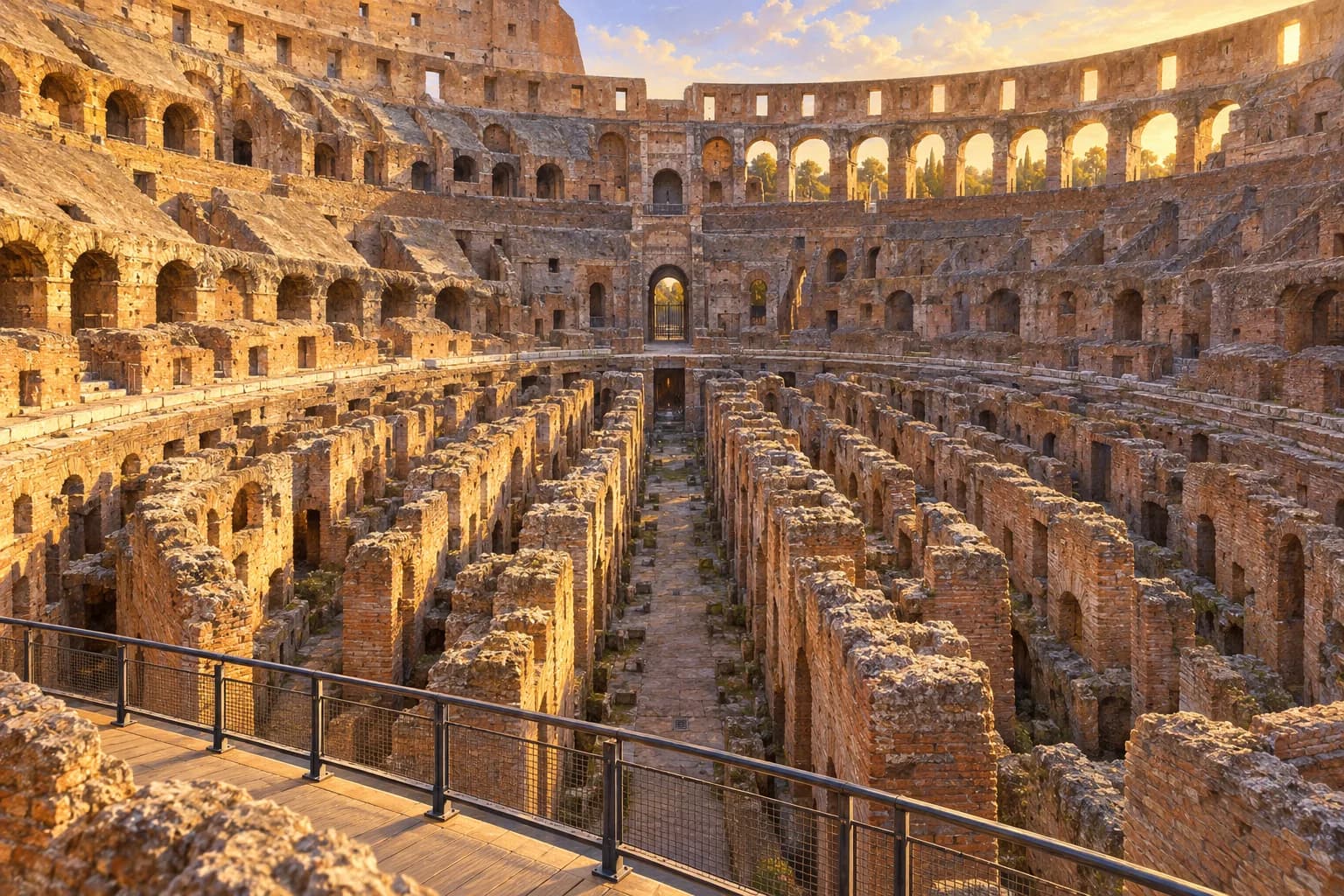 The stage and what lay beneath it. A painterly interpretation, not an exact reconstruction of ancient machinery.
From outside, the Colosseum can seem to be all about its arches. Inside, your gaze drops towards another building: corridors, openings and the work concealed from the audience.
The Archaeological Park explains the lifts and platforms that connected the underground levels to the arena. Surprise depended on mechanisms and the people operating them. This great architecture was also an organisation of labour, not only an emperor’s ambition.
Start with that difference between visible and hidden. Notice levels and passageways without assuming that today’s exposed ground reproduces the ancient arena floor. For entry, check the official conditions: different tickets do not provide access to the same spaces.
Explore this place in WAONDERFlorence: a dome built from decisions
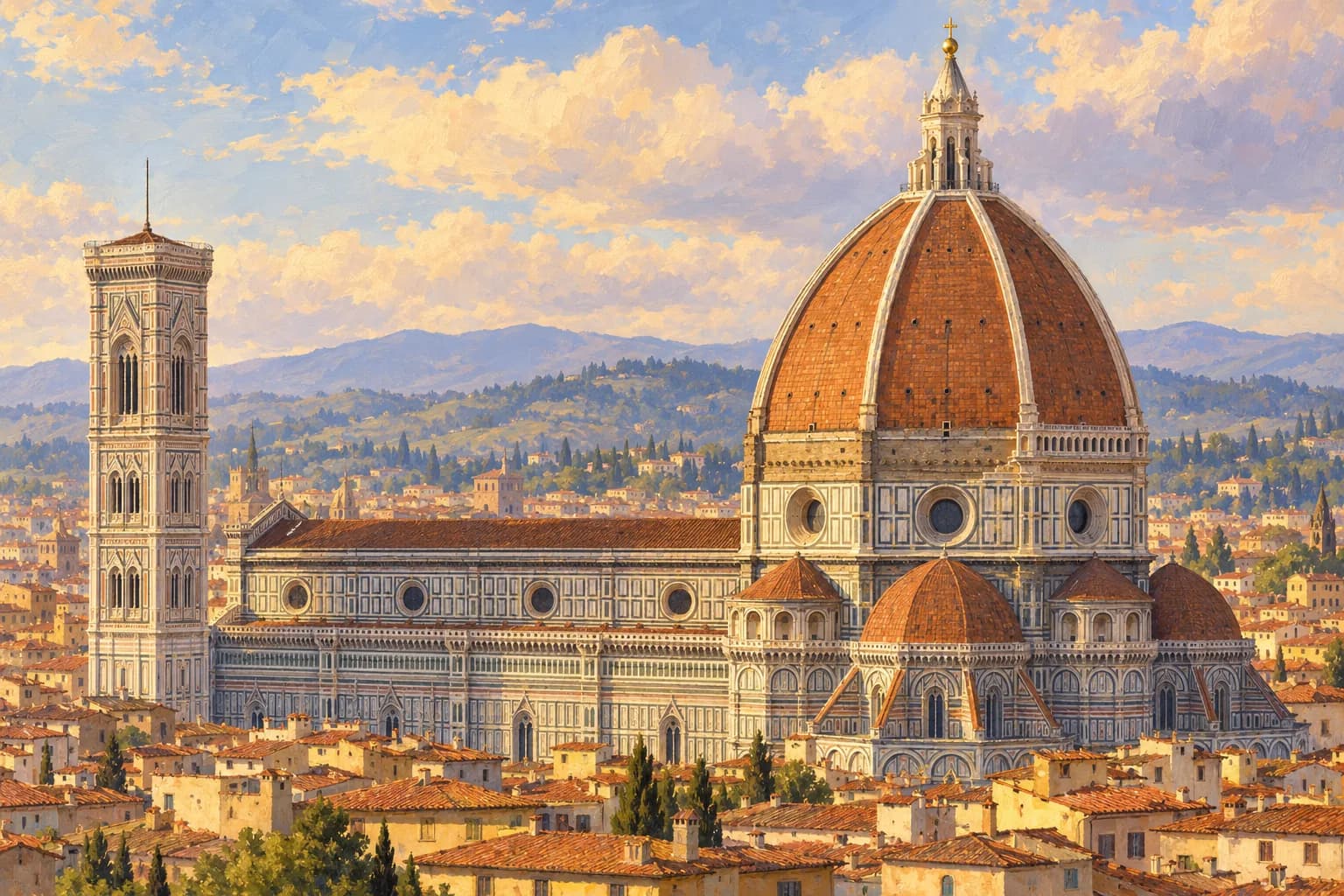 The dome and Giotto’s bell tower above Florence. An illustrated elevated view.
Santa Maria del Fiore’s dome is visible from afar. It takes an effort to imagine that familiar outline as a problem nobody had yet solved.
The Opera del Duomo describes Brunelleschi’s solution: between 1420 and 1436, a dome with two shells and eight segments took shape. From the square, the white ribs let you follow those segments up to the lantern. What looks like a simple outline is also an answer to an extraordinary building challenge.
Before trying to capture everything, follow one of those lines up to the lantern. Behind it lie design, materials and hands that worked without seeing the finished building. The square, cathedral and dome climb have different visiting conditions; understanding the story does not require doing them all.
Explore this place in WAONDERMilan: a cathedral spanning generations
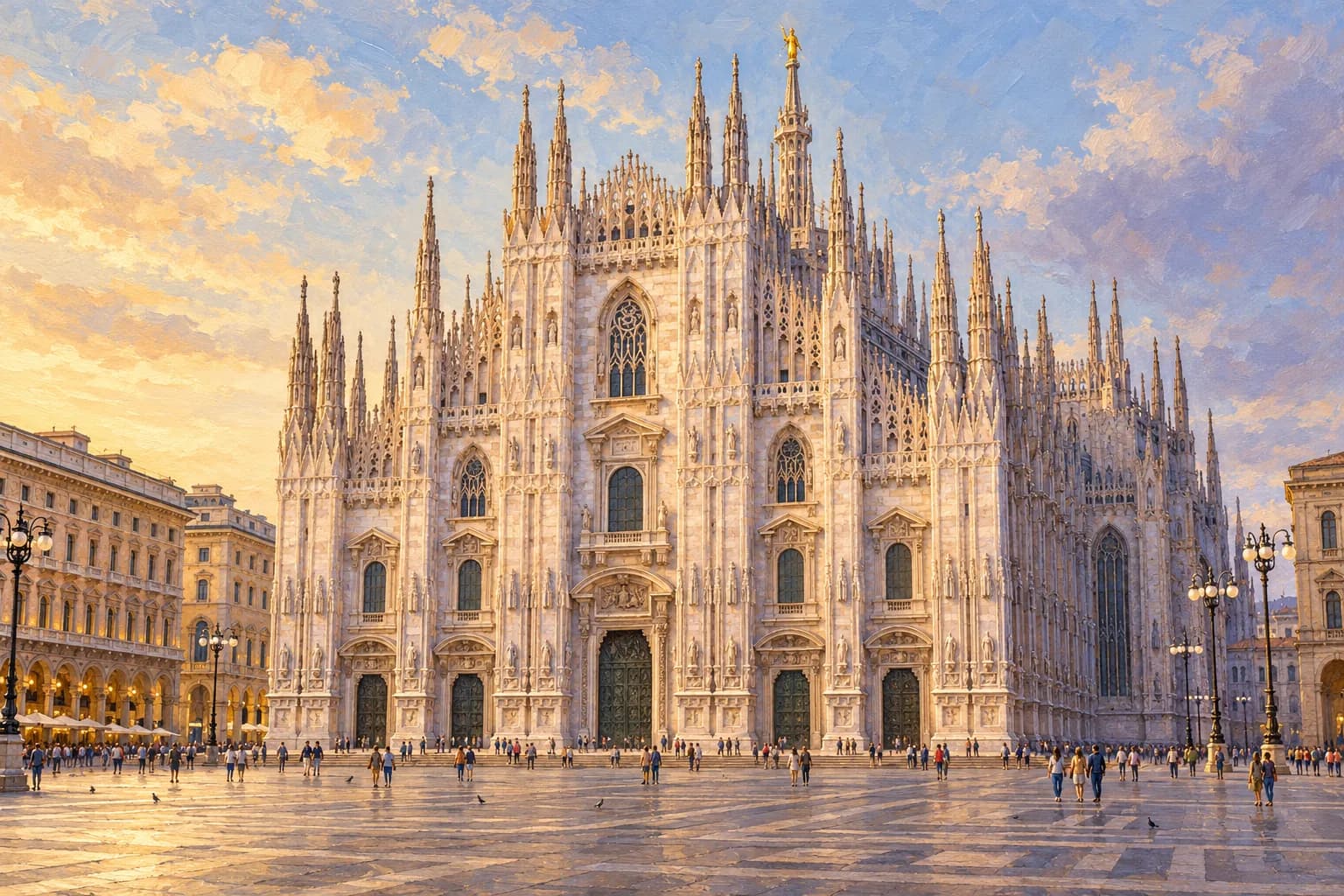 The Duomo from the square: an illustrated interpretation of its architecture.
In Milan, the first impression may be the sheer quantity of worked stone: pinnacles, windows, figures and heights. Yet the Duomo did not emerge from a single impulse or a single lifetime.
The Veneranda Fabbrica dates the start of construction to 1386 and explains the choice of Candoglia marble over traditional brick. The project drew craftspeople from across Europe: a cathedral can also preserve a history of knowledge travelling.
If you cross the square often, choose one detail to look for on your return: a window, a pinnacle, a change in the marble. The facade stops being a familiar backdrop when you begin to distinguish its parts. Next time you pass, you will have something of your own to recognise.
Explore this place in WAONDERVenice: the small man beneath the announcements
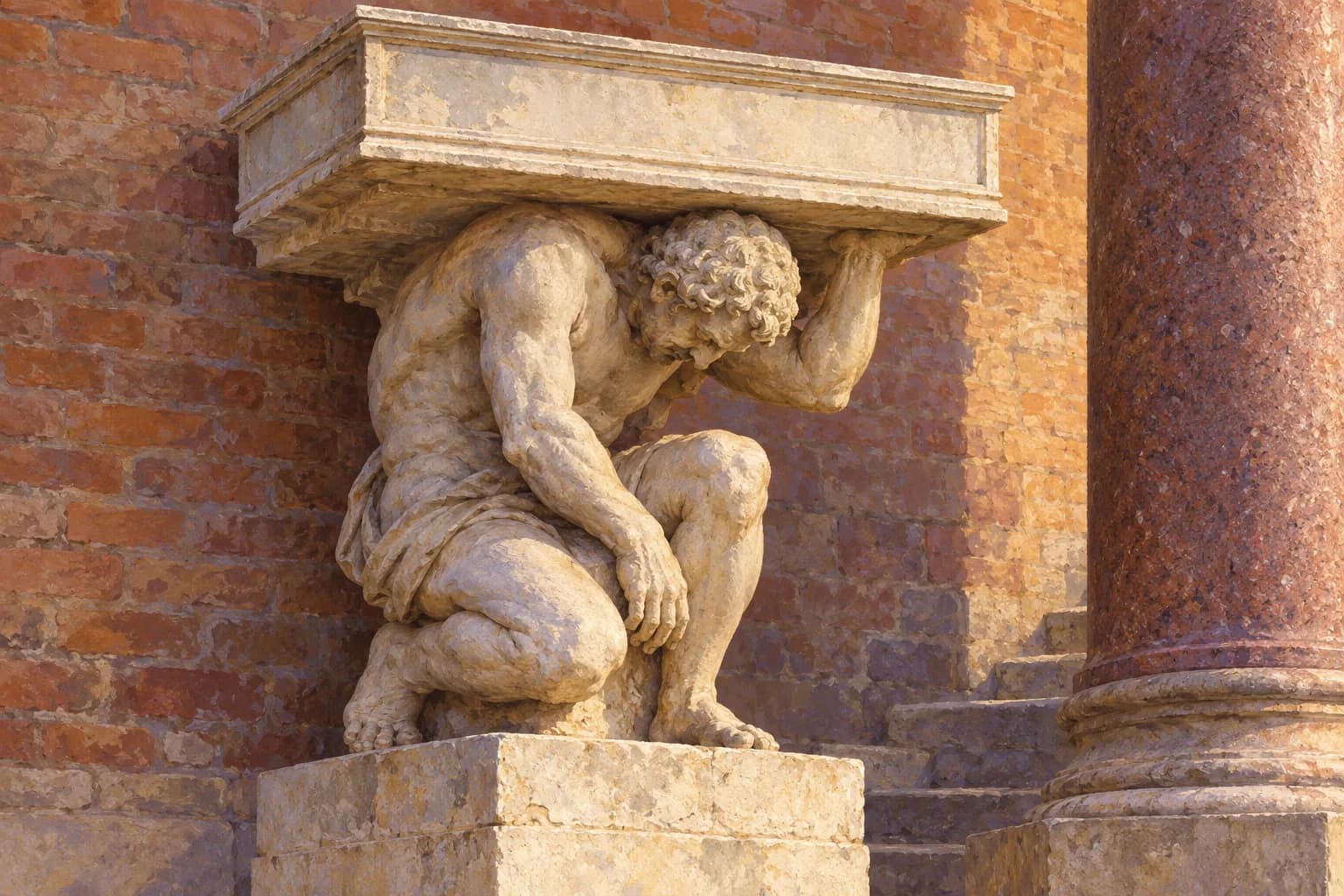 The Gobbo of Rialto beneath the platform used for public announcements. Illustration.
Among Rialto’s many distractions stands a small figure you could easily miss. It is low down, crouched under stone, nothing like the scale of Venice’s grand monuments.
The City of Venice explains its purpose: proclamations, decrees and sentences were read from the Gobbo’s platform. That raised stone helped a voice reach the city.
Next time, look at the relationship between body, support and stairs. This is not merely an unusual pose: it gives physical form to a public function. Around the Rialto market, this small figure brings to mind a city gathering to hear its public announcements.
Explore this place in WAONDERNaples: a white arch between the towers
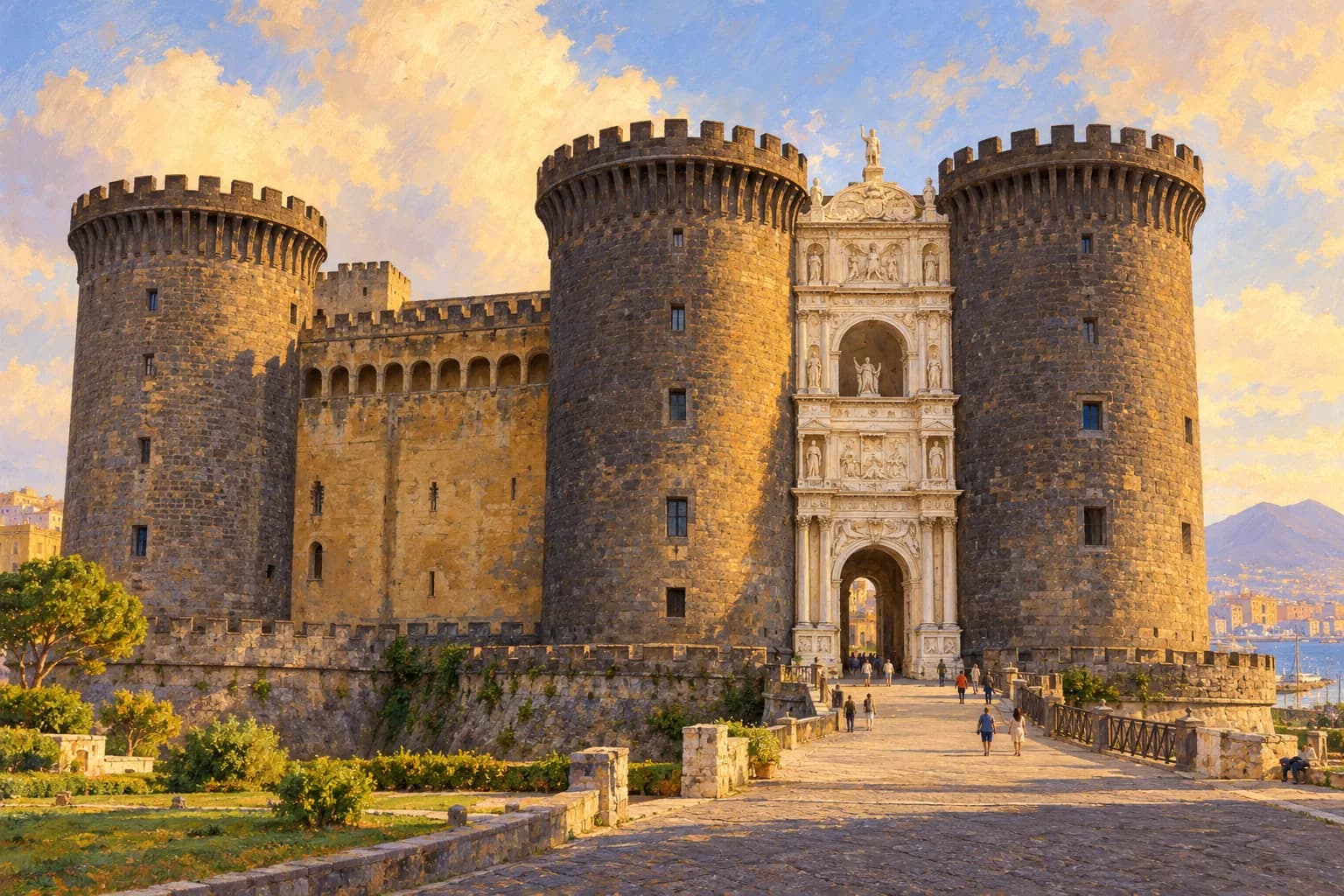 Castel Nuovo: contrasting materials make a history of change visible.
Castel Nuovo’s towers seem to speak of resistance. The pale arch fitted between them also speaks of how a ruler wished to be remembered.
OpenCampania’s account of the complex distinguishes its Angevin origins from its Aragonese transformations. The arch celebrates Alfonso I’s arrival in Naples: it is not an arbitrary ornament on a fortress.
Pause at the contrast between the dark mass and the carved stone. One building can defend, accommodate a court and tell a version of power. Your next question need not encompass the whole castle; it can begin at the entrance that changes the facade’s tone.
Explore this place in WAONDERBologna: students left their mark too
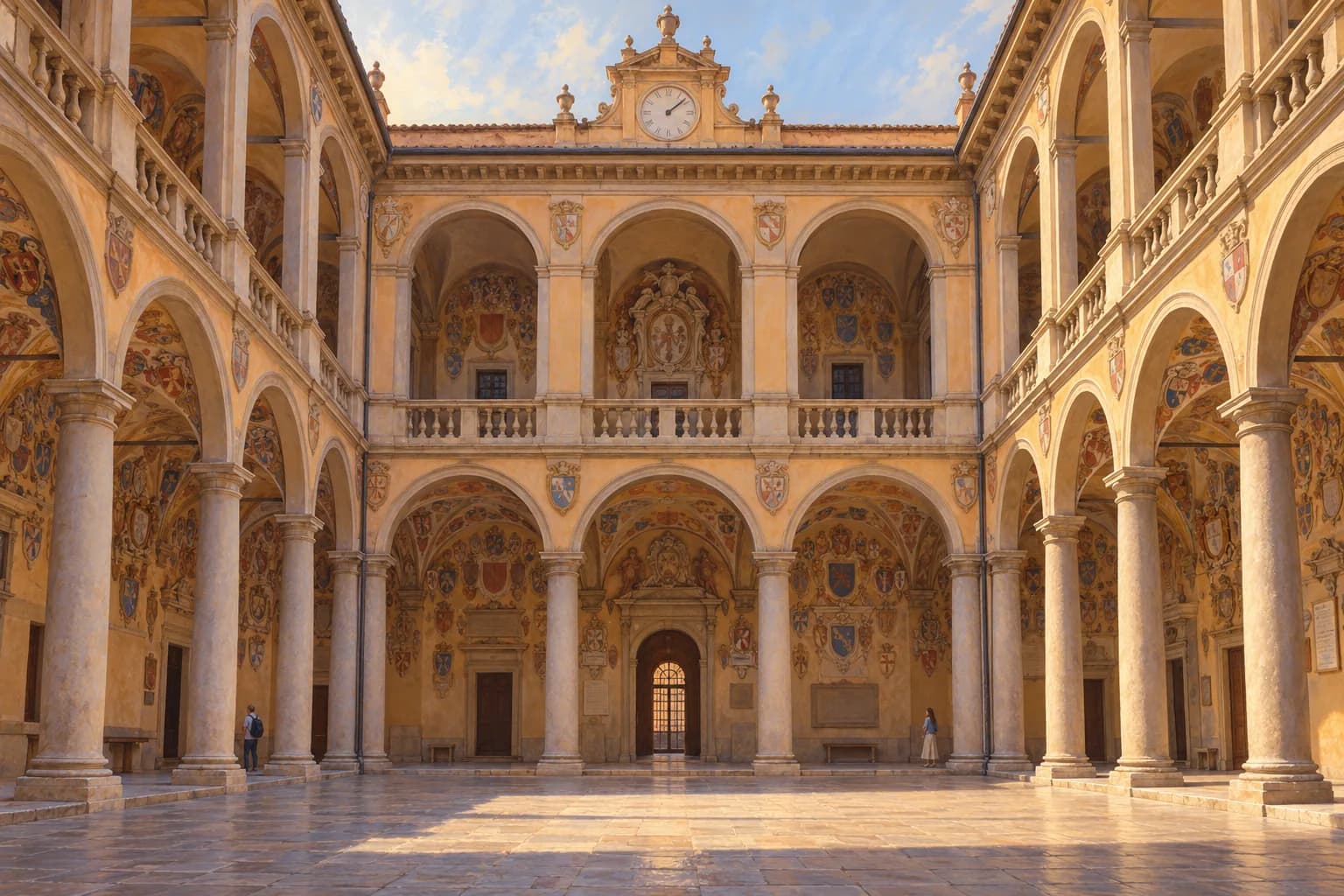 University memory in the Archiginnasio courtyard. Heraldic motifs are interpreted in the illustration.
A coat of arms can look decorative until you discover whom it remembers. At the Archiginnasio, walls and vaults preserve the memory of teachers and students who passed through the university.
Bologna Welcome describes the palace, built in 1562–1563 and reconstructed after damage in 1944. The courtyard speaks not just of a prestigious institution but of people who travelled to learn and wished to leave a trace.
Look up at the variety of motifs without trying to decipher them all. The palace also houses the Anatomical Theatre and a library; that does not mean every room is open to tourists or shares the same admission arrangements.
Explore this place in WAONDERTurin: a building that came to tell other stories
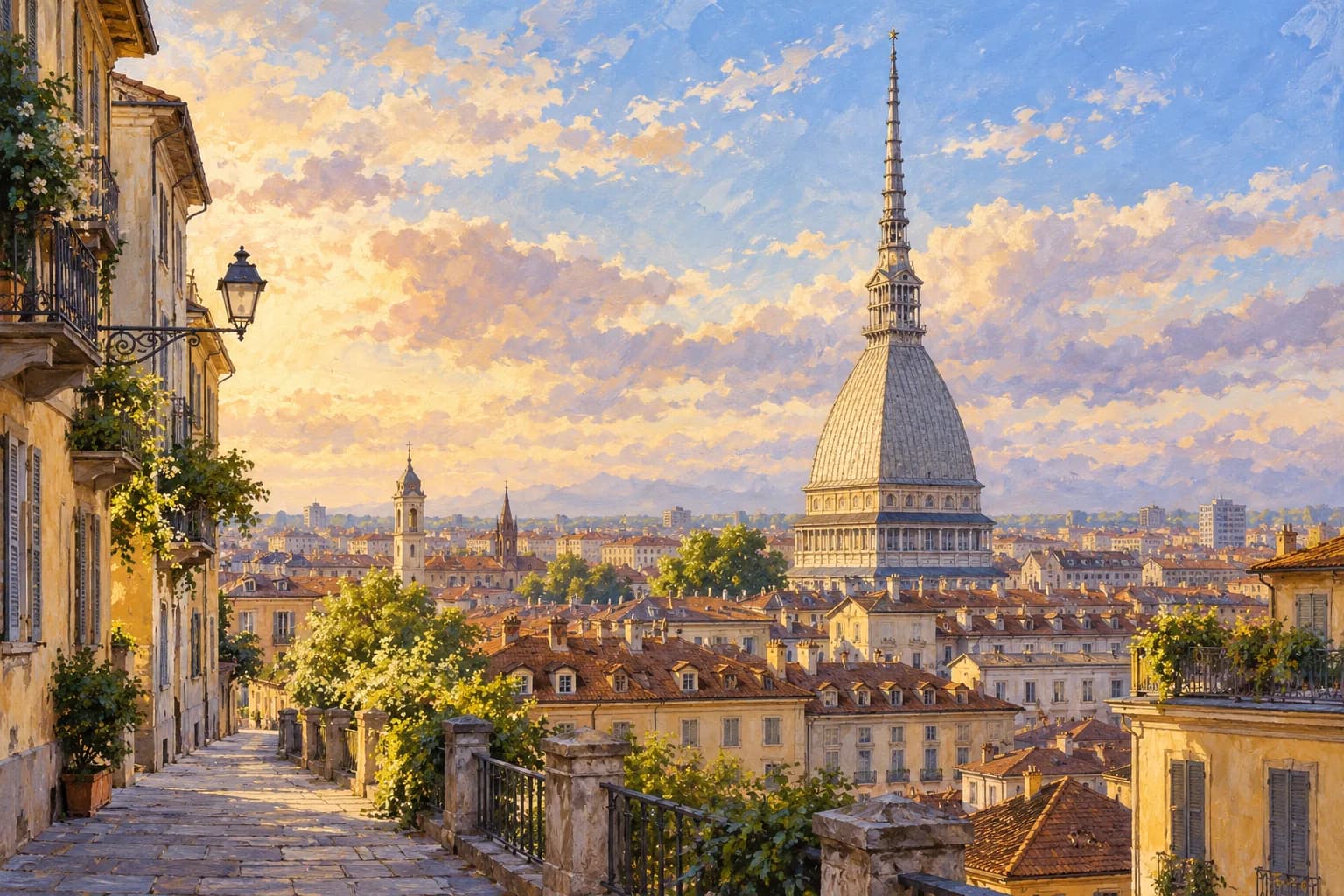 The Mole’s roof and spire above Turin’s rooftops. An illustrated composition.
The Mole Antonelliana makes Turin recognisable even in a small picture. Its story, however, did not begin with cinema.
The National Museum of Cinema explains that it was designed as a synagogue. Ownership and purpose changed before it became the museum’s home. Between that first project and the stories told inside today lies a city finding new uses for one of its most recognisable silhouettes.
Notice how the great volume of the roof ends in such a slender spire. That contrast can begin a conversation about architecture or the uses a city finds for its buildings. Check museum visits and panoramic access separately.
Explore this place in WAONDERVerona: the missing part can be read too
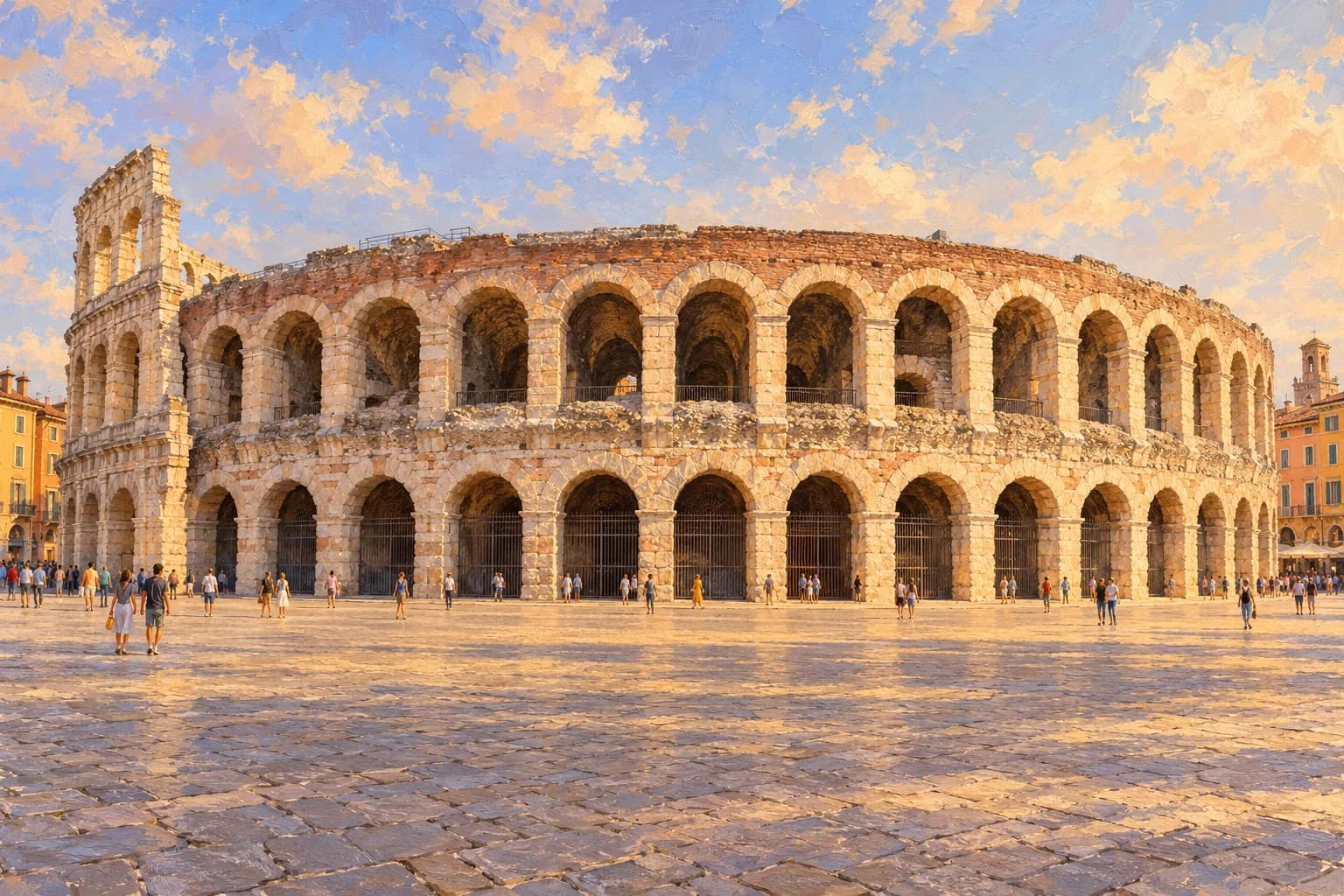 The Arena and the fragment known as the Ala. Interpretation of the present amphitheatre.
Facing the Arena, do not look only at the repeated arches. Look for the change in height.
The City of Verona identifies the surviving outer fragment known as the Ala, part of a ring that lost much of its stone. Its incomplete outline helps you recognise that this amphitheatre has not reached us intact.
There is something familiar in that adaptation: the city kept living around its ancient buildings. Compare the Arena with the Colosseum without treating them as copies. Before entering, check visitor information; performance installations and events can change which areas are accessible.
Explore this place in WAONDERPisa: before the pose, a bell tower
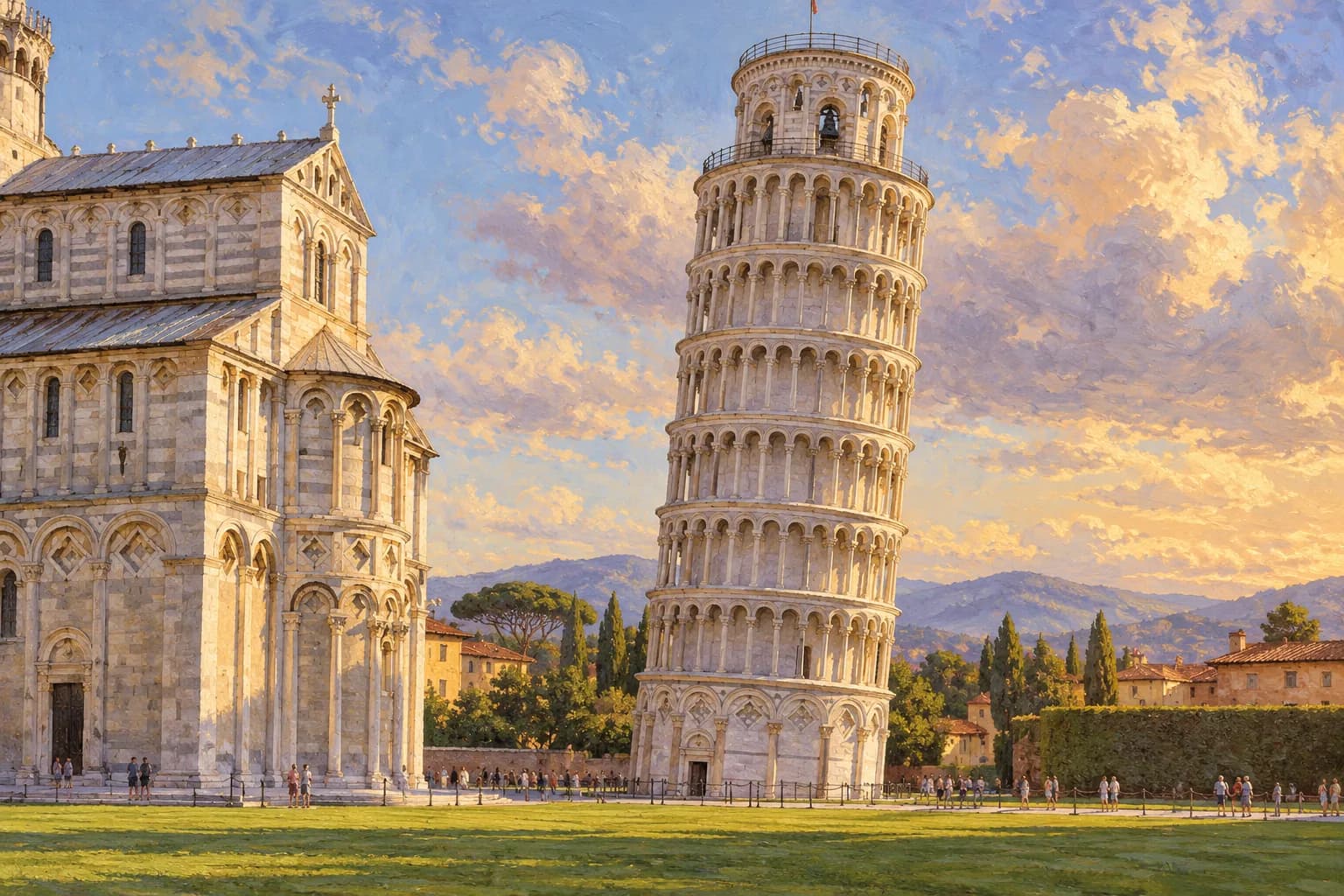 The tower’s relationship to the cathedral complex. An interpretative illustration.
Recognising the lean is easy. Remembering why the tower was built may take a little longer.
The Opera della Primaziale Pisana presents it as the cathedral’s bell tower. Looking at it beside the cathedral restores a relationship an isolated photograph often erases: it was not an independent object waiting to become a famous image.
The familiar photograph can be the beginning rather than the end of the visit. Follow the galleries up towards the bells, then look back towards the cathedral. The tower still leans, but you can now see it as part of a larger whole: a place built for more than being looked at.
Explore this place in WAONDERWhat lies beyond these nine places
The working inventory reviewed on October 27, 2026 contains 35,780 exported records across these nine cities: 18,624 map-only points and 17,156 records not restricted to the map. The latter include 1,295 areas or zones and 15,861 records not marked as areas. These are not 35,780 unique monuments or independently verified conversations in production.
| City | Records |
|---|---|
| Rome | 11,128 |
| Florence | 3,015 |
| Milan | 5,926 |
| Venice | 3,385 |
| Naples | 3,040 |
| Bologna | 2,783 |
| Turin | 3,343 |
| Verona | 2,005 |
| Pisa | 1,155 |
| Main category | Records | A reason to look |
|---|---|---|
| Churches | 4,287 | 2,708 are not map-only. Look at a material, facade or shared work, as in Florence and Milan; this does not imply interior admission. |
| Monuments | 2,505 | 1,458 are not map-only. Connect what you see with its purpose and changes, rather than simply recognising an outline. |
| Public art | 2,352 | 1,230 are not map-only. Spend time with a small figure such as the Gobbo that you might otherwise overlook. |
| Archaeological heritage | 1,280 | 773 are not map-only. Read levels, absences and transformations without treating every record as an accessible archaeological site. |
| Bridges | 1,169 | 531 are not map-only. Ask how a city became connected; the category establishes neither an itinerary nor current access. |
| Gardens | 2,991 | 2,730 are map-only: useful context for a walk, not a promise of a conversation at each one. |
The table shows six of the 45 main categories. Each record is counted once, under its main category. Figures come from the reviewed local inventory and may differ from the app version you have installed; the level of detail varies by place. For entry to buildings or sites, check their visiting arrangements.
Your next question could be close to home
You do not need to know all nine cities to make use of this expansion. Choose one, find an available place on WAONDER’s map and start with whatever caught your attention. The buttons in this article link to specific places; if your device does not open the app, the fallback page offers the stores. Installing does not guarantee automatic return to the selected point.
If you would like to explore in another language, we have also explained the arrival of French and Italian in WAONDER on iOS. This map expansion covers the nine cities in this article: a chance to keep discovering near home and take that habit with you when you travel.
You might discover something on the walk you planned. Or on the ordinary stretch of your day where you never expected a story.
Start discovering places with WAONDERSection
Waonder updates