San Marcos: the Florida fortress built from seashells
Coquina looks an unlikely stone for a fortress. In St Augustine it helped shelter a town, and still holds the story of the people who built its walls.
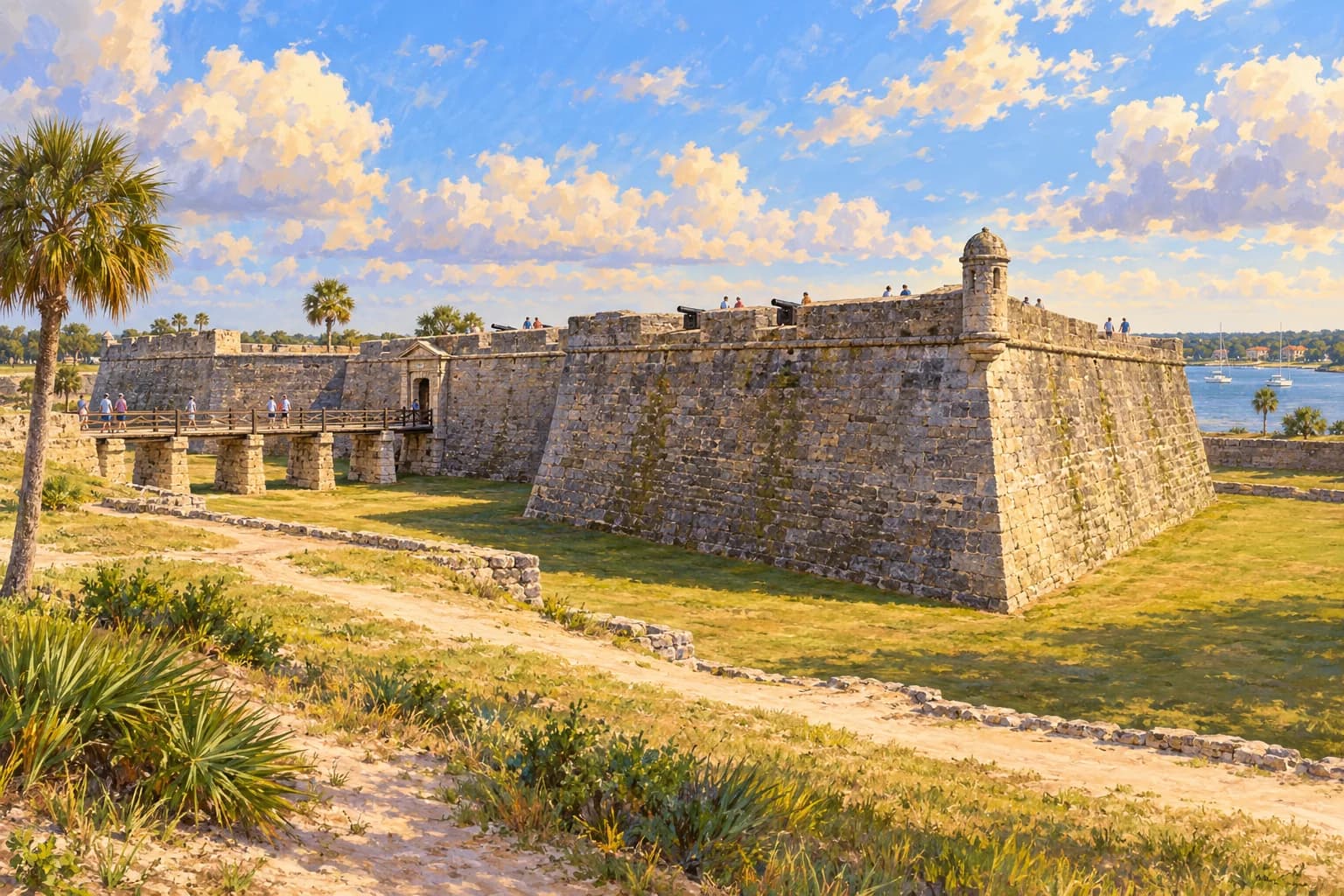
At St Augustine’s great fortress, it is tempting to look up first: the guns, the sentry turret, the shapes against the sky. Try doing the opposite. Look at the stone.
The walls of Castillo de San Marcos are packed with tiny pieces of seashell. The rock is called coquina, and it seems an unlikely choice for withstanding a siege. Yet its porosity would become part of its defence.
Behind that surprise lies a less visible story: people who cut and carried the blocks, families who sought protection, and a town that learned to depend on material from its own coastline.
Discover San Marcos with WAONDERA beach turned to stone
Coquina is not modern concrete with shells pressed into it by hand. It is limestone made of shell fragments cemented together naturally over time.
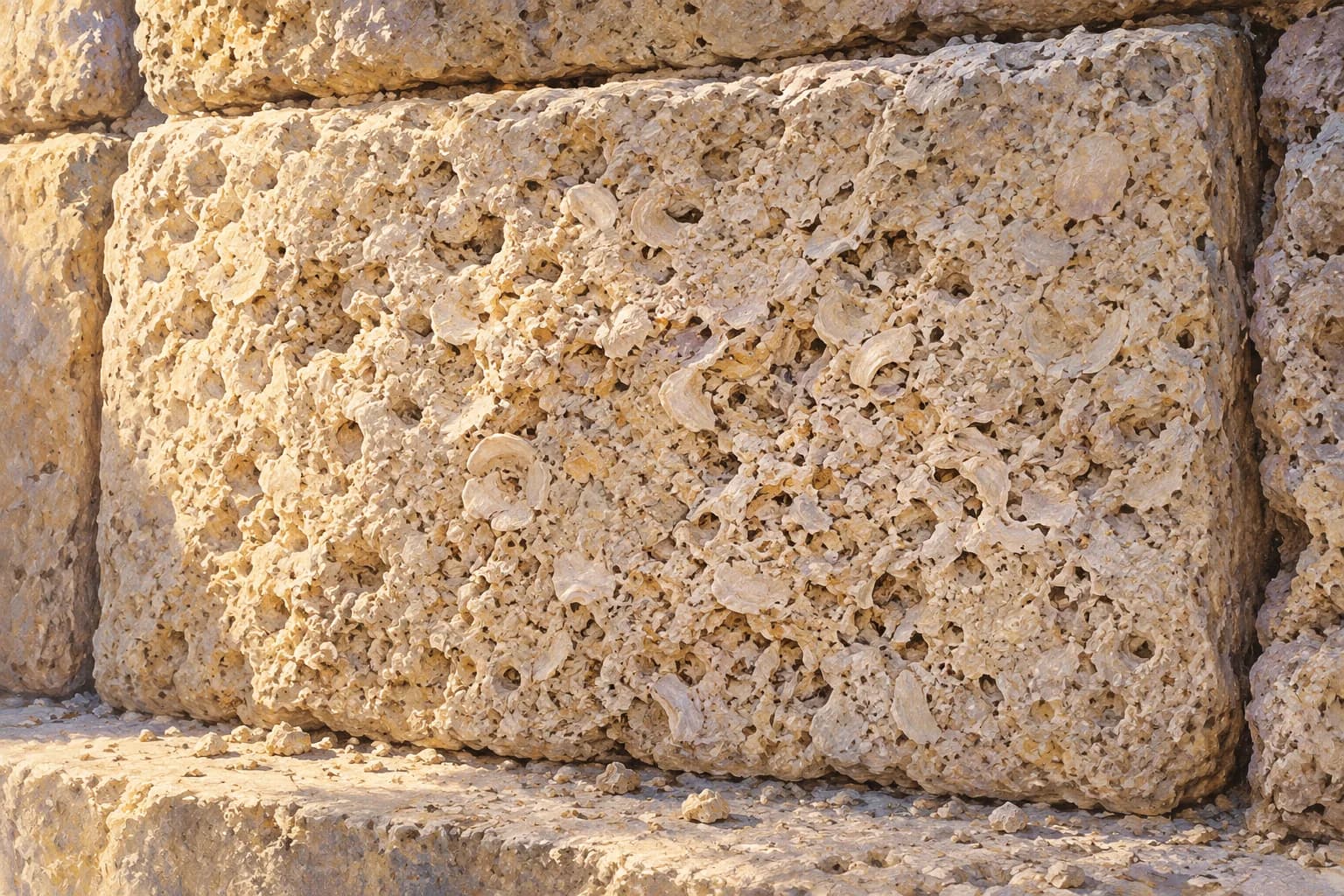 Coquina texture, enlarged in an illustration to reveal its fragments and pores.
The National Park Service explains its formation and use at the Castillo. The stone was quarried on Anastasia Island, across the water. What looks like a continuous wall began as rock that had to be extracted, shaped and moved.
Water lay between the quarry and the walls. Each block had to cross from one shore to the other before taking its place in the Castillo: defence began long before a cannon was installed.
How could something so porous hold?
A harder, more rigid wall can fracture under impact and throw out dangerous fragments. Coquina’s porous structure could absorb some of the energy: projectiles might lodge in it rather than break the wall apart as expected.
This was not an invulnerable rock, or a wall of loose shells. Thickness, design and maintenance mattered too. The park’s architectural account places the material within a complete defensive system.
Look at the bastions. Their angles were not designed to make a handsome silhouette: they answered the needs of artillery and allowed defenders to cover the enclosure’s faces. The Castillo is low and broad because strength here did not mean building a fairytale tower.
Twenty-three years between two dates
Construction began in 1672, and the fort was declared finished in 1695. Between those dates lay changes, shortages and people who never saw the completed building.
The park’s research on its builders preserves the name of Andres, a stonecutter who worked here for sixteen years. A finished wall conceals that time: days of cutting stone, tools at work and blocks that others would keep laying.
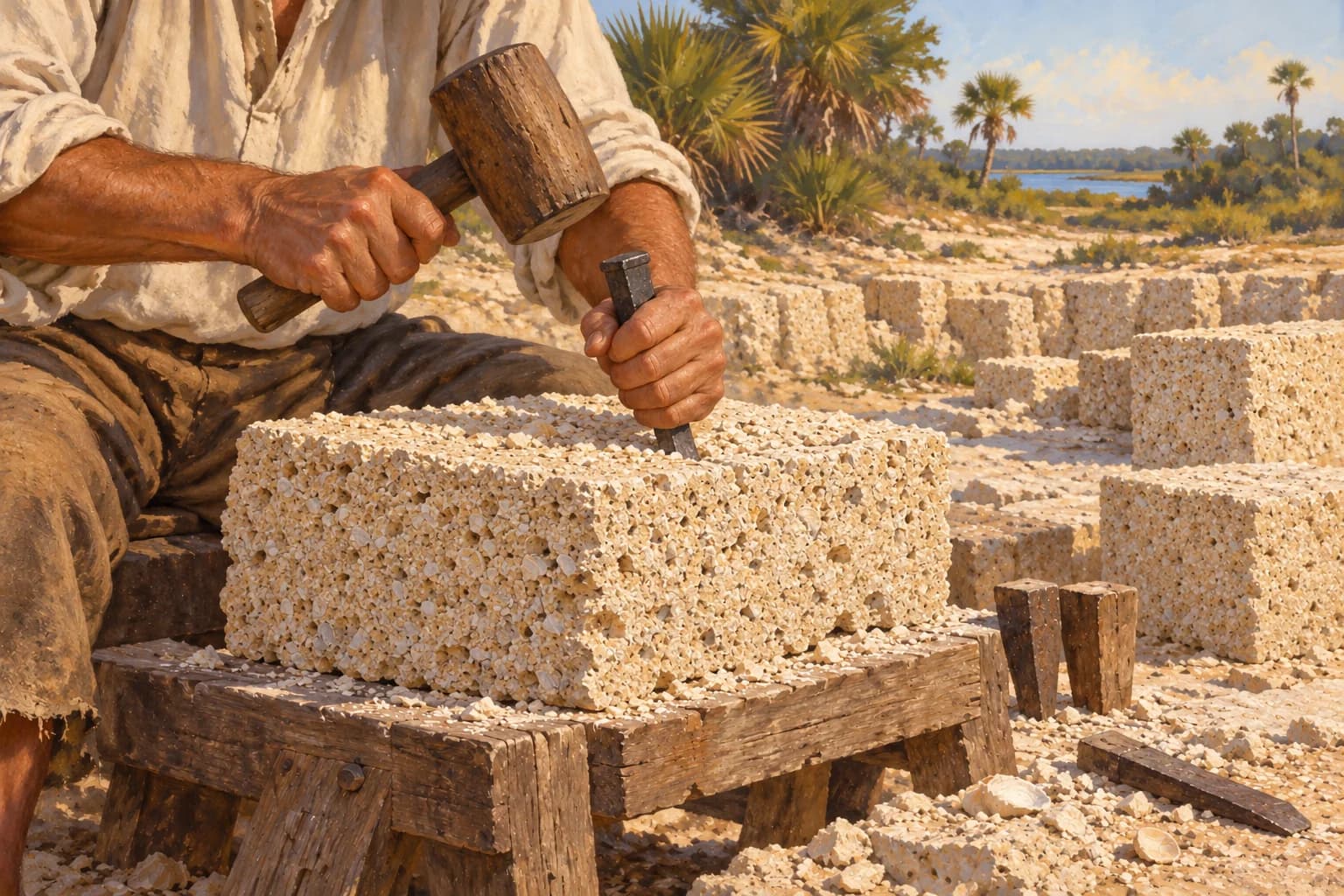 An evocation of period stone-working, not a portrait of Andres or a documented individual scene.
Craftspeople, soldiers, convicts, and free and enslaved Africans worked here. Guale, Timucua and Apalache communities supplied much of the Indigenous workforce, compelled to serve. Families also bore the cost of their absence and the harshness of that system.
Admiring the workmanship does not require making those conditions beautiful. The fortress preserves a technical achievement alongside a history of inequality and coerced labour.
A courtyard where a town sought shelter
Today the courtyard invites you to stop and look at the rooms opening around it. During a siege, being inside meant something altogether different.
In 1702, an English attack forced about 1,500 people to shelter here for 51 days. The NPS courtyard account describes tents and makeshift lean-tos built with materials brought from home: the rooms were occupied by supplies.
The fortress held, but the siege history records that the attackers burned the town as they withdrew. Leaving the walls did not mean returning to the life people had left outside.
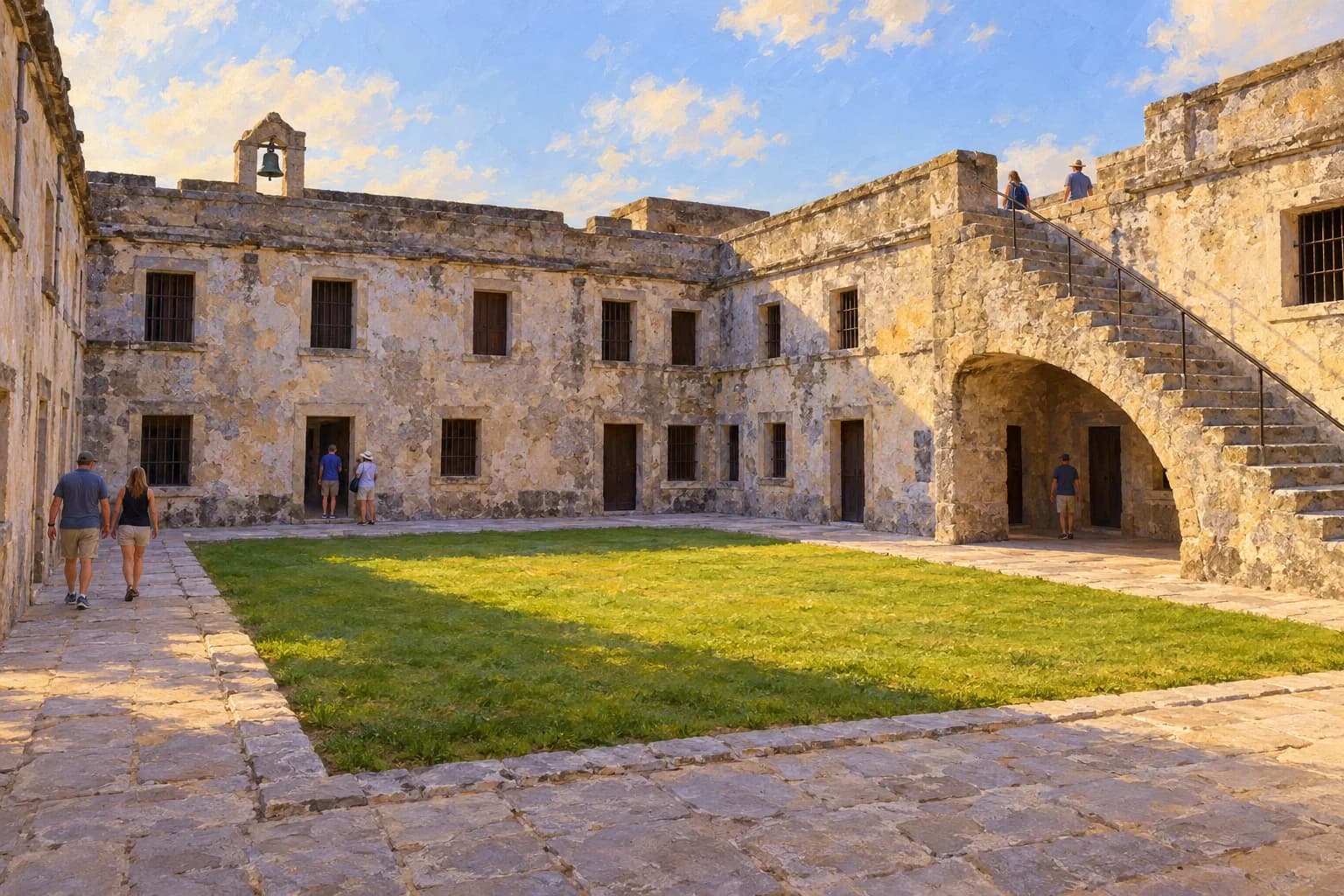 An illustration of today’s courtyard, altered by rebuilding after the siege of 1702.
The courtyard changed after that siege. Today’s lawn and doorways do not recreate the refuge of 1702; the tents and shared living space belong to its documented history.
Three details for your next visit
Follow the visit at three scales: a tiny shell in the stone, the angle of a bastion and the space of the courtyard. The material, the defences and life within the walls meet in those three details.
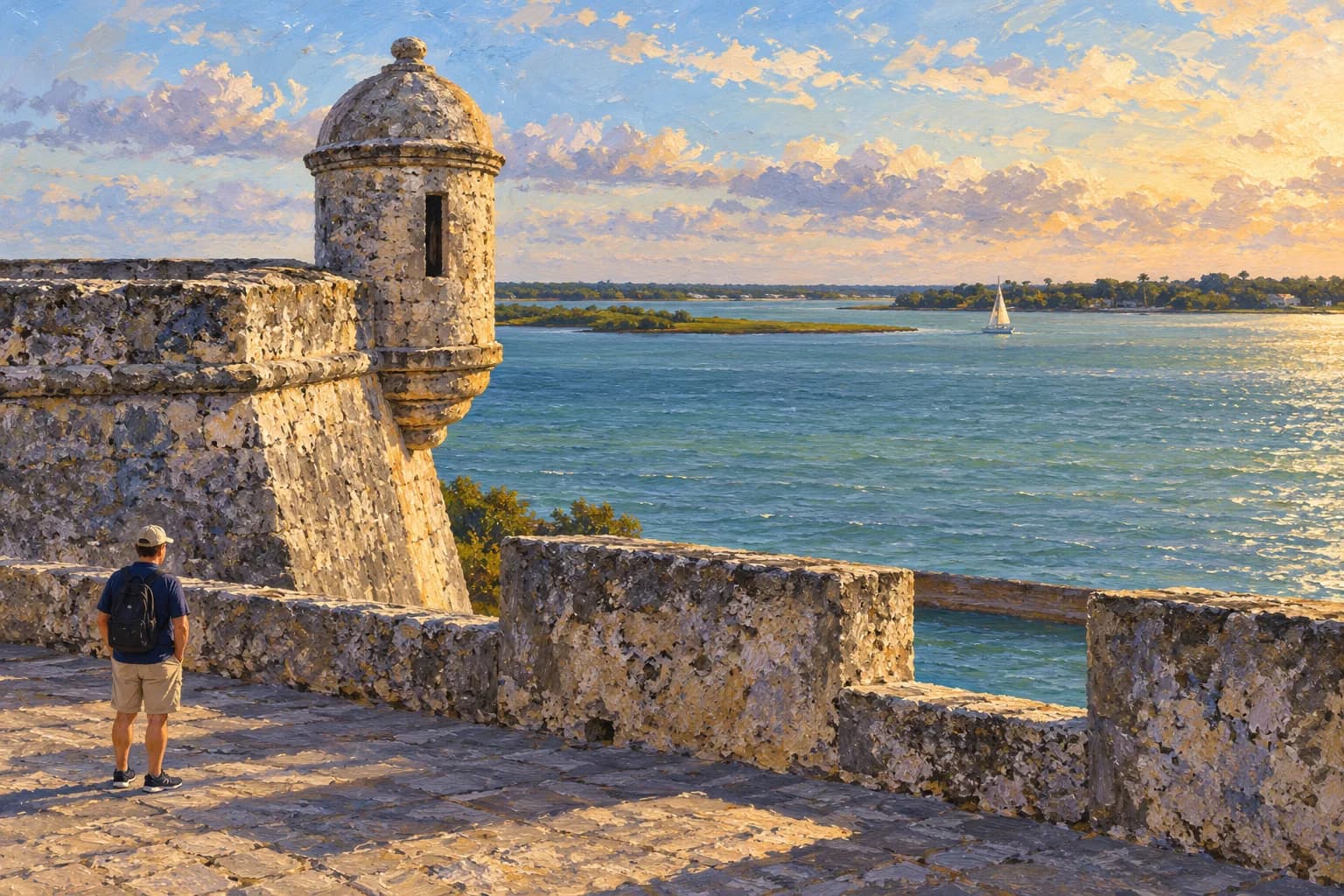 An illustration of a sentry turret overlooking Matanzas Bay.
Check the park’s official visitor information for admission, hours, accessibility and alerts. Do not assume there will be a cannon demonstration or access to every area. Observe the stone without removing fragments or climbing the walls.
For another outing, explore our selection of stories and places across Florida. Today, perhaps the most interesting memory will not be a photograph of a gun. It might be the moment you notice a tiny shell and realise that it too belongs to the history of a town.
See San Marcos differently with WAONDERSection
Stories behind places