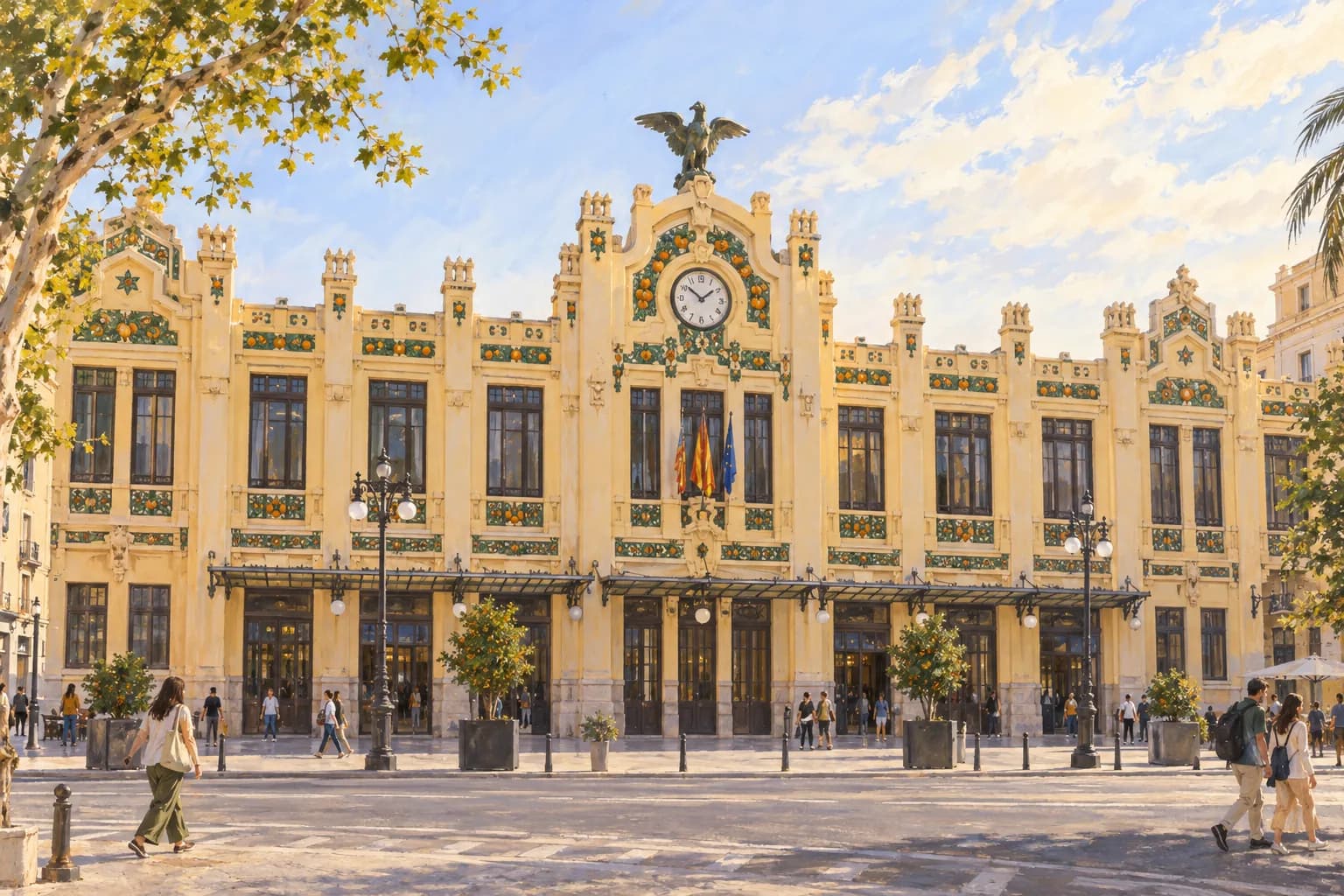
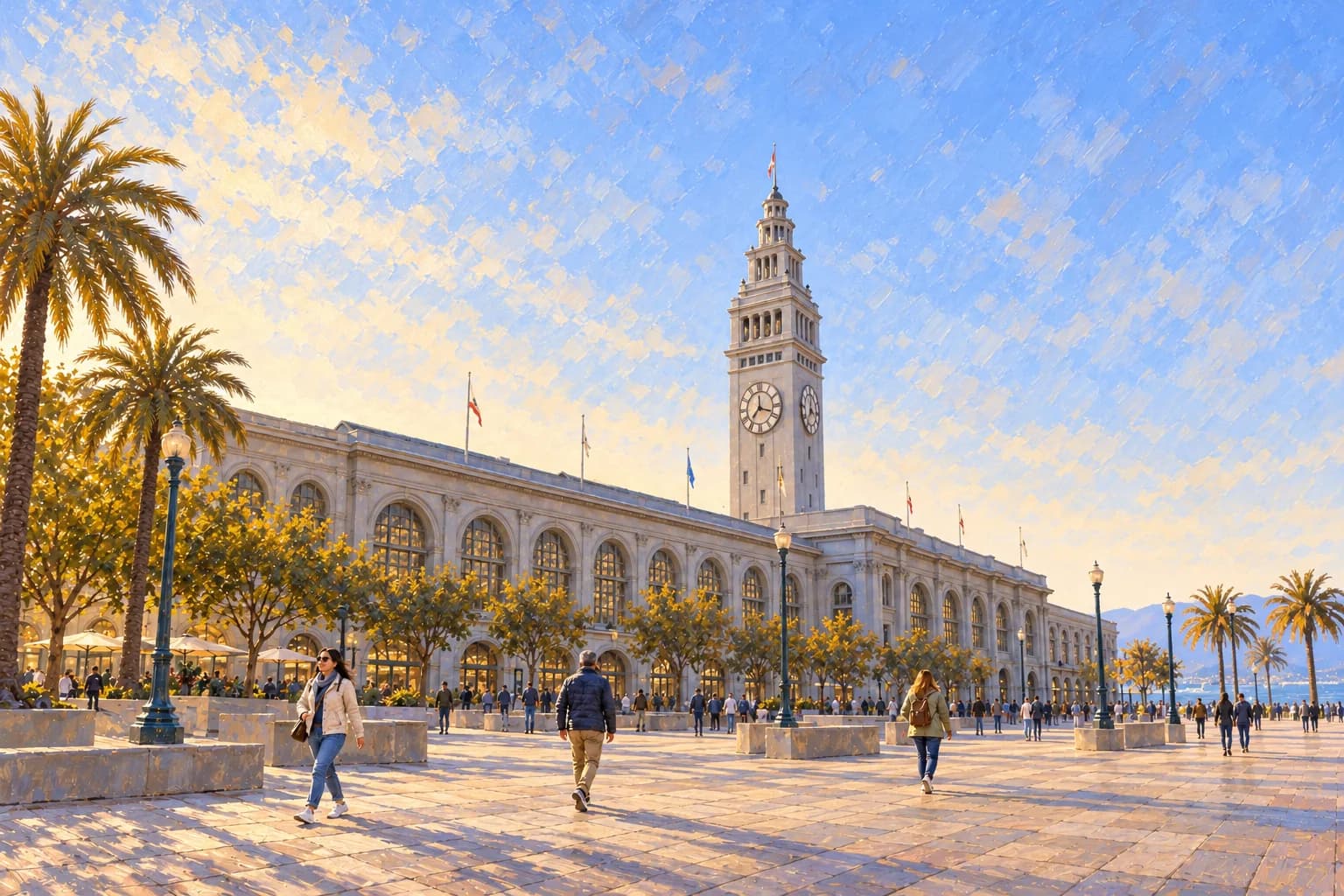
Santander after the fire: a walk through what is no longer there
From Calle Cádiz to the cathedral and bay, take a short walk through the memory of 1941 and the city that kept on living.
There is a way of walking through Santander in which the most important thing is not always in front of you. It is in the gap left by a house, a rebuilt street, or an old photograph that suddenly fits the place where you are standing.
On 15 February 1941, the fire that devastated the historic centre began. Today you can encounter that memory without seeking a landscape of ruins: the city kept living, and many of its traces ask you to pause.
This outing has three stops: Calle Cádiz → Plaza de Atarazanas and the cathedral → Jardines de Pereda and the outside of Centro Botín. Start in the historic centre and finish beside the water. We have selected part of the municipal walk, bringing together memory, stone and the bay without requiring the full circuit.
Start with Santander Cathedral’s story in WAONDERBefore you go: bring a photograph and time to look
The municipal Fire Route brings together ten points with historical images and information. Those materials are the best companion for comparing past and present on the spot.
The same source records 377 buildings destroyed. The centre was devastated in under 48 hours. Homes, shops and workplaces disappeared together: rebuilding streets also meant rebuilding everyday life for the people who used them.
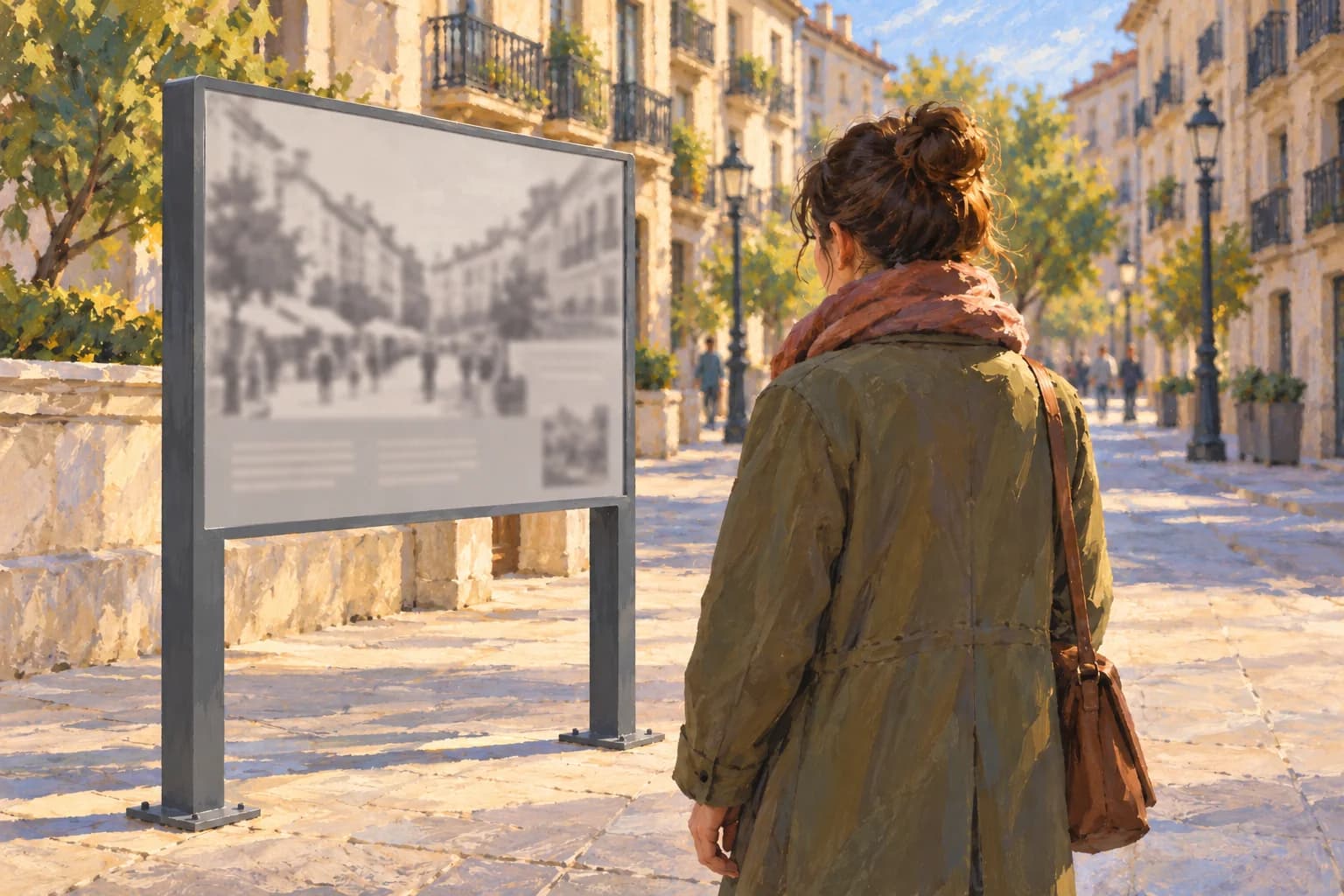 An evocative pause to read about the city’s past; the illustrated panel is fictional.
The municipal itinerary offers more stops if you want a longer outing. Our three can be enjoyed outdoors; entering the cathedral or visiting a Botín exhibition is an optional addition, subject to opening hours and visitor conditions.
Calle Cádiz: when a street becomes more than an address
The official route identifies Calle Cádiz as the starting point of the fire. Begin here before heading up towards the cathedral, and look for the historical material for this stop. Compare more than the facade: notice the space between buildings and how the street meets the next ones.
Find the relevant historical image in the municipal materials. Choose something to compare — an alignment, a corner, the profile of the ground — then look up. Not everything needs to match: the difference is exactly what you are learning to read.
Do not attribute every modern building to the fire either. The city changed for many reasons before and after 1941. Each location’s photograph and explanation help distinguish them.
Atarazanas and the cathedral: survival can mean rebuilding
From the Calle Cádiz area, continue towards the square below the cathedral, using designated crossings. The city’s religious-buildings guide explains that the complex was partly rebuilt after the fire.
The cathedral combines old fabric with repairs made after the fire. Below it, Atarazanas holds an earlier memory: the municipal walk describes fifteenth-century shipyards and the sea reaching this square. The water you will see at the end was once much closer to this spot.
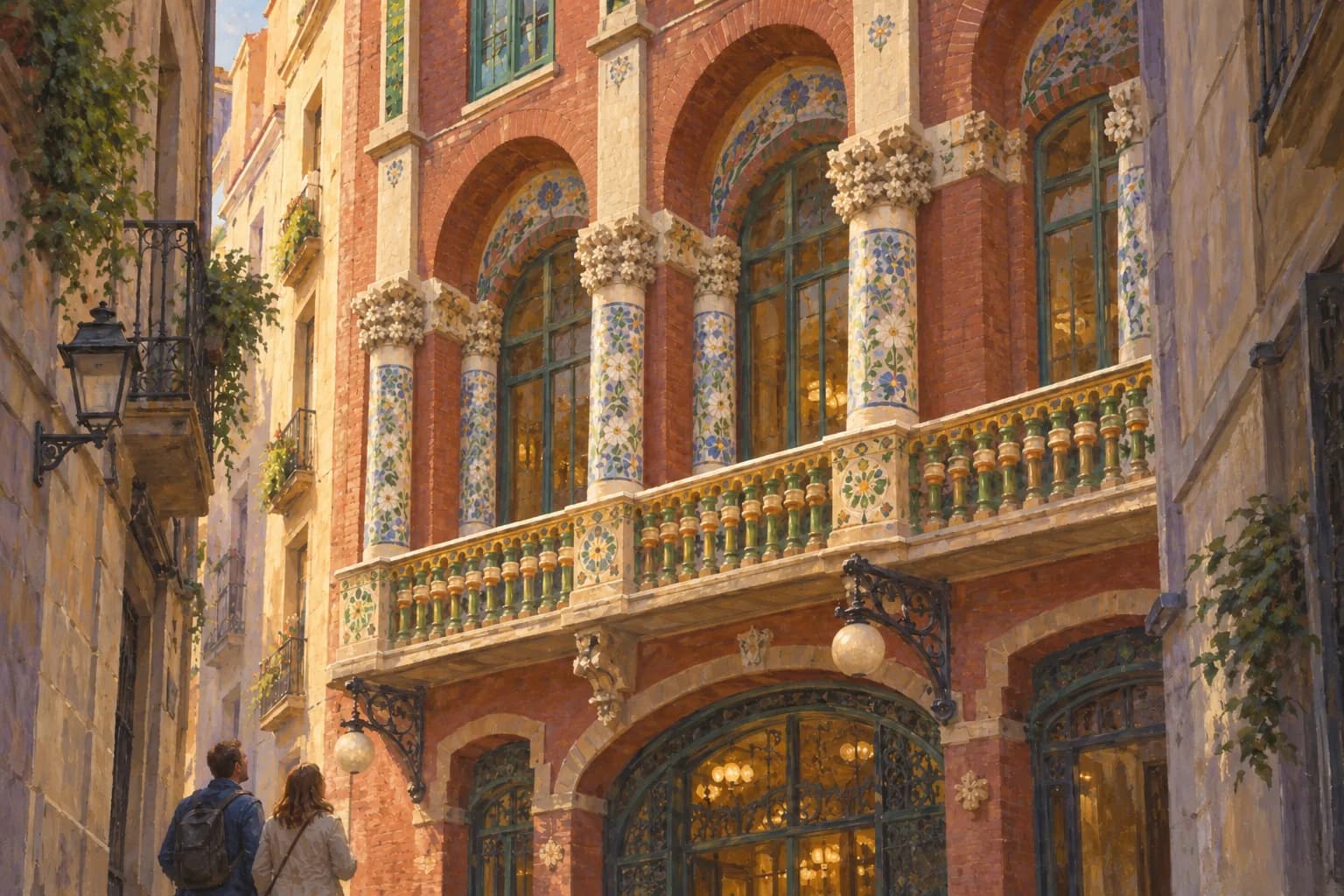
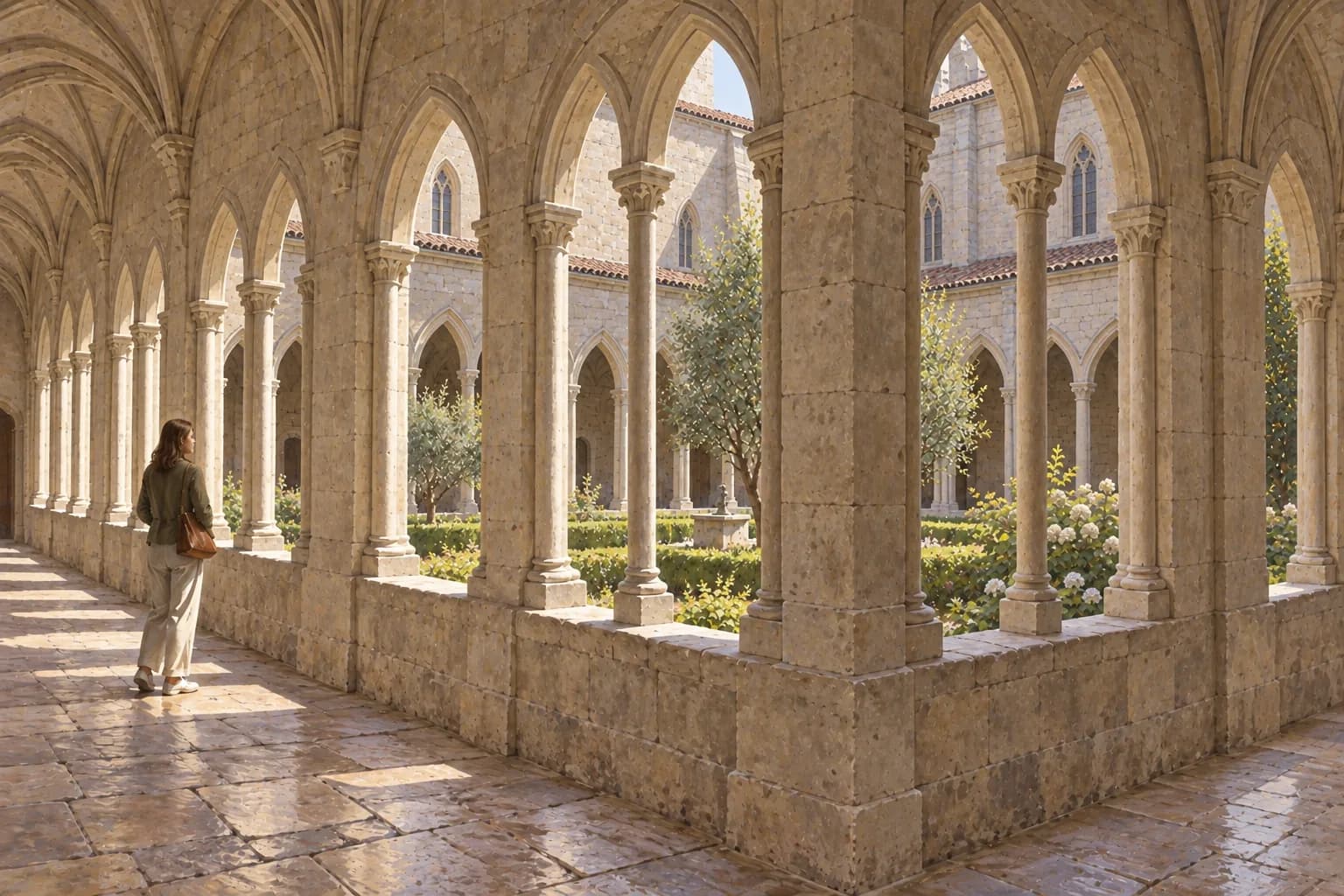 An illustration of the cathedral cloister, part of a complex that has undergone rebuilding.
If you choose to enter when possible, the cloister offers another scale: from urban change to a sequence of supports, arches and quiet spaces. Otherwise, the outdoor stop still makes sense. Understanding the history does not require entering every room.
Pereda and Botín: finish in a city that did not stand still
From the Atarazanas area, head towards Plaza de Alfonso XIII and Jardines de Pereda, using marked crossings. Continue through the park to the outside of Centro Botín and the bay. Here you can put the old photographs away and return to today’s city.
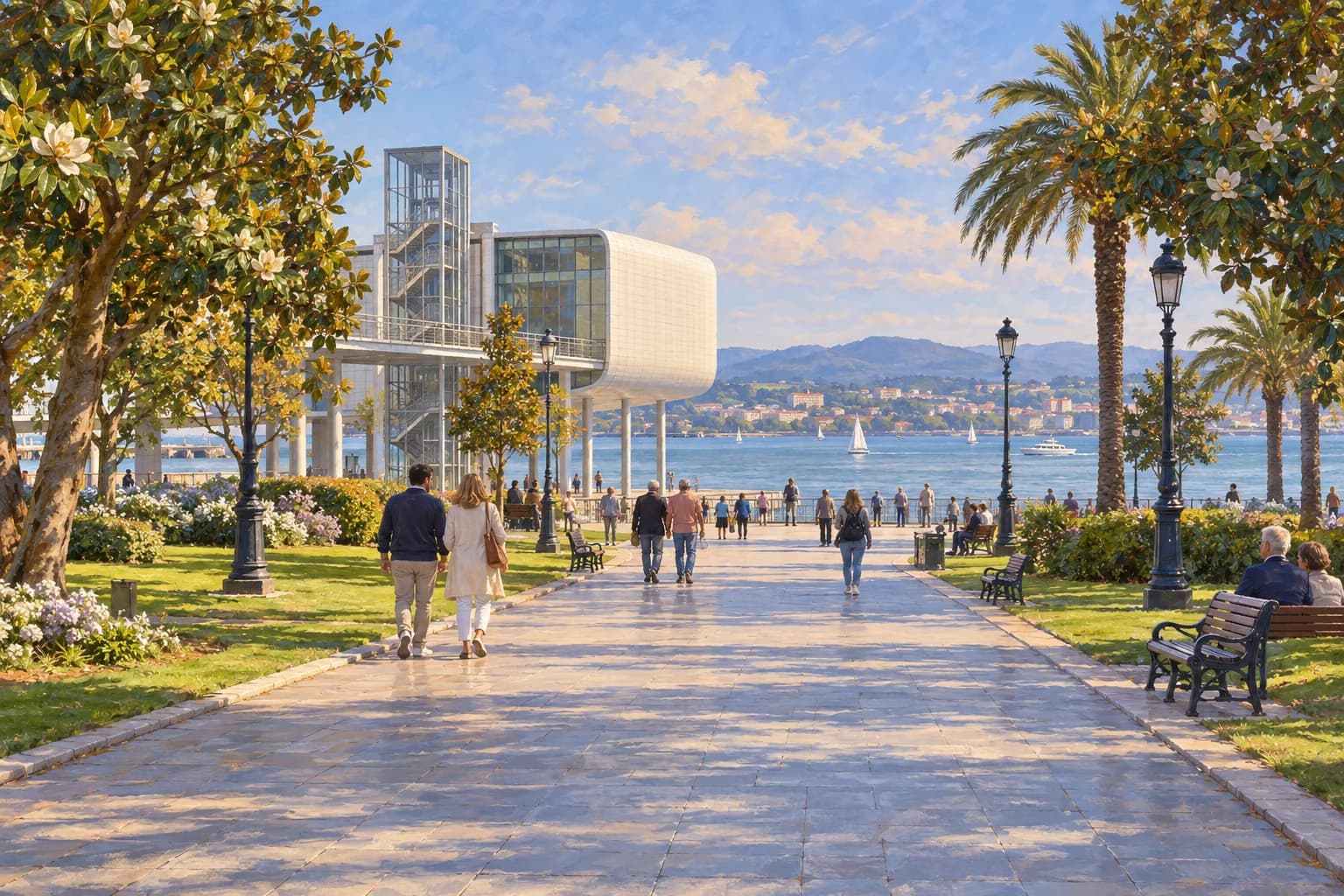
Centro Botín, opened in 2017, belongs to another moment. Its architectural project connects park, town and water through raised volumes and spaces for movement. You can observe that relationship without buying an exhibition ticket.
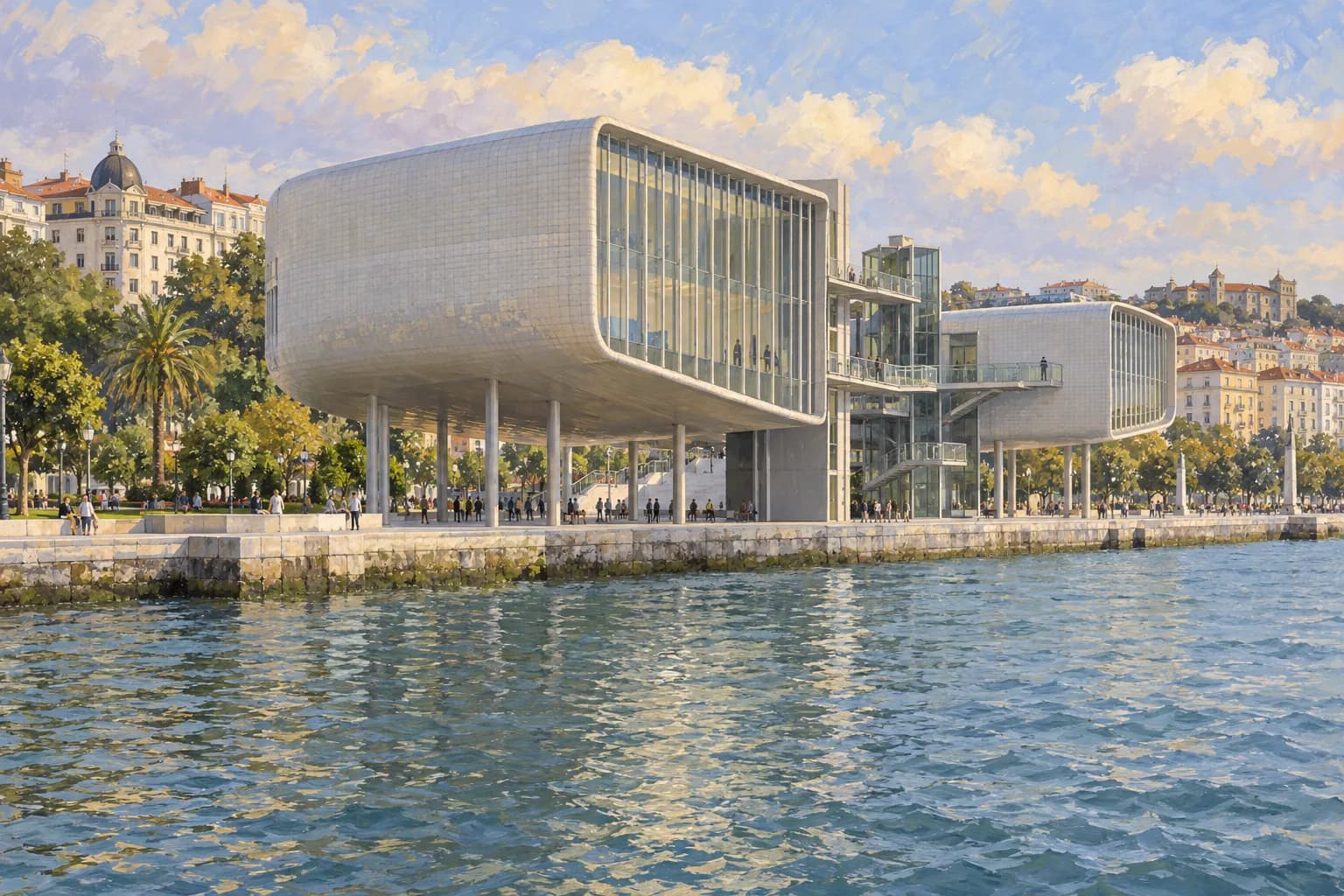 An illustration of Centro Botín, contemporary architecture beside the bay.
A city remembers through more than preservation. It can explain its losses while making room for other uses. Sitting by the water can be the end of the outing, not a brief pause before racing to another sight.
Go home with a comparison, not a list
Shorten the outing to the cathedral area or continue to the water. Wear shoes suited to the historic centre’s slopes, and check the weather before leaving. If you need step-free access, check the specific approaches with tourist information and the places you intend to enter.
For another day, our collection of Santander stories offers more possibilities. This time, perhaps all you need is a comparison: the corner in an old photograph and the corner today.
The next time you pass while running an errand, the city will still be everyday life. But it will not be invisible in quite the same way.
Look again at Santander Cathedral with WAONDERSection
Ideas for city walks