Old Stone House: Georgetown’s remarkable case of mistaken identity
It was not George Washington’s headquarters. This small stone house has a real story of families, clocks and a memory that chose the wrong door.
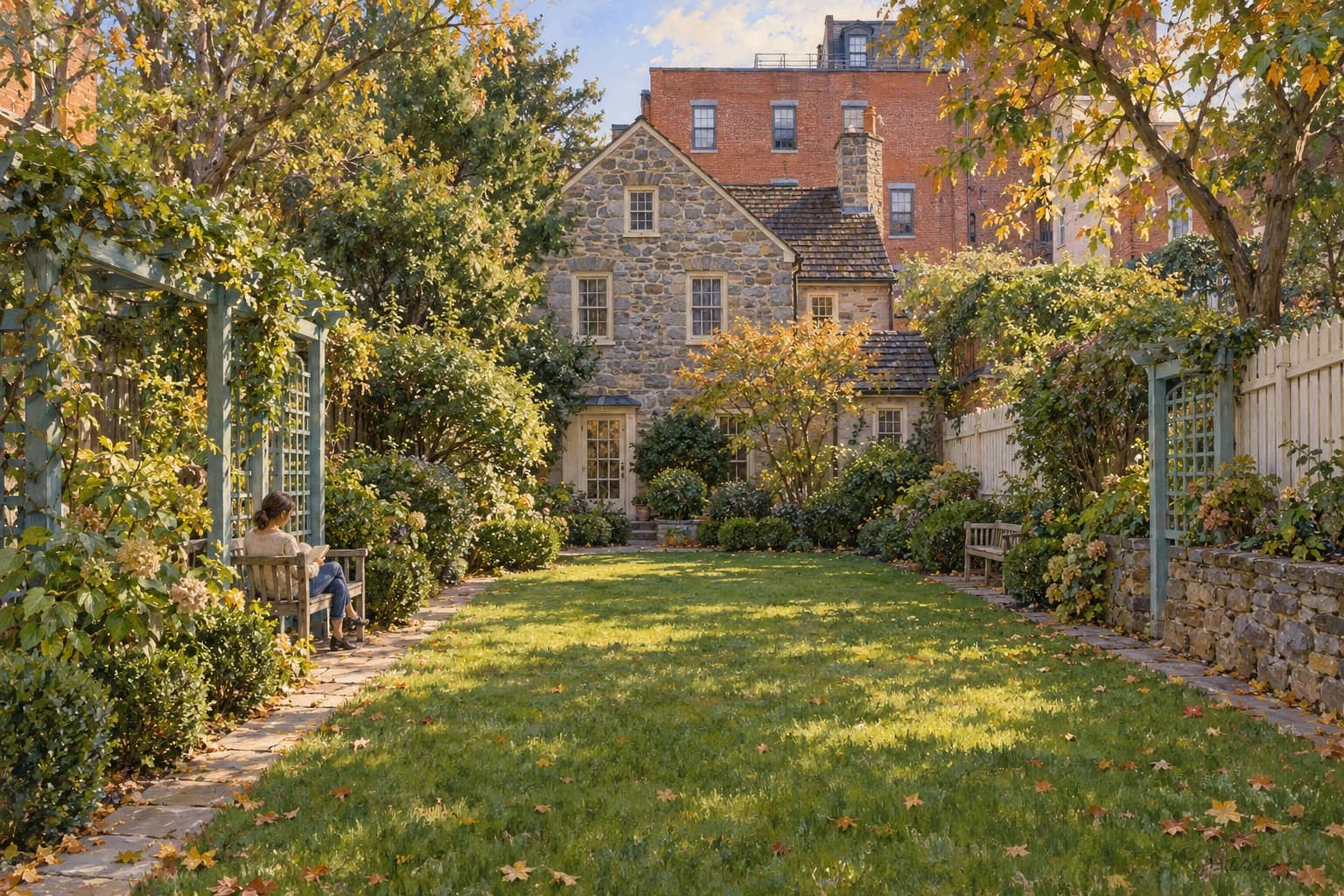
In a city full of famous names, a small house survived because many people believed it belonged to George Washington’s story.
The surprise at Old Stone House, in Georgetown, is that the association was mistaken. Washington need not have slept here for the building to deserve your attention. Behind its walls is something less grand and closer to home: families, rents, trades and the effort of carrying on.
Find it at 3051 M Street NW, amid the neighbourhood’s busy shops. Next time you pass, notice the outside staircase before thinking of presidents.
Discover Old Stone House with WAONDERA family before a legend
The National Park Service’s researched history begins long before that fame. Christopher and Rachael Layman came to Georgetown with two sons in 1764. He died the following year, and she continued the house project.
The first building’s exact appearance is unknown, but the house still bears traces of its builders: marks from the large saw used to cut the oak ceiling beams remain visible. Long before commemorative plaques, the work itself left its record here.
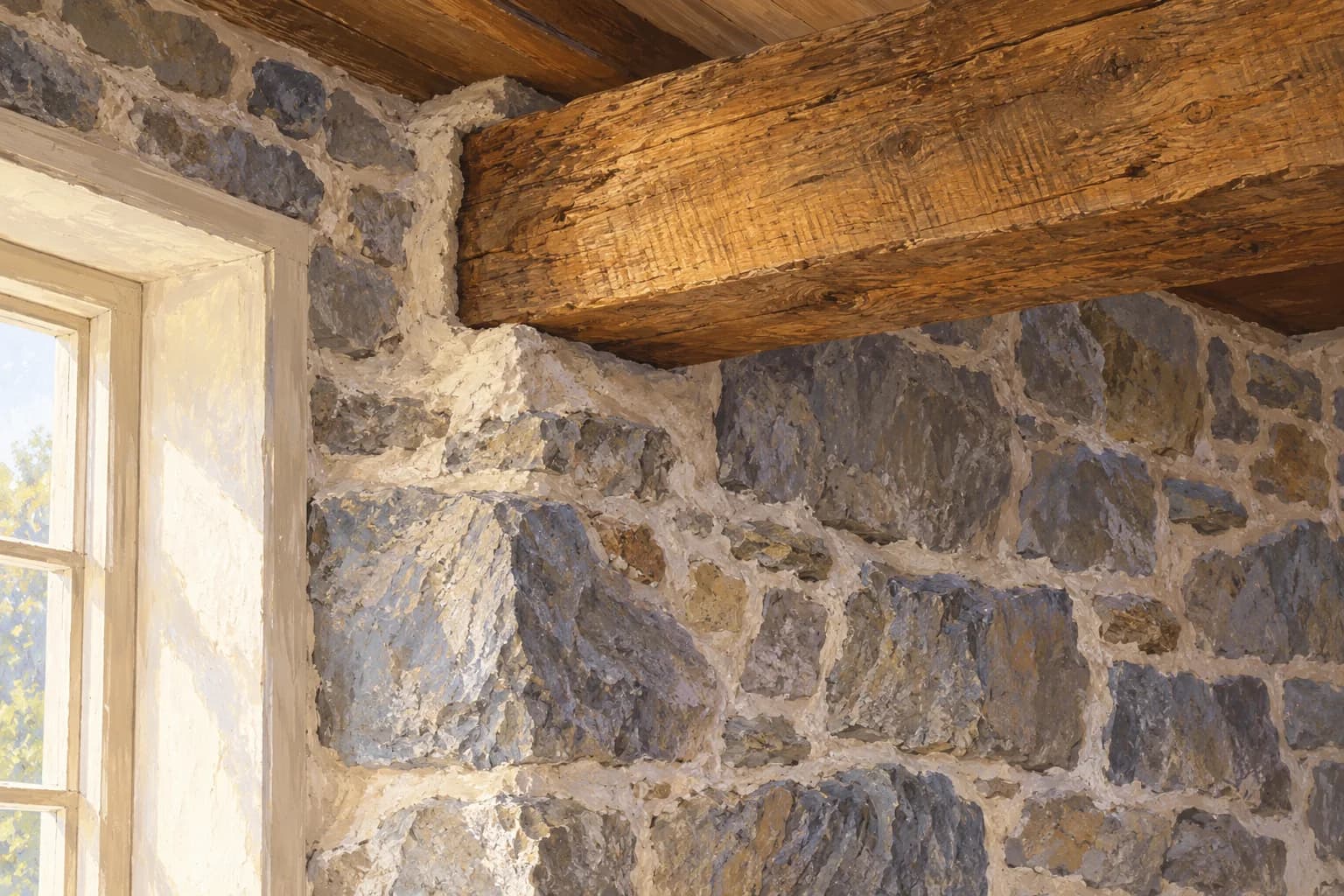 An evocative illustration of stone and oak construction, not an exact surviving room.
Local stone and hand-worked timber bring the story within reach: carrying, cutting, fitting. This was not a house built to become a monument.
The women who kept the property
Cassandra Chew acquired the plot and financed additions. For more than a century, ownership remained connected with women and their descendants. The house also earned rent: it was both home and business space.
That prosperity was also tied to slavery. Cassandra Chew and other owners enslaved people; the park documents that connection, although it cannot establish whether they ever lived at Old Stone House. Behind the rents and inheritances lies this other part of the owners’ wealth.
The building’s domestic scale did not set it apart from Georgetown’s inequalities.
Two John Suters and the wrong door
In 1791, Washington and Pierre L’Enfant stayed at Fountain Inn, known as Suter’s Tavern, near 31st and K Streets. That was not this building.
The NPS place entry explains the confusion: John Suter ran the inn; his son, also John, was associated with a clock shop in Old Stone House. Over time, names, businesses and buildings blurred together.
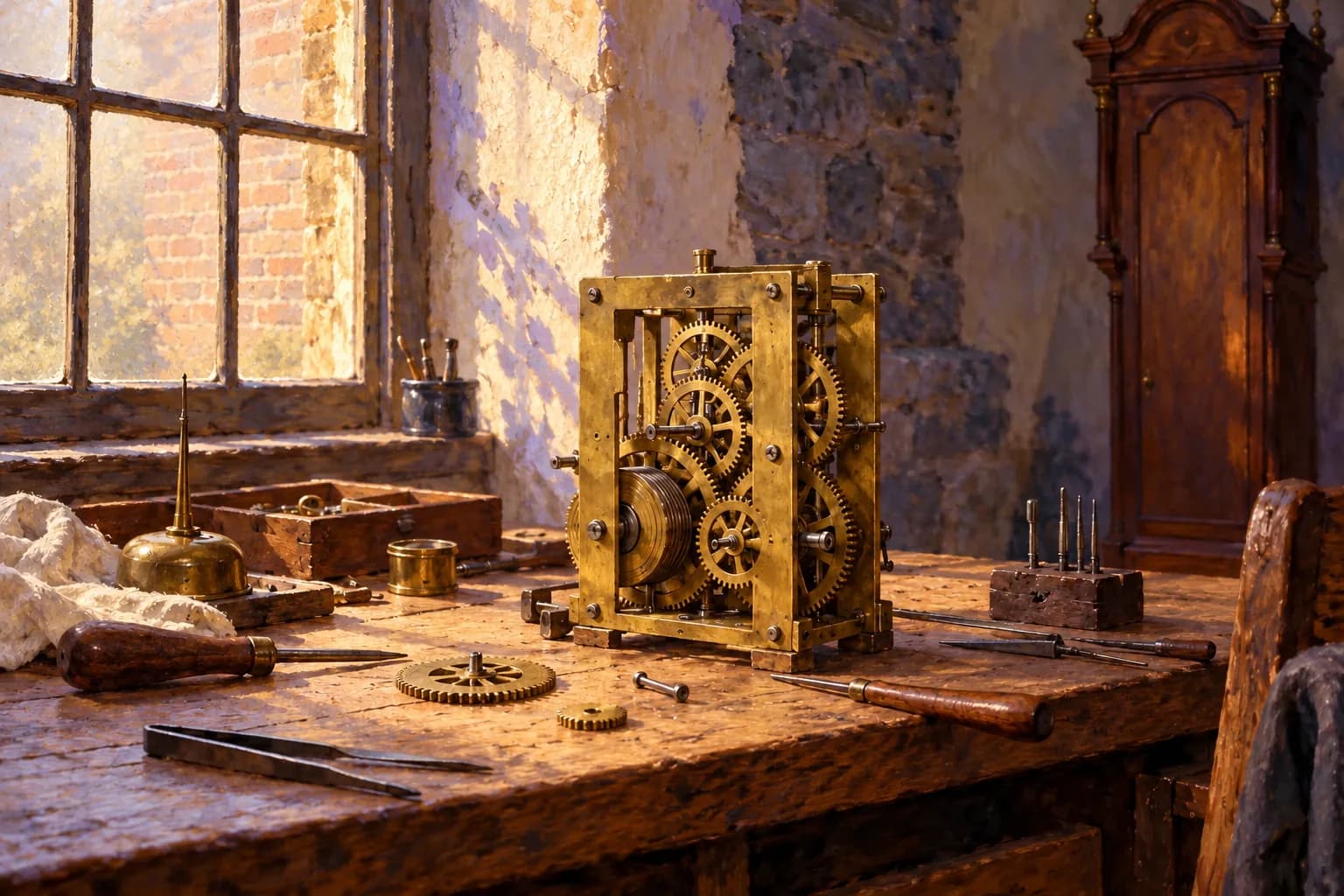 An evocation of clockmaking, not a reconstruction of John Suter’s workshop or a specific object.
The desire to remember the president helped protect the wrong house. The irony is remarkable: a mistake preserved a place whose real history would eventually be reason enough to keep it standing.
What research revealed
Historian Cornelius Heine helped unravel that identification. The NPS’s work made it possible to look beyond plaques and much-repeated stories.
When the federal government bought the property in 1953, the site was associated with a car business. After preservation work, it opened to the public in 1960. It had not remained frozen in the eighteenth century, waiting for us to arrive.
One object brings the story back to its real occupants: the NPS acquired a tall-case clock by John Suter Jr. and returned it to the house. Whether he made it here remains uncertain. Even with that question unanswered, it belongs more closely to this building’s history than its supposed role as Washington’s headquarters.
A pause among the shops
Stop at the irregular stonework, windows and pale staircase. Set them against M Street’s shops and the contrast becomes clear: a small, hand-built house has remained standing while the street changed around it.
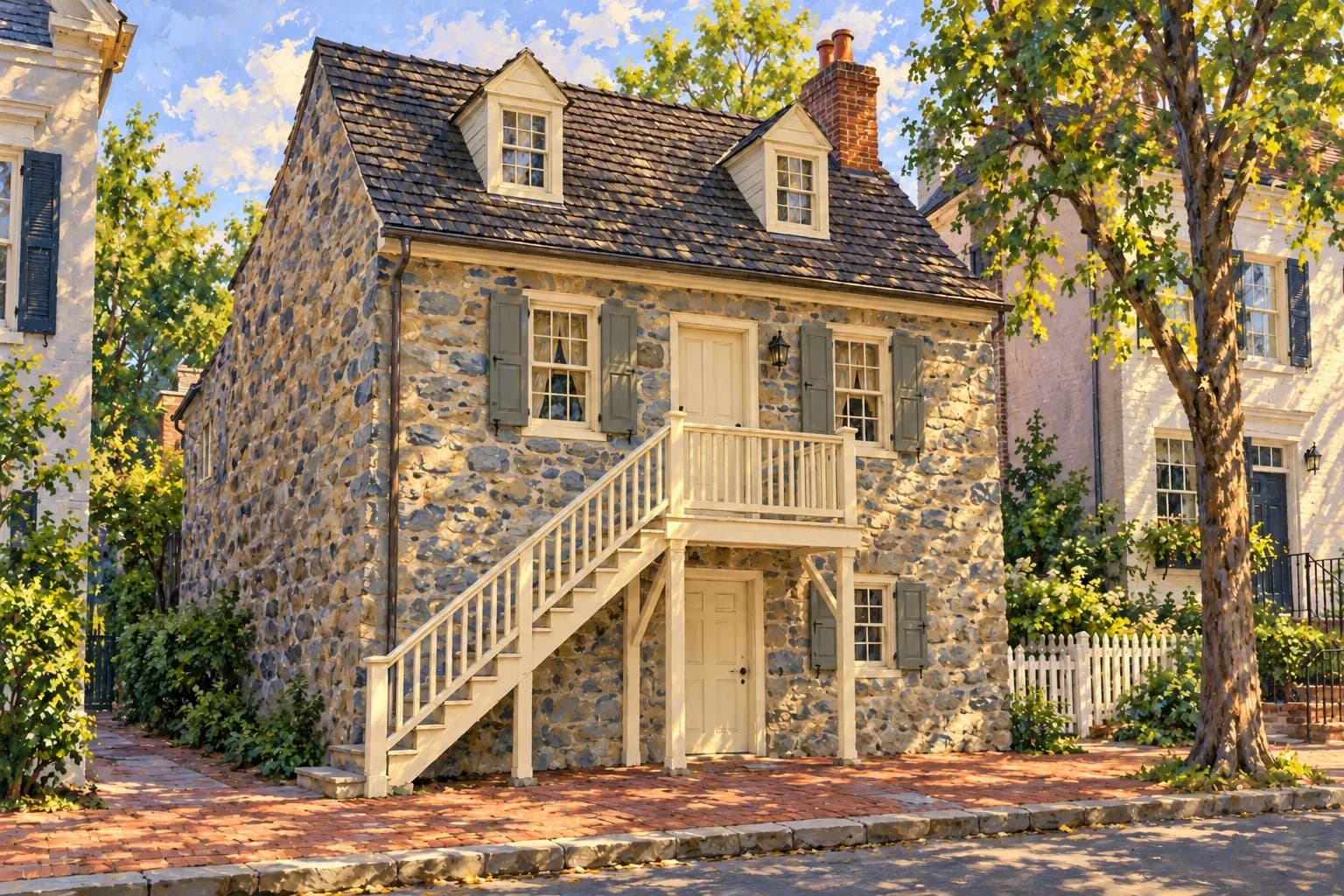 An interpretation of the present facade, not the house’s first appearance in 1765.
Check the park’s visitor information: the page consulted distinguishes the garden, store and kitchen, and states that upper floors are closed. Do not plan on a full tour of every room. Respect the spaces and hours available.
For another outing, explore more Washington DC places and stories. But this small house leaves one thought worth taking home: a place does not need a famous owner to hold an extraordinarily interesting life.
Explore Old Stone House’s real story with WAONDERSection
Stories behind places