Marian Anderson: the voice that found a stage at the Lincoln Memorial
From a hall that denied her a stage to the 1939 concert: discover Marian Anderson and look differently at the Lincoln Memorial’s steps.
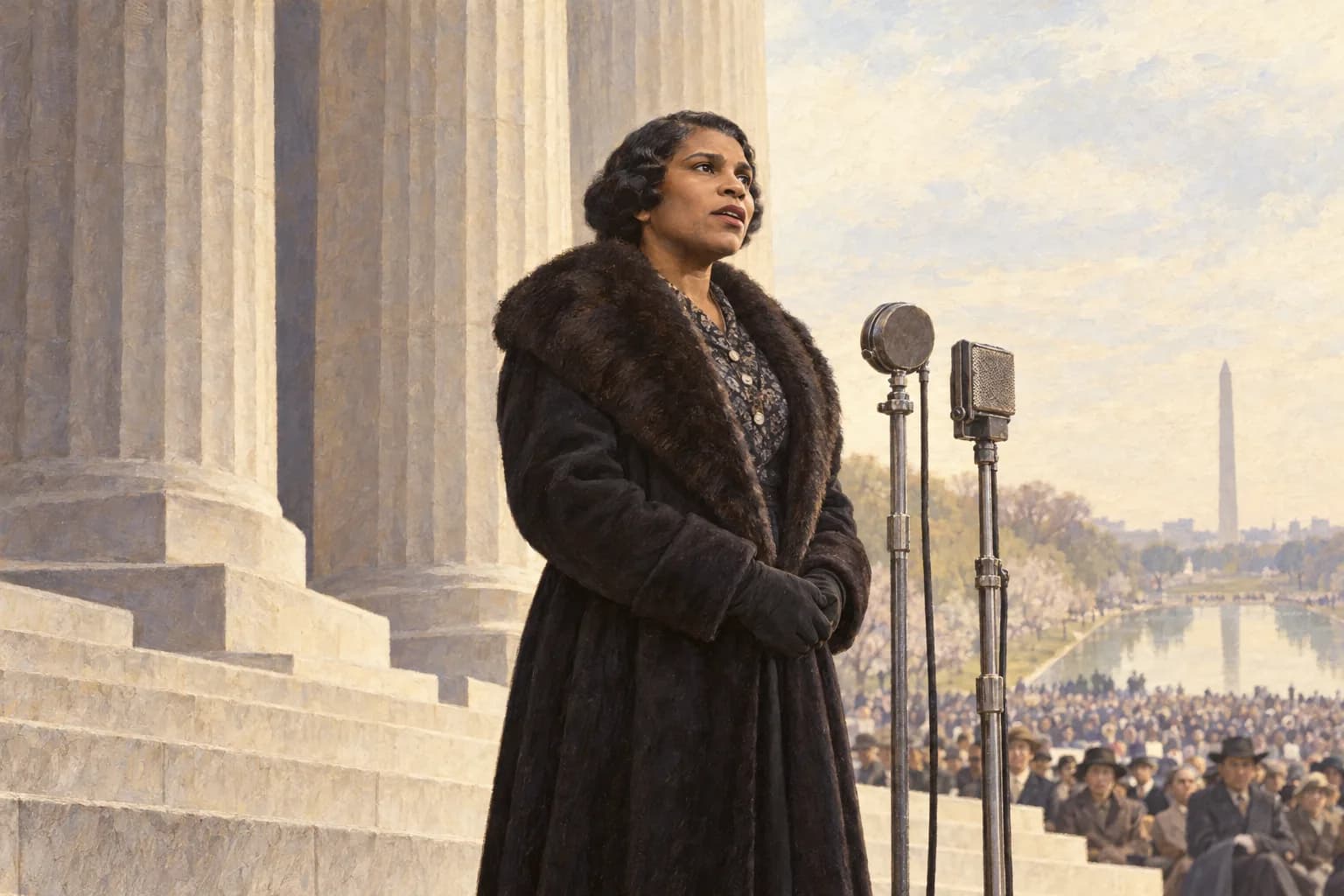
The steps have a voice, too
At Washington’s Lincoln Memorial, the eye usually rises toward the seated figure of Abraham Lincoln. Before going inside, the steps deserve a pause. On April 9, 1939, Marian Anderson sang here after another venue had refused her a stage because she was Black. An estimated 75,000 people came to listen.
A photograph of the building preserves an architectural story. A photograph of that concert also preserves a decision: making a public space available to an artist whom a concert hall had excluded. Approaching these steps can mean more than finding the best angle.
Explore the Lincoln Memorial in WAONDERBefore that afternoon, there was already an artist
Anderson was born in Philadelphia in 1897 and began singing in a church choir. Her career did not begin in front of the memorial. She won a competition associated with the New York Philharmonic in 1925, performed at Carnegie Hall in 1928, and built a European career during the 1930s. The National Archives preserve her biography and documents.
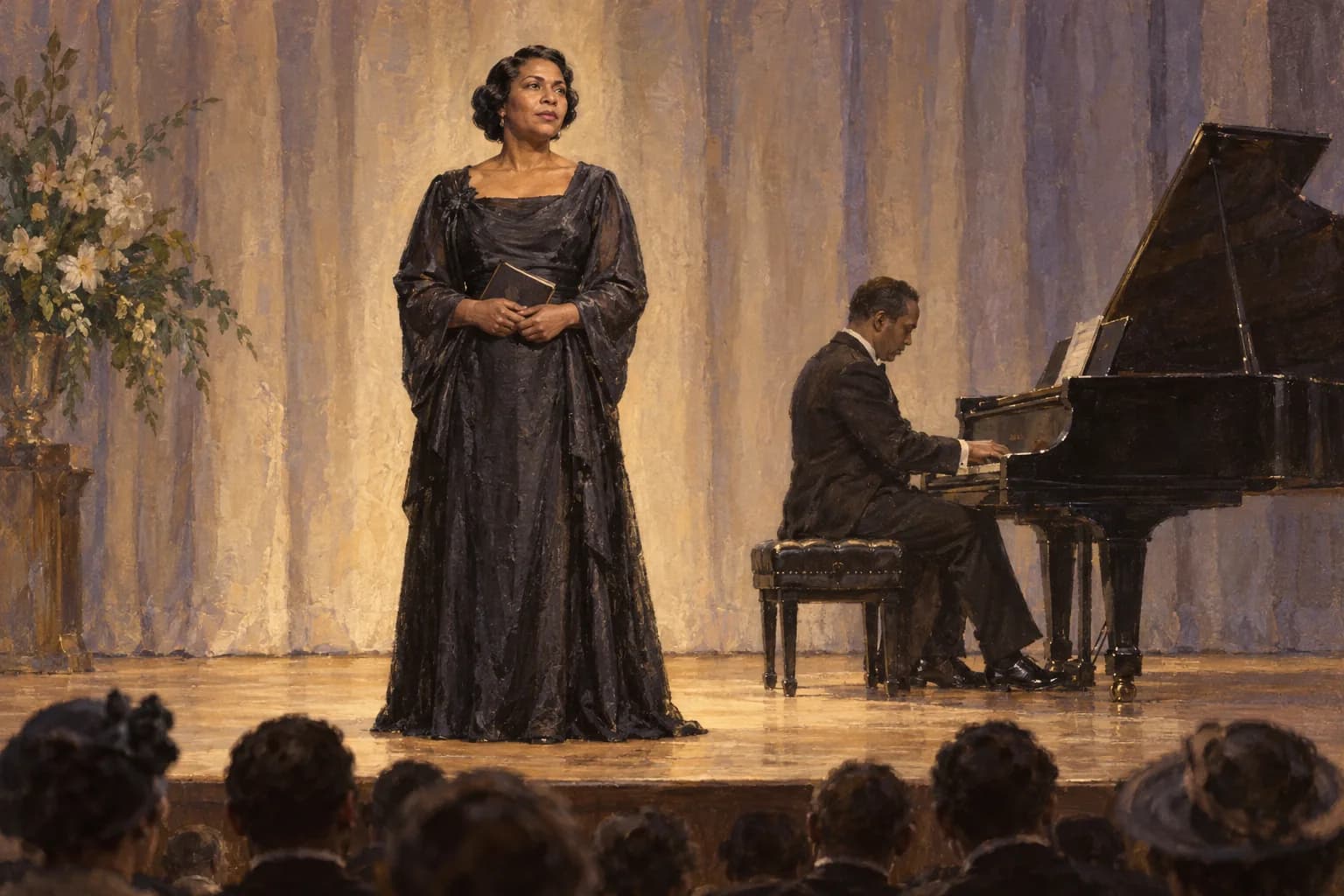 An imagined 1930s recital setting. It does not represent a specific documented hall or performance.
Remembering that changes the story’s starting point. When the Washington refusal came, the question was not whether Anderson had learned to sing or could attract an audience. An artist with an international career was still encountering a door that talent alone could not open.
In the 1939 photographs, no grand pose is needed to recognize her: the dark coat, hands held together, attention turned toward the microphones. The image preserves a performer at work. Her music matters as much as the event that came to surround it.
A closed hall, and people who would not accept the answer
Constitution Hall belonged to the Daughters of the American Revolution, known as the DAR. Its policy excluded Black performers. Anderson was denied permission for the concert intended for the hall in 1939. The National Park Service documents the refusal and the alternative venue; the DAR itself now acknowledges the racial exclusion.
The response was collective. It involved her manager, Sol Hurok, the NAACP and its secretary Walter White, Howard University, and Interior Secretary Harold Ickes. Eleanor Roosevelt resigned from the DAR in protest and supported the search for another stage. Documents assembled by the National Archives help trace that collaboration.
It is easy to compress the story into a famous gesture by the first lady. That leaves out something essential: the organizers, the university, those advocating for the concert, and, at its center, the artist who would perform it. An outdoor stage needed work before it could welcome a crowd.
The memorial already contained a contradiction
The Lincoln Memorial had been dedicated on May 30, 1922. One of its speakers was Robert Moton, president of Tuskegee Institute. Yet Black attendees were placed in a separate section. The NPS explains the segregation at that ceremony.
That history adds depth to the choice of venue in 1939. The memorial was not neutral ground or a place where equality had already been settled. Its columns could celebrate ideals while people arriving to hear them were treated differently.
Seventeen years later, Anderson would sing to an integrated audience. The same building that had separated its guests at the dedication now welcomed a crowd gathered before a Black singer.
A piano, microphones, and a crowd
The concert took place on Easter Sunday, April 9, 1939. Anderson was accompanied by a piano. She opened with My Country, ’Tis of Thee, a patriotic song, before the crowd assembled on the Mall.
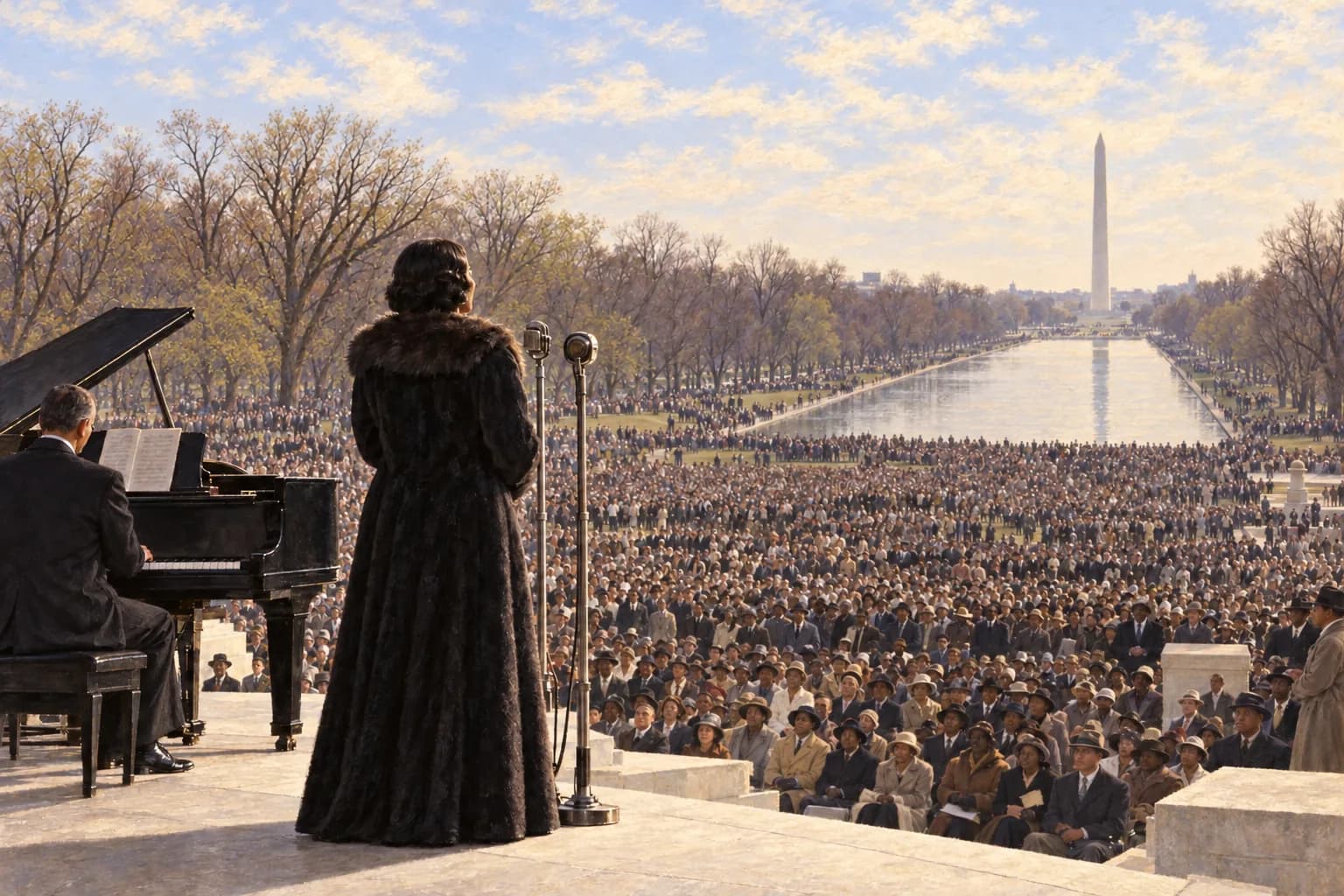 An evocative composition informed by the arrangement visible in archive photographs. It does not reproduce the entire attendance or every position that day.
Photographs preserved by the National Archives show people filling the space before the memorial and lining both sides of the pool. There is a difference between reading a number and seeing that expanse: the steps end, but the audience continues.
A concert hall’s refusal had led to an outdoor performance. Between the piano and that crowd, an excluded artist found a stage much larger than the one denied to her.
Her voice reached beyond the rows of spectators. The concert was broadcast nationally by radio, as the Library of Congress explains in its research on the recording. You could listen without being in Washington.
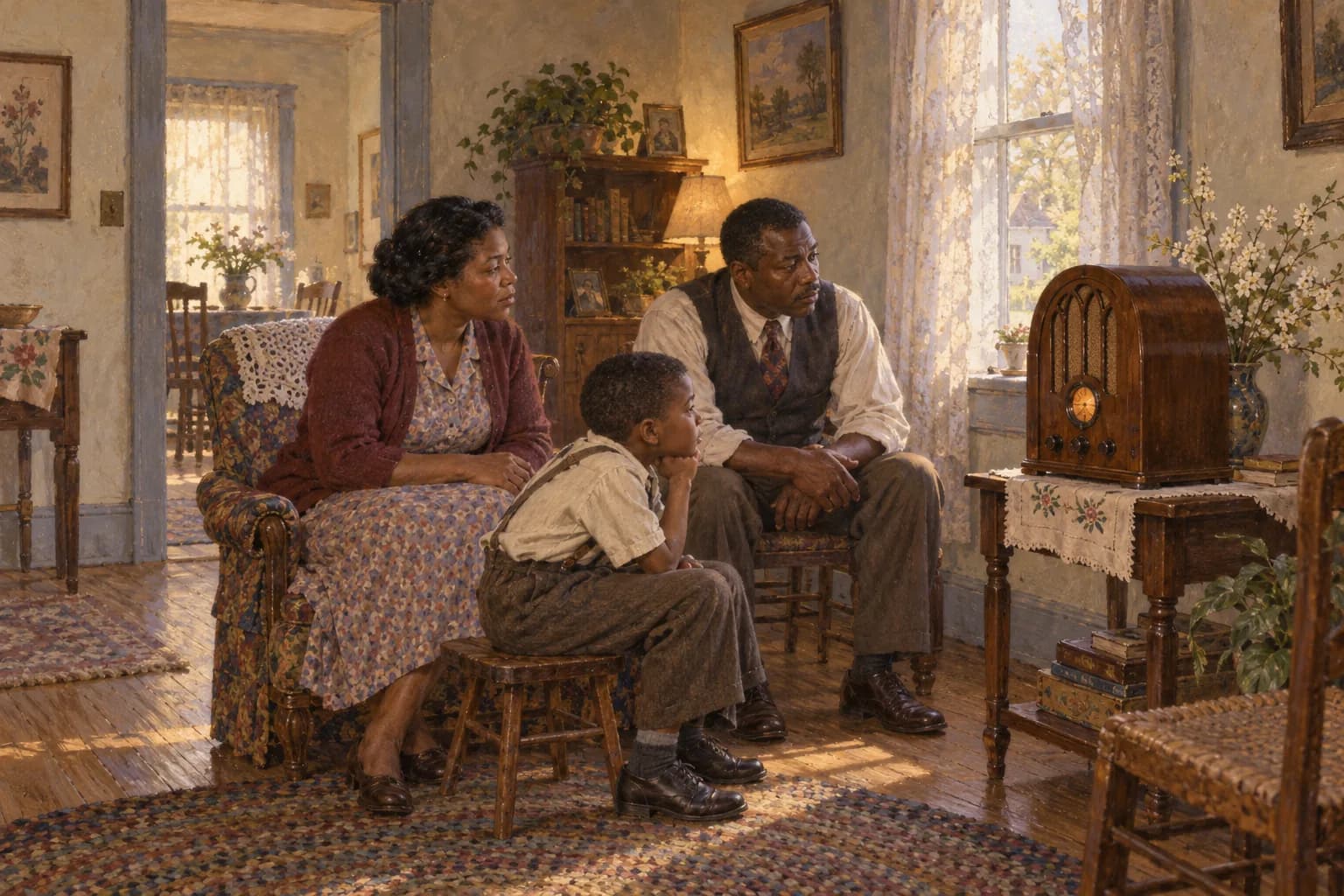 An imagined domestic listening scene illustrates radio’s reach. It does not portray a documented family or establish its reactions.
For another way into the event, the National Archives link to the concert recording from their article. Listening brings back something photographs cannot preserve: Anderson’s musical work, not just the size of the audience.
The story continued after the applause
In 1943, Anderson performed at Constitution Hall for a benefit concert, on the condition that its audience be integrated, according to the NPS. Returning did not make the earlier exclusion a harmless misunderstanding.
On January 7, 1955, she made her Metropolitan Opera debut in New York as Ulrica in Verdi’s Un ballo in maschera. The Met’s archives specify that she was the first African American artist to sing a leading role with the company. That distinction matters: Black performers had previously appeared as dancers or chorus members.
In 1963, she returned to the Lincoln Memorial to sing at the March on Washington. The 1939 concert did not remove barriers overnight. It belonged to a longer history, and Anderson’s artistic life cannot be contained in one afternoon.
When you look at the marble again
If you visit the chamber, look at the hands of the Lincoln sculpture designed by Daniel Chester French and executed by the Piccirilli brothers. The right is more open; the left, more closed. The NPS suggests connecting them with compassion and determination. That is an interpretation of the gesture, not evidence of sign language or a secret message.
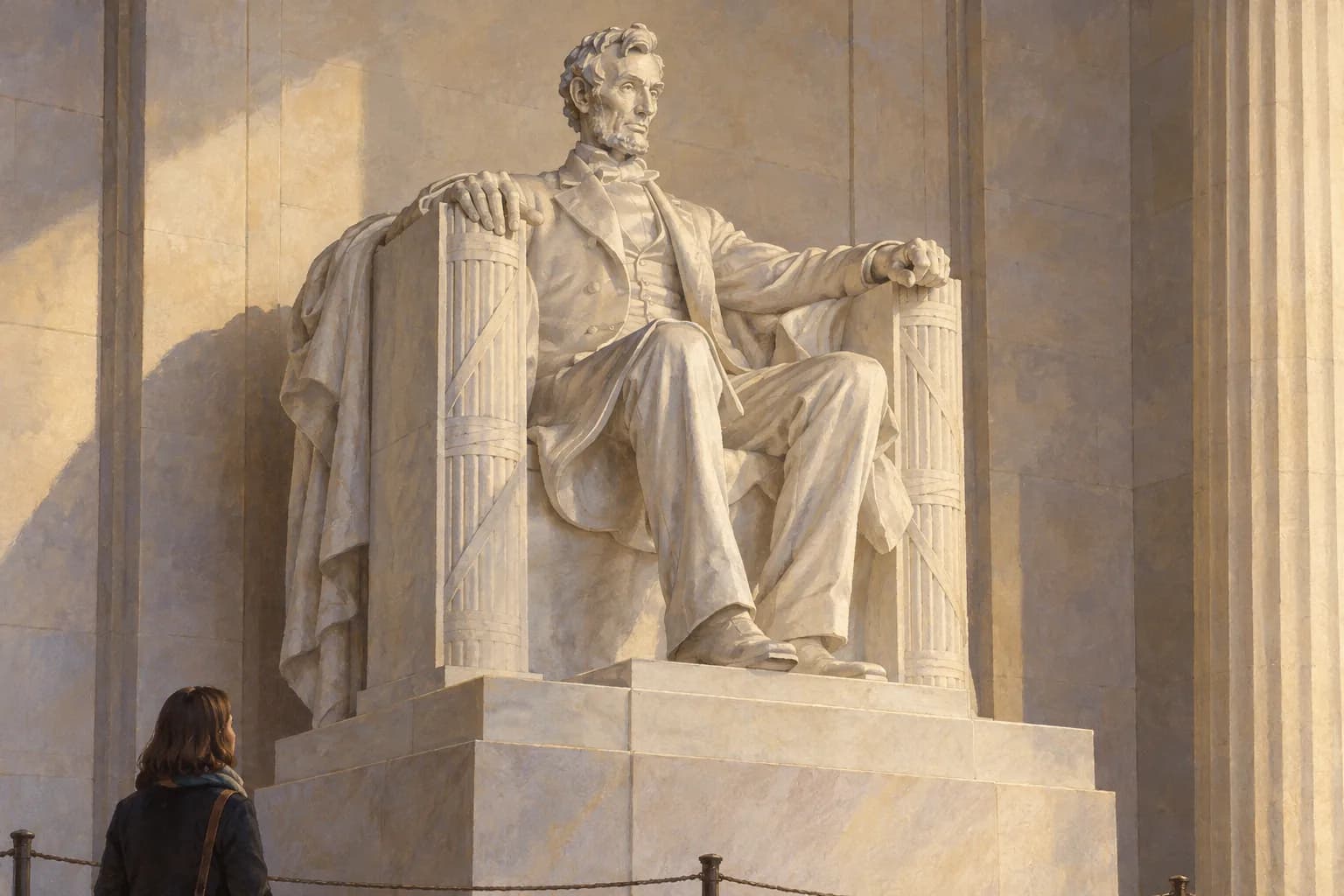 A pictorial study of the sculpture and its supports, not a photograph of current visiting conditions.
Then turn your attention outside. The steps connect the figure being honored with the people who gave the place further meanings. Anderson was one of them.
The official visiting information distinguishes the main chamber, which has no admission fee, from the separate museum and undercroft experience. Check access notices and accessibility guidance before setting out.
There is also a stone on the steps commemorating Martin Luther King Jr.’s 1963 speech. It does not mark the exact position where Anderson sang in 1939. Two events can share a place without sharing every detail.
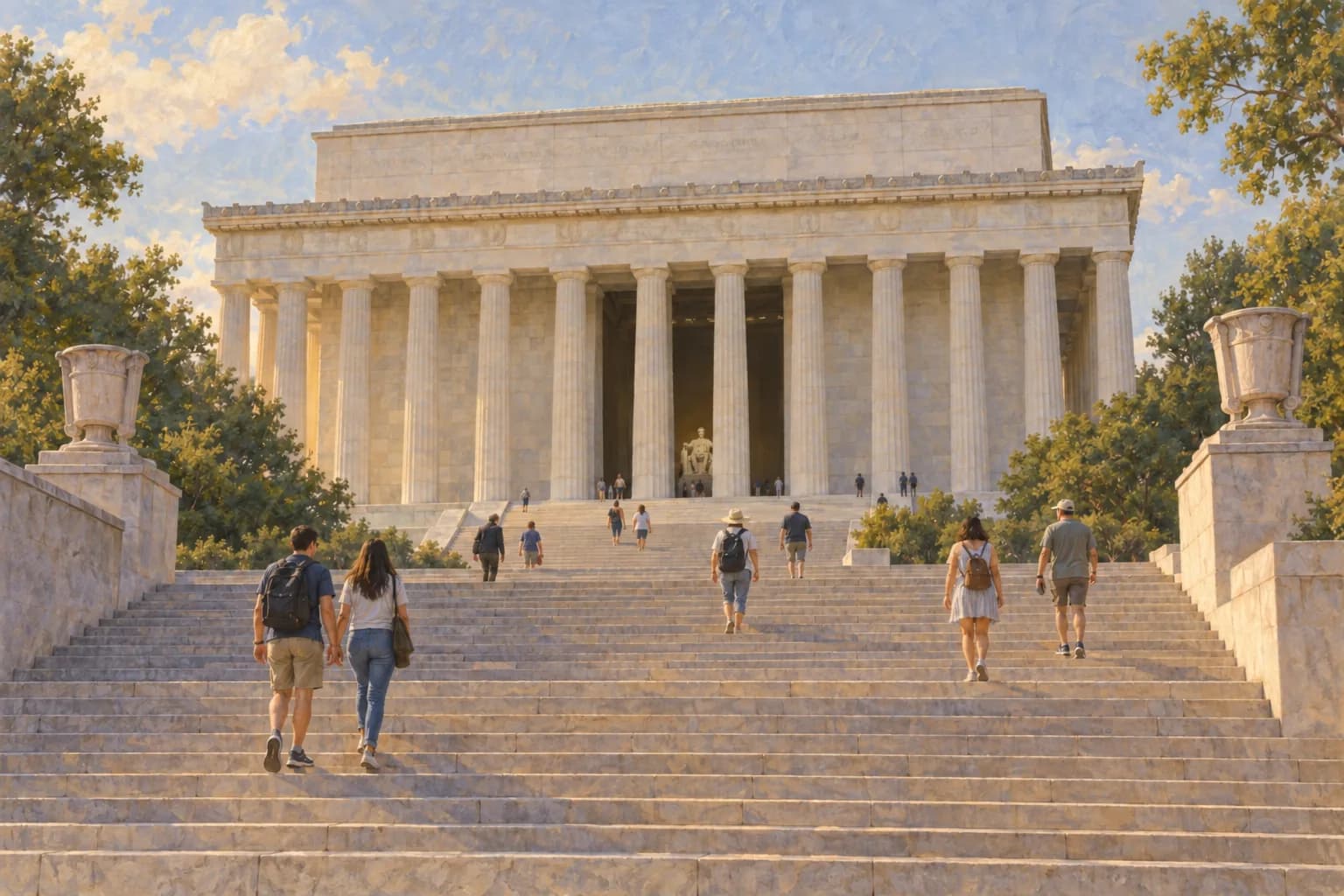 A return to the present-day place: the illustration does not certify works, access or conditions on the day of your visit.
If you want to continue through the city, our selection of places in Washington, D.C. offers other points where a visible form leads to a story: the marble of an obelisk, a wall of names, or a house that a misunderstanding helped preserve.
Here, you can begin with something small. Look at the columns, the seated figure, and then the steps. Your next image of the Lincoln Memorial may contain another protagonist, even though Marian Anderson is no longer in it.
Keep exploring the Lincoln Memorial in WAONDERSection
Stories behind places