Nineteen figures that do not walk alone: Washington’s Korean War memorial
Steel ponchos, faces in granite and names beside the water: a closer look at the Korean War Veterans Memorial beyond the first photograph.
They seem to be moving, yet they have stood here for decades. A helmet turns. A poncho opens. A gap separates one figure from the next. At the Korean War Veterans Memorial, the first impression is not of someone posing for history. It is of a group with ground still to cover.
Photograph only the statues and you take away part of the place. The rest is in a dark surface that returns images, names that draw you closer, and somewhere to sit without your visit being over.
Find the Korean War memorial in WAONDERNovember 11 is an occasion, not the whole story
In the United States, Veterans Day falls on November 11 and honors those who served in the armed forces. It is different from Memorial Day, which remembers those who died in military service. The Department of Veterans Affairs’ guide to the observance helps distinguish the two.
That distinction matters here. Looking at a memorial need not reduce a life to its ending. It can also prompt questions about youth, work, and the return home of people who lived through war.
The National Park Service dates the memorial’s dedication to 1995. The Korean War began in 1950; the 1953 armistice stopped the fighting but was not a peace treaty. Decades separate the conflict from this public space. Remembering also means deciding how to remember.
This article does not announce a November 11 ceremony. The date offers a reason to look more closely; the place remains worth understanding on any other day.
Start with the weight of a poncho
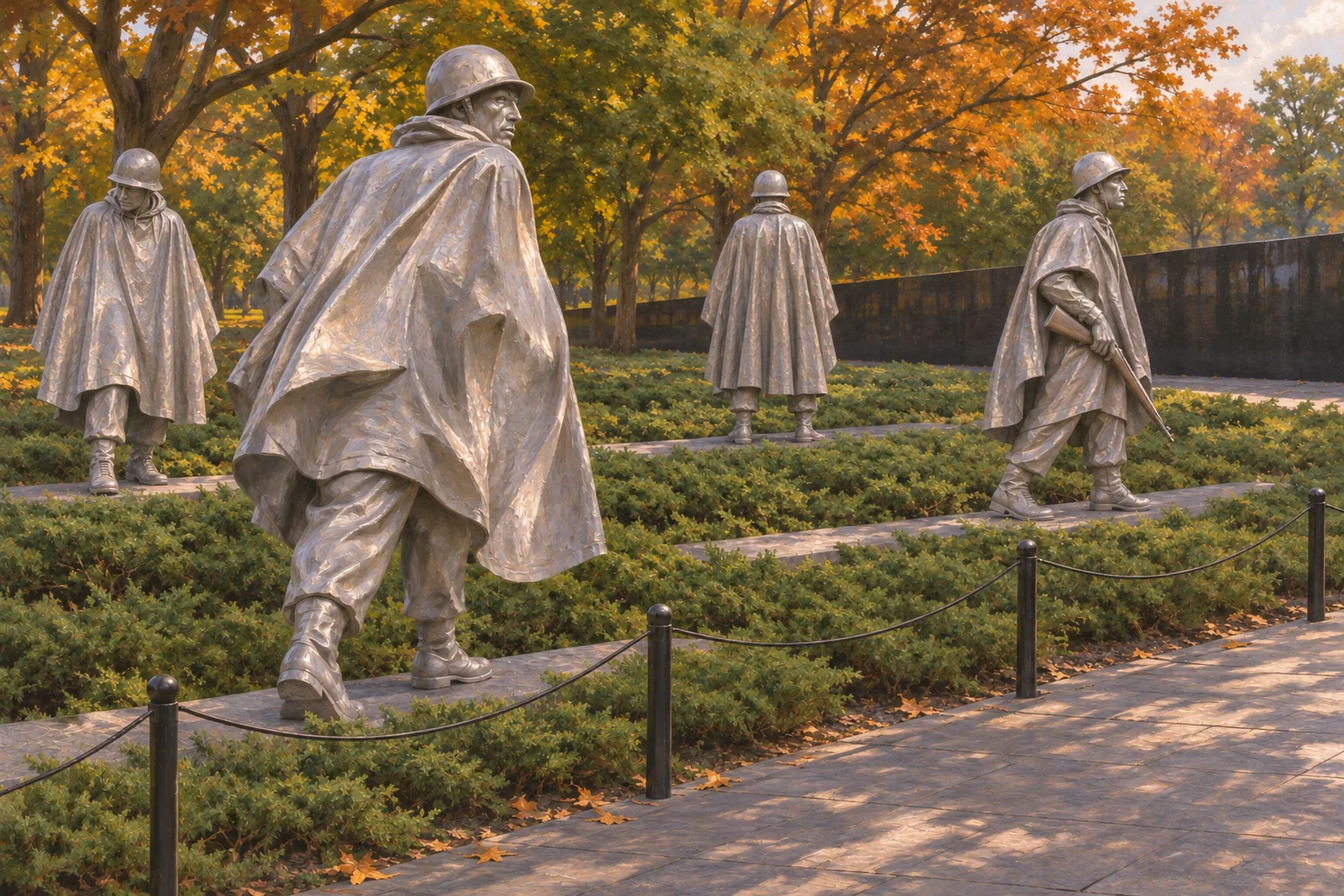
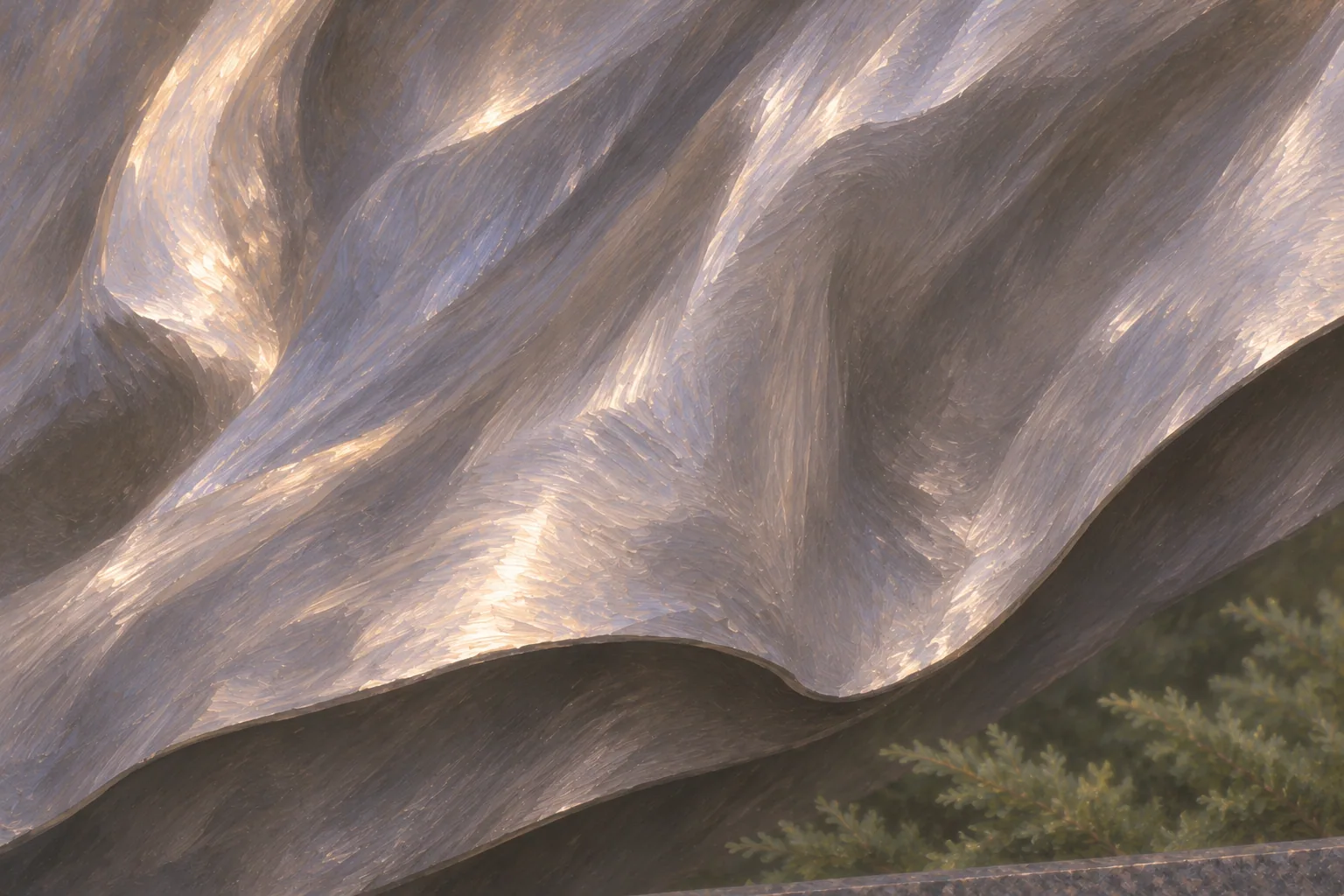 Metal suggests cloth caught by the wind. An interpretive material study, not an identifying detail of a particular statue.
The nineteen stainless-steel figures are by Frank Gaylord, as the official On Patrol description explains. Ponchos, granite strips and planting help evoke difficult terrain and weather.
Before looking for a lengthy explanation, follow a fold. Something rigid manages to suggest movement. The cape conceals part of the body yet makes its effort more apparent: not every gesture is visible, but you still sense the advance.
You can read that from the path without entering the planting. Notice the empty space between figures and the different directions of their gazes. The composition does not need one pedestal carrying the whole scene. Its weight is spread across the ground.
The illustrations here interpret fragments of the memorial. They are not an exact inventory of poses or a reproduction of nineteen individual portraits.
The wall brings other people into view
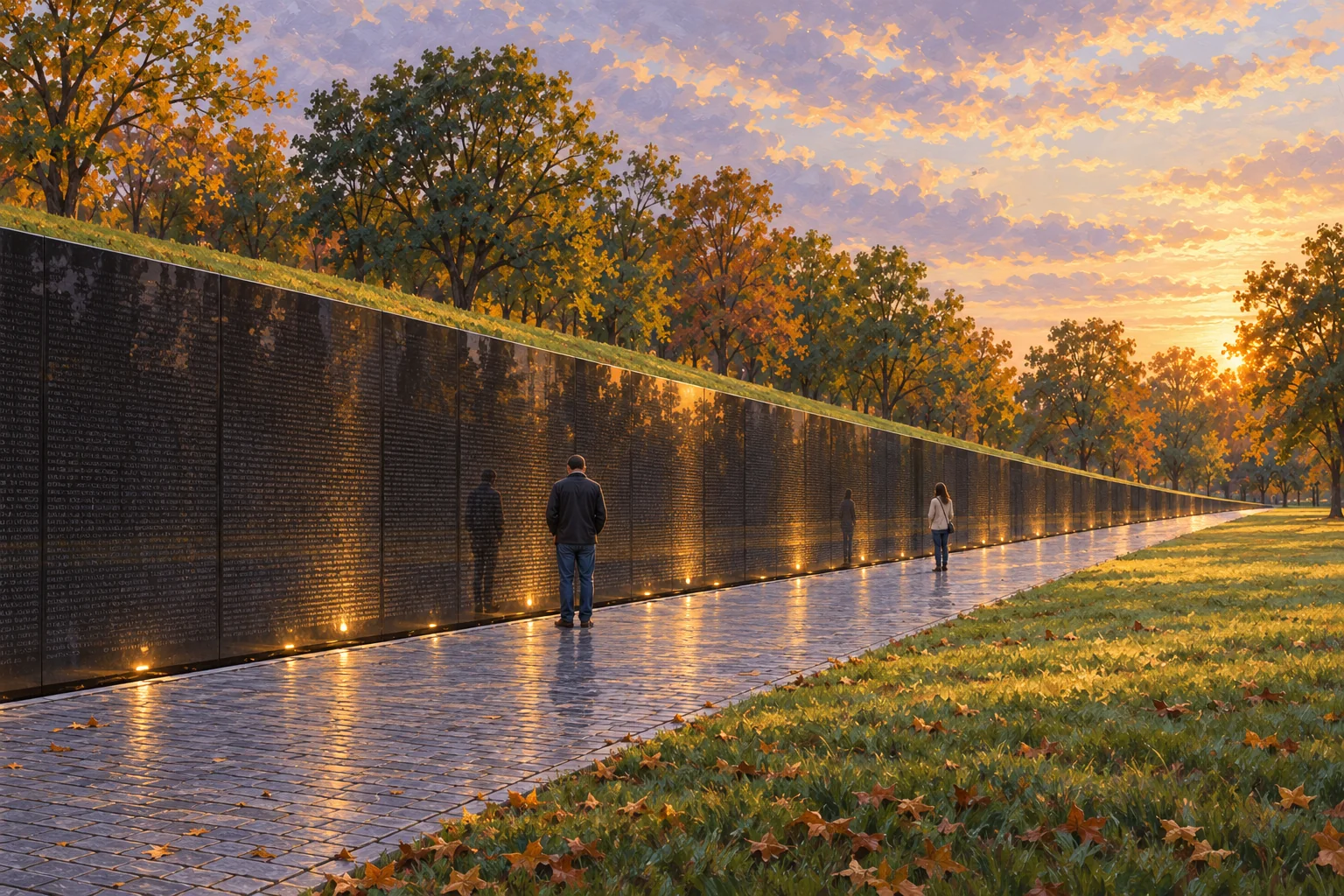
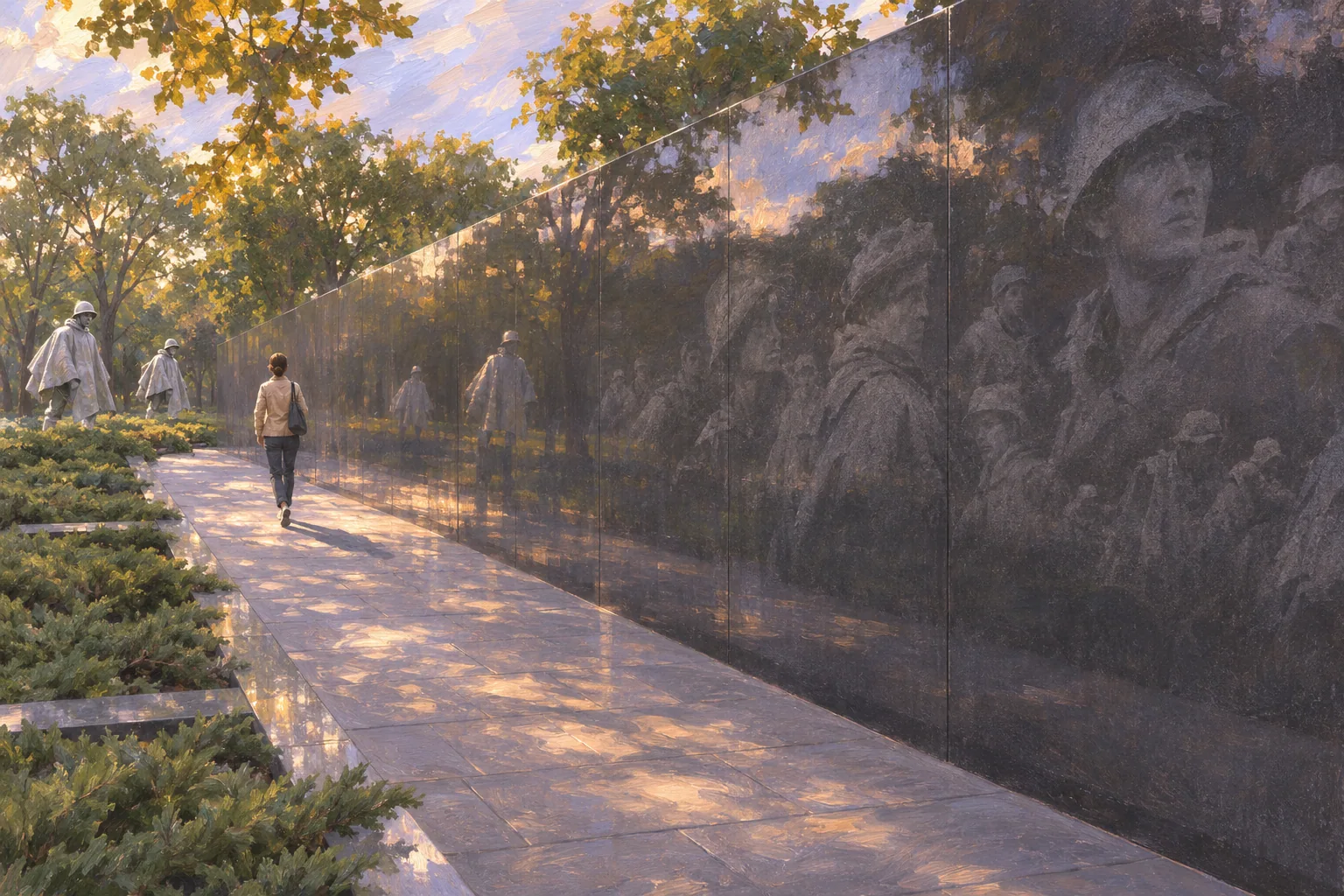 Etched faces and reflected light share a surface. The images are interpreted, not copied as documentary portraits.
Not every image on the wall is made in the same way. Some marks remain; some reflections change with you. That difference deserves a pause.
The NPS explains that Louis Nelson’s mural uses images drawn from archival photographs and recognizes support roles. The polished granite also reflects the figures: nineteen plus nineteen symbolically recalls the 38th parallel. Do not expect every viewpoint to offer thirty-eight neatly countable silhouettes.
Shift your position slightly without blocking the path. An etched face stays put; the light, trees and your own image do not. The memorial brings a record fixed in stone into contact with a present that keeps passing in front of it.
Look this way and a checklist visit becomes something else: statue seen, photograph taken, next stop. The question is no longer only “What does it represent?” but “What appears when I move?”
The walls do not all remember in the same way
The photographic mural is not the Wall of Remembrance, added in 2022. The later wall names American service members and Korean KATUSA members — who augmented the U.S. Army — who died in the war, as the official account of the addition explains. It is not a roll of every veteran. That distinction gives reading here a different weight from recognizing the faces on the mural.
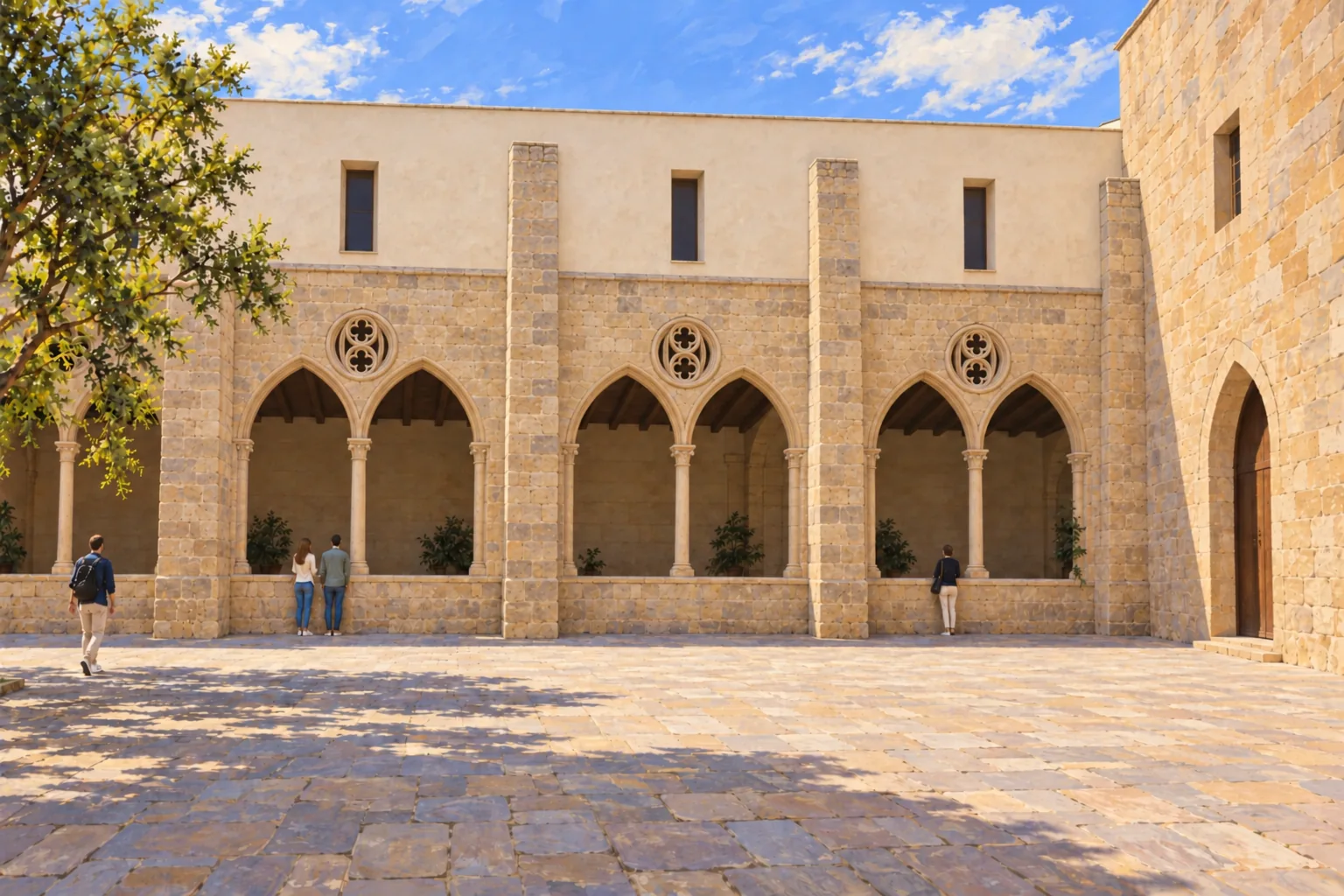
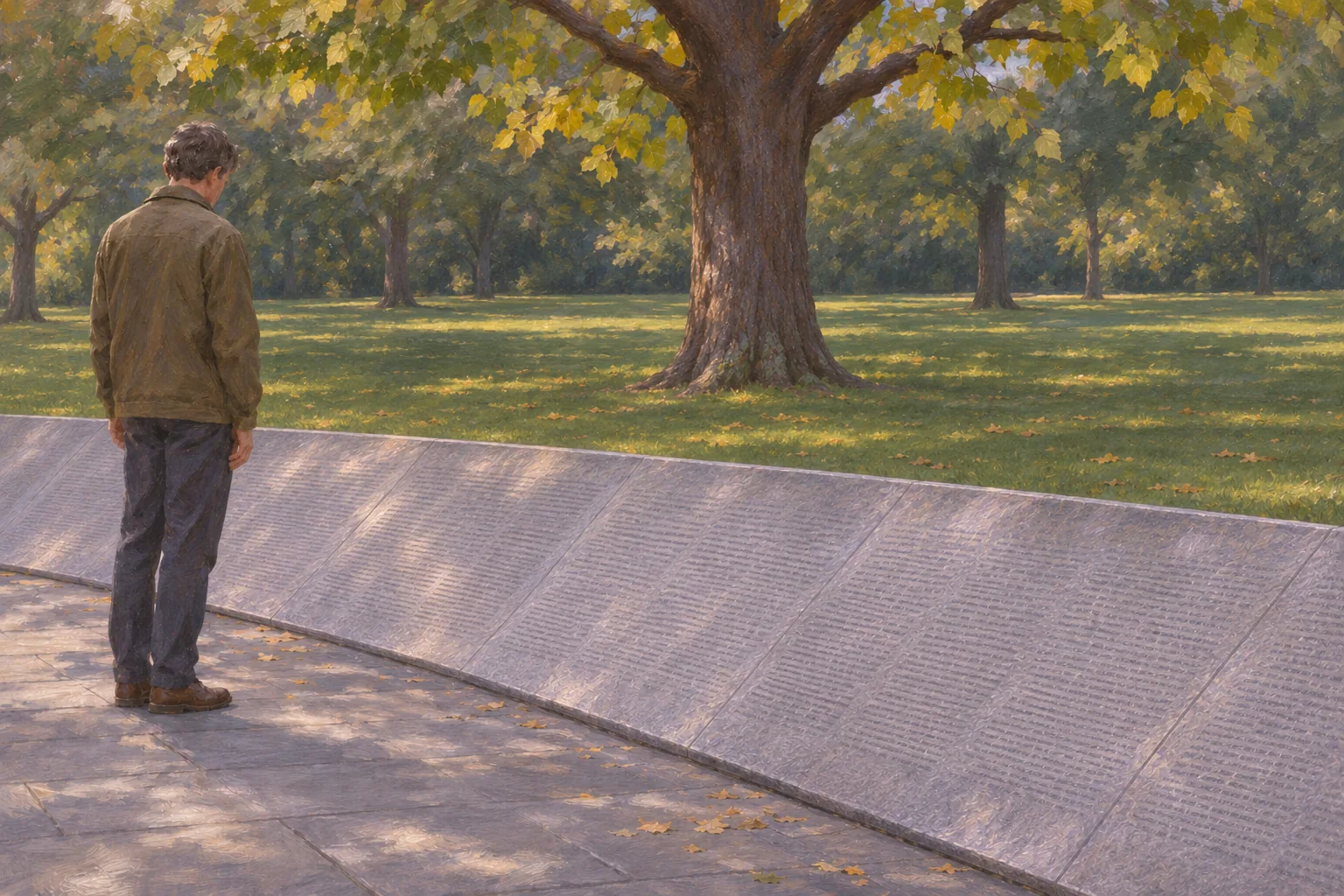 Coming closer to read changes the scale of the visit. An interpretive scene, not an identifiable visitor or a reproduction of real names.
From a distance, the lines may look like texture. Close up, reading asks you to slow down. A name does not work like a statistic: it takes up little room but asks for a different kind of attention.
There is also a wall recognizing the United Nations coalition’s countries, with military and medical contributions. It is a reminder that a war cannot be contained within one nationality or the people who occupy the foreground.
You do not need to read everything in one visit. Simply distinguishing what each part remembers changes the walk. Figures, images, countries and names stop being interchangeable elements.
Water lets the visit stop being a race
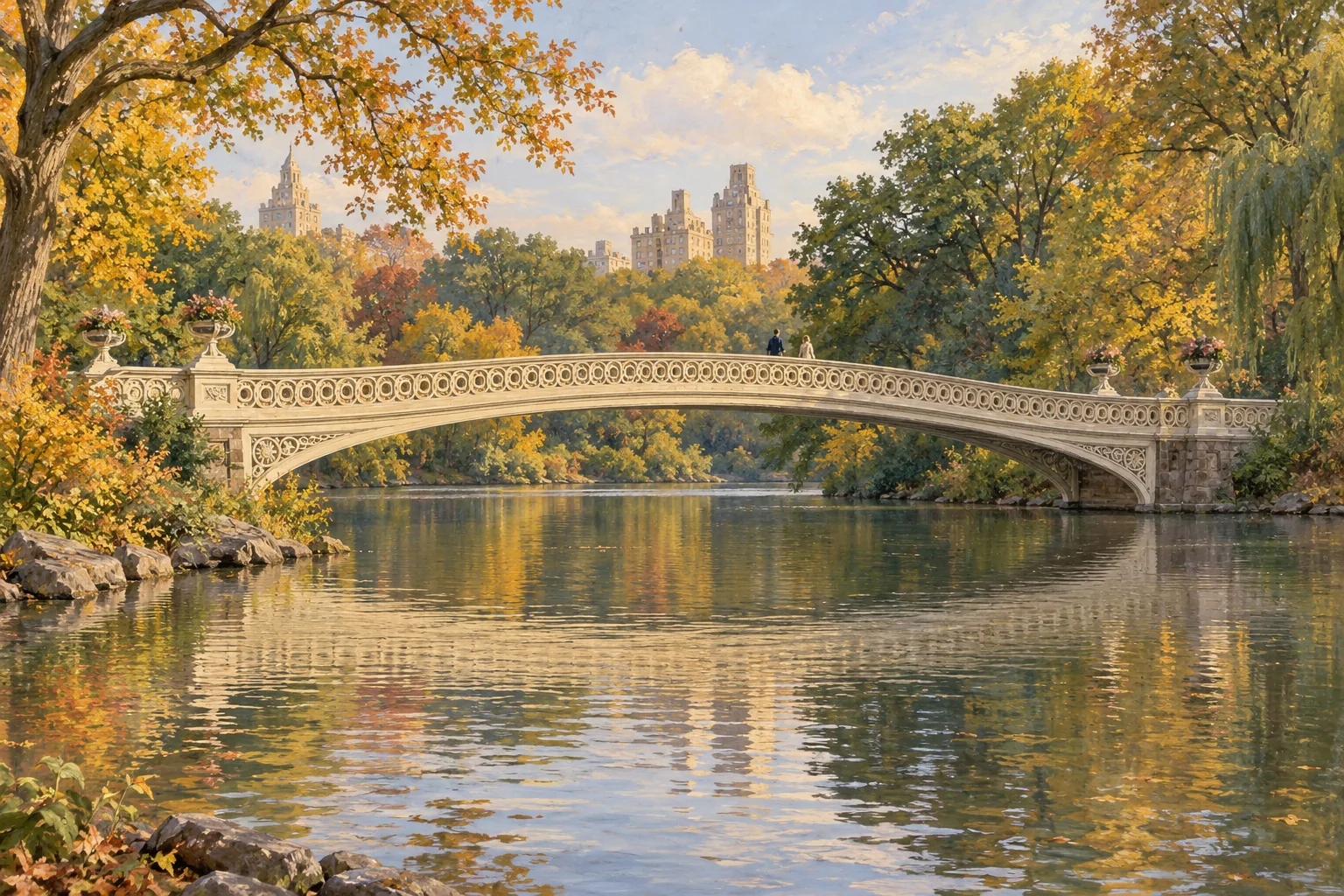
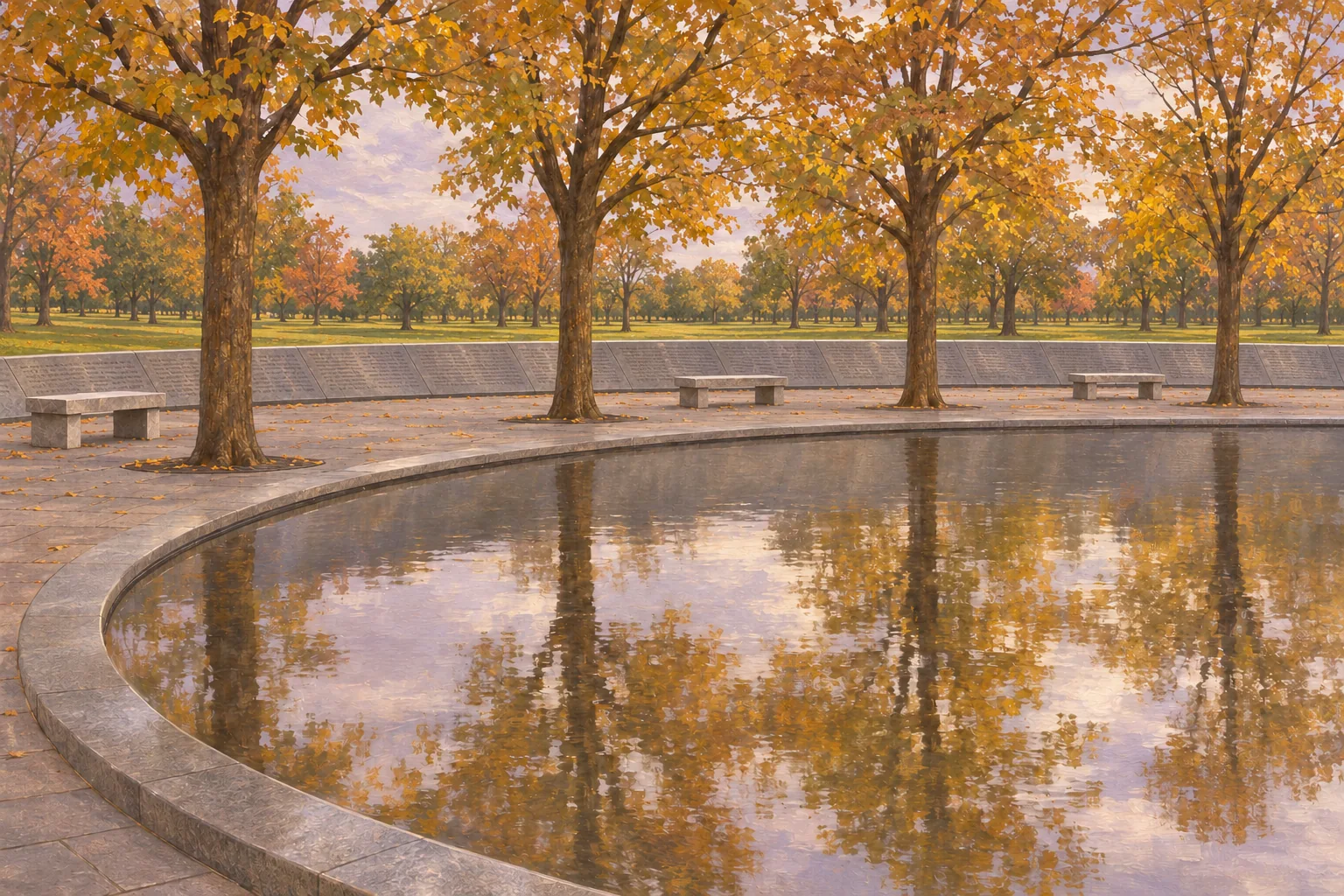 Water, benches and trees make room for a pause. An illustration of the setting, not a promise that the water will operate on your visit.
The pool and benches change the pace. After looking at bodies that advance and surfaces that gather images, you can stop moving.
There is no correct emotion to produce, no required photograph. Perhaps you are interested in the sculptor’s work. Perhaps a name holds your attention. Perhaps you simply need to sit. A place of remembrance can accommodate those experiences without turning them into a performance.
Return another day and choose a different detail: first the gazes, then the relationship between wall and trees, later the scale of the inscriptions. You do not need a new attraction to find a new question.
A small visit, with your full attention
Before setting out, check NPS visitor information and notices. Access to an outdoor space does not mean services, programs or staff assistance are always available. Respect marked boundaries, keep the path clear and avoid close photographs of people experiencing a private moment.
If you are interested in how design shapes remembrance, continue with Maya Lin’s wall and the order of its names. Not to decide which memorial is more moving, but to compare what each asks of your position, your gaze and the time you give it.
Perhaps that is the best reason to return: no longer passing some metal figures, but recognizing a place that still has something to teach you about looking.
Explore this place in WAONDER before your next walk Download WAONDER to keep discovering WashingtonSection
News in context