Florence, sixty years on: the hands that rescued its memory
The 1966 flood left another story at Santa Croce and the National Library: people who rescued books, art and part of Florence’s memory.
A soaked book does not weigh the same as a dry one. Nor can you hold it in quite the same way. Suddenly, something meant to open between two hands needs other hands around it.
4 November 2026 marks sixty years since Florence’s 1966 flood. Italy’s Civil Protection Department recalls an emergency affecting homes, lives and heritage. Remembering rescued artworks should not push the people who suffered out of the picture.
This story invites you to look at two places today—Santa Croce and the National Library—and think of those who worked so that something of that world could still reach us.
Take this story on your next walkSanta Croce: what a facade cannot tell you
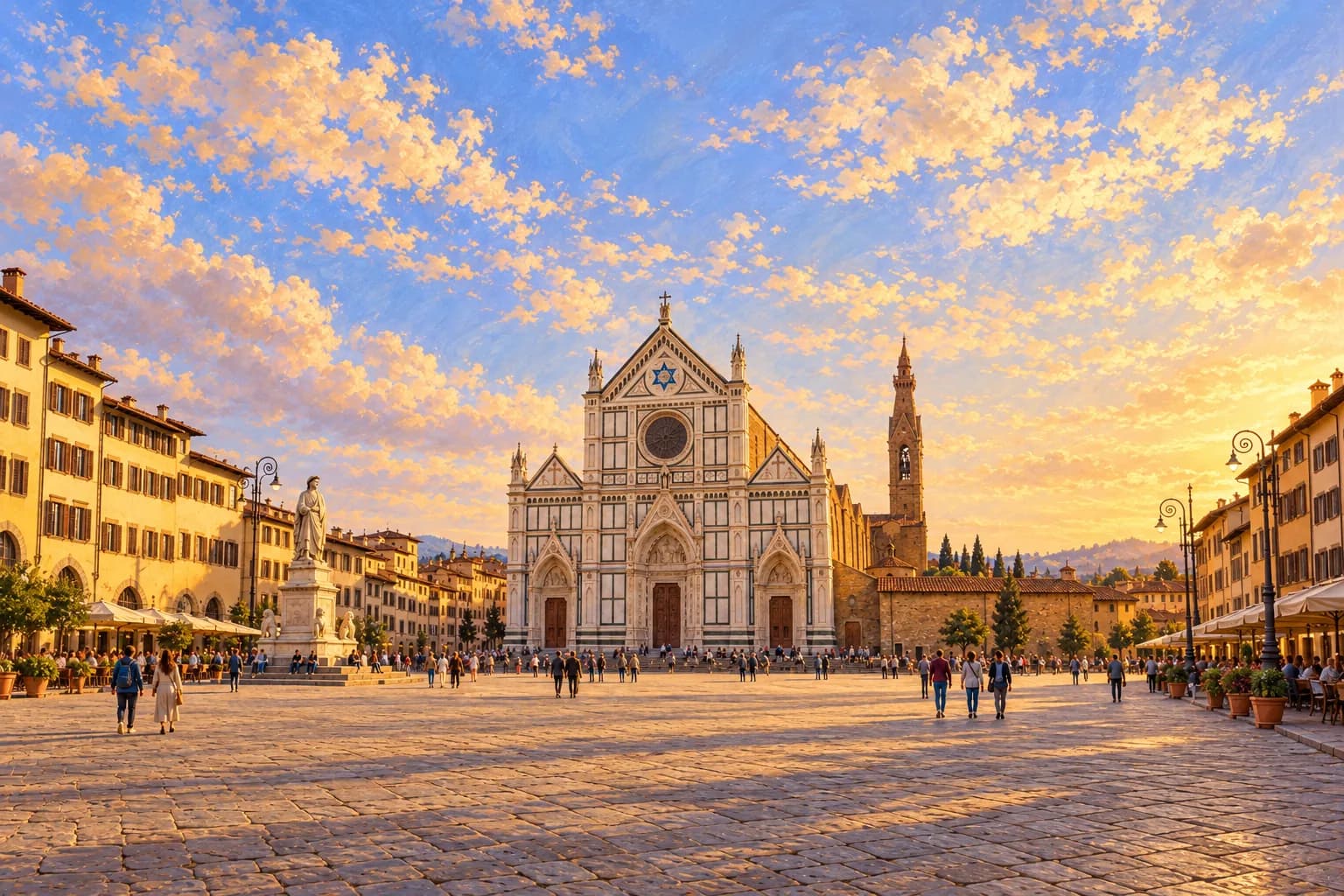
Footsteps, conversations and people pausing before the marble have returned to the square. The facade might seem a complete image of Florence; it cannot show everything the complex has endured.
Opera di Santa Croce describes damage from water, mud and fuel, and the work of friars, specialists, soldiers and volunteers. The danger to materials did not end when the water fell.
In the former refectory, floodwater had reached Cimabue’s Crucifix. Santa Croce’s account describes a task much smaller than moving a great work: sifting mud to recover fragments of paint and support. What looked like dirt could hold part of the object people were trying to save. Looking at a surviving work today also means thinking of those tiny pieces someone stopped to search for.
Explore Santa Croce in WAONDERPassing a book meant more than moving it
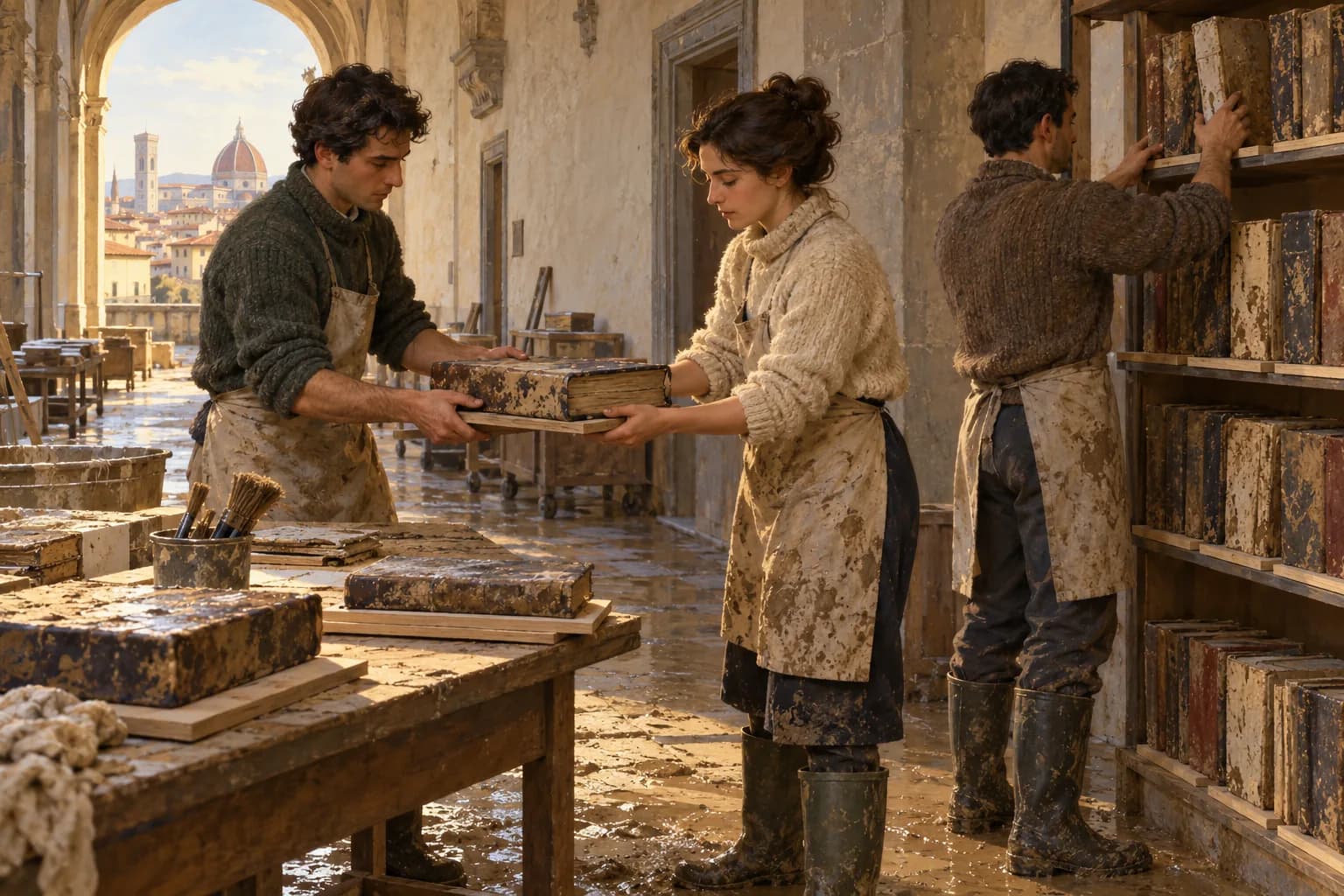 An evocation of rescue work in 1966, not a reproduction of a photograph or a portrait of particular people.
In an emergency, a simple gesture stops being simple. Picking up a volume, finding somewhere to support it, making room for the next: each decision requires care.
The Directorate-General for Libraries recalls the international response and director Emanuele Casamassima’s work. The image of the so-called angeli del fango, or mud angels, brings together many different tasks. This was not one lone hero’s adventure.
Perhaps that chain is the part we can most readily understand. You need not know the writer to recognise that losing a book matters. A hand receiving something fragile can continue another person’s effort, even when they share no language.
Patience leaves traces too
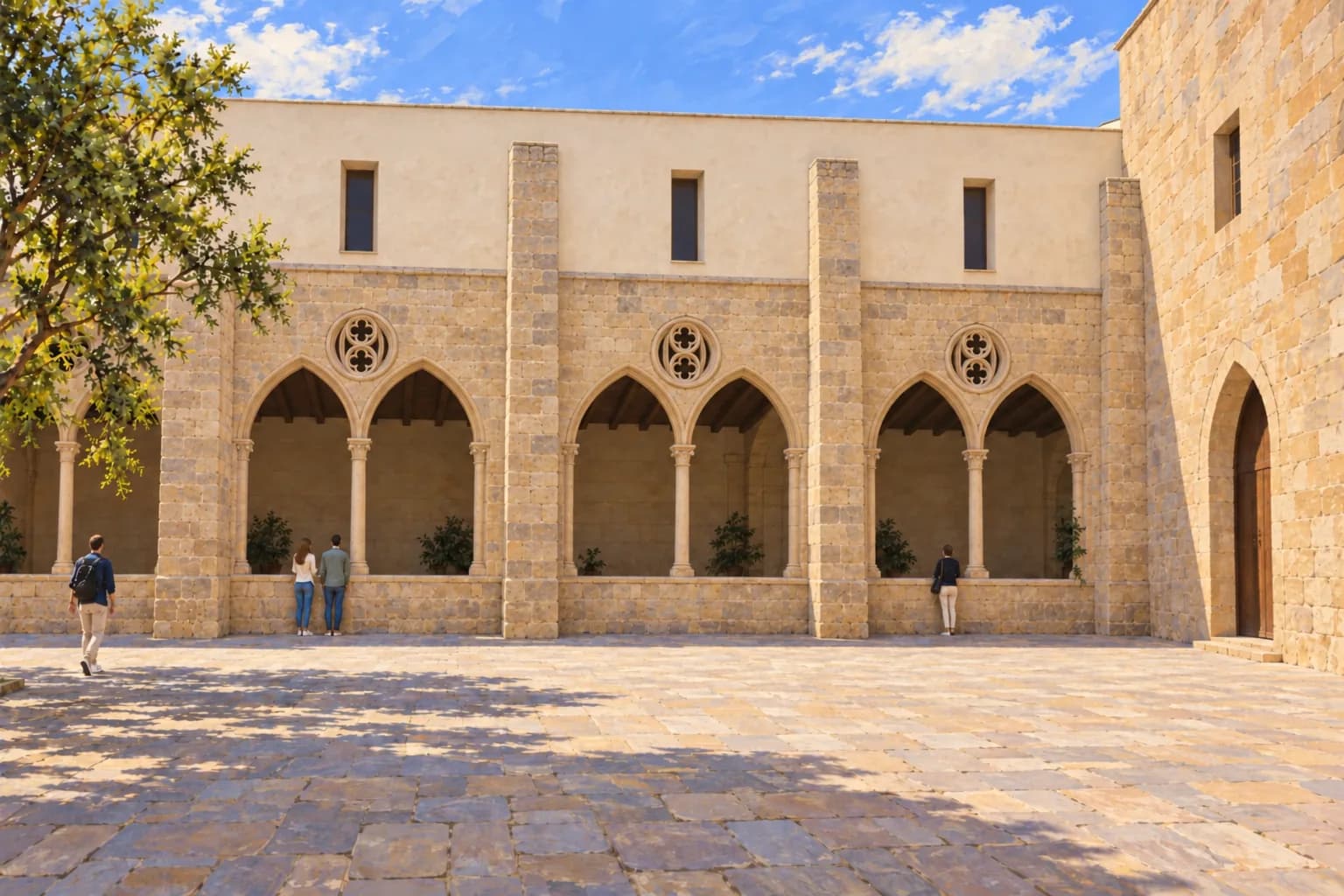
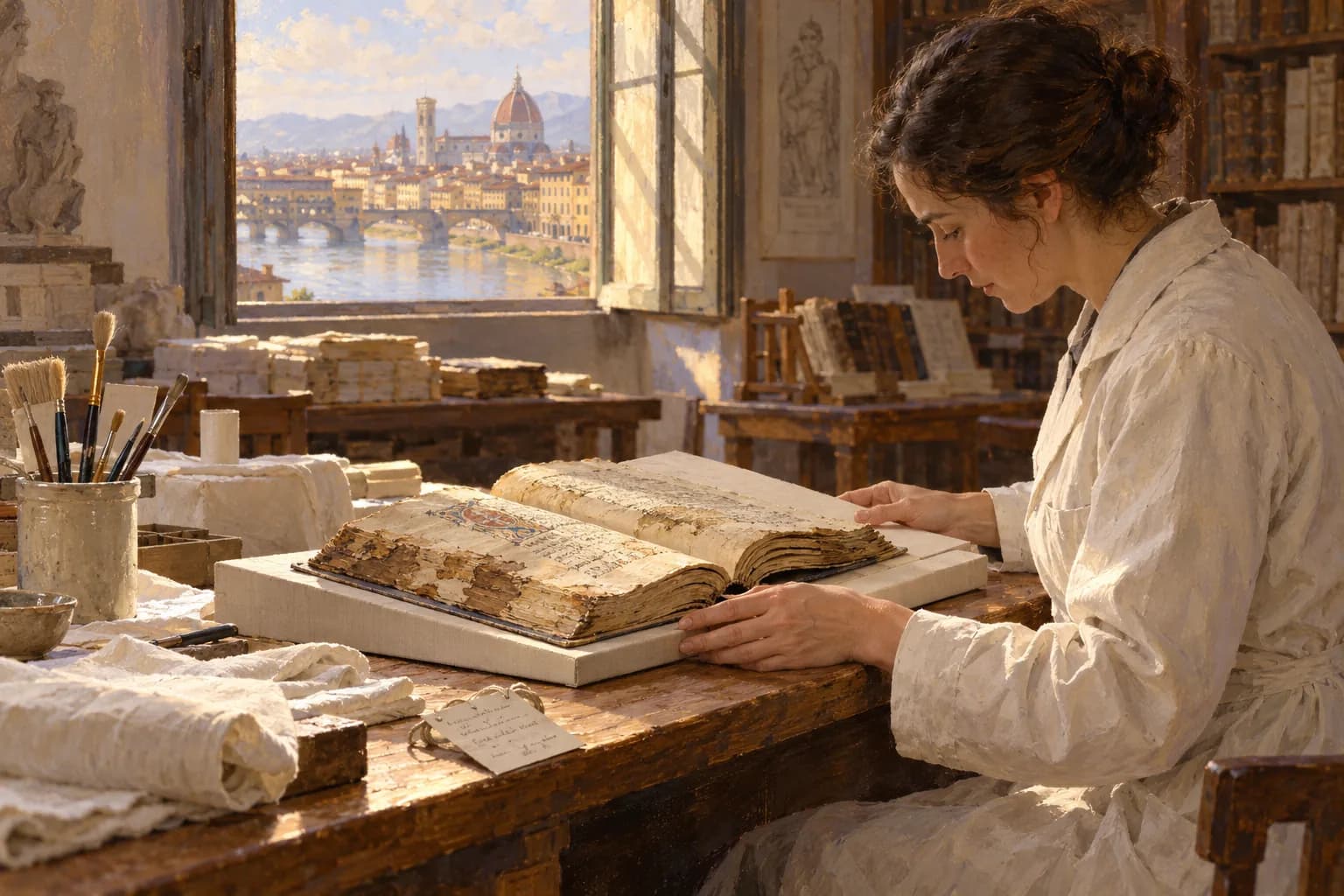 Caring for paper, interpreted in an illustrated scene. This is not a demonstration of conservation techniques.
Rescue has an immediate image: boots, mud, movement. At the library there was another, less visible loss: damage to the catalogues and inventories that made books findable. Saving paper and preserving its identity were inseparable tasks.
The National Library describes an organised process in which each volume travelled with a record of its damage and original structure. Its 1966–1975 conservation laboratory archive preserves documentation of the work.
That record was less dramatic than a flooded street, but it could let someone else continue treatment years later. The emergency left a chain of care longer than the chain of hands carrying books out of the water. The library’s historical figures belong to different reviews; we do not treat them as an updated account of everything restored by 2026.
The library beside the river
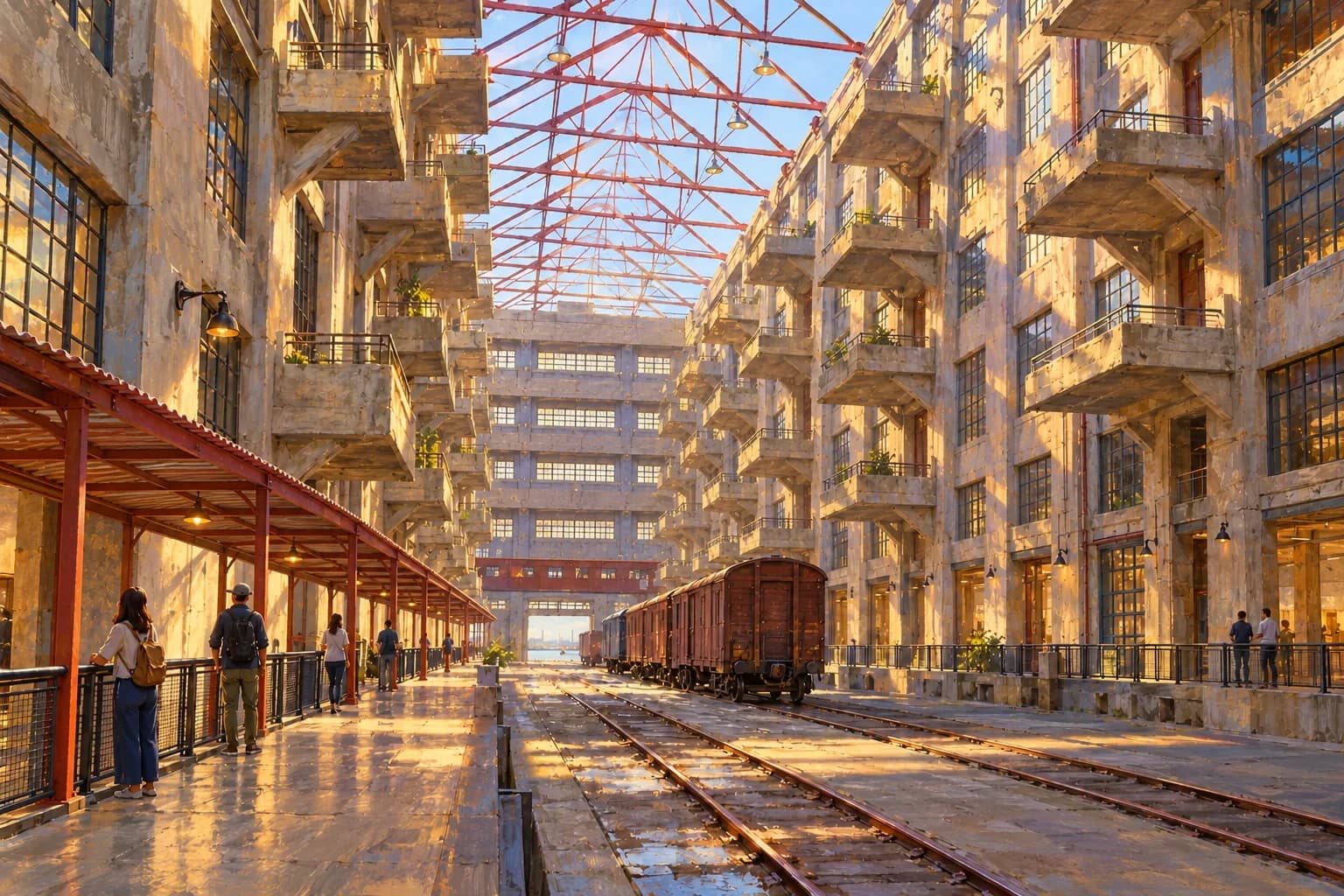
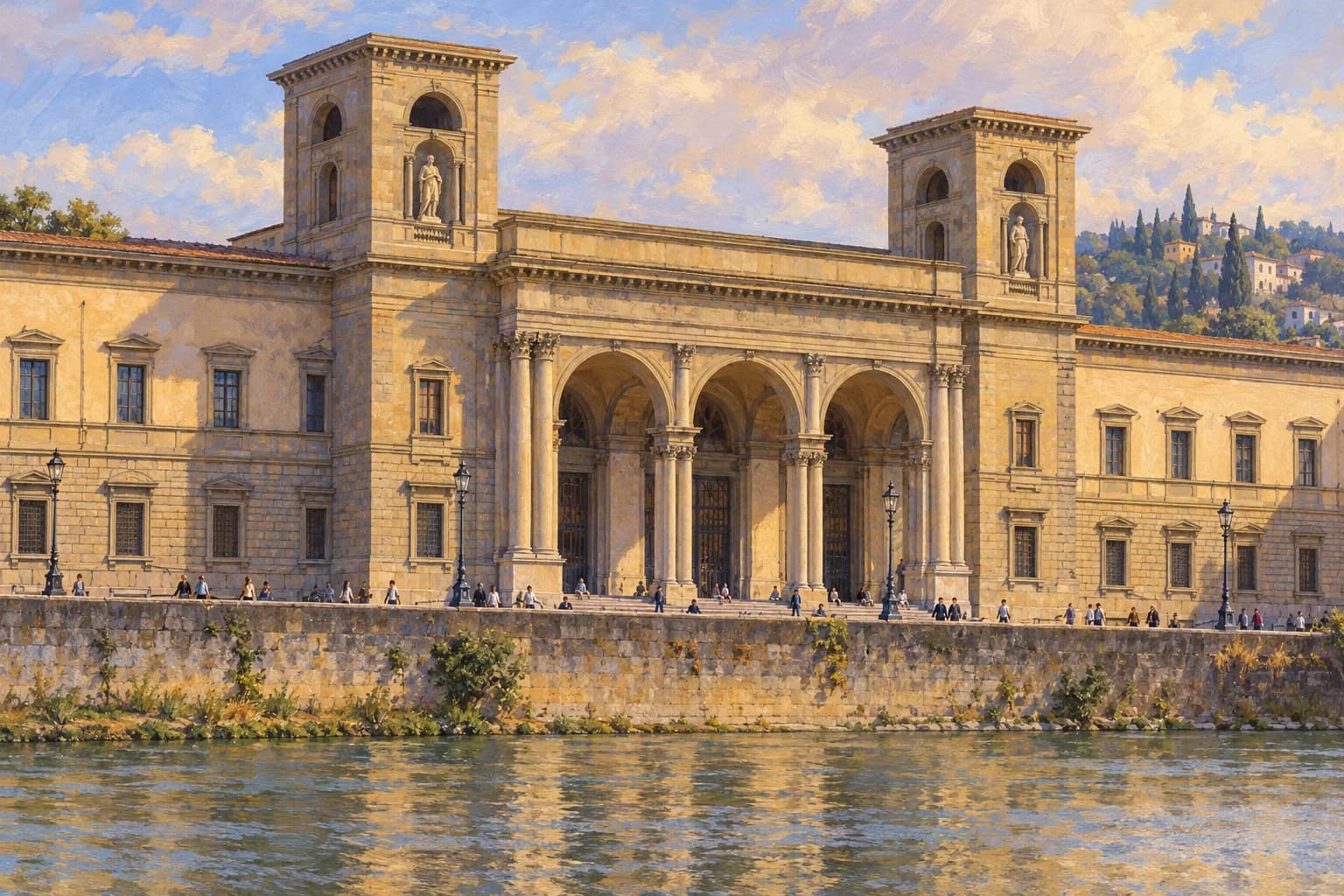 The National Library in the city today. An illustrated interpretation of its facade.
Approach the Biblioteca Nazionale Centrale from outside and notice its three great arches and the two towers framing the entrance. Then place it beside the Arno in your mind. The relationship between building and river becomes more than scenery.
To take this story outside, choose the exteriors of Santa Croce and the library as two places to pause. You could then continue west beside the Arno to finish facing Ponte Vecchio, checking the map and conditions along the way. The library has its own access rules: an outdoor walk need not turn its reading rooms into a tourist stop.
Find this library in WAONDERReturn to the Arno without forgetting the rest
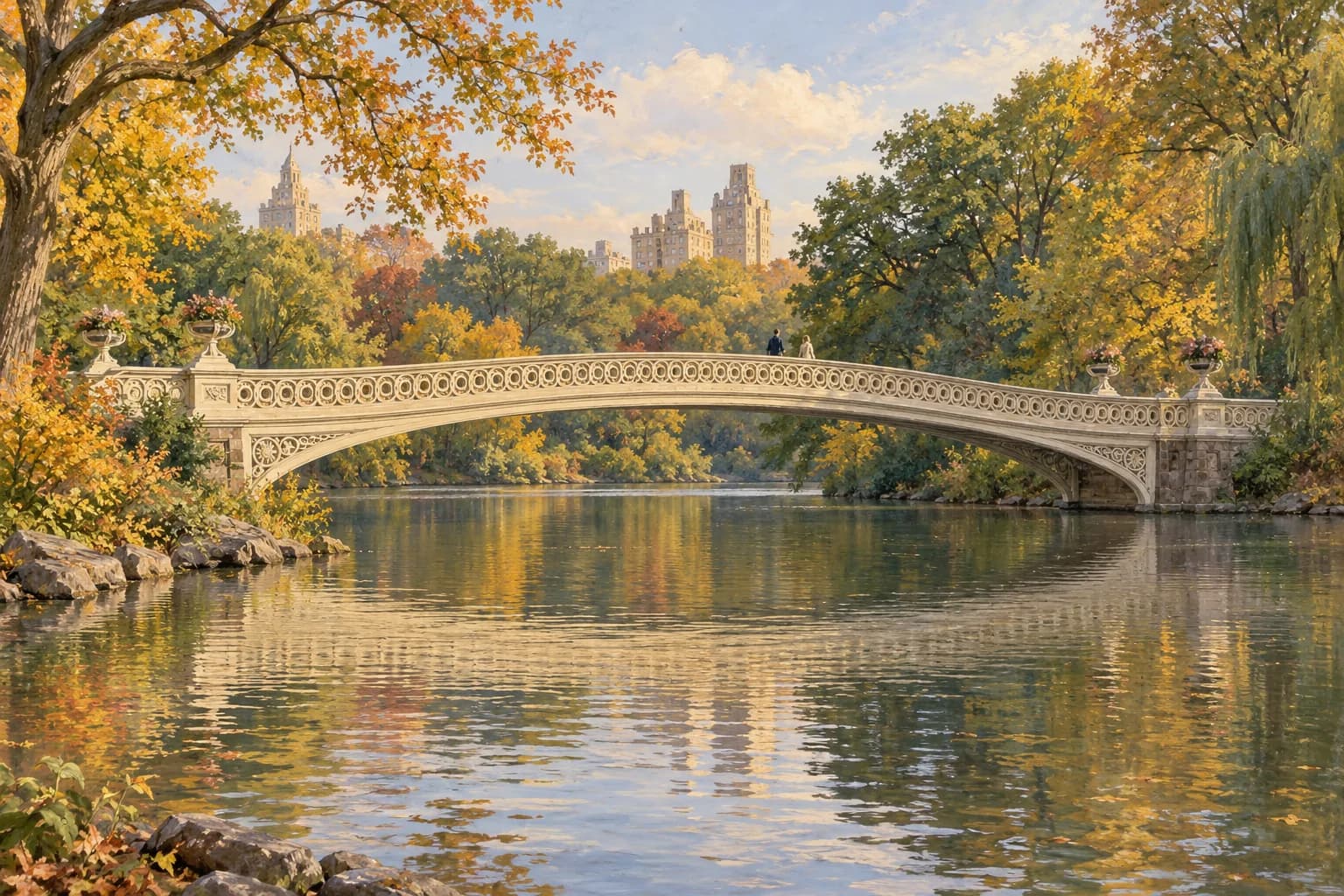
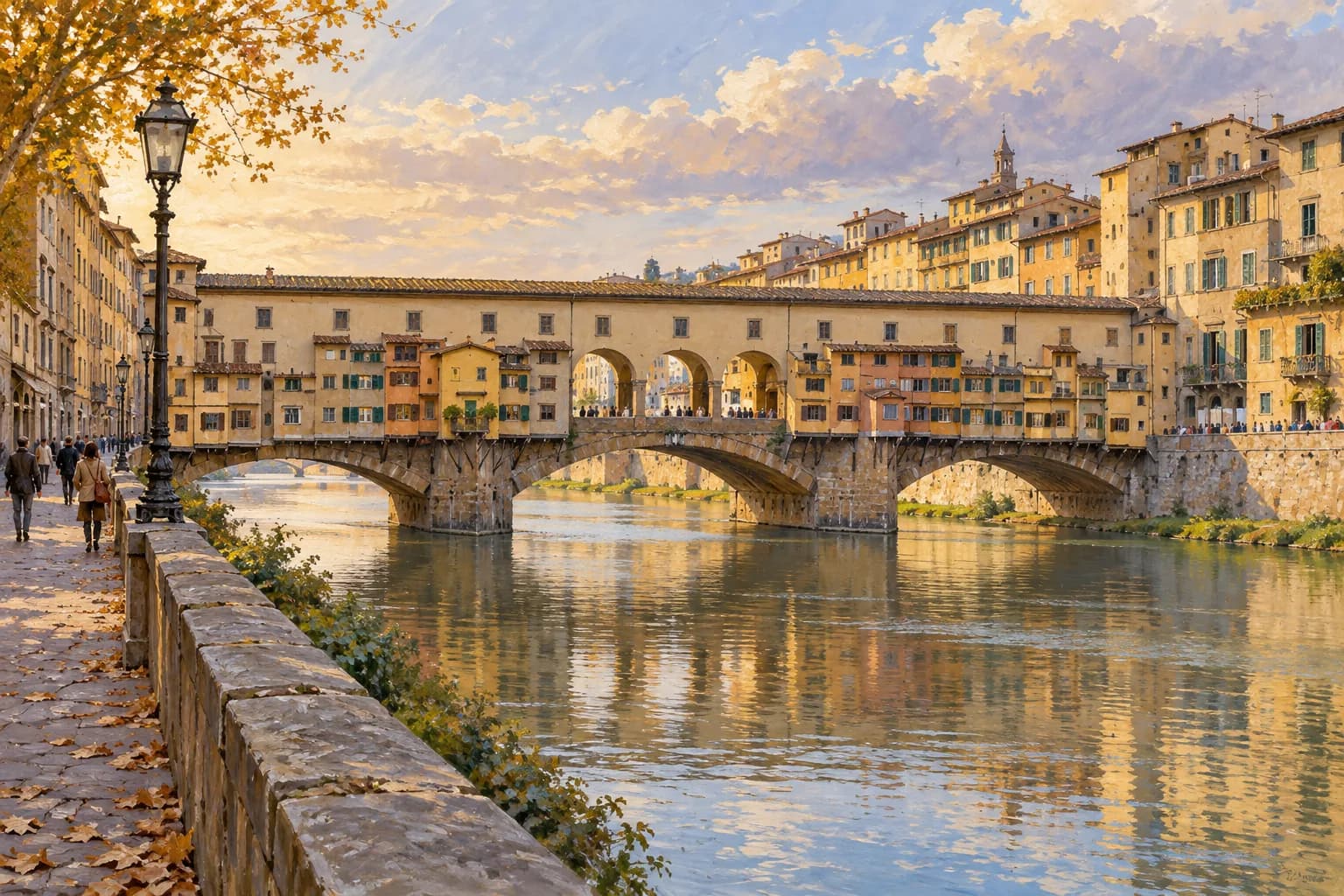 The Arno and Ponte Vecchio in an illustrated present-day scene, not during the flood.
Ponte Vecchio offers a way to finish with the living city. Look at the bridge, water and banks without seeking a catastrophe to reenact.
An anniversary does not require a particular feeling. Perhaps, next time you pass a library or church, it will simply give you another question: not only who made this, but who cared for it so that we could still find it.
If that question stays after the photograph, your walk will already be different.
Look at Ponte Vecchio with another question Plan your next outing with WAONDERSection
News in context