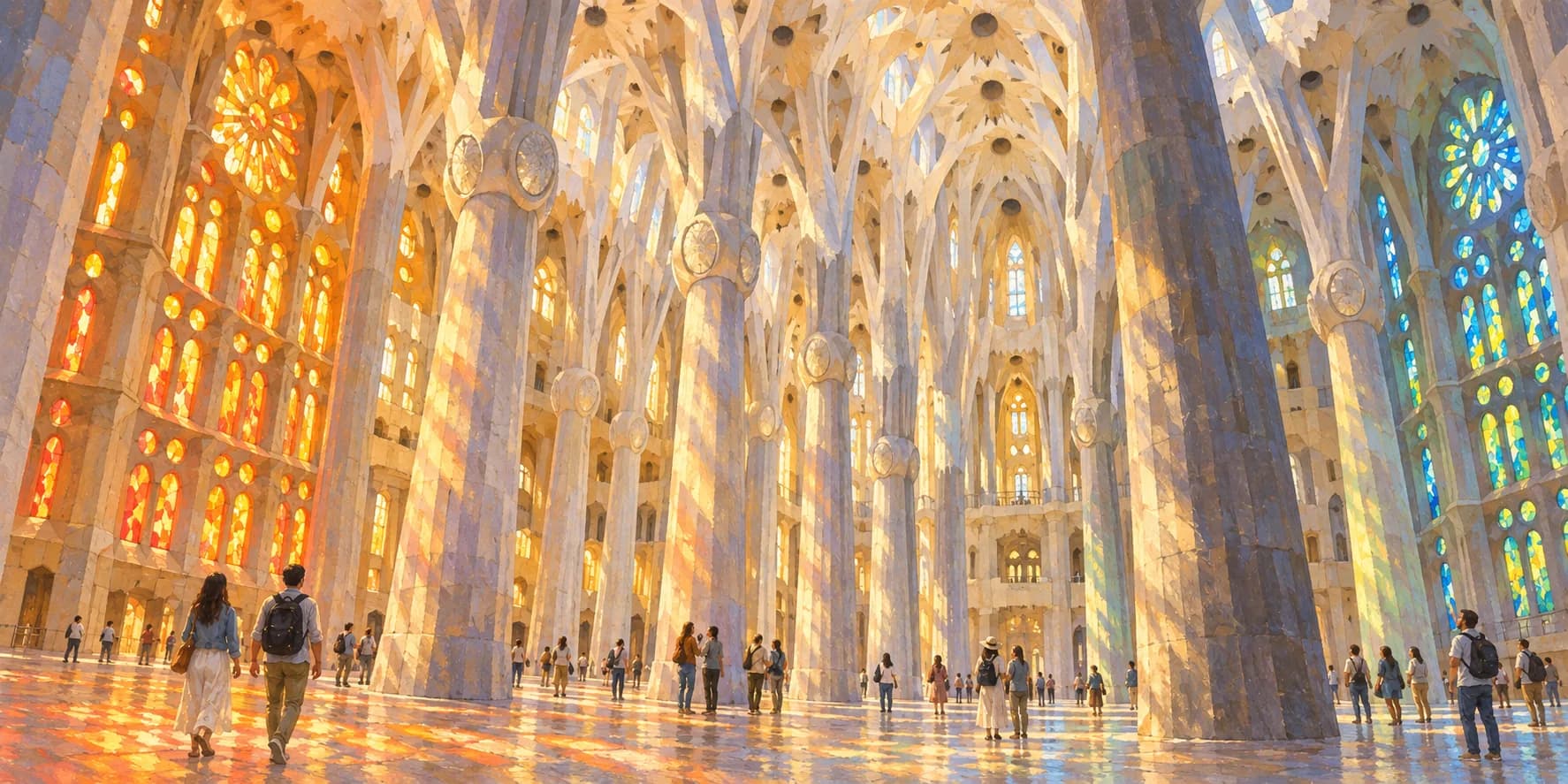
Barcelona on foot: from the Palau to the lives beneath El Born
Walk from the Palau de la Música to Santa Maria del Mar and the former Born market: different mosaics, harbour stone and homes beneath your feet.
Three stops to see your city differently
Some walks begin with a small question: what if we didn't hurry through the centre as usual today? You don't need a different city. Sometimes you only need to stop at a familiar facade and look for something you haven't noticed before.
This walk connects the Palau de la Música, Santa Maria del Mar and the former Born market. First you'll look up; then at the stone holding a church together; finally at the outlines of homes beneath another building. Three ways to get closer to the people who made and inhabited Barcelona, without turning an afternoon into a race to tick off landmarks.
You can keep it to the exteriors or choose one interior to explore slowly. This is an editorial suggestion for an independent walk, not a guided or WAONDER-generated route.
Take WAONDER on your next walkBefore leaving: choose what you want to see
The starting point is in Sant Pere, not on the passeig del Born. The final stop is the former market on plaça Comercial, rather than the whole neighbourhood commonly called El Born.
-
Palau de la Música. Look for two mosaic columns with different designs. To see the concert hall, plan an interior visit: its skylight isn't visible from the street.
-
Santa Maria del Mar. Pause at the facade's rose window; inside, look at the faces of its octagonal pillars. Check cultural-visit arrangements and respect worship.
-
Former Born market. Notice the contrast between the iron structure and the homes preserved below. Check building and archaeological-site access separately: they aren't the same visit.
Connecting the stops: from the Palau's historic facade on Sant Pere Més Alt, head towards Via Laietana; continue down towards Argenteria and through to plaça de Santa Maria. Then look for passeig del Born and plaça Comercial. These street names help you prepare the walk on a map; they aren't turn-by-turn navigation. Adjust crossings and streets to construction work, signs and conditions on the day. We haven't verified the route's accessibility on the ground.
1. Palau de la Música: a garden that doesn't repeat its flowers
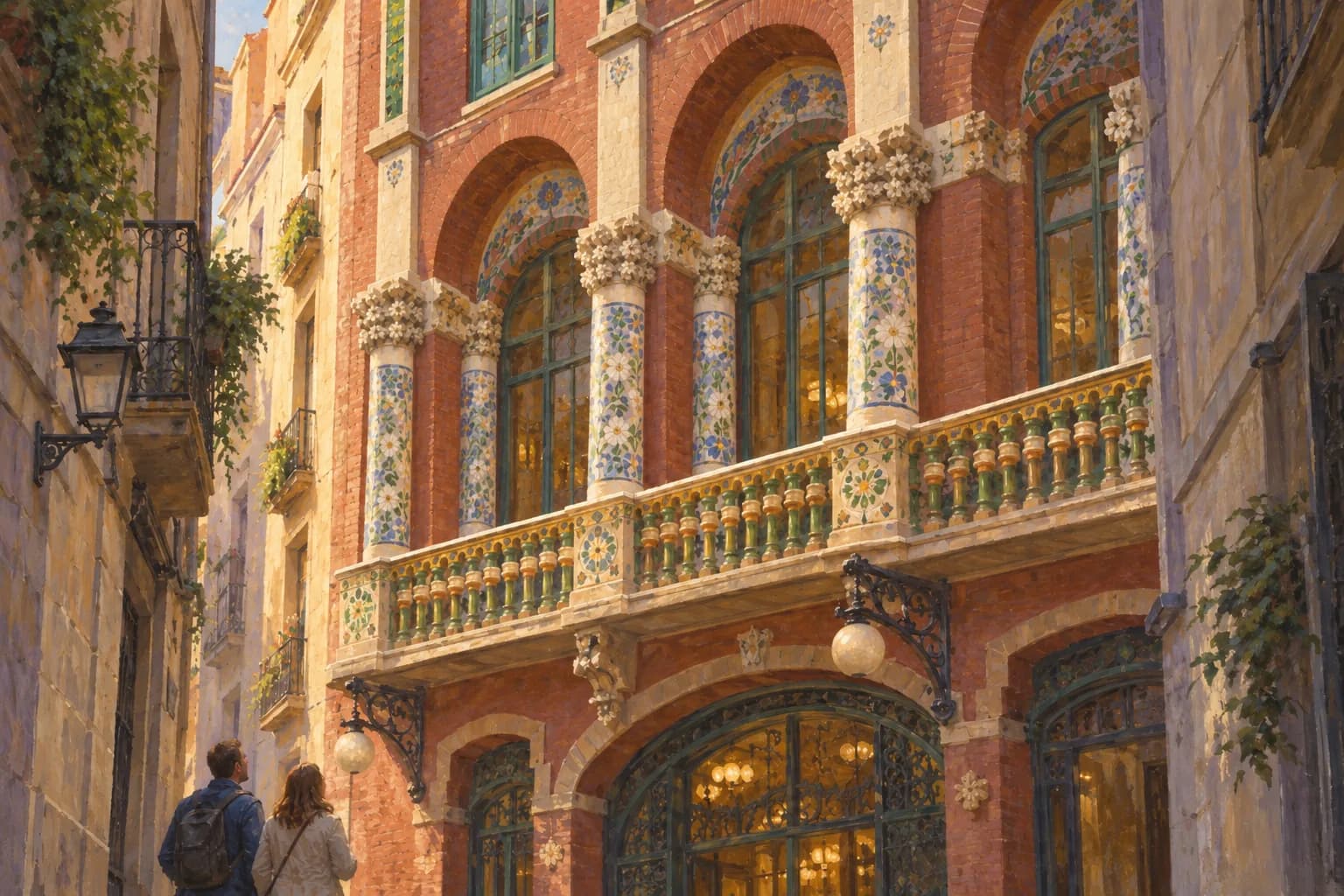
 Look closer at the mosaic: a painterly interpretation of the Palau's materials and motifs, not an exact reproduction of every tile.
Outside the Palau, the colour can distract you from a lovely detail: the mosaic columns along the facade's balcony have different designs. The institution also records that Lluís Domènech i Montaner designed the building, constructed between 1905 and 1908, as a home for the Orfeó Català, funded through public subscription. Both details appear in the Palau's own history.
Start simply: choose two columns and compare their flowers. Follow a stem with your eyes, switch colours, return to the first. From a distance, the balcony seemed to repeat a decoration; close up, you start noticing individual decisions.
The public subscription adds another way to look at the building. This isn't just a famous facade: people contributed so that a choral society could have a home. Hold that collective effort in mind as you study such painstaking work. Music has a place here; ceramics give it a visible presence even when you stay outside.
If you choose to visit the interior, change the question: how does daylight transform a room made for listening? Save that experience for a Palau visit, rather than looking for the skylight from the street. You don't have to see everything today. A walk can leave you a good reason to return.
A question to explore in WAONDER: “How is the Orfeó Català connected to this building?”
See the Palau de la Música in WAONDER2. Santa Maria del Mar: look at the stone, remember who carried it
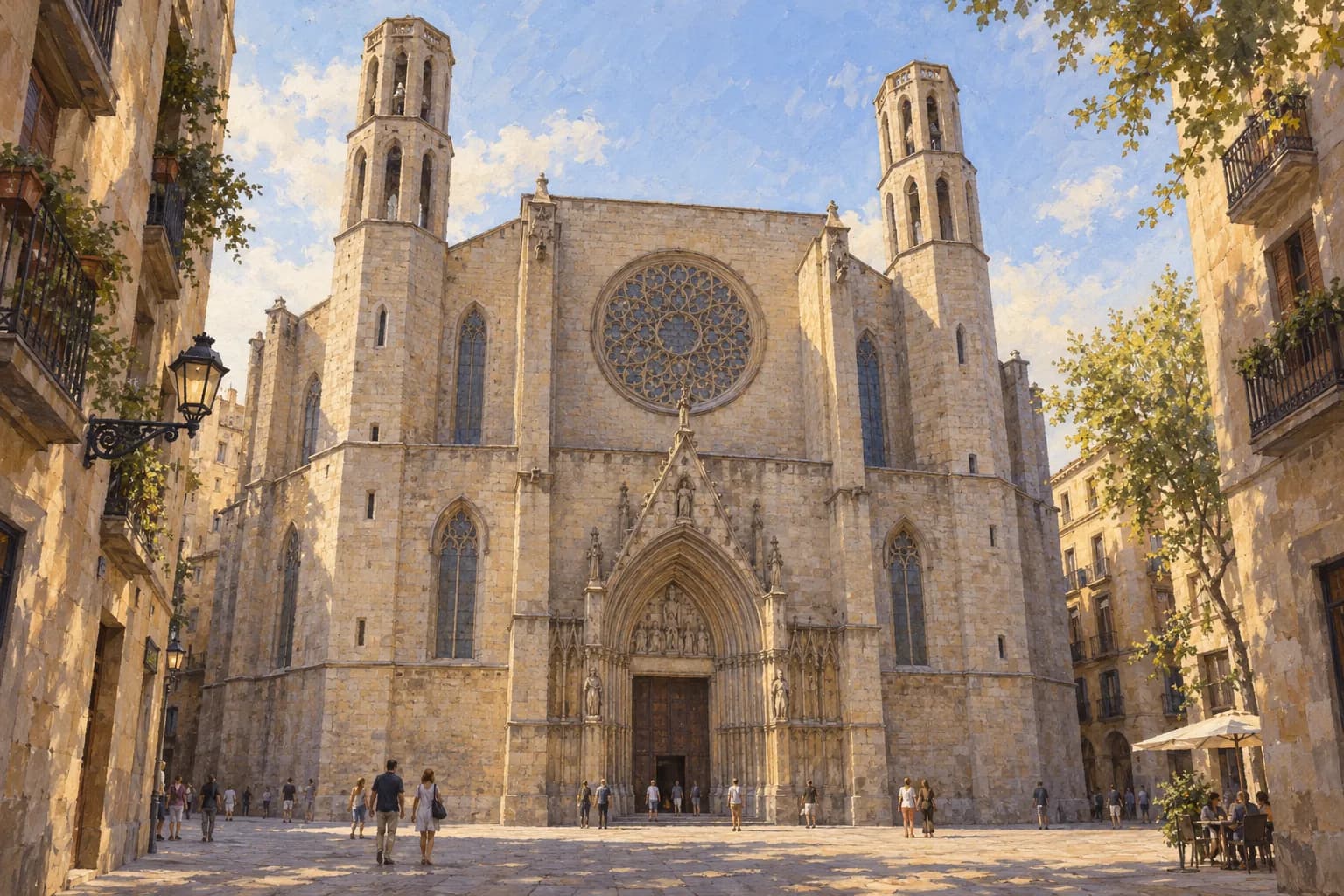 The square changes the pace: an illustrated interpretation of the facade, not a photograph or record of present conditions.
On plaça de Santa Maria, let a change of building change your attention too. After the mosaics, look at the stone. The rose window and entrance give you two places to rest your eyes before deciding whether to enter.
Construction began in 1329, in a Ribera district closely connected to the harbour. The basilica's history describes substantial donations alongside contributions from guilds and craftspeople. No single group built it alone: merchants, authorities and workers played different parts in the undertaking.
Among them were the bastaixos, the harbour porters. The basilica documents their contribution to transporting stone from Montjuïc and describes the interior's three naves, nearly equal in height, articulated by octagonal pillars.
You can carry that connection with you without inventing a medieval scene. Look at a stone in the building and consider the effort required to bring materials here. The monument holds something its architects' names don't tell you on their own: bodies, skill and time were needed too.
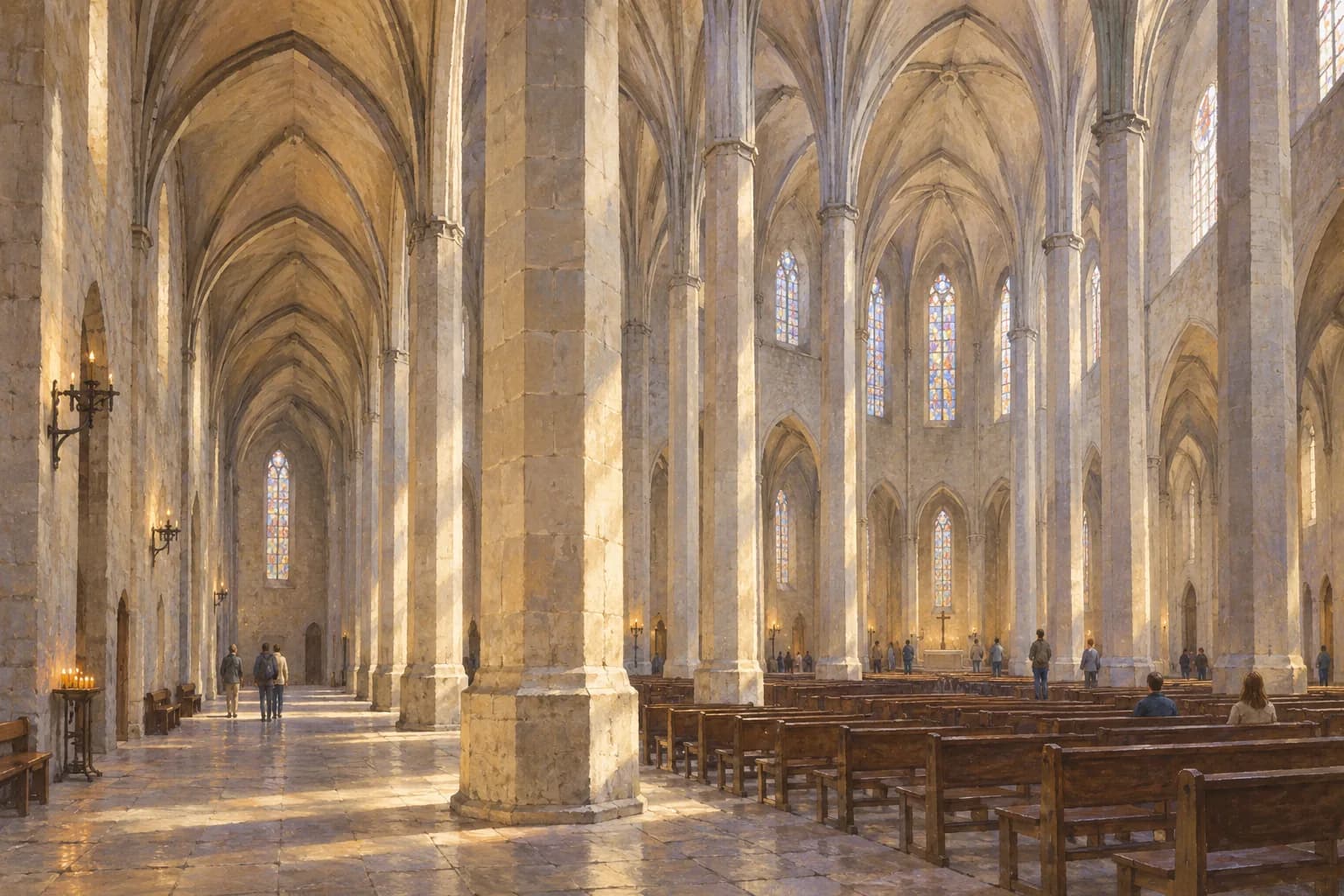 If you enter, look for a pillar's flat faces: an interpretation of Catalan Gothic space and structure, not an architectural survey.
Inside, find the flat faces of a nearby pillar. Then look through the arches. You don't need the vocabulary for every element to notice how the columns organise a space where your gaze can move from one nave to another.
You might leave with a photograph of the rose window. Or with a second image that a camera can't capture quite so easily: a stone that didn't arrive by itself. That other way of seeing can change your next walk across the square.
A question for the place: “Who were the bastaixos, and what did they contribute to Santa Maria del Mar?”
See Santa Maria del Mar in WAONDER3. El Born: beneath the market were people's front doors
Continue towards passeig del Born and plaça Comercial. For this final stop, look for the former market: El Born, Museu d’Història de Barcelona. Here the walk stops asking only who built a monument and starts asking who lived on its ground before.
The iron market dates from 1876, as recorded by the Generalitat's heritage service. The contrast lies underneath: excavations in 2001–2002 documented blocks of houses, streets and a section of the Rec Comtal water channel. Barcelona's Archaeology Service dates the destruction of that urban fabric from 1716 onwards, to make way for the Bourbon citadel.
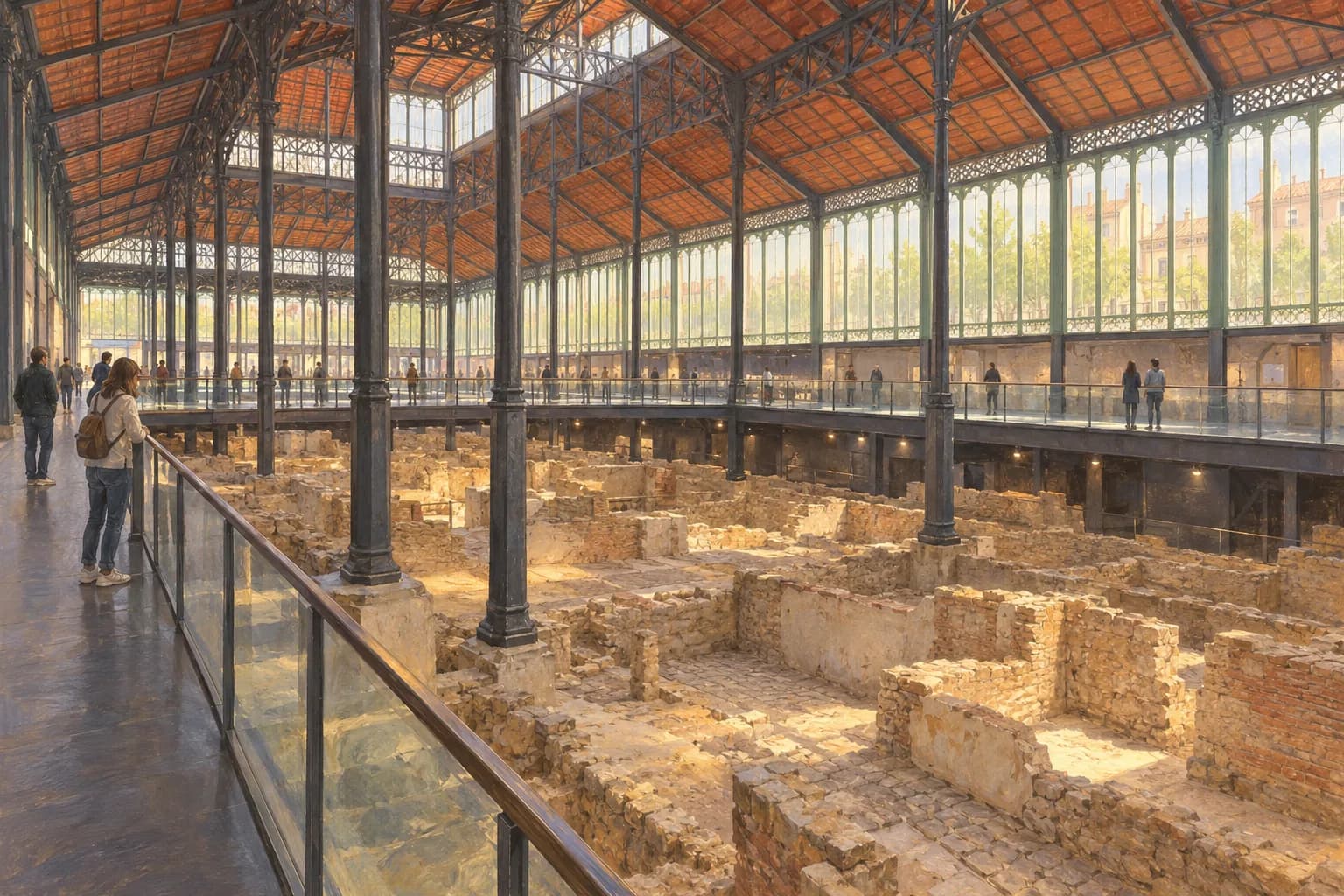 Two layers of city: a painterly interpretation of the market and archaeological site, not an exact floor plan or an excavation record.
If you reach a viewpoint over the remains, try distinguishing a domestic space from a street, rather than treating everything as a collection of ruins. Look for a boundary, a passage or a division between rooms. Don't label a space as a kitchen, or attach a family's name to it, without consulting the museum's interpretation.
It's a small change, but it matters. A low wall may look modest beside a grand facade. Once you begin to read it as part of a home, you're no longer searching only for a beautiful landmark. You're looking at the edges of a place where someone lived an ordinary life.
Above, the industrial structure remains; below, an earlier way of occupying the same ground. At the end of the walk, you've moved from ceramic flowers to the incomplete shapes of homes. The city hasn't grown larger. It has grown deeper.
To understand what you're looking at: “What do the houses and streets of the Born archaeological site preserve?”
See the former Born market in WAONDERWalk at your pace, not a checklist's
You can focus this outing on the exteriors and choose just one interior for another day. To enter, check the Palau's visits, Santa Maria del Mar's information and the municipal listing for El Born. Hours, reservations, prices and access to specific spaces can change. Reaching a square doesn't mean you can enter every room.
If the walk raises another question, our selection of eight places to rediscover Barcelona offers other starting points. You don't have to add them all to the same outing.
Keep one detail from each stop: two mosaics that aren't alike, a pillar's flat faces, a home's boundary beneath the market. Perhaps next weekend you won't need a new destination, just a different reason to return to somewhere familiar.
Download WAONDER for my next walkSection
Ideas for city walks