Venice’s Ghetto: a square with memory and a living community
Bridges, windows and voices in Venice’s Ghetto Nuovo: understanding a place without separating its past from the people who live there today.
A square can look open and still hold the memory of gates that closed.
In Venice’s Ghetto Nuovo, that contrast changes a visit. There are facades, windows and everyday footsteps; there is also a history of enforced residence that should not be confused with the charm of an old neighbourhood.
Understanding this place means keeping two things in view: the segregation that shaped its origins, and cultural life that cannot be reduced to it. You need not arrive with every answer. It is worth bringing a question beyond where to take your next photograph.
Explore Venice’s Ghetto with contextA decision that changed where people could live
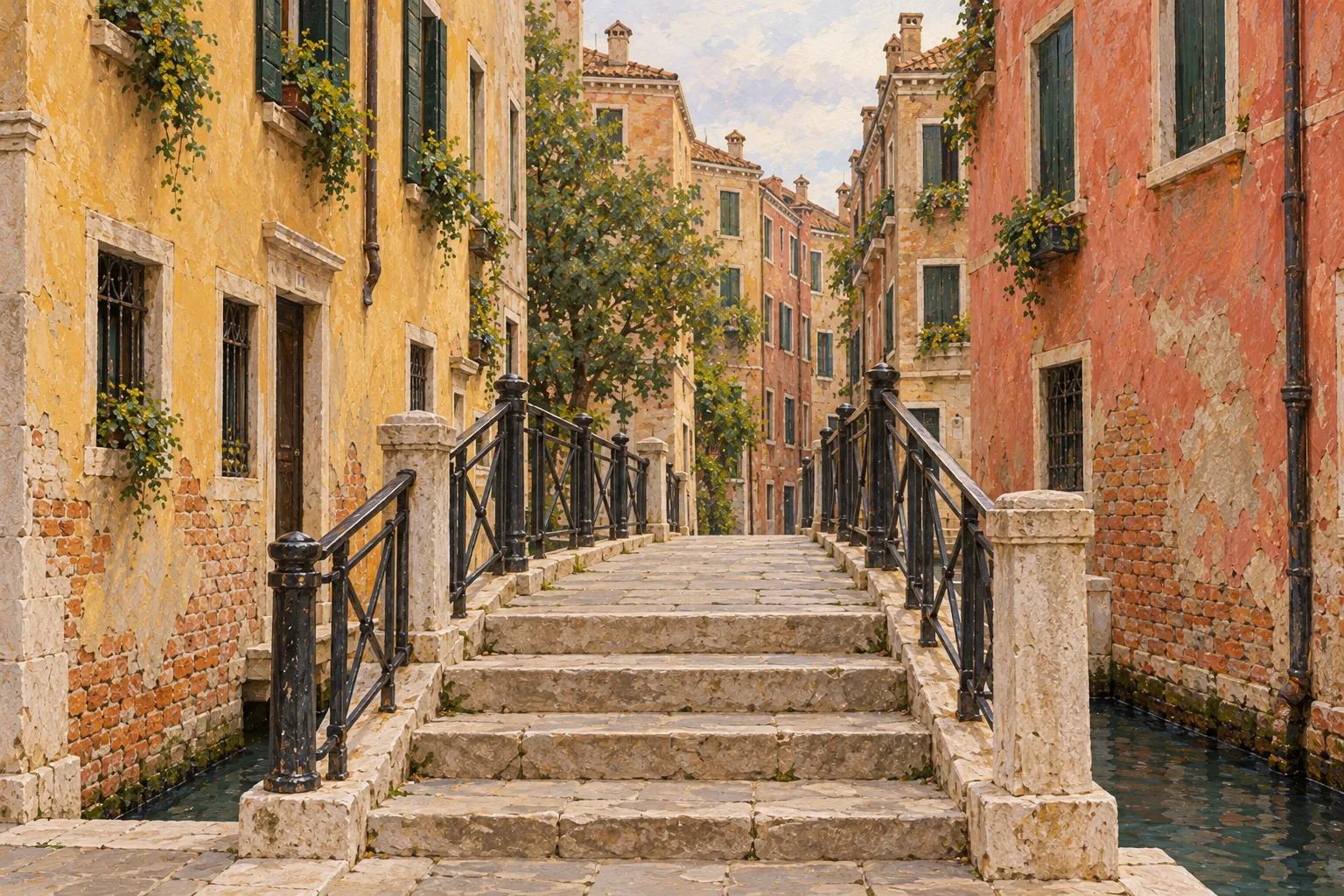 An entrance to the neighbourhood today, interpreted in an illustration. These are not the gates of 1516.
The State Archive preserves the decree of 29 March 1516 requiring Jewish residents to live in a specified area. This was not a collective choice to withdraw.
Venice’s Jewish Community explains the nightly closing of the gates. Knowing that changes the meaning of crossing a bridge: an everyday passage today was once bound up with restrictions on other people’s lives.
You do not need to imagine a dramatic scene for the fact to matter. Consider the difference between being able to come and go, and having someone decide when you may do so.
Five arches that ask you to look up
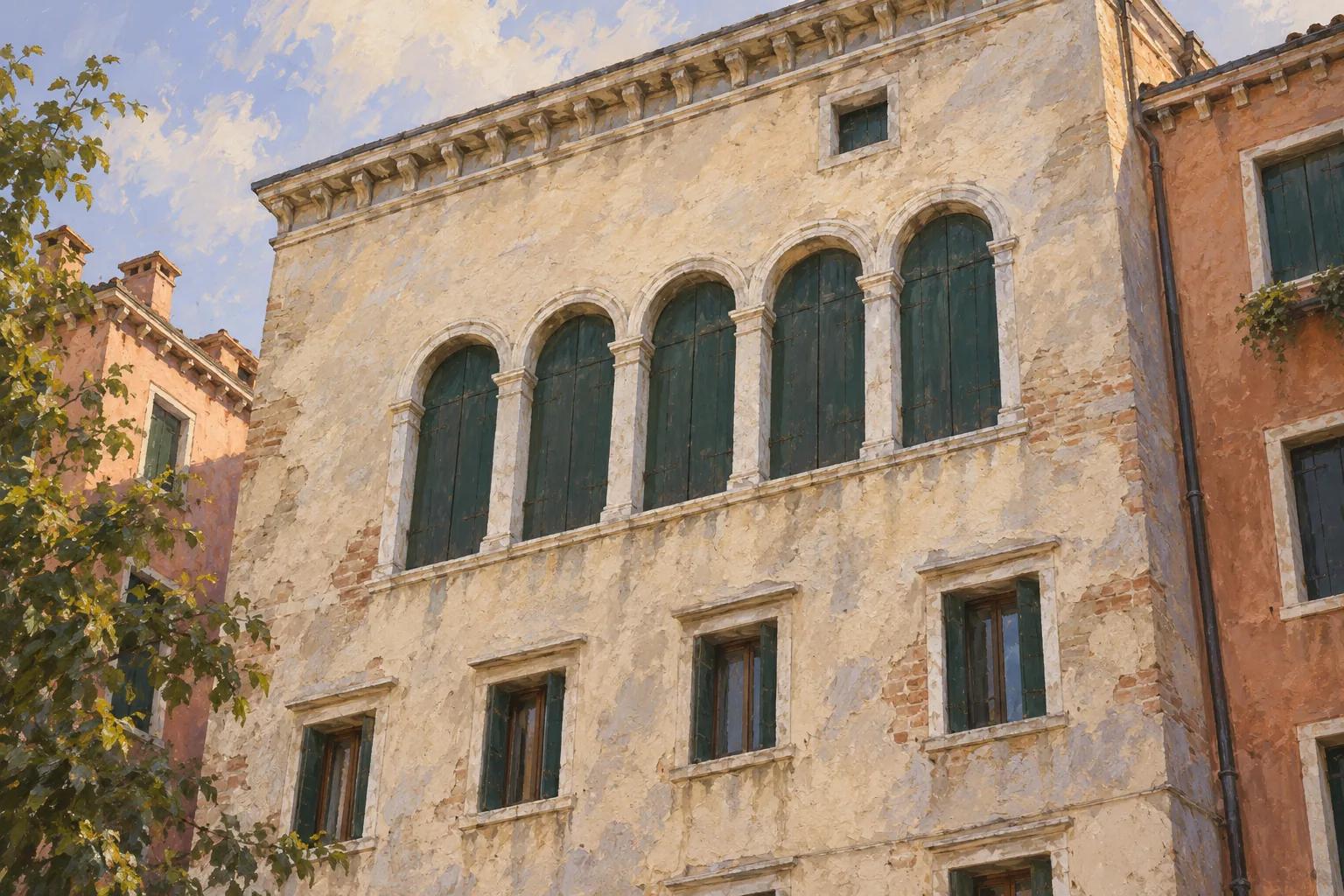 The Scuola Grande Tedesca exterior. An illustrated interpretation, not a facsimile of inscriptions.
The Jewish Community identifies the five white-stone arches of the Scuola Grande Tedesca and dates the start of its construction to around 1528. It is Venice’s oldest synagogue, yet from the campo it does not announce itself as a freestanding temple: you have to recognise its sign among the façades.
From the campo, find that upper row and compare it with the domestic windows. Discovery does not mean peering into a home or assuming every door is open. It means recognising that one facade may contain different uses.
Then return to the whole. Heights, changes of colour and the closeness of buildings stop the neighbourhood becoming a uniform patch on a map. What used to be background begins to have parts.
Words circulated here too
The story does not end with a restriction. The Jewish Community recalls Sara Copio Sullam and the literary salon attended by writers and members of the Venetian nobility. Behind the windows there were readings and debates, not only lives governed by regulations.
The same source describes a revealing contradiction: Jews were prohibited from operating printing businesses themselves, yet could work for Christian printers. They participated in a city crucial to Hebrew publishing. Knowledge travelled through relationships that restrictions alone cannot explain.
That exchange does not make segregation beneficial. It lets us recognise people here as authors, workers and readers, with an intellectual life worth telling in its own right.
A museum to widen the view
The Museo Ebraico di Venezia offers a way to explore the neighbourhood’s histories and traditions further. Check its current information before booking: do not assume the museum, synagogues and worship spaces share admission arrangements.
Prepare one question: which cultural differences existed here? Or choose an architectural detail you would like to understand. The museum can become the continuation of something that interests you, rather than another box to tick.
Before booking, distinguish what you want to see: the museum exhibition, a synagogue included in a visit, or a place of worship. Check your session’s meeting point, language and ticket coverage. Walking through the campo does not depend on every interior being open.
Find the Jewish Museum in WAONDERThe square is not only its past
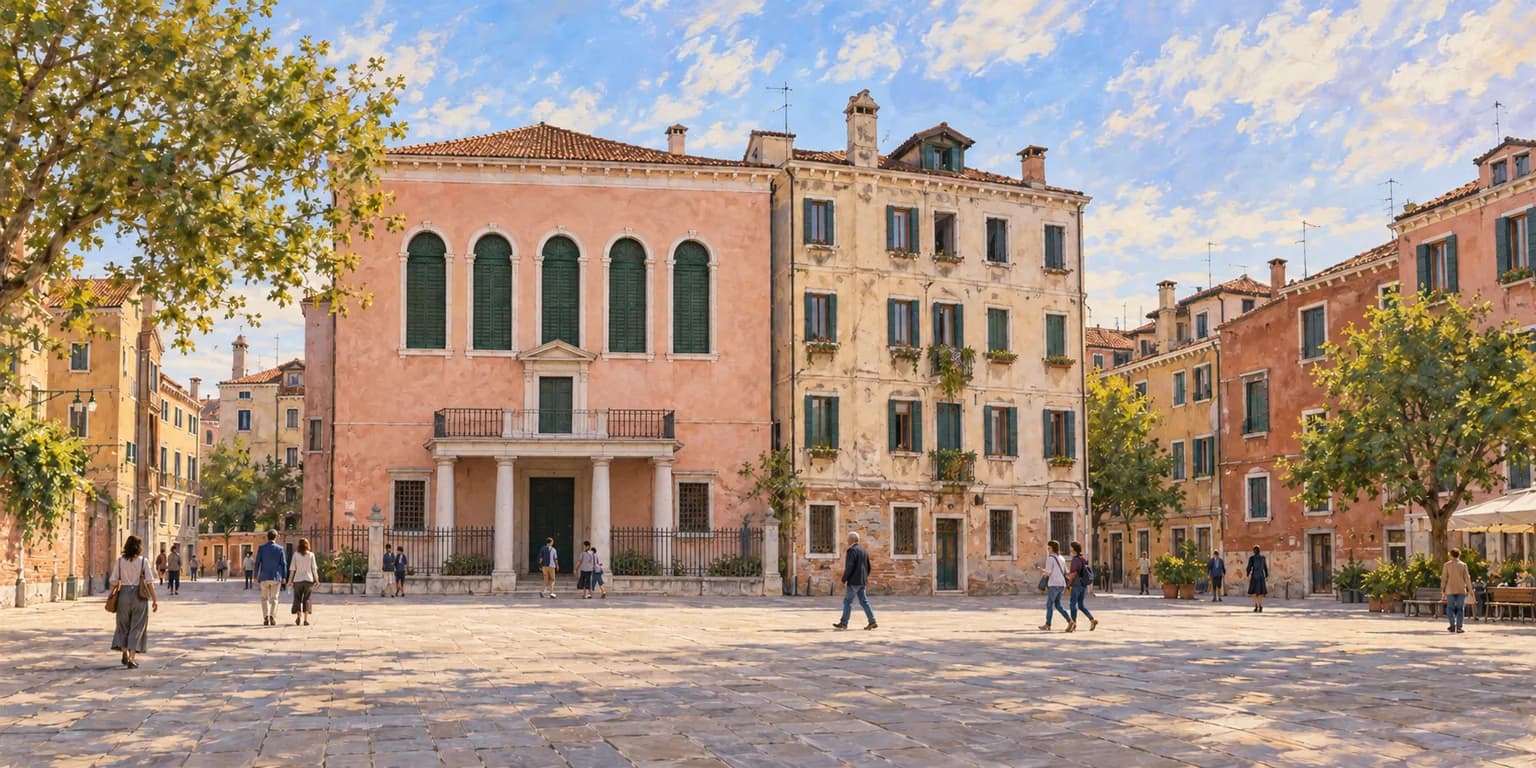
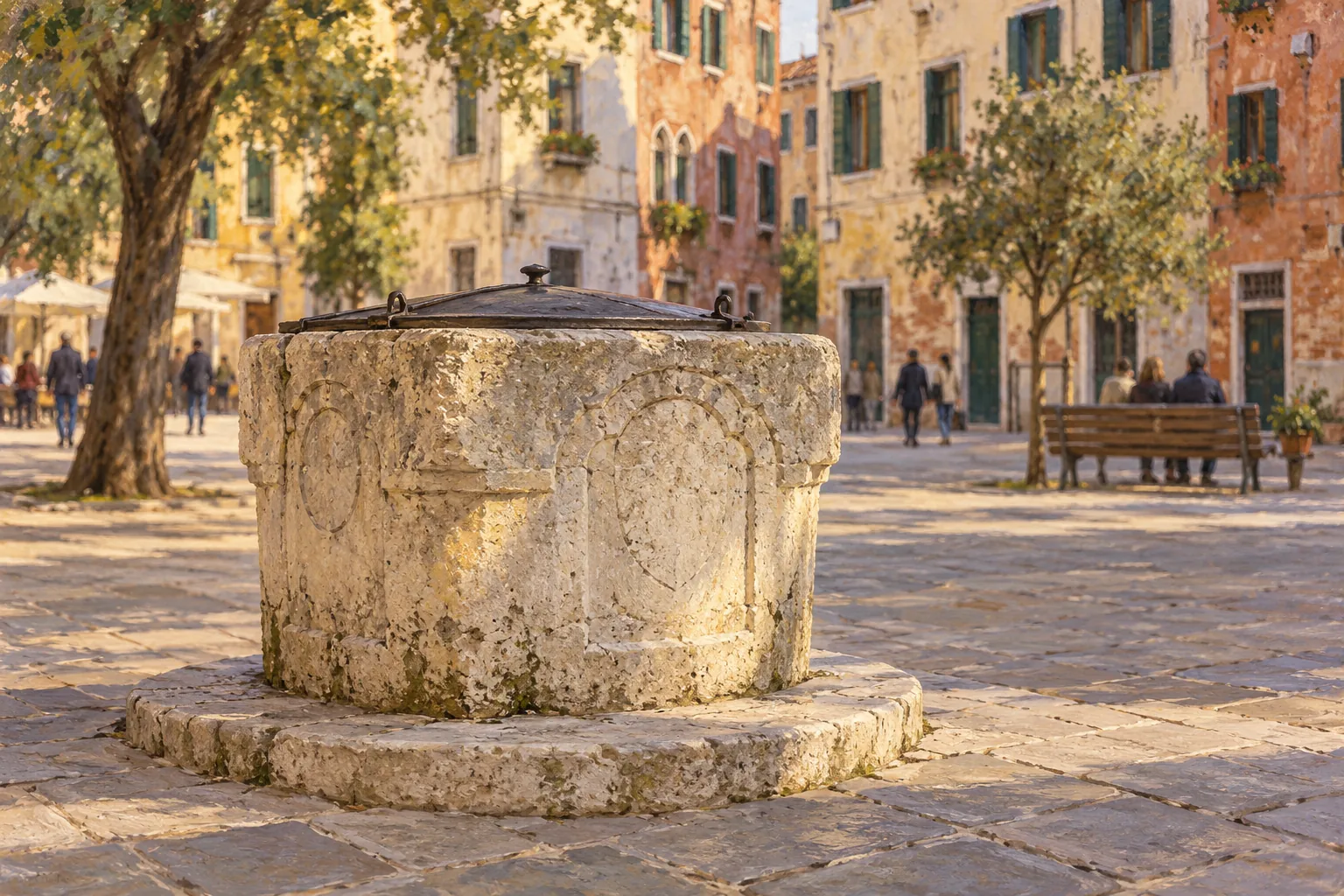 Stone and everyday life in the campo. An illustrated composition, not a documentary photograph.
In Cannaregio, the campo remains a place of homes and everyday journeys. Three references are enough for an attentive walk: the bridge you arrive over, the five arches you can now recognise, and one of the old wellheads in the open space. You do not need to look into residential windows to understand the architecture.
Stepped bridges may affect access: choose the way that suits your mobility and respect checks at visitable spaces. Then leave time for the square without adding another admission to the plan. The memory of closed gates and the freedom to stand in that space today can belong to the same visit.
Return to the neighbourhood with a new questionSection
Stories behind places