Rome’s Pantheon: the sky is part of the building
Light and rain enter through the Pantheon’s open oculus. Architecture, change and small details for a fresh look at this Roman landmark.
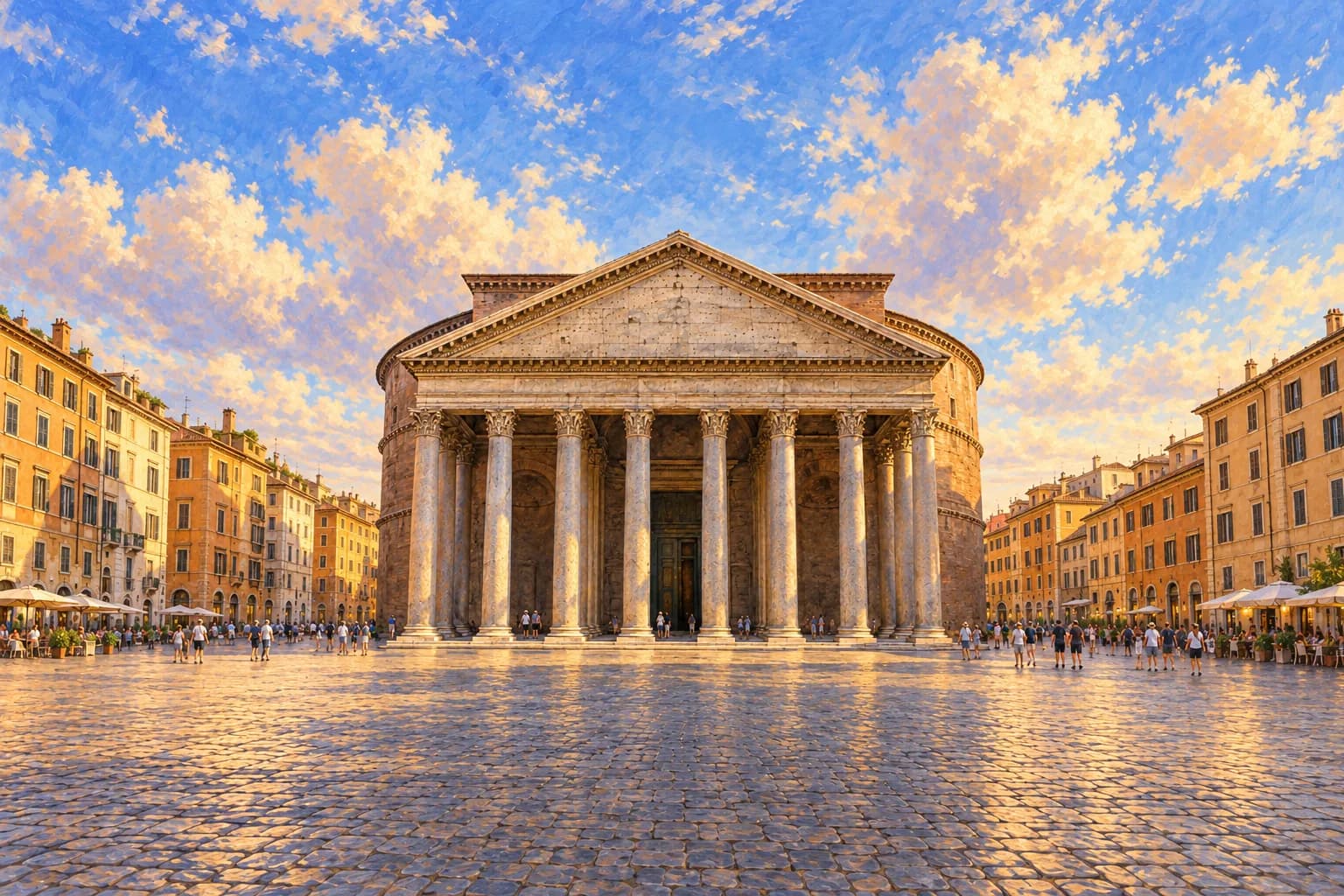
Most buildings put up a roof to keep the weather outside. At Rome’s Pantheon, a little of the sky remains indoors.
Look up as you enter and you will find it: an open circle at the top of the dome. It is not a glass window or a gap left by a lost roof. The oculus is open, and rain can come through it. Rome’s municipal tourism guide explains how drainage in the floor carries the water away.
That small curiosity gives you a different starting point. Instead of trying to see everything at once, follow three things: where the light enters, how the space is arranged and what remains of the building’s different lives.
Explore the Pantheon in WAONDERRain does not need a legend
 Rain and the Pantheon’s floor. An illustrated scene, not a photograph of a particular day.
There is a tempting explanation that turns the opening into a small miracle: rising air supposedly prevents a single drop from falling. Yet understanding the place does not require the water to disappear in mid-air.
The interest lies in the opposite: an open roof and a floor prepared to receive what comes through it. Looking down completes what you have just seen above. Oculus and pavement belong to one building, rather than being two unrelated details.
You do not need to wait for a storm to appreciate this, or approach a wet area. On any visit, notice the opening and look for the circles and squares in the floor. They are reasons to lower the camera for a moment and keep looking.
A scale you can feel
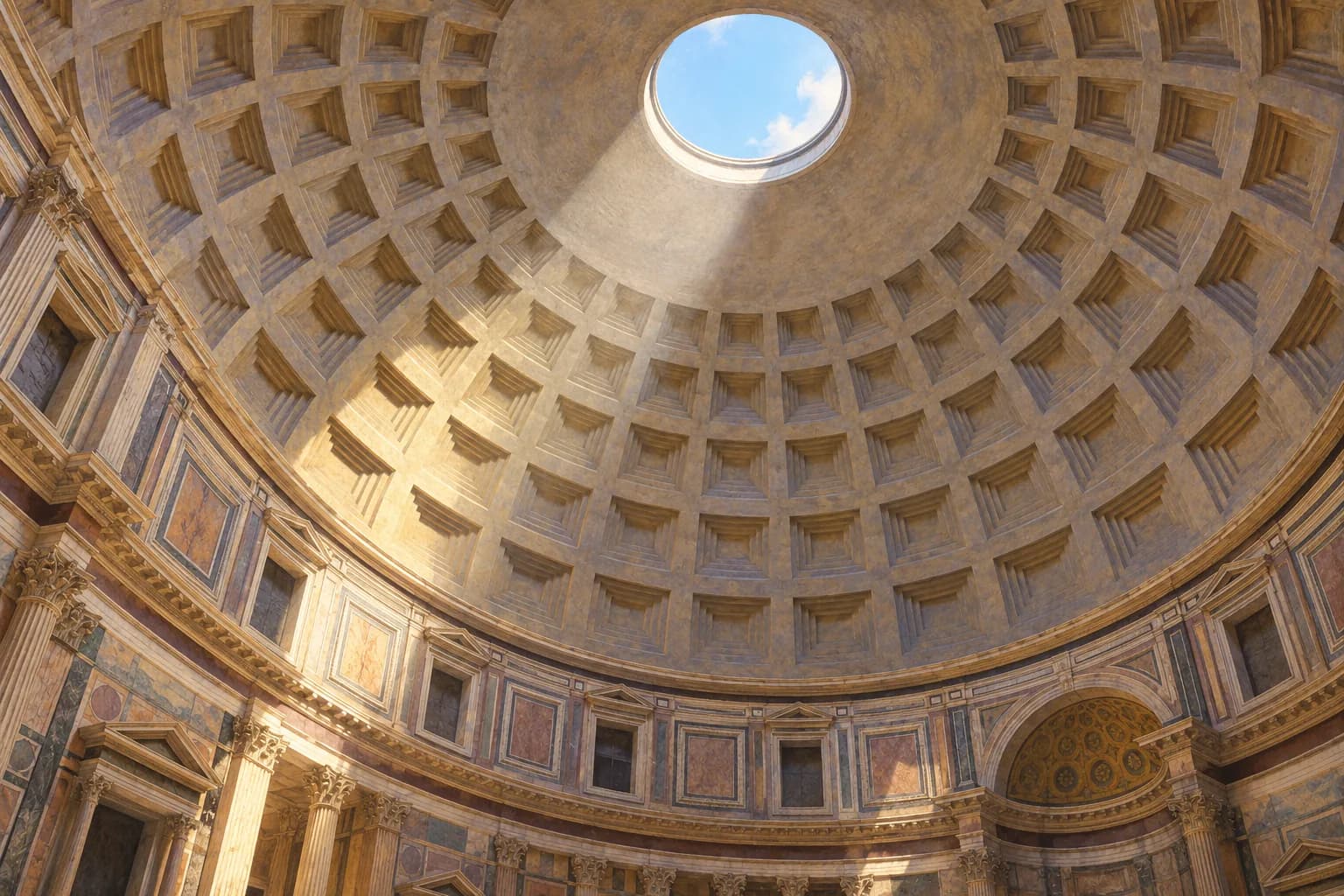 The oculus, smooth upper band and dome coffers. An illustrated interpretation of the interior.
From the square, the portico might lead you to expect a long room. Inside, a great circular space awaits. The change of shape is part of the surprise: first you move between columns, then the building seems to surround you.
Rome’s tourism guide describes an unusual proportion: the interior diameter and height to the dome are both a little over 43 metres. The comparison helps you imagine a sphere inside the building. You do not need a tape measure to sense the relationship between width and height.
The coffers grow smaller towards the oculus. Follow them without trying to count each one. The surface has rhythm and depth; what can look like a uniform vault in a photograph becomes a sequence of planes.
The name on the front and the history behind it
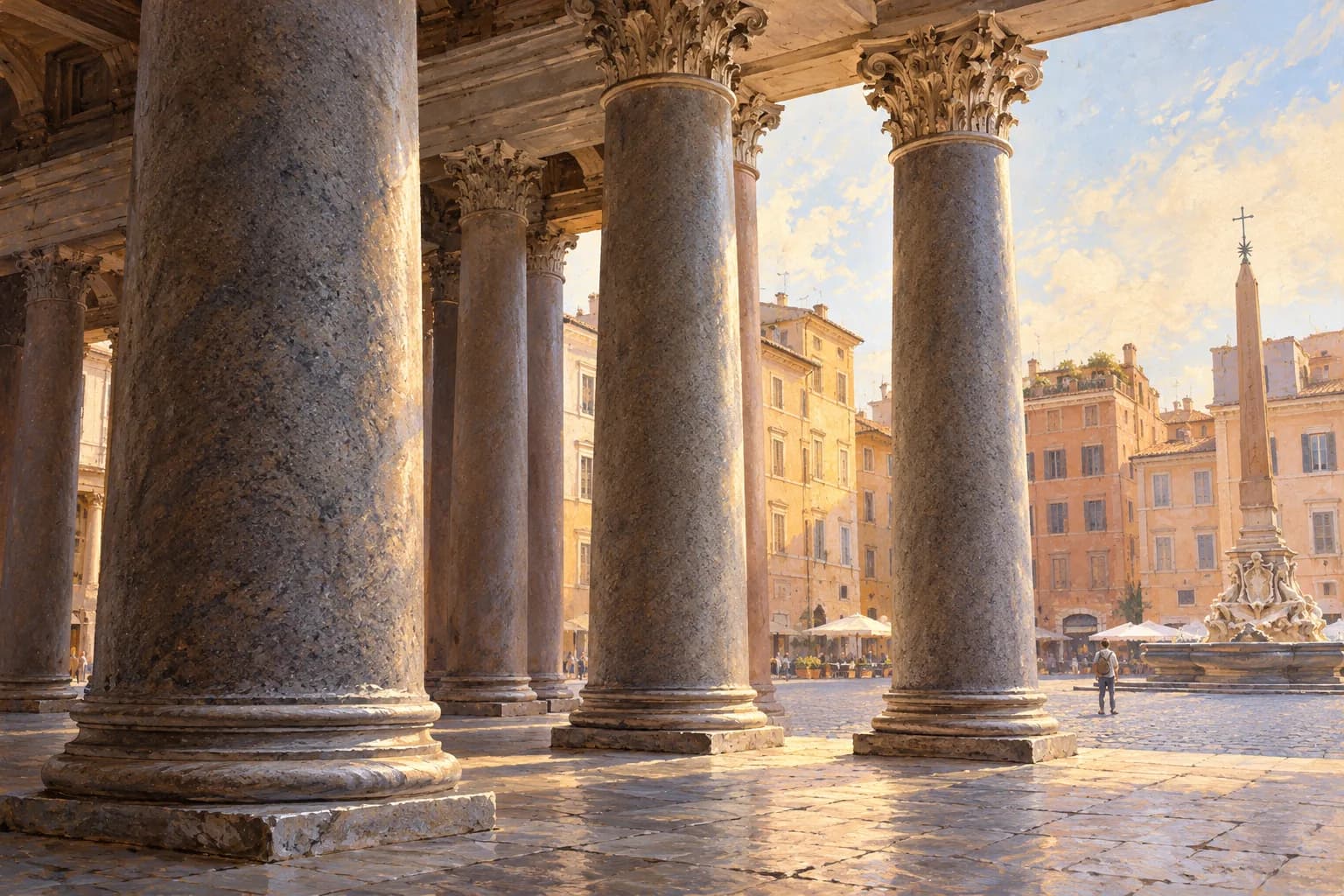 Granite, capitals and shade beneath the portico. An illustrated composition.
Marcus Agrippa was an associate of Augustus who commissioned an earlier temple here in the first century BC. His name above the portico looks like a signature, yet it does not date everything in front of you.
Rome’s museum authority distinguishes that origin from the reconstruction under Hadrian, in the second century AD. More than a century separates the two. From Piazza della Rotonda you can read the lettering beneath the pediment, then enter a circular room that tells of another life of the monument.
Remaining in use is another way to survive
The Pantheon is more than a building from imperial Rome. Consecrated in 609 as Santa Maria ad Martyres, it remains a basilica. The Ministry of Culture provides official visiting and worship information.
Among the tombs is Raphael’s, which Turismo Roma lists alongside those of Italy’s royal family. Imperial Rome, a medieval church, a Renaissance artist and the memory of unified Italy now share an interior. You can cross some of that historical distance without leaving the rotunda.
Check official channels before going: admission arrangements and services may affect your visit. Remain respectful and leave space for people using the building as a place of worship.
One thing on your next visit
Keep three reference points: Piazza della Rotonda for the portico, the middle of the room to connect oculus and floor, and the perimeter for chapels and tombs, leaving the circulation space clear. Check the official links for admission and worship arrangements before going.
If you already know the place, return at another time and notice where the light falls. The architecture remains the same; the picture drawn by the sky does not. That may be the detail that stays with you after the photograph.
Return to the Pantheon with another questionSection
Stories behind places