Bologna beneath the porticoes: two ways to go for a walk
Walk between Santo Stefano and the Archiginnasio, or make a separate outing to San Luca: choose your next walk beneath Bologna’s porticoes.
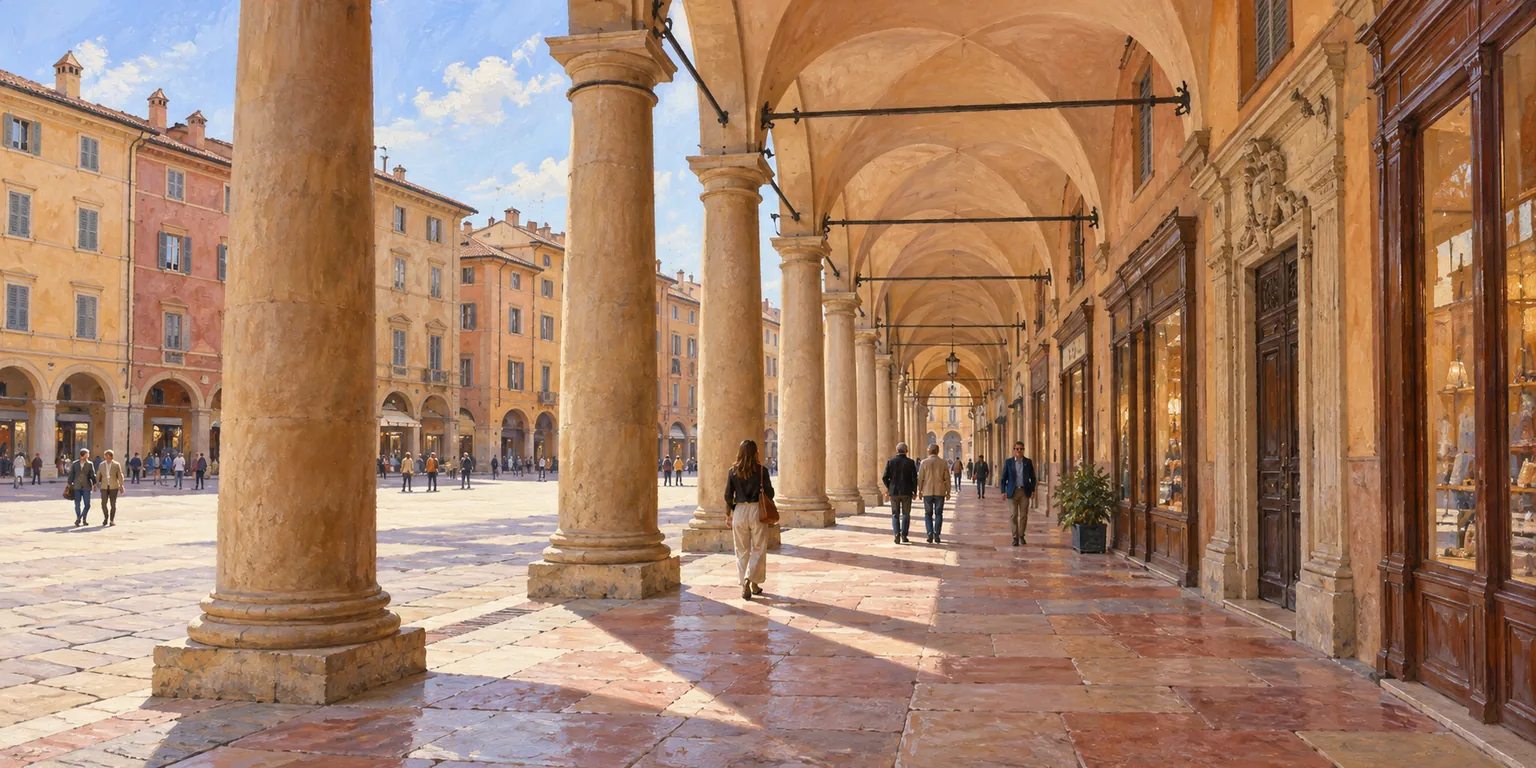
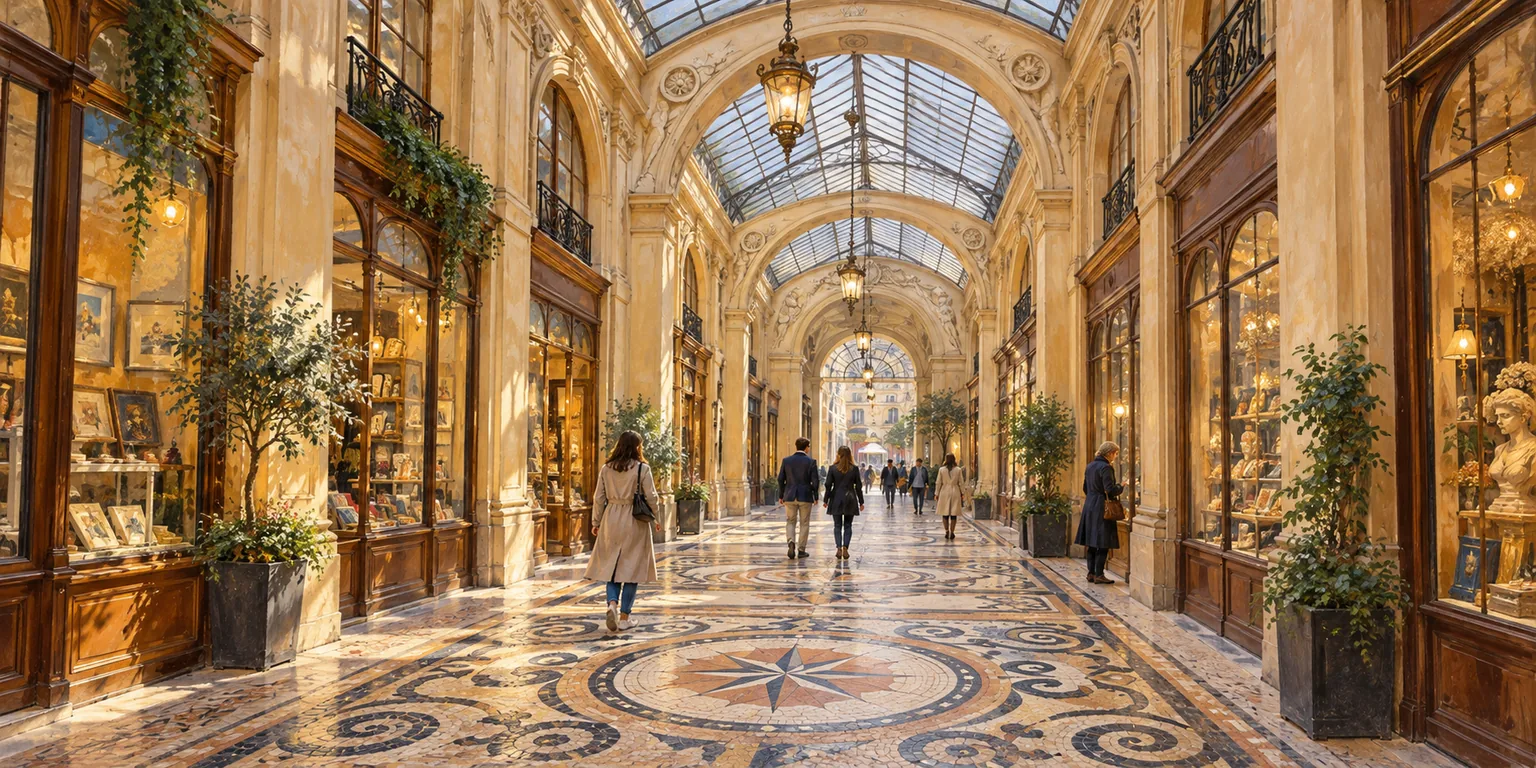
In Bologna, a line of shade can accompany you along the street. A portico makes room to walk, pause and watch the city without being completely indoors or out.
They do not all tell the same story or demand the same effort. Here are two separate outings: one through the centre between Santo Stefano and the Archiginnasio, another towards San Luca on the hill. Choose for your time, energy and mobility; you need not do both in one day.
UNESCO inscribed a selection of twelve components of the portico system in 2021. The recognition goes beyond a succession of handsome arches: these spaces belong to private buildings but serve public use, making them part of daily life. Underneath, the walk home, the shopping trip and the leisurely stroll share the same space.
Choose your next walk with WAONDEROption one: begin where the square opens out
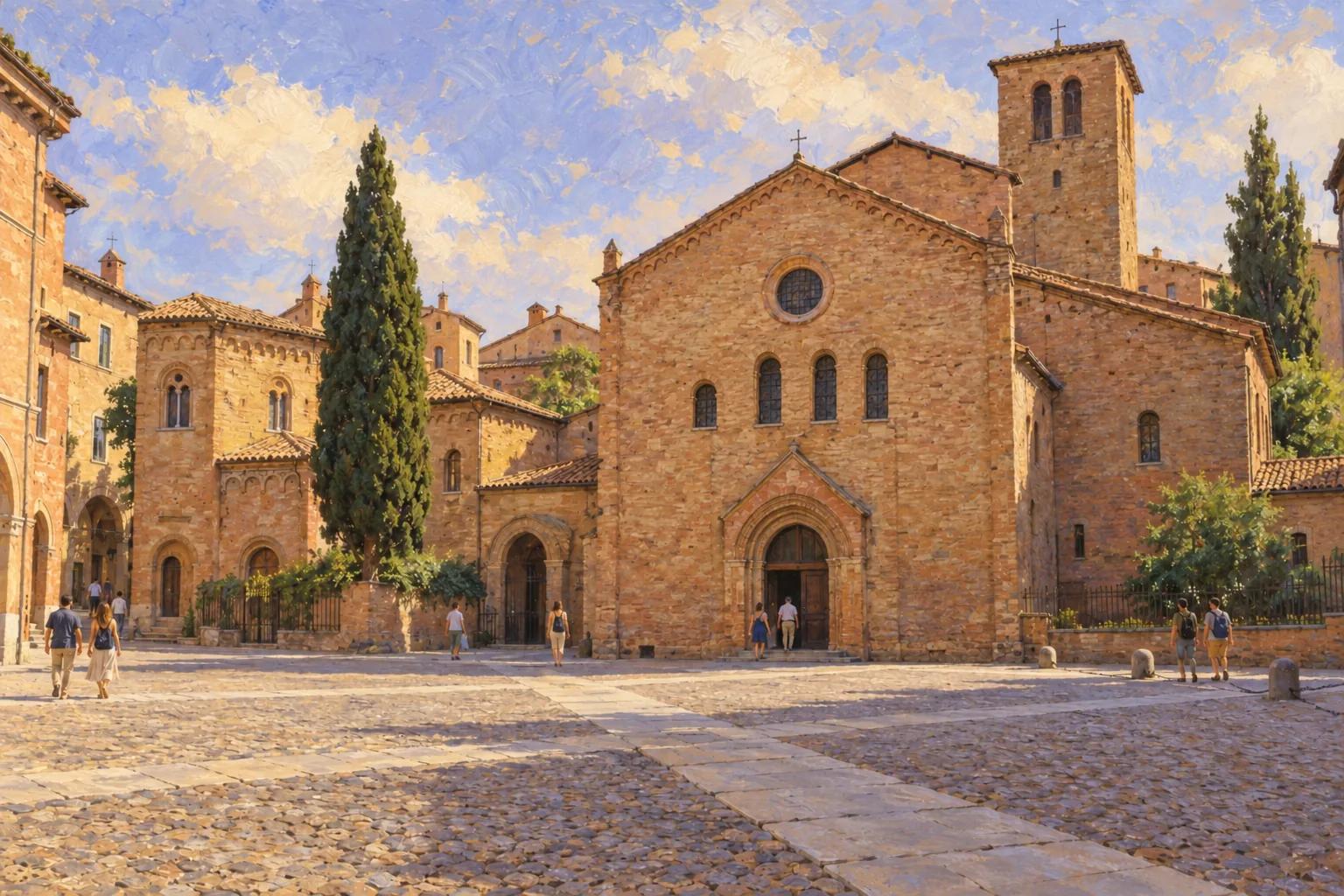 Santo Stefano from its square. An illustrated interpretation of the complex’s forms.
At Piazza Santo Stefano, begin without entering a building. Notice how the space changes when a street opens into a square. Then find differences between facades: they are not all the same height or the result of one decision.
Bologna Welcome explains that the complex brings together buildings from different periods. The traditional name Sette Chiese does not require you to count seven facades outside or imagine one undisputed origin.
Stay with the brick, windows and cypresses for a moment. If you enter the religious complex, check arrangements and respect worship. The WAONDER point is the square: somewhere to find your bearings before choosing what to visit.
Find Piazza Santo Stefano in WAONDERContinue to the Archiginnasio: people left traces
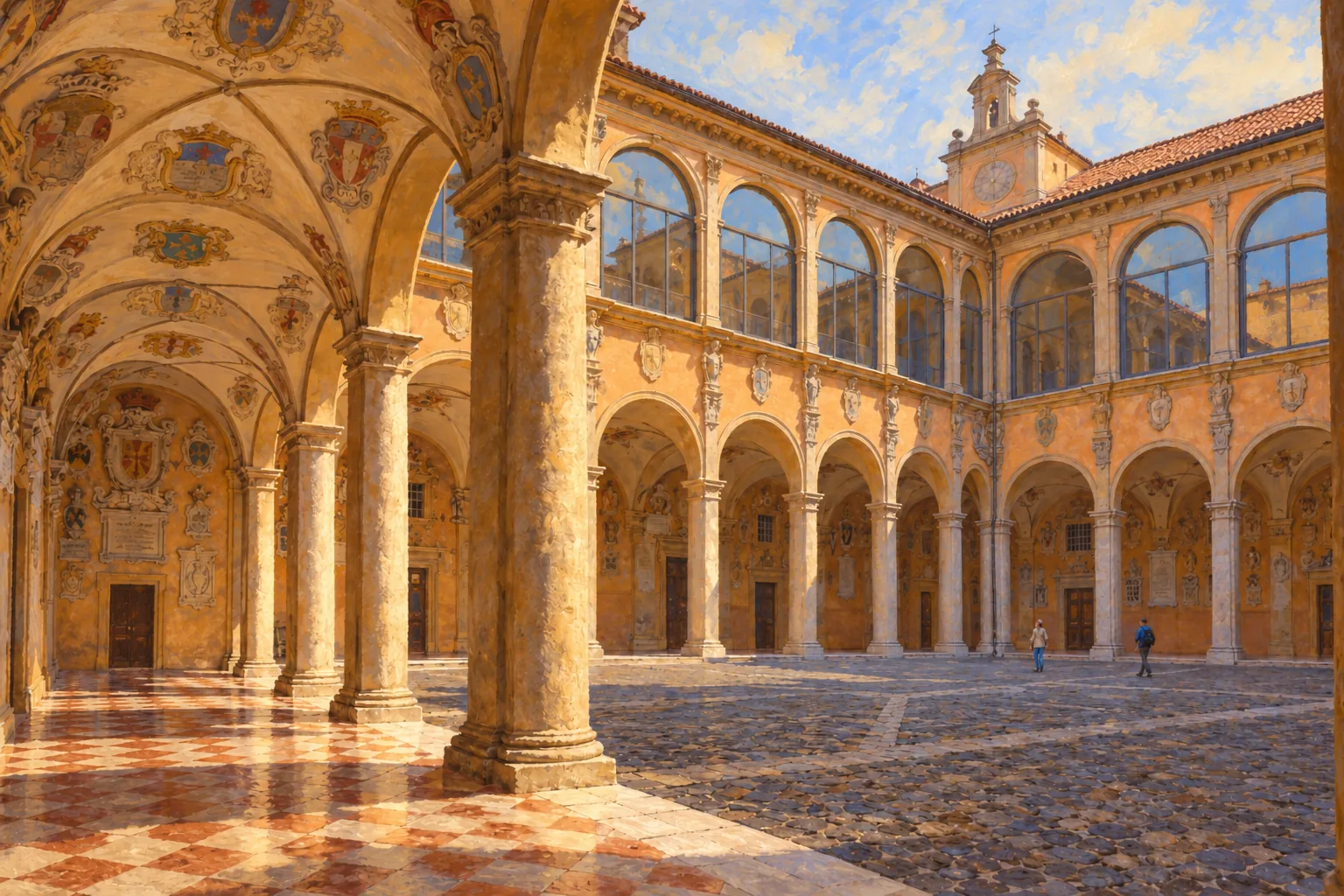 The Archiginnasio courtyard. Heraldic motifs are interpreted, not reproductions of identified coats of arms.
Continue through central streets towards the Archiginnasio and Pavaglione, using a map to choose your way. Outside, notice repeated columns and changes of light. Inside, the courtyard offers another kind of repetition: memories of those who taught and studied.
The institution explains the courtyard’s coats of arms and memorials. One connects Bologna with the other side of the Atlantic: Diego de León Garavito, a Spanish student born in Lima, dedicated the decoration of the entrance vault to Cardinal Benedetto Giustiniani. Among so many names is a life that crossed continents to study here.
The address is Piazza Luigi Galvani, 1. Look for that vault on entering, before turning to the galleries above: the journey is recorded not just in a monumental facade, but in personal dedications.
Before climbing stairs or booking, distinguish the spaces. Official visitor information separates the palace, visitor rooms and library, which does not admit tourist visits. Admission to one does not automatically open the others.
Your first outing can end here. It is not a lesser plan: you have noticed a square, covered walkway and university memory without adding a hill just to lengthen a list.
Explore the Archiginnasio in WAONDEROption two: keep another walk for the climb
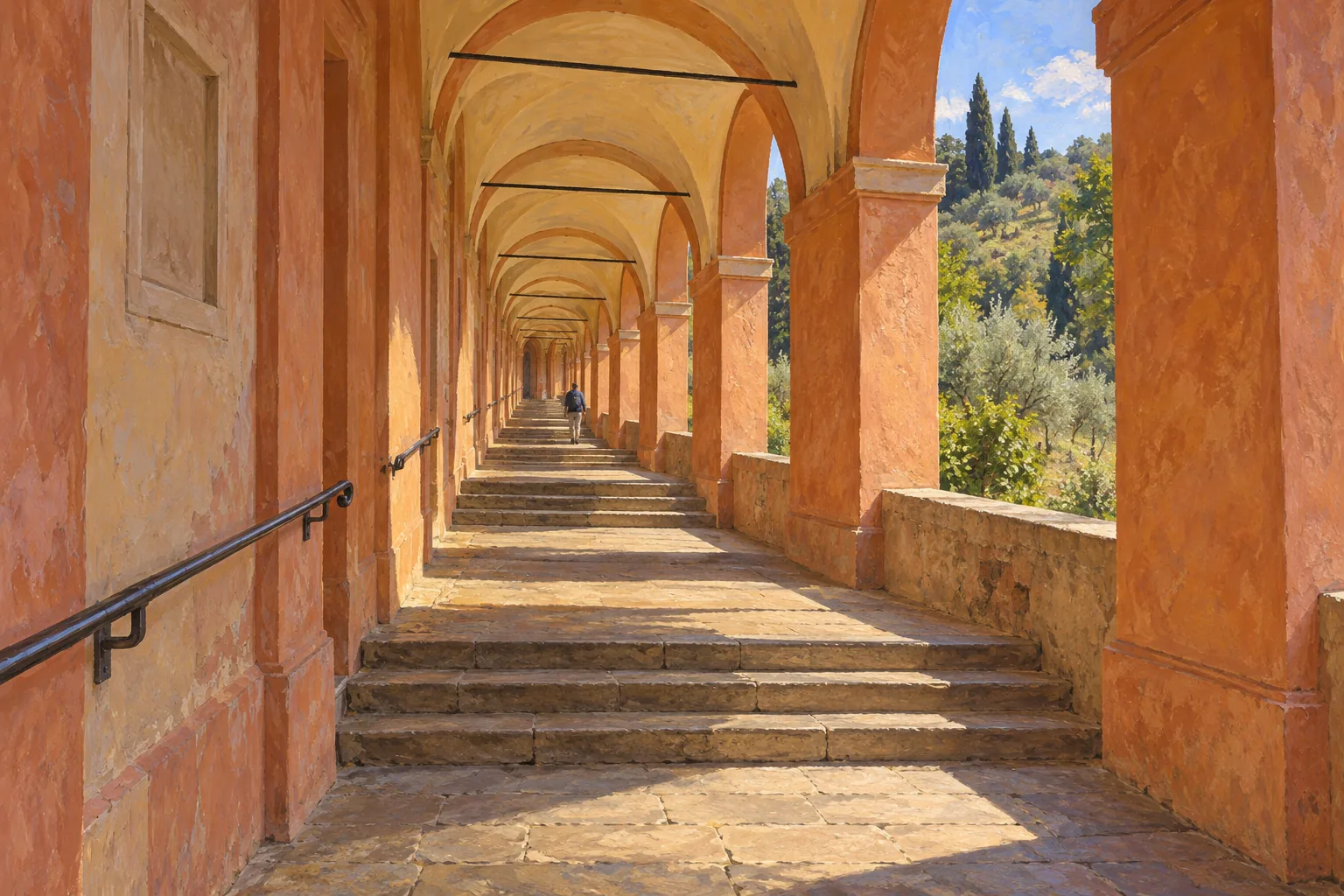 Climbing under the porticoes. An illustrated scene, not a measured plan or accessibility guarantee.
For San Luca, change your starting point and keep a separate outing. The tourist office’s route follows via Saragozza, passes Porta Saragozza and reaches the Arco del Meloncello before climbing to the sanctuary. Built in 1732 to a design by Carlo Francesco Dotti, the arch carries the portico across the road: here the city walk begins to become an uphill one.
The sequence is easy to recognise on a map: via Saragozza → Porta Saragozza → Meloncello → San Luca. Decide where to start, how far to walk and how to return. There are slopes and steps; if the whole climb does not suit you, check official alternatives rather than assuming a covered route is accessible throughout.
The portico leads to a place of pilgrimage, but also belongs to the walking habits of Bologna’s residents. You can pause for a stretch, notice how the light changes and save the rest for another day.
San Luca: arriving also means making room
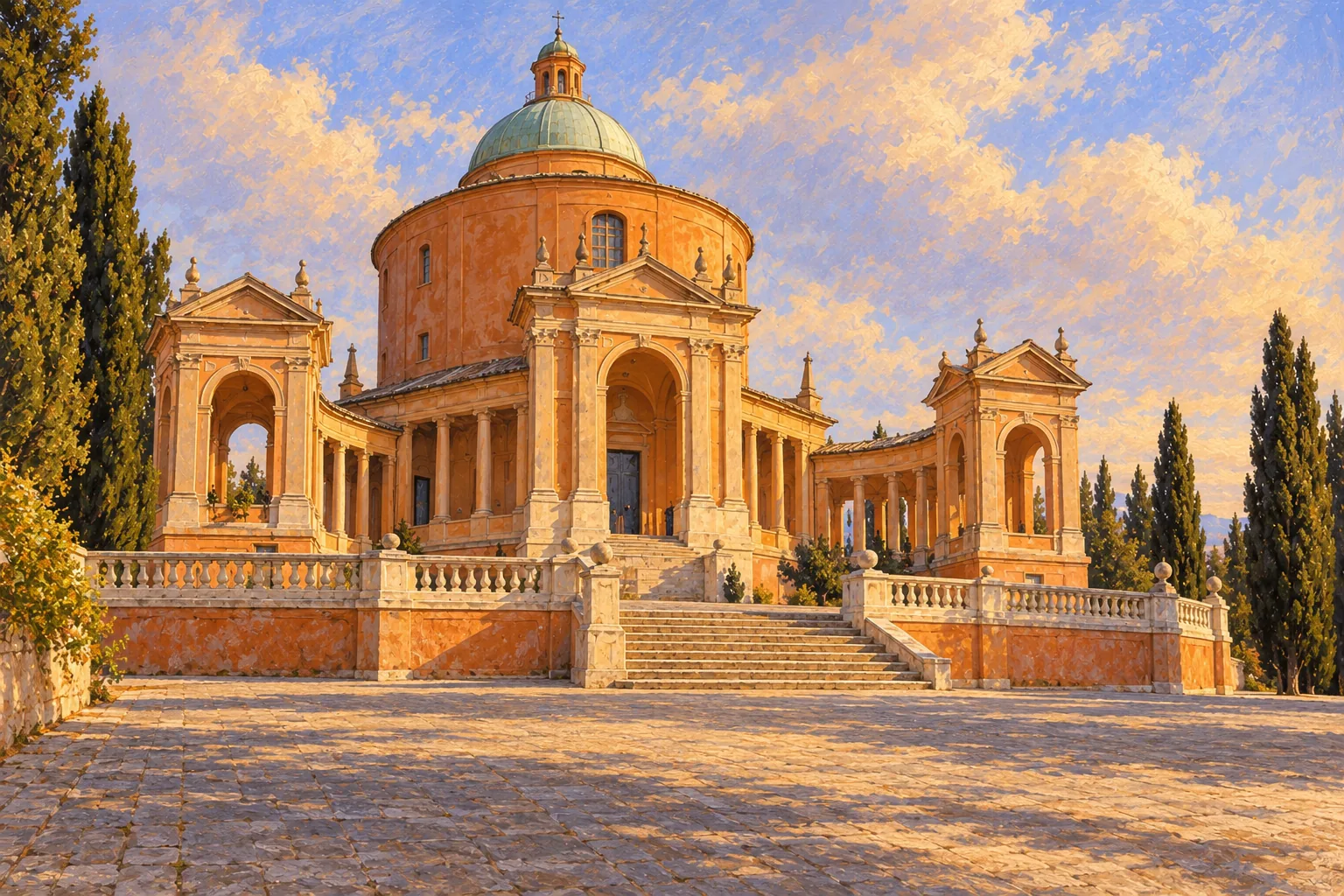 San Luca sanctuary and its approach, in an illustrated interpretation.
On arrival, the sanctuary’s form replaces the corridor of arches: its central volume and side pavilions create another relationship with the landscape. After a climb, stopping is part of the visit.
The sanctuary remains a place of worship. Check current admission and any panoramic access; services may restrict tourist visits. Do not assume every space shares one timetable or ticket.
For a Bologna resident, these options can become separate outings through the year. For a traveller, choosing one and enjoying it can offer more than rushing to connect everything. What stays need not be the number of arches you passed, but what you began to notice beneath them.
Find San Luca sanctuary in WAONDER Take WAONDER on your next outingSection
Ideas for city walks